

2025 is proving to be a significant milestone for anime.
From recent theatrical releases — like July’s hit Demon Slayer — to buzzy shows like Solo Leveling and Dragon Ball DAIMA, the medium has seen a sharp rise in popularity. Anime has moved from niche to mainstream thanks in large part to the streaming platform Crunchyroll and its increasingly diverse range of content.
For those captivated by the stylized Japanese animation, Crunchyroll — owned by Sony Group — is an essential destination that super-serves the medium. Some of its more popular series, like SPY x FAMILY and Chainsaw Man, have garnered millions of views. And the fanbase and audience only seem to be growing: According to The Hollywood Reporter, Netflix boasts that its anime viewership has tripled over the last five years — and half its global audience now watches anime.
The Television Academy recently spoke with Crunchyroll’s chief content officer, Asa Suehira, to get his take on anime’s recent surge in the U.S. and how the platform approaches acquiring content.
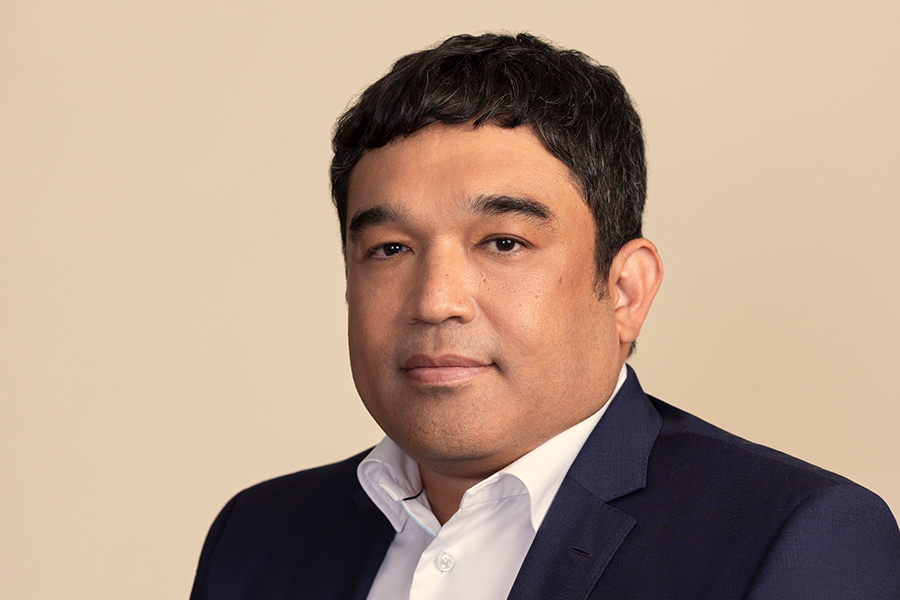 Chief Content Officer Asa Suehira / Photo credit: Crunchyroll
Television Academy: So, from your experience, why do you think anime has become so popular recently?
Asa Suehira: Anime has been present in the global market since the ‘70s and ‘80s. People were watching shows like Speed Racer or the Gundam series on TV, but they didn’t realize it was coming from Japan and that it was anime.
The breakthrough really happened when streamers like Crunchyroll started to introduce all anime that was broadcast in Japan. I think a lot of the audience discovered that anime wasn't just action titles for boys. They discovered that there was fantasy, sci-fi, romance, slice-of-life and comedy. Being able to enjoy it at the same time as Japan was broadcasting it was something very fresh for the U.S. audience.
Who is the audience for anime in the United States now?
In the U.S., Gen Z is really drawn to anime.
Why do you think that is?
Because it offers something that they can't find in other forms of entertainment. They find it uniquely vibrant with imaginative visuals, and with emotionally engaging characters that they can relate to. And the storytelling style stands apart from anything they’re used to. The Gen Z audience engages heavily with anime content on social media, [using] clips and edits, to express themselves and connect with others. Anime, as a medium, really resonates with how they socialize and express themselves.
What is Crunchyroll’s strategy when it comes to acquiring shows?
Most of the titles and anime series are based on a novel or a manga. The popularity of the original source is an important factor for us. But, at the same time, we will look at our audience and analyze what is trending. We read a lot of original scripts, the manga. We have a lot of discussions with the creators to [help us] understand the project.
Most of the titles that we acquire are based on revenue-sharing. Sometimes, there’s an old catalogue series that we might acquire for a certain region — and there might be a different business model for that. But basically, revenue share is our model.
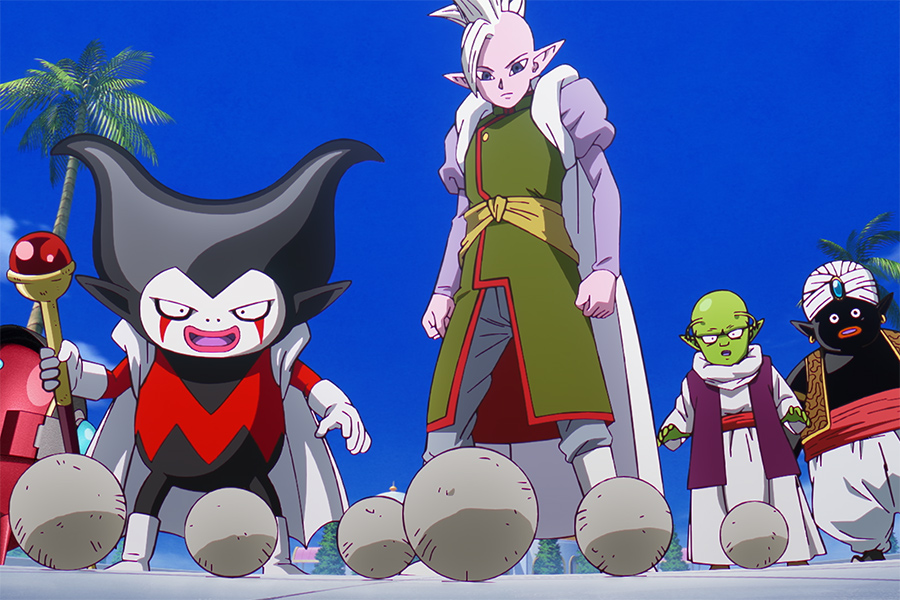 A scene from Dragon Ball DAIMA / Photo credit: Crunchyroll
Currently, what is your most popular genre on the service?
We try to have different genres available, as much as possible. The most popular genre is shōnen boys' action type programming. [Editor’s note: This programming is aimed at adolescent boys and young men]. But, recently, there's a lot more popularity with a genre called “isekai,” which is fantasy that goes back and forth between the real world and fantasy world. A lot of sci-fi, romance and slice-of-life are also becoming very popular on our platform.
How do you work with the creators on developing the content?
We share a lot of data with our partners in Japan. Performance will often vary depending on the region — different arcs and different episodes have different viewership behavior. We try to share what resonates with the audience, what type of devices they watch on, what are the market trends. All of this helps them understand how the audience reacts, and hopefully, that [information] will be used in the next creative project.
While you work primarily with Japanese creatives, are there anime creators outside of Japan that you work with?
A lot of the studios are still based in Japan, but we're exploring different storytelling IPs that might resonate in different regions. For example, Solo Leveling is based on a Korean webtoon. We also work with Aniplex, a Japanese studio, to adapt that into an anime. We'll see more opportunities for the source of anime to come from outside of Japan, but the actual production will remain in Japan.
In terms of Crunchyroll’s global audience, where are most of your viewers from?
Our biggest audience is North America. We're starting to see an increase in [viewers] from Latin America, especially in Brazil and Mexico. Also, Europe — specifically the U.K., France and Germany. These are very strong territories for anime. We're also seeing a lot of growth in India — it is one of our Top 10 markets — so there's a lot of focus on the Indian region right now.
During your tenure at Crunchyroll, how has it evolved over the years?
Crunchyroll started as a streaming platform that streamed Japanese IP and Japanese TV series at the same time as [the programs] were broadcast in Japan.
When we started, it was in the middle of when the home video market declined and illegal piracy on the internet started to rise. To fight piracy, Crunchyroll worked closely with Japanese partners to get simulcast rights — which meant that we could stream the video at the same time as it was broadcast in Japan. In 2017, Sony acquired Funimation. In 2021, Funimation acquired Crunchyroll. Crunchyroll is now the largest dedicated platform for anime.
As a fan of anime, what draws you to it?
I grew up in Japan. As a child, I read a lot of manga and I watched a lot of anime. It’s always been a part of me. Growing up in Japan — and now seeing how anime is becoming something that [audiences] engage with in different markets — it’s very encouraging. It’s something I’m really proud of.
This article was edited for length and clarity.