
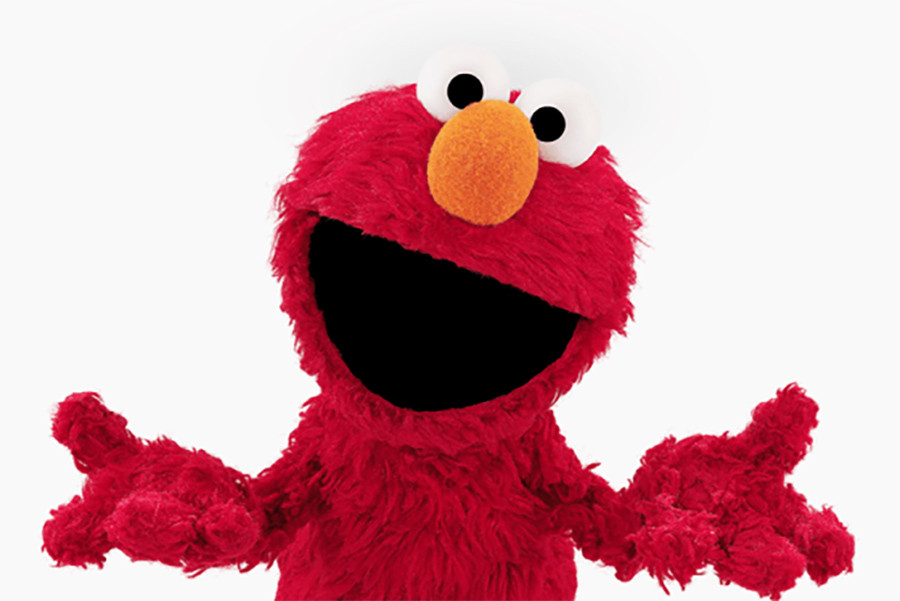
He certainly doesn’t look it, but Elmo is about to turn 40.
The Sesame Street mainstay — who refers to himself in the third person and is forever three-and-a-half years old — has spent most of his four decades entertaining children and appealing to adults of all ages. Since Elmo was added to the PBS series in 1985, he has carved quite a place for himself in modern entertainment. He became a popular, must-have toy in the 1990s; he also met with some of the biggest talk show hosts on TV, from Oprah to Rosie. And, in 2024, Elmo went viral on social media with a single question.
But Elmo had humble beginnings; for his first five years on the show, he was mostly a background player while the spotlight favored Big Bird and Oscar the Grouch. Soon, however, the character would take on a life on his own — spending the last 40 years as a popular and enduring mainstay of children’s entertainment. (Just don’t ask him what he thinks about his one-time nemesis, Rocco.) Elmo’s pop-culture ascent was not planned, but, it certainly was welcomed by those responsible for his creation.
"Before we develop characters, we look to see who is in the community and who would be a good character to deliver the curriculum we want to focus on," Dr. Rosemarie Truglio, Senior Vice President of Global Education, Sesame Workshop, tells the Television Academy. "With Elmo, we needed a younger character to represent the preschool child — and that's why Elmo was [designed to be] three and a half." Dr. Truglio adds that Elmo is red because that color wasn't a predominate one among Sesame's eclectic ensemble, and red is also a primary color for children.
November 18 marks Elmo’s 40th anniversary. On November 10, he and the rest of his Sesame Street pals make their broadcast premiere on Netflix. In honor of both, Dr. Truglio shared with us Elmo's origins, his evolution and how celebrities react to Sesame Street's most popular monster not named "Cookie."
Television Academy: Elmo famously started as a Sesame Street background character, so how did he evolve to become a main cast member?
Dr. Rosemarie Truglio: Sesame Street is a curriculum-driven show, and we're always looking at what the needs are for children and how best to tell those engaging, relevant stories. The characters are the focal point [of the show]. It has been documented that, when children select their favorite show and TV characters, those characters become their friends. We want children to see themselves in the story, so having Elmo be created with that three-and-a-half-year-old mindset in mind, it reflects the viewer. We're constantly evolving to make sure that we have characters telling stories that are relevant to what [modern] children are experiencing in their own life.
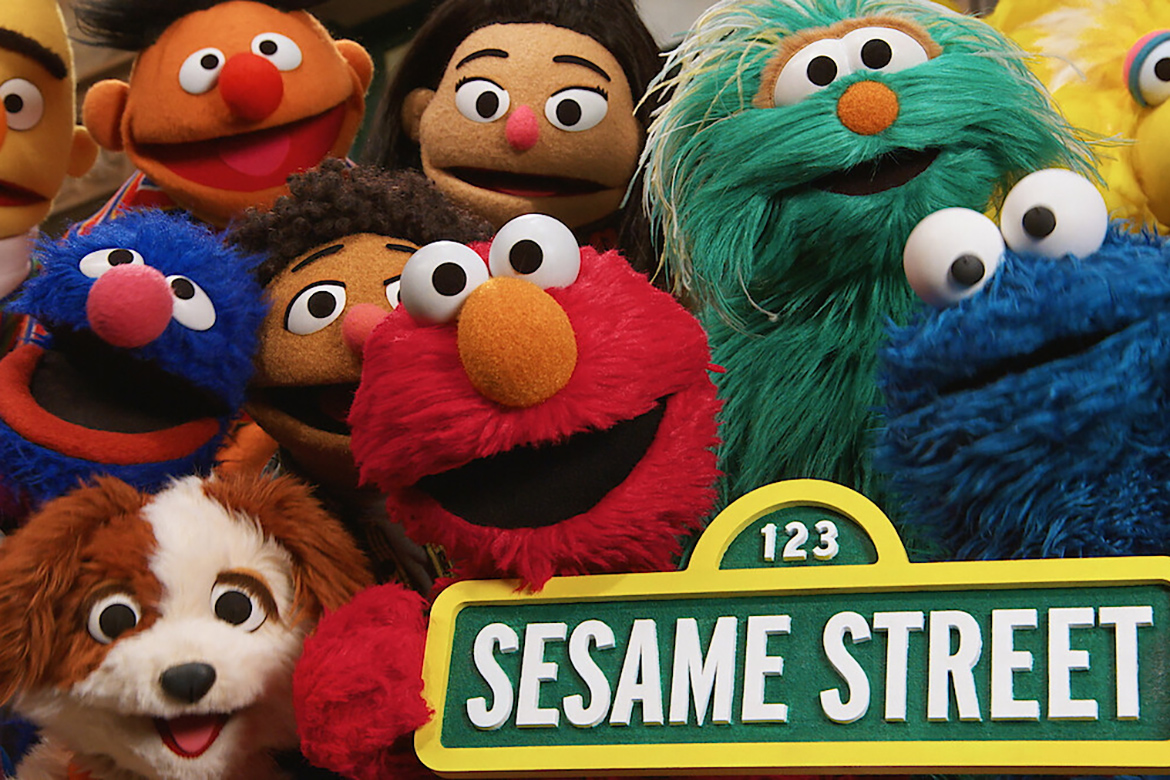 Photo credit: Netflix
Elmo always speaks of himself in the third person. How did that come about?
Once you know that the character is going to be a preschooler, then you want to get into the life and the speech patterns of a preschooler. And, usually, children younger than three have a hard time with pronouns. They use their name, so that's how that came about. Elmo is Elmo. He doesn't say "I" or "me." Speaking in third person became part of his personality. If he's three and a half, he should be speaking with his pronouns, but we say, "Well, he's on his own monster developmental trajectory."
Why do you think Elmo blew up the way he did in pop culture, and on modern social media?
It just happened. Back in the day, when we didn't have the constant presence of media, Sesame Street was appointment viewing. So, you co-viewed the series with friends and family. The show has always been written in a way that, yes, it's for children — but not at the exclusion of adults. When a parent sees the joy that their child has when they watch Elmo — or interact with an Elmo toy or book — they also have this love and appreciation for the character.
When Elmo tweeted [in January 2024], "How are you doing?’," it wasn't the kids who were talking to Elmo. It was all the adults, and then we saw the power of Elmo. They're talking to a three-year-old monster and they're telling them how they feel, they're sharing some pretty deep thoughts and reactions. No one expected that to happen, but we did it because we were focusing on emotional health.
Elmo has been known to appear on talk shows hosted by Ellen DeGeneres, Rosie O'Donnell and Oprah. Is there a different thinking in place when he is on those shows, about how to present Elmo to adults?
Elmo stays as Elmo. I'm the vice president, so all those scripts have to come through me and my staff because we want to make sure Elmo is staying his age. And he's not on a talk show — he is talking to Ellen as his friend. They're on a play date together, and he talks about his friends on Sesame Street because he's not on a show. We never break that.
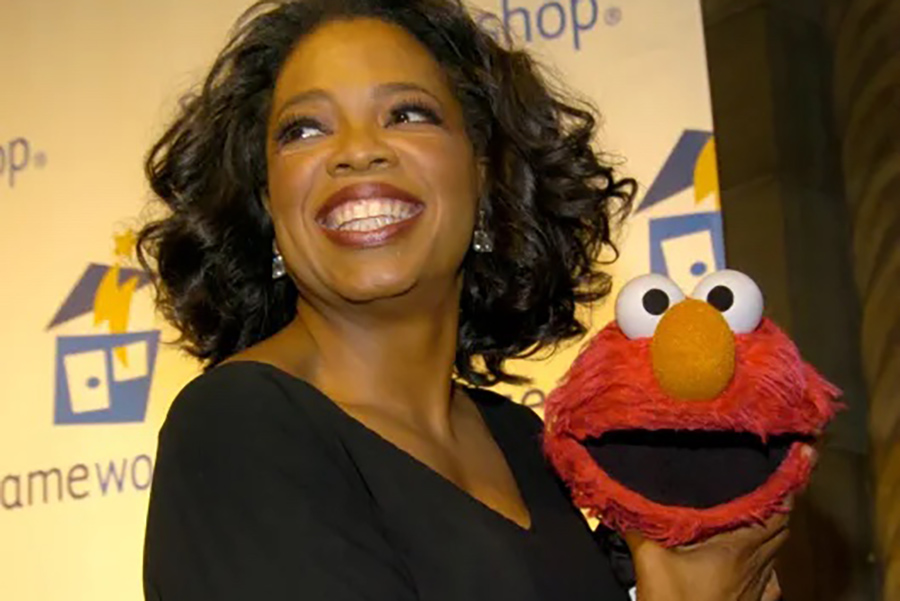 Oprah and Elmo together in 2006 / Photo credit: Invision/AP
Regarding the puppeteers, what's a consistent trait that they all need to have for when bringing Elmo to life?
It's a core group of puppeteers, and there's all this puppeteer training and workshops. They do know the characters.
Many of our puppeteers have been with us for decades — if there is going to be a change in the puppeteer, then the puppeteer has to match the character. We don't change the character because we have a new puppeteer. For example, with Big Bird, Caroll Spinney was the original puppeteer. He passed away [in 2019]. As he was getting older, the person who was interested in being Big Bird [Matt Vogel] had years and years of coaching and training. [Editor's note: Elmo’s current puppeteer is Ryan Dillon.]
Elmo's met so many famous people over the years. How do the celebrities typically react when meeting him?
They become a child, and they can't believe that they're meeting a rock star. When Robin Roberts (Good Morning, America) walked onto the set, she just was in awe. She had a constant smile; she could not believe that she was on Sesame Street and that she was talking to Elmo. When we do these live interviews, everyone comes out and wants a picture with Elmo or a video: "Please, can you just talk to my child and say hi?" They all become children. And that's the power of the character.
What's next for Elmo at 40?
As an educator, I really love the work that we're doing on emotional well-being. Elmo is happy and optimistic, but we all get angry and disappointed, so we need to see Elmo really being a preschooler and telling stories that little kids can relate to. When you're building a block tower and a ball accidentally hits it, you're not going to say, "Oh, that's okay. I'll just start over." That's not real. We're going to see Elmo engaged in real, big feelings.
This interview was edited for length and clarity.
Sesame Street is available on PBS and premieres November 10 on Netflix.


