Cris Abrego
I want to acknowledge that directly. The industry has gotten harder. Consolidation and technology have reshaped both how content is made and distributed, and how people build and sustain careers. There are fewer buyers, and the way decisions get made has shifted. What used to be a clear “yes” or “no” in a room is now often a layered process, with responsibility distributed across greenlight committees and data inputs. The result is longer timelines, less creative risk-taking and fewer opportunities for projects to break through. And that pressure is being felt across the board — not just by creatives, but by executives at all levels.
At the same time, while the structure of the business is changing, the level of spending in entertainment has not meaningfully declined. What has shifted is where that spending is concentrated. As both participants in and builders of this industry, we need to stay focused on that movement, because it is shaping what gets made, who gets access and what reaches audiences.
Too often, digital formats — short-form, creator-led, vertical — are framed as competitors to traditional television, but they are part of the same ecosystem and a signal of what moves audiences, who have little concern for our distinctions. Newer formats operate with a different kind of immediacy and authenticity, while long-form series deliver scale, depth and lasting cultural impact. The question is not whether one replaces the other but whether we are recognizing the full scope of what storytelling has become and where value is being created.
As chair of the Television Academy, part of my responsibility is to make sure our institution reflects that reality. Today the Emmys are awarded across three organizations: the Television Academy for what has traditionally been primetime television; the National Academy of Television Arts & Sciences for daytime, news and documentary, sports, and children’s and family; and the International Academy of Television Arts & Sciences for programming produced outside the United States and in non-English languages. That structure reflects how the industry has been historically organized — by format, by category and by geography — but not necessarily how audiences experience it today. As our business and our viewing habits continue to cross borders and categories without distinction, we are working across our organizations to better represent a global, interconnected medium.
None of this is simple, and none of it is without consequence. But moments like this demand clarity. We must be honest about what’s changing, disciplined about where we focus and intentional about how we move forward. If we do that, we are not just reacting to where this business is going but helping to shape it.
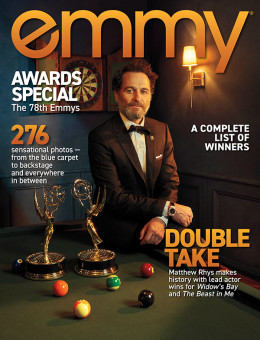
This chair letter originally appeared in emmy magazine, issue #6, 2026.