


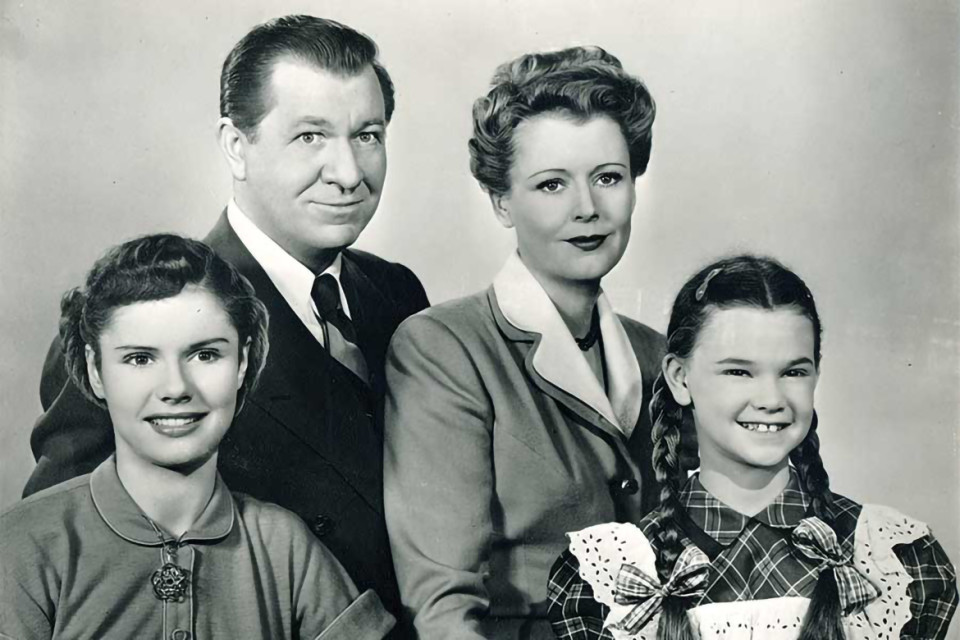


When Sheila Kuehl was cast as brainy Zelda Gilroy in The Many Loves of Dobie Gillis in 1959, the 18-year-old was already a seasoned actress.
Much like Zelda, Kuehl was a smart cookie — she’d skipped grades in school and graduated high school at 16.
The teen-centered sitcom proved to be a hit for CBS, running four seasons. and as Dobie Gillis neared its end, Kuehl — then 21 —was being touted as the star of a Zelda spinoff.
But that show never happened. After viewing the pilot, the network president deemed her “too butch” to be a star and pulled the plug. It was a devastating turn of events for the actress, who had gone to great lengths to hide the fact that she was a lesbian.
“When you’re in the closet, the worst thing that can possibly happen in this industry is getting outed,” Kuehl says, “because you will lose your career.”
Still, she persevered, appearing in more shows and reprising her Zelda character in 1988, in the TV movie Bring Me the Head of Dobie Gillis.
Kuehl then turned her focus to a new career in law and, later, politics. In 1994 she became the first openly homosexual member of the California State Legislature. In 2000 she was elected to the California State Senate. Last year she was elected to the Los Angeles County Board of Supervisors. Throughout, she has been a strong supporter of equal rights for the LGBT community
Kuehl was interviewed by Adrienne Faillace in 2013 for the Television Academy Foundation’s Archive of American Television. An edited excerpt of that discussion follows; to view the entire interview, go to TelevisionAcademy.com/archive.
Q: What were some of your early interests?
A: I loved to sing and dance, though I didn’t know how to [properly] do those things. I’d play piano on the windowsill because we didn’t have a piano. I also loved to read. I learned to read when I was three or four, so when I started school I skipped the first couple of grades. I was always quite a bit younger than everybody.
Q: Did you take acting classes as a child?
A: I took tap-dancing lessons, and the teacher’s wife taught the drama class. They talked us into taking both for half-price.
One night the drama class did a skit called “The Old Sleuth,” and I was the sleuth’s assistant. My job was to listen for clues — I didn’t have any lines. I was under a table listening to what everyone was saying.
Well, when you’re seven and you’re me, active listening requires making faces. The audience started to laugh, which I liked, so I made more faces and they laughed more. I ruined the entire skit.
Q: You got your start in TV in 1950 as the younger daughter on the ABC series The Trouble with Father. How did you get the role?
A: They were looking for a tomboy. I was full of personality, and [stars] Stu and June Erwin really liked me. I had to come back and come back and come back. I finally got the part.
My character would get in trouble because she wanted to help people or sometimes because she was just doing things that were unusual. Sometimes she would not tell the truth, but then the denouement would be how it was more important to tell the truth. She was in every show.
Q: After that, you appeared on The Bob Cummings Show …
A: In one of the later years of The Stu Erwin Show [as The Trouble with Father was also known], Dwayne Hickman came on as a guest star.
We had a number of guests playing the boyfriend of the older sister. James Dean was one. Martin Milner, who later did Route 66 , was another.
I had met Dwayne doing this show. Dwayne played Bob Cummings’s nephew and had suggested that maybe they would want to look at me for a part.
The director, Rod Amateau, later was the director of Dobie Gillis.
Q: How then were you cast as Zelda on Dobie Gillis?
A: It came right out of Bob Cummings. I got a call from my agent to go over to Fox Western, which doesn’t exist anymore. I went on the set, and Rod was directing and Dwayne was starring — I think it was the first or second episode, because the Zelda episode was the fourth show that they did in the series.
Dwayne said, “We all know you and we love you,” and Rod said, “Just go over and talk to Max.” Max Shulman, an award-winning novelist, was adapting his book for the series.
Q: How did that meeting go?
A: He was across the street in the administrative offices. They ushered me in, but I didn’t see anybody behind the desk. It was a huge desk with a huge chair, and finally I noticed a really short guy sitting there.
I said, “Mr. Shulman?” And he said, “What’s the first line that you say?” I said, “I love you?” And he said, “You’re hired.” I said, “I am?” He said, “Yeah. Go back and tell them you’re going to do the part.”
He told me a couple of weeks later, I think kiddingly, “Well, of course you were going to be hired. You were the only girl that came in that day who was shorter than I was.”
Q: How would you describe your character, Zelda Gilroy?
A: The smartest girl in the room, the city and probably the world. She understood everything. She could invent everything. She had a very strong will.
But remember, we hadn’t quite gotten into feminism yet. Even though she was the smartest girl and really the only girl on television at the time who was allowed to be brilliant — who didn’t have to play dumb — everything she wanted was also part of the gestalt of the show.
Dobie was chasing every girl that he wanted; Zelda was the only one chasing him. She wanted everything for Dobie. She wanted him to be class president. She wanted him to open his own store. And she would make it happen.
She would be his campaign consultant. She would be the business manager. She would be the power behind the throne.
Q: Did you do much publicity for the show?
A: A lot of the teen magazines wanted to talk to Dwayne. Because Zelda was not a heartthrob — she was predatory, actually — I didn’t get that many interviews.
When I finally made the cover of TV Guide , the title of the article was, “She’s No Marilyn Monroe.”
I felt kind of bad, because it seemed like whenever they would write about the show, Dobie was chasing nice-looking women and Zelda, who was not nice-looking, was chasing him.
After the article came out, Max said to me, “Look, if you were really ugly,the joke wouldn’t work. They would feel too bad about you. But the fact that you’re really nice-looking and funny, then the joke works.”
Q: What kind of response did you get from fans?
A: The most interesting thing is that in the early 1970s, when the women’s movement started, I started getting fan mail from women in their twenties saying, “Zelda was a major role model for me. She was the only woman allowed to be smart on television. It made me feel that if I was good at school — if they kidded me about it — it didn’t matter.”
I started feeling like Zelda had been responsible for a whole generation of smart, empowered women, and it was even more meaningful.
Q: In 1962, toward the end of the run, there was talk of a spinoff starring you as Zelda.
A: It was extremely exciting. I had never been a star of anything.
They didn’t treat me like a kid. I was 21. I was in every meeting with them. We developed a script, cast it and shot the show.
I was told CBS was pretty high on the pilot. I had to discontinue my contract with Dobie and sign a new contract, because if the pilot sold, you had to be under contract to do the series.
Q: Did the pilot go to series?
A: Well, in 1959 I had met and fallen in love with a woman. It was very secret.
For everybody on the set who wondered if I was dating, I made up boyfriends. I would pretend that I’d gone to New York and seen my boyfriend during the break — it was a lot of lying.
So I was in a relationship, not living with her — I was really too young and in the closet — but that was what my life was like.
When the pilot was finished, it was shown to the president of CBS, Jim Aubrey. Not long after we expected it was going to be picked up, I was on the set visiting and Rod Amateau asked if we could take a walk.
He said, “The pilot’s probably not going to go.” And I said, “Really? Why?” He said, “Well, Jim Aubrey looked at the pilot and he thought you were just a little too butch.”
Q: How did that make you feel?
A: I felt like someone had cracked an ice cube on my head and it was running down my whole body.
When you’re in the closet, the worst thing that can possibly happen in this industry is getting outed, because you will lose your career. Certainly in those days that was the case.
People think it’s all over now, but it’s not. It still can happen. But then, in the early ‘60s, it was very dangerous.
I didn’t know what to say, and I was in such shock, I don’t remember what I said. A couple of weeks later I drove up the coast and was thinking that I might not want to live anymore. Fortunately I didn’t act on it.
But you think all kinds of stuff: “My life is over. They’re going to find out. I won’t have any career.” As it turned out, I was kind of rescued by Rod and I did four episodes of Dobie Gillis that last year.
Q: What did you do when Dobie Gillis ended?
A: I was cast in Broadside, a spinoff from McHale’s Navy. It was about women in the navy during World War II.
It was one of those ensemble shows where you couldn’t tell if you were even going to have one or two scenes in the entire show. It was very different from being third-billed on Dobie Gillis .
Q: You made quite a career change in 1975, when you entered at Harvard Law School.
A: I didn’t know what to do when my acting career was over.
When Broadside was over, I was afraid everybody knew I was gay. I hadn’t told my parents — I still wasn’t telling anybody.
I thought, “Well, I’ll go back to UCLA.” I had been in the student council — I knew all about the student organizations. They hired me to run freshman orientation, and then in the office that advises student organizations — the Students for a Democratic Society, the Progressive Labor Party, the Women’s Liberation Front and the Black Student Union.
The kids started coming around my apartment late at night, talking about the revolution, about race, about politics. Finally they gave me some good advice: “Look, some of us are going to go to law school because as much as we are [talking] revolution, it’s the law that has to be changed. You’re smart. You ought to go to law school.”
Q: But during law school, you appeared in the 1978 reunion movie, Whatever Happened to Dobie Gillis?
A: Max [Shulman] had written it, but then they fired him because they thought, “Nobody’s going to believe this [story] — it’s too crazy.”
Everybody said, “No, this was what our show was like. When you do a reunion movie, you’re supposed to give fans what they’re looking for, have it be like [the original] show.”
They said, “No, it’s just too crazy.” They rewrote the script, and it had nothing really to do with our show. Dobie and Zelda were married; they had a kid. I had signed on to do the show, and when they change the script, you don’t have any choice.
Q: How did you feel about Dobie and Zelda being married?
A: I thought it was wonderful. I could see where it didn’t fit with our show, because the whole point of the show was the chase and the refusal — the conflict between them because she wanted him and he wanted anybody but her.
But it was inevitable. We knew it was inevitable from the first show.
Q: What did you do upon graduating law school?
A: I came back to Los Angeles, because that’s where I live.
I started working in a law firm that represented cities — like a city attorney for cities that don’t have their own city attorney.
Then I got a job with a firm that did municipal law. I finally ended up going into sole practice.
I also got involved in the domestic violence movement, which was just starting at that time.
I was asked to teach a class at USC in gender and law, then I taught at UCLA. Finally I decided, well, I’ll be a law professor. I was hired at Loyola Law School as an associate professor.
Q: In the early ’90s you discussed your sexuality on Entertainment Tonight. What prompted that?
A: I was out already. In 1982, when I was working at UCLA, I met and fell in love with a woman named Torie Osborn — Torie would become the executive director of the Los Angeles Gay and Lesbian Center.
So I came out to my parents, I came out to my sister — you do it one at a time — it’s actually quite exhausting for everybody.
[The ET appearance had to do with] Dick Sargent, who had appeared on Broadside and then on Bewitched, and who was being threatened with being outed. There were a number of publications in the gay community that were always upset at people who didn’t come out, so they would threaten to out people.
Dick was beside himself. He called and asked me what I thought he should do, because I was quite successfully out of the closet. I said, “You have to really come out.” He said, “I can’t do that. Will you do it with me?” I said, “Of course. I’ve done everything but take a sign on Sunset Boulevard.”
Q: And in 1994 you were elected to the California State Assembly….
A: It was scary to run for the Assembly. I knew that I was qualified and I had worked on a lot of issues, but no gay or lesbian person had ever won even a primary. This was big.
The thing that made it easy was my Dobie character, Zelda Gilroy. Everybody already liked Zelda — they liked her a lot.
Q: How have things changed since you first ran for office?
A: The theory that we have in the LGBT community is that everybody ought to come out if they can. Once you realize your third-grade teacher, the nurse who saved your life in the hospital and your aunt are all lesbians, you change your mind about stuff. We’ve seen it happening even in Congress.
Q: How do you assess your legacy so far?
A: I used to say, “I am a first up here in Sacramento….” Everyone thought I was going to say, “I’m the first gay person.” Instead I would say, “I’m the first sitcom actress who was ever elected.”
I think my legacy flows through having done a character that people still remember, who showed that girls could be smart. And then being a smart girl and going to Harvard, using that degree for the women’s movement, for the LGBT movement, and then in government to try to do what was right and fair.
I hope my legacy would be as a role model for the smart girl, for the girl who then does something with it by trying to make life better for people who are not as fortunate. If that’s my legacy, I’d be happy.
Photos: Courtesy Sheila Kuehl


