

When the Television Academy presents an Inclusion Summit, the program doesn’t only explore how Academy members can tell stories that authentically illuminate the principles of diversity, equity, inclusion and accessibility (DEIA), or how the industry can incorporate those principles in its hiring and other practices. The concept of “inclusion” extends to the Academy members themselves, be they part of the LGBTQ community, an ethnic or religious minority, of a senior age — or, sometimes, all of those identifiers at once.
Such was the case at the Academy’s Summer Inclusion Summit, held June 23 at the Saban Media Center at Academy headquarters in the NoHo Arts District. Spotlighted was the Academy’s recently launched Affinity Program, comprising 12 groups for members of historically underserved identities. Many of the program leaders spoke about the progress and challenges occurring within their respective Affinity Groups. Also attending were DEIA specialists from networks and studios, partners from organizations promoting narrative change and members of the Academy’s Diversity Committee.
Producer-writer-director-consultant Jesse Turk returned as facilitator of the summit, emphasizing DEIA in the context of creativity, community and collaboration. Turk is the founder of Gestus, a culture-growth consulting practice for creative and innovative companies that takes a holistic, people-first approach to organizational strategies, communications, content creation and other work elements.
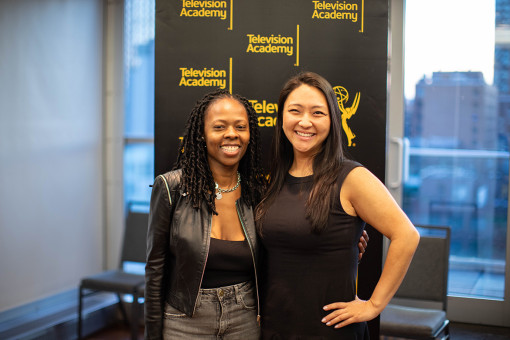
Alex Schmider, GLAAD, Brandy Curry, Chief of Staff, Television Academy and Dennis St. Rose, Creative Artists Agency, attend the 2026 Inclusion Summit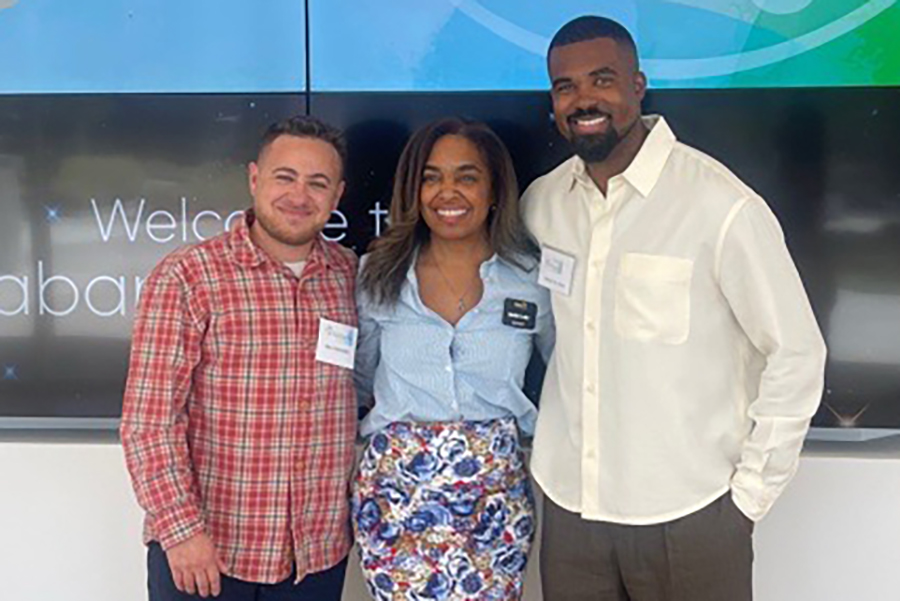
Academy president and CEO Maury McIntyre welcomed the attendees. “Despite changes and challenges across the industry, these summits have become a key touchpoint for the Academy’s DEIA efforts, and we’re happy you’re here to help us learn and grow as an industry,” he said. “You continue to make television a better place to create for more types of people — and the Academy continues to remain committed to supporting the good work you all do — guiding content towards more inclusive authenticity.”
Turk then noted that the Academy has been working with Making Space, an accessibility consultant that helps people with disabilities find employment, increases disability representation in media and teams with companies to bolster physical, digital and all other kinds of accessibility. The organization conducted a thorough accessibility audit of the Academy — even attending an FYC event to get a sense of what occurs there — issued its report and held staff training in areas for improvement; it will also be providing a customized checklist for each department and to Academy partners.
And via the Academy’s partnership with Gestus, “We're also revising the culture strategy that we've been working on, to reflect the current realities of the world of the industry, to make sure that it feels relevant and to find different leverage opportunities within this kind of continuously changing environment, while still maintaining a clear commitment to DEIA,” Turk said. “That has been something evergreen for the Academy since we started doing this work: being really, really clear about where we stand, regardless of what's happening in the broader culture, making sure that this organization is very clear that this is still important to us.”
Next up: A conversation about how collaboration with consulting organizations leads to better storytelling, between Dennis St. Rose of summit presenting partner Full Story Initiative and Alex Schmider, senior director of entertainment at GLAAD, the nation's leading LGBTQ advocacy organization.
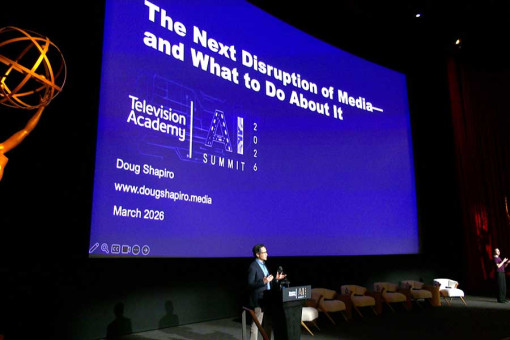
Gestus founder Jesse Turk and an ASL Interpreter facilitate the Inclusion Summit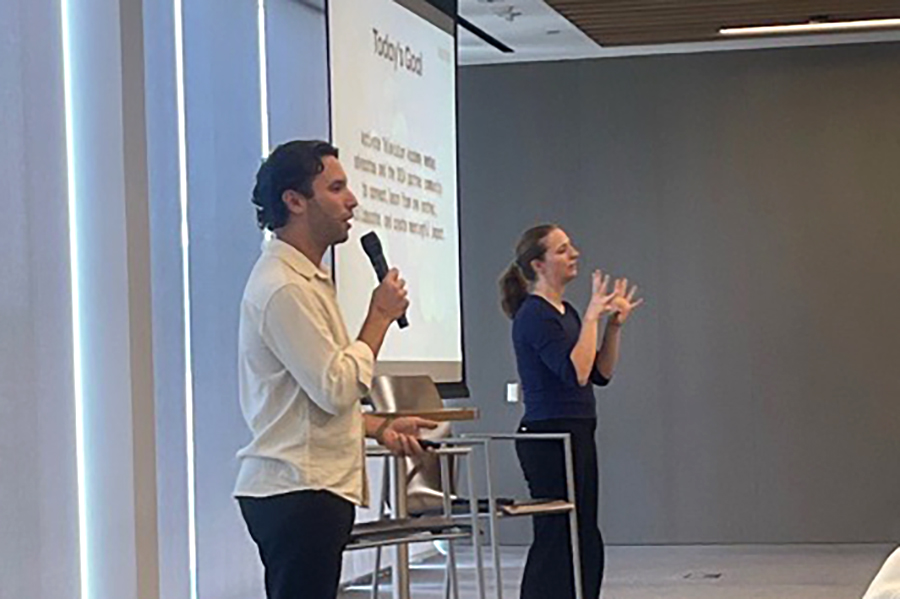
St. Rose is a Community & Impact executive at the CAA Foundation, Creative Artists Agency’s philanthropic division, where he leads CAA’s narrative-change efforts. Full Story provides a collection of resources for storytellers to help them create more authentic and inclusive works. And it has recently relaunched toolkits for topics including climate and environment, Alzheimer’s and all other dementia, immigration, anti-sexual violence, nuclear weapons and various marginalized communities. Schmider leads much of GLAAD’s consulting and advising on content for television, films and other media.
“We know that by working with these organizations, the stories that we see on screen will actually reflect what audiences want to see. We know that stories have always shaped how we understand each other,” St. Rose said. A poll showed that Americans are not as divided on hot-button issues as one might think; their private opinions differ from public perceptions. “So, stories have the opportunity to actually show the nuances that need to be explored and show the reality that exists out there.”
There’s a misconception among creators that when consulting with GLAAD or other entities, the organization wants to sanitize and stifle creativity, Schmider noted, when in fact, the best kind of stories will have the cultural impact both sides hope for.
“I think what we're seeing across television and film, generally speaking, is a want to see the best in humanity, and the best in humanity can also be in the most extreme of emotional experiences, and that is something that people are desiring of,” he said. “Often, what's happened when representation or DEI is framed in a certain way, it's identity first, story second. And I think what a lot of people are craving and expressing they want is to see inclusion baked into these stories, because the more entertaining and compelling they are, the more emotional, empathetic reaction they can elicit from audiences.” One study showed that films incorporating authentic inclusion and representation scored significantly better at the box office, for instance.
Working with vetted resource organizations, which are there to support the project and are familiar with the production ecosystem and timelines, not only makes for better storytelling and audience engagement but better industry reception as well. St. Rose and Schmider discussed the 2025 Peacock series Devil in Disguise: John Wayne Gacy, whose creator–executive producer, Full Story client Patrick Macmanus, had begun consulting with GLAAD early on.
“Patrick Macmanus, from the very beginning, knew that there were a lot of sensitivities to telling this story about John Wayne Gacy and his victims, even though many of them were not young queer men,” Schmider related. “Part of the story and the narrative of why he wasn't caught was because of systemic homophobia. We were brought in before the scripts were written; we were closely working with the team on writing those scripts, and I should also note that the writers’ room was very heavily queer. It wasn't as if the writers’ room did not reflect the lived experience of the protagonists and the characters in the series, but what GLAAD was brought in to do was make sure those writers in that room felt as safe and comfortable to be as creative as they wanted to be.
“Then GLAAD was there to review the scripts, identify any places where maybe there was bias or a blind spot the writers hadn't considered and provide that back as a framework for them to then brainstorm about. What resulted is that Devil in Disguise was critically acclaimed, commercially acclaimed and audiences truly resonated with it. It's an example of the kind of collaborations and partnerships that I'm hopeful more of these organizations — alongside creators — can do together.”
The program then shifted to the Affinity Program, which Academy members had been requesting and has been thriving with almost 5,100 program participations, meaning the combined number of members in each of the 12 groups; people can join more than one group.
“There are four pillars that the entire program is based on: community, culture, career support and change,” Turk described. “One of the main things we wanted to make sure to do is have any goals, any events, any initiatives connect to at least one of these pillars, if not more than one. So, the overall mission of this program is to uplift and connect members from historically underserved identities, and the affinity groups are meant to be spaces for members who share identities or are allies to connect, engage, learn and catalyze progress within the television industry.
“The program aims to support the overarching Television Academy mission and root its efforts in the Academy's broader goals of recognition, inclusion and just making a lasting impact on the industry.”
The 12 Affinity Groups are: AAPI; Black; D/A/N – Disability/Accessibility/Neurodiversity; Indigenous/Native American; Jewish; Latinidad; LGBTQIA+; MEAM – Middle Eastern/Arab/Muslim; Parents & Primary Caregivers; Veterans/Spouses of Veterans; Women; and 65 Years+.
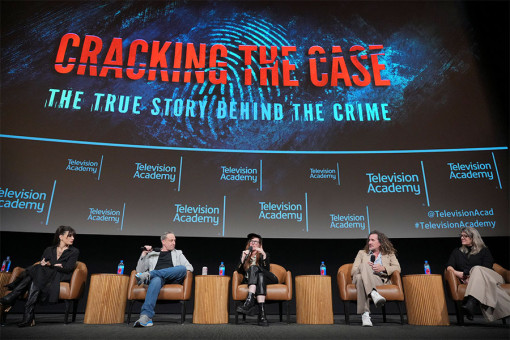
Recording artist-host and CEO of RAMPD, Lachi, answers an attendee's question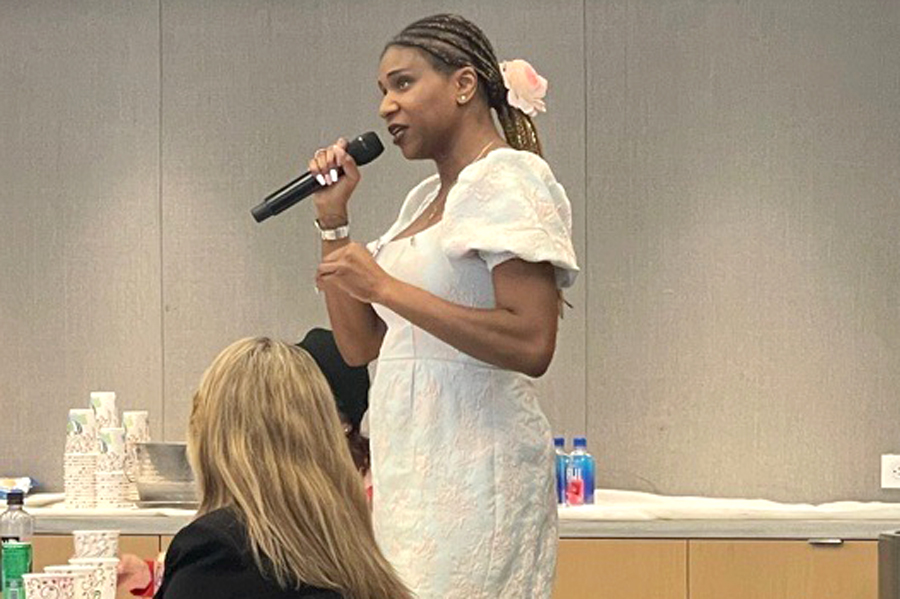
Hundreds of Academy members applied to be group leaders, of whom two were chosen for each group and then underwent leadership training. The Affinity Program launched late last year, with more than 1,000 initial signups. All the groups have held in-person and/or digital events, including mixers, happy hours, speaker programs, meetings with members of guilds and other organizations, speed networking, discussions about representation, theater nights, concerts and holiday celebrations.
While each group is creating a charter to state its mission and approach to operation, there’s no mandate to run the groups in one particular way. Intersectionality — joining more than one group according to one’s personal identification — is encouraged, as is collaboration among the groups. Members of the D/A/N and 65 Years+ groups shared a fun night at a saloon, and the Women and Veterans groups will be teaming up for an event. Many of the groups have had online meetings with Academy members who live in other states.
The group leaders present gave updates, with Turk filling in for those who couldn’t attend. After a break, Summit attendees moved from their own tables to join those at others, to discuss their Affinity Group experiences and wishes. When people at each table were then asked to share their conversations with the room, a number of resource organizations were noted, while a common challenge was the means of communicating between group members, as LinkedIn is the designated method rather than email.
The summit’s last speaker was Hala V. Furst, director of strategic partnerships at summit presenting partner PERIL, the acronym for the Polarization & Extremism Research & Innovation Lab at American University’s School of Public Affairs in Washington, D.C. Among other endeavors, PERIL creates digital violence-prevention curricula for students in grades K through 5 that teach critical thinking skills, such as how to recognize manipulation tactics and misinformation, and social emotional learning, so that kids realize their online behaviors and choices also affect how their classmates feel.
Furst made an impassioned plea to the television industry to, as she said, “help prevent hate-fueled violence through telling bigger, stronger stories.” Research shows that most people who engage in the harm and violence resulting from polarization and violent extremism “are in pain, and self-medicating on hate and violent ideology. That hate leads to violence against women, people of color, LGBTQIA+ people, Jewish people, Muslim people, immigrants and political, social and corporate leaders; all of them can become ‘the other,’ whose very existence is a threat to me or to my people, the reason my life is not going the way that I want it to.
“So, at PERIL, we work to decrease the likelihood of the very racism, sexism and hyper-polarization that is the reason diversity, equity, inclusion and accessibility professionals like yourselves need to exist,” she explained. “Our research has led us to understand that — in addition to data, logic, theory and scientific methods — preventing this kind of harm and violence is fundamentally a process of creating the emotional antibodies to hate and planting the emotional seeds of trust, love, inclusion, curiosity and hope. What does that better than stories that entertain and challenge?”
After telling a true-life story about a student who is bullied and develops thoughts of violence but whose potentially tragic actions are averted by an intervention from a caring student and counselor concerned about his behavior, Furst asked, “Can we tell realistic, compelling, fuller stories about violence prevention and avoid unintentionally telling our audiences that this violence is inevitable, ubiquitous and random, when it's not? I believe that with your creativity and support, and PERIL’s research and interventions, we can.”
The opportunity for attendees to network followed. Everyone was invited to a mixer cohosted by the AAPI Affinity Group and the Pasifika Entertainment Advancement Komiti (PEAK), which took place in the Saban Media Center immediately after the summit’s conclusion.
The next Inclusion Summit is scheduled for December 3.