











Is it the singer or the songwriting?
While a number of reality shows focus on finding the perfect performer, NBC’s Songland focuses on the oft-overlooked songwriter.
The new show is the brainchild of musician/producer Dave Stewart, Emmy Award-winning producer Audrey Morrisey, director Ivan Dudysnky, and executive produced by The Voice’s and Maroon 5’s Adam Levine.
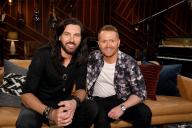
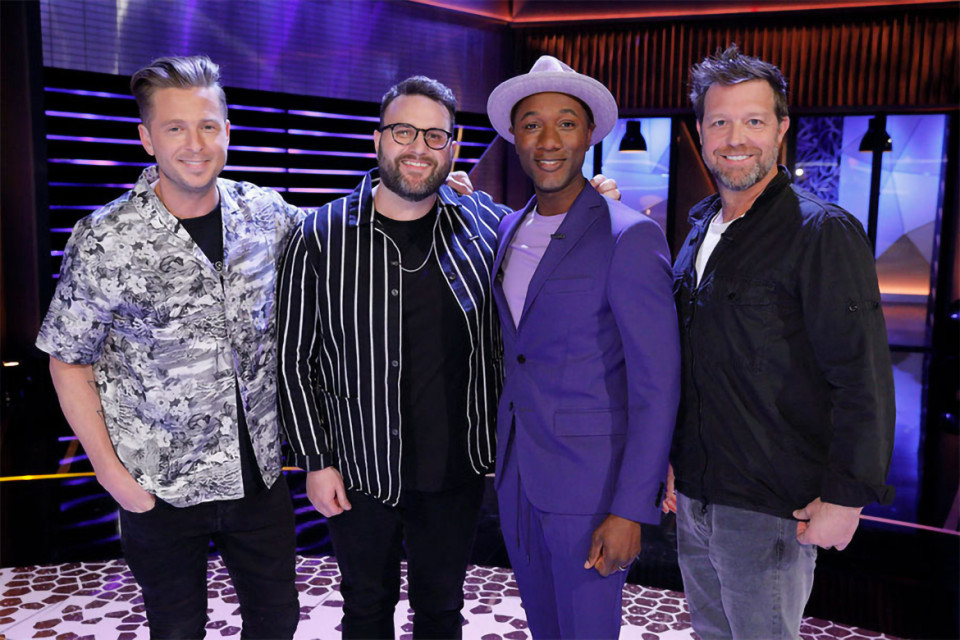
The panel judging the contestants are songwriter Shane McAnally, songwriter/producer Ester Dean, and singer/award-winning producer Ryan Teddy. The show will feature guest artists like John Legend, the Jonas Brothers, will.i.am, and Meghan Trainor.
As a member of the Eurythmics, winner of numerous awards for songwriting and production, and as a producer for a number of legendary musicians like Mick Jagger, Bryan Ferry, Ringo Starr, Tom Petty, and Joss Stone, Stewart’s presence and decades of experience lends a strong legitimacy to Songland.
He views the show as opportunity for audiences to see and experience what he does when he’s presented a song. “People could see some of that [songwriting] magic that I see just about every day of my life,” said Stewart.
Show contestants present a song to the panel of judges, then may be provided the opportunity to further work on their songs with guest performers. The guest performers decide if they will record and release the contestant’s song.
“We have all sorts of different kinds of people coming on,” said Stewart. “I knew that would happen because there are songwriters all over the place - in their mother's cupboard, in their bedroom with a laptop or with their acoustic guitar. And we got everything from a busker who’s spent 10 years busking in the streets, to a kid who knew how to program and record himself, a kind of technology guy who is also was a great songwriter.”
What was the genesis of the show?
Around 2012 or 2013, I came up with the idea of a panel of producers with songwriters as the contestants. For years, I’ve worked with artists and songwriters, and I know their stories are always interesting.
Usually songwriters tend lean towards artistry and being artists rather than people who are singing other people's songs and in a Karaoke style - excluding Frank Sinatra and people like that. I know their stories are always interesting and they tend to have something they want to say that’s very personal. It’s a journey. It’s a story. But I also realized how tough it was for songwriters to get anywhere.
It's bad enough actually for new artists to get their careers underway because of the actual overload of content; to get heard in a sea of so much stuff. For a songwriter, it’s even further adrift. Lots of amazing songs were written by people who weren’t artists. You know, that didn't go on to be artists. They wrote songs for other people.
For example, Etta James singing “At Last,” a lot of people think, “oh, that's an Etta James song.” But it's written by Mack Gordon and Harry Warren, and she made it her own. These songs were interpreted by great artists. So that was another interesting aspect of [the show].
I met Audrey Morrissey and we got on like a house on fire. And she not only loved my idea, but she also knew how to add to it and take it to another level with Ivan, her husband. Audrey had already produced about 140 shows of The Voice and various things. She also understood the core of it, which is the songwriter comes on and sings their song. They present it the way want to present it.
Even if they don't get to be the songwriter [whose song] that the artist wants to record and put out, [the songwriter has] been seen by millions of people singing their own song.
How is this show different?
It has the benefits of multiple wins. You get on the show and you’ve already won because the whole audience just saw you sing your song untouched.
And then if you go to the next level, where you’re going into the studio with Shane, Ryan, or Esther, and work with them to get the song molded for the star who’s on the show – either Macklemore, John Legend, or whoever it is – [the songwriter] gets the experience of understanding how in a big studio you can mix things in all different ways.
Probably the most extreme example for me is “Sweet Dreams (Are Made of This)” by Eurythmics, and then Marilyn Manson’s version.
How do you examine the process of songwriting? How do you get a songwriter to divorce themselves from the song as its being changed, given that it’s generally a personal statement and it’s the one song they feel best represents them?
Well, it's interesting because sometimes a songwriter would come on the show, and the panel or the guest star would say, “You know what? That’s one song you should sing and record yourself.” A lot of the time it's about arrangement.
For instance, Carole King might sing on piano “(You Make Me Feel) Like a Natural Woman.” But then, suddenly Aretha Franklin's recording it, the artist sees the songs remains the same, it's just now that the arrangement has changed.
And sometimes there's some resistance and you see that in the studio. They’ll say, “But I wanted it to be like this and like that.” And then there might be a discussion, but you came on the show because you wanted John Legend to sing your song. So, there's always that going on. You see that all the time as a record producer, as well in the studio with people and their own songs.
It's funny because a lot of songwriters really want to hear the truth from people. I remember Jimmy Iovine in telling me a story now about John Lennon in the studio. A lot of huge artists would have yes-men around them all the time. “Everything's brilliant. That's great.” Yet, when they're in the Beatles, there'd be three others or Ringo saying, “No, I don't f*cking like it.”
A simple thing like Jimmy saying, “I like it, but I can’t follow this bit.” [The songwriter wants] to hear that. For a songwriter, it’s honing a craft like a carpenter. A master carpenter can come around and say they should’ve made it a dovetail joint because the table’s going to fall down in a few years. It’s putting the building blocks in place.
Some people have come on the show and they sing a song that’s pretty mind-blowing. We had a few come on and the whole panel just goes, “Well, that's just bloody amazing. We wouldn't change it. So, there's nothing you would do, really. You should just do that. And now, a few million people have just seen you do it.” That’s good.
When you started off songwriting and collaborating with other artists, was there a single piece of advice that you remember getting?
The biggest advice I got was from a German record producer [Conny Plank] who worked with The Can, Kraftwerk, Devo, and a lot of underground artists. He built his own studio. He basically told me that there are no rules. Just before that, I always thought I had to stick to the rules.
Like, you shouldn't let it get distortion on the bass drum or a song can’t stop on a weird bridge section. But he just said, “Listen, there are no rules. It's just whatever makes you get high on it or get goosebumps. That’s it.”
That's when I went back to London, decided I had to get some equipment, so Annie [Lennox] could record [an album] ourselves. That’s how I ended up with an 8-track tape recorder. That’s how we made the start of the Sweet Dreams (Are Made of This) album – with no rules.
Because songwriting covers such a diverse spectrum of genres, did you develop an affinity for one while producing the show? Is there one with which you’re less comfortable?
It’s a good thing I have pretty eclectic taste. The show really has a cross-section [of genres]. I’m a bit of an odd musical character because the last 10 years I'd been going to Nashville and recorded duets with Alison Krauss and working with loads of classic country musicians. I’m also known for being at the forefront of electronic movement in the early eighties.
And I've worked everybody from Bryan Ferry to Mick Jagger to Gwen Stefani. In a way, I'm a bit sort of musical chameleon. For every genre that I’ve came up on, there’s been something about it that I liked.
I think the time we're coming into now, even though people will probably not understand what I'm saying, is in some ways is becoming as free as it was in the 1960s. In the ‘60s, record label bosses didn’t know what the hell was going on, but [said], “The kids might like it, so let’s put it out.”
We’re coming back to that period now where you have no idea what kind of music somebody is going to come up with in their bedroom in Cleveland, Ohio, and if it’s going to be phenomenally successful. And that goes right across all the genres: Hip-hop, rap music, rock, pop. It’s like that thing that German producer said, “There are no rules.”
What makes a good song is subjective. What’s the judging process like for the show?
It’s not really “judging” like in the other shows where the audience screams, or the judges give it points or hit red buttons, or whatever. The songwriter comes on, sings their song, and sitting there is the panel and Kelsea Ballerini or Aloe Blacc or [another guest].
And they're interested if Aloe Blacc or Kelsea Ballerini, or whoever it may be, would actually record [their song] because they know that would be in a pretty amazing thing. Ninety-nine percent of them that come onto the show have not had anything recorded by anybody or really gone anywhere with their songwriting because they didn't know how to get to anybody.
Instead of judging, the panel talk about the song and start playing around with it in front of [the songwriter]. So does the guest artist. And there’s a band there. This all happens within 30 or 45 seconds. You’ll see a part of the song transforming, like the bridge will become the chorus, or this becomes that. It’s not really judgment.
For instance, Bryan Ferry singing “Jealous Guy” is completely different than John Lennon singing it. The artist who is there – a John Legend, for example – is actually joining in. He has a keyboard and says, “Actually, if I was going to sing this, I would have to alter this part a little bit. I would change the key, and maybe repeat this bit because I like it more than this part.”
But they never change the essence of the song.
Sometimes, the lyrics change a bit because somebody like Shane McAnally, who’s written about 36 number-one country hits, will pick up on something. And when he points it out, it’s quite interesting. Like a book editor, he’ll say, “You don’t need to say that again, because you’re just saying it in a different way here. Why not open it up?”
This sounds like a really technical show to watch. But when you’re watching it, you are on the edge of your seat because you're watching something transform in front of your eyes. Then, you're thinking, “Oh my God, now it sounds like this could be the one that this person records.”
And then [the contestands] go away separately into the studio and you see them working a bit. Then they come back, and they play the song again. Sometimes, the arrangement is transformed so drastically. Some of [the contestants enter the competition] with a tape that they’ve made, and it’s full of 20 different overdubs and instruments.
When they come back into the studio to play the song again, the producer has taken it down one acoustic guitar and a cello, and it sounds loads better.
This sounds similar to the old Wrecking Crew sessions.
Exactly it. Can you imagine sitting in some of those rooms? Those guys would sit [in the studio] and do three or four songs in a day that were all hits. And you know, they’d just change a bassline or a drum beat or a guitar riff, and suddenly the whole band changes it, the whole [song] turns around.
What’s the best piece of advice you could give to an aspiring songwriter or to someone struggling with their songwriting?
I think there's no better test when you've written a song than to play it to somebody. That's one thing I learned very early on when I was learning the guitar, listening to records, and trying to learn how to play “Suzanne” by Leonard Cohen or a Bob Dylan song or whatever. I thought, “Oh, I think I'll try and write a song.”
I wrote with my friend, who was a painter. But, we don't know if the song’s any good. We think it is. This is a classic artist’s [thinking]: “Hey, this is really great. Oh, perhaps it's really terrible. Oh, I'm feeling really good about it now, but maybe people would hate it.”
There's only one thing to do. Just go out and play it. It doesn’t matter if it's for six people in a bar or a living room full of students. Whatever it is, sing or play that song, whether it's a tape you made or on an acoustic guitar. Otherwise, you've got no perspective.
Songland airs Tuesday nights on NBC.


