

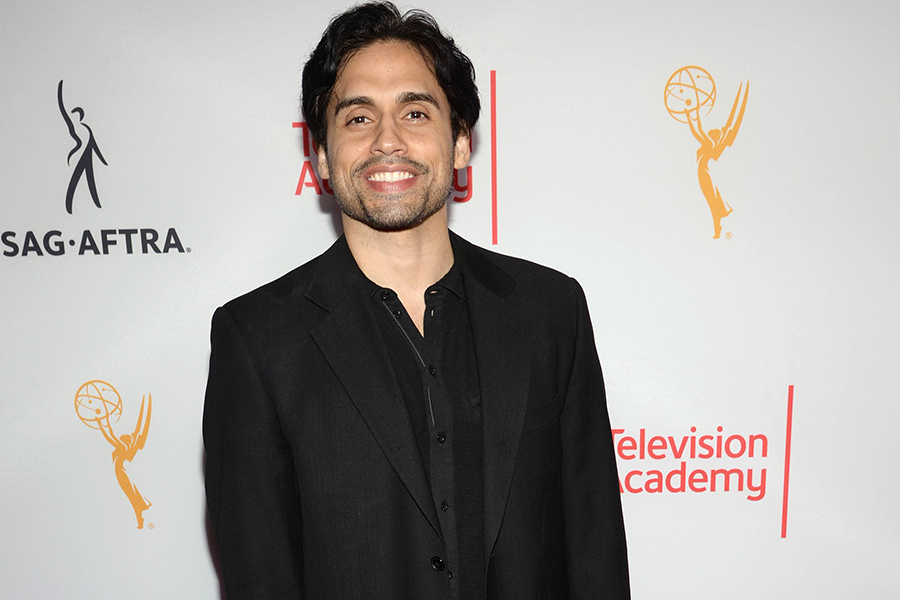
A lot has changed since 2012, when actor-writer-producer Danny Arroyo produced and hosted a panel for the TV Academy entitled “Hola! The Phenomenal Growth of Latino Television.” With execs from the country’s top Latino TV stations in attendance, the sold-out event addressed the underrepresentation of Latinos and their stories on screen.
At the time, Latinos made up 17% of the American population yet remained locked into stereotypical depictions on TV, or locked out altogether. According to a recent Columbia University study, 24.2% of all Latino TV actors played criminals from 2012–13. And in 2011 and 2012, the number of Latinos responsible for writing network TV pilots was zero.
More than a decade later, things have changed while also seemingly staying the same in some key regards. Latinos now make up more than 19% of the population, and drive 24% of streaming subscriptions, according to research from the Latino Donor Collaborative.
Despite that, Latinos remain the most underrepresented group on TV. While there has been some progress, Latinos appeared in less than 10% of lead roles in scripted TV and films in 2024, and directed only 8% of streaming scripted episodes. Of course, this chasm is happening at a time when Latinos in Los Angeles have been facing extreme challenges; the Television Academy reconnected with Arroyo in the summer of 2025, as ICE raids across the city were leaving many in the community shocked, scared and angry.
Just weeks after Arroyo took the step of submitting himself for Emmy consideration (Outstanding Guest Actor in a Drama Series, Wild West Chronicles) he shared with us what, in his experience, has changed since that 2012 panel, as well as his hopes for the industry’s future.
Television Academy: I think the best way to start this is to just ask how are you feeling as a Latino resident of Los Angeles right now?
Danny Arroyo: I feel heartbroken. I don't know how else to describe it. The other day, I was meeting with a director friend of mine at a restaurant, and a gentleman came up to my table. He asked me if I could buy him some food. Usually, you get that if you’re outside, in your car –– stuff like that. But never in a restaurant where we’re actually eating. He was of Mexican descent, and he didn’t look like he had much. I gave him some food; he got on his bike and rode off. I said, “Wow, that's a man who probably is scared to go to work. People are afraid to just live their lives. I’m actually heartbroken.” Because after all we went through with the Palisades fires, it just seems like things keep piling on.
It’s disheartening. It’s also linked, somewhat, to our reason for talking today: the state of Latino representation on TV. What do you think has changed in the years since you hosted that panel in 2012?
When we did that panel in 2012, I was offered the opportunity to produce it, write out the content and host it. They gave me the authority to make these calls to all the big heads of the Latino TV stations: Telemundo, the Univisions, Estrella TV. It was a great panel, and I felt privileged to have been given that responsibility. You saw how Latino television was growing, and the panel was showing how Latinos have a voice.
Over the years, our place in the entertainment world has improved. I've seen it get better. I've seen, for example, my auditions and my bookings and the roles I’m offered improve. If I wasn't the janitor, I was the gangster. If I wasn't a gangster, I was a Latin lover.
I even had one casting director –– I read for some gangster role with the shaved head, tattoos, the whole stereotype –– and she said to me — in the kindest way, but still ignorant, because she didn’t know better — “Danny, you're more of a Disney Latin than the Latins that we see here.”
Data shows that Latino representation is now actually worse than it was years ago. But, if I am understanding you correctly, while the number of roles hasn’t improved, the types of roles have improved in a way that’s not as pigeonholed as it used to be.
That is the perfect way to look at it. They saw us as these limited things. Now, however, I've been playing doctors, lawyers, everyday characters. The irony is that as our place in the entertainment world has improved — and there's still room for improvement — the real world has stepped backward.
What about behind the camera? How are you, your friends and your colleagues thinking about roles and positions behind the camera where there is perhaps more room for inclusion?
You couldn't have hit it more on the nose, because I've been in those rooms, and it's like, "Where's the representation here?" As a community, it's imperative for us to create our own content. We have to get together as a group and just tell our stories. We may have to jump through more hoops in order to get it seen, but — at least in numbers — we're stronger together than we are individually. We're not alone in this struggle to express who we are as a culture and as a people.
What are some things you're seeing now that make you feel hopeful, excited, proud, happy? Ramón Rodriguez is killing it on Will Trent.
I was just at an event with him a couple weeks back. It makes me smile to see excellence happening in great work and in great storytelling.
Also, look at John Leguizamo — how do you come out of his show [American Historia: The Untold Story of Latinos] and not feel inspired? How do you not realize that our country is this huge melting pot, with this great mix of cultures and energy? The great thing about being a member of the TV Academy is that I built such a large contingent of friends here, and we support each other. They see you working, and they see you hustling. They see you doing the work, taking the classes, taking the meetings. I feel very fortunate to be a part of that circle. We really look out for one another.
You were in Wild West Chronicles (INSP), which brings to life historical stories about the frontier during the late 1800s. What made that special for you?
[The show] takes real-life stories of cowboys from back in the day. I got to play a character named Tiburcio Vásquez, who was this charming, charismatic bandit from the late 1800s. He was a guy who’d be charming a beautiful woman in the store while [simultaneously] stealing her purse. It was really cool to be able to play that role. There was a responsibility to play him as accurately as possible, based on the research I did. I got to ride a horse. I wore authentic cowboy gear. I was able to submit myself for Emmy consideration. And there it is on the ballot; there I am alongside all these heavy hitters. And it's humbling, because these are people that I look up to, and then there I am with them, with a legit shot at people seeing my work.
Can you talk a bit about self-submission versus being submitted? What does it entail to submit yourself versus having the studio or network do it for you?
I've been a member of the Academy since 2007. Most people assume that the studios will do it for you, or your agent or manager. If it's a big show and a big name, they may have the studios do it. But the majority of the time, if you don't submit yourself, you're not going to be in the game at all. They’ll send you a link on how to submit, and it's pretty standard; a photo, a clip of yourself on the show — one preferably edited down to just your scene. Then you submit it and pay the fees. But if you are a member of the Television Academy, it's free to submit.
I can't tell you how many people miss out because they’re waiting for someone to do it for them. I can’t tell you how many people I've coached to help them learn how to self-submit. So I feel very proud about that. It's great to see friends up there right now. For some of them, it's their first time on the ballot — their first time to be in this grand thing called the Emmys.
Looking ahead, what advice or suggestions do you have for others to keep hope and to maintain the pressure for change?
I am telling people, “Hey, if you want to create something, let's do it.” I have the resources. You have the resources. Let's put something together. It’s talking to people: “I want you to meet this person” or connect with someone. So, it kind of just naturally manifests.
In this industry, you can't just act. You have to write, you have to produce. People hire me to speak at fall festivals, or even go to schools to speak to the up-and-comers, and that's exactly what I tell them. [You can’t] be the person waiting by the phone for someone to give you a job. Why would they do that? What can you contribute? And, ironically, as you're doing [all you can for yourself], then the phone will ring. I think that's really the only way to survive. You have to keep sort of reinventing yourself.