
Think of the iconic sci-fi series The X-Files, and most likely the first thing that comes to mind (okay, other than aliens) are intrepid FBI agents Dana Scully (Gillian Anderson) and Fox Mulder (David Duchovny).
The initially mismatched pair — Scully was the skeptic, Mulder the true believer in the hard-to-believe — investigated paranormal activity and dozens of creepy, "Monsters of the Week" cases. But no conversation about the Emmy-winning Fox series is complete without addressing a notable part of the show's success: The Lone Gunmen.
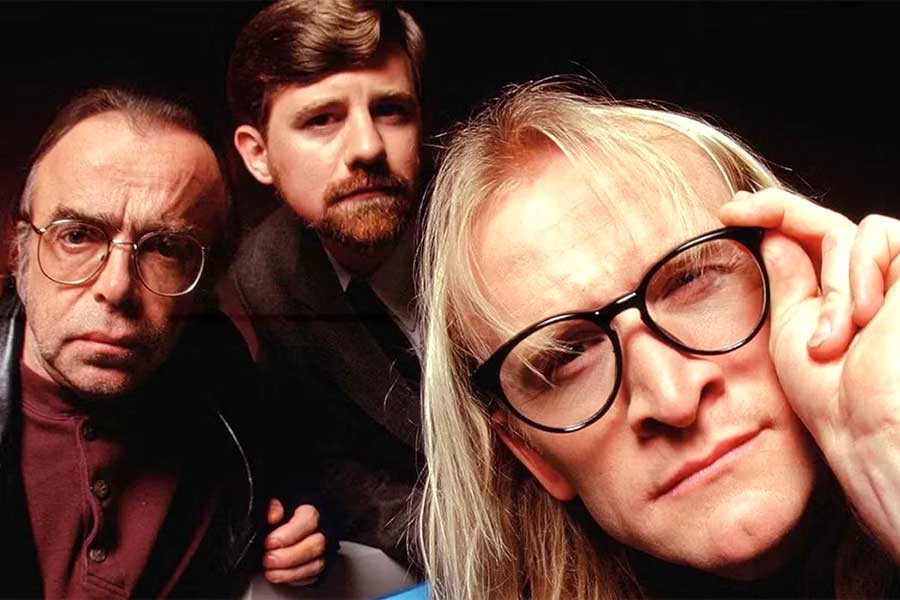
The beloved, quirky trio of conspiracy theorists — John Fitzgerald Byers (Bruce Harwood), Melvin Frohike (Tom Braidwood) and Richard “Ringo” Langly (Dean Haglund) — served as Mulder's unofficial private investigators, uncovering clues through unconventional, often less-than-legal means. From the Gunmen's first appearance in The X-Files' second season episode, "E.B.E.," they quickly proved themselves to be fan favorites, as they provided the dark world of the show with much needed comic relief. The characters were such a hit with loyal viewers that Fox tasked X-Files creator Chris Carter and his fellow writers — Vince Gilligan, Frank Spotnitz and John Shiban — to give the three scrappy sleuths their own show.
The Lone Gunmen was the first — and only — X-Files spinoff. The hour-long drama premiered on March 4, 2001 — in the Sunday, 9 p.m. time slot usually occupied by the mothership series. Thirteen million viewers watched the debut episode, a promising sign for the new series.
However, once it moved to Friday nights, where The X-Files originally launched on its way to becoming a pop-culture phenomenon, the spinoff met the opposite fate. Viewers disappeared faster than some of Mulder and Scully's elusive quarries, and there was no second season.
X-Files writer/EP and Lone Gunmen co-creator Frank Spotnitz
"[Fox] was shocked because we began on Sunday night, and the ratings for that first episode were giant," Spotnitz says. "They're like, 'Great, we're in business.' Then, we went to Friday night, and we never really established ourselves — but we did try really hard to keep the show on the air."
Despite the show's short life span, Gilligan and Spotnitz's fondness for The Lone Gunmen has only grown in the 25 years since its premiere.
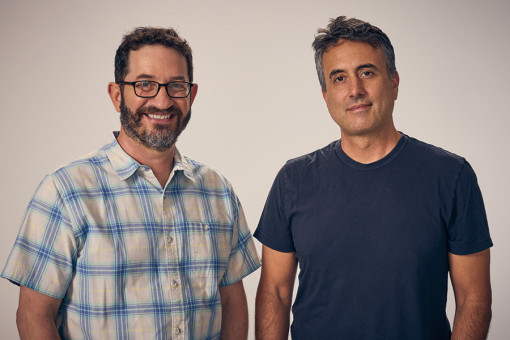
Here, in an exclusive interview with the The Television Academy, Gilligan and Spotnitz (paired over Zoom) celebrate the spinoff's 25th anniversary by revealing when they knew Byers, Frohike and Langly needed their own show, how Gunmen was affected by the pilot episode’s World Trade Center storyline (which aired six months prior to September 11, 2001) and whether they regret the major creative decision that sealed the trio's fate.
Television Academy: When did discussion being about giving the Lone Gunmen a spinoff show? Was it after "E.B.E.," or Vince's season five episode, “Unusual Suspects?"
Vince Gilligan: We always loved the Lone Gunmen. I mean, how can you not, and who didn't? It was about a year or two after ["Unusual Suspects"], where we were talking about: "Wouldn't it be great to have them have their own show?"
Frank Spotnitz: "Unusual Suspects" was obviously Vince's episode that made them full characters, that really fleshed out their identities. But, I think [the sixth season's] “Three of a Kind” was the one where it was like, "We gotta do this." Bryan Spicer directed that episode, and I remember we thought, "Wow, he did such a great job. He should direct The Lone Gunmen!"
At the time, The X-Files was still going strong. How did you decide who did what for The Lone Gunmen?
Gilligan: I can't even remember how hard we all worked back then. I mean, all of us were doing X-Files at the same time.
Spotnitz: I actually think we wanted to do The Lone Gunmen [earlier] and it was delayed by Harsh Realm [Editor's note: Harsh Realm was a non-X-Files series created by Carter that aired from 1999-2000]. It was really a passion for John, Vince and me to do The Lone Gunmen, and Chris came along. He ended up writing an episode later. I just remember Lone Gunmen was just a joy to work on.
I did rewatch the pilot, and it still wasn't quite The Lone Gunmen yet. It still had an X-File-y vibe to it, but we got funnier and funnier as the show went on. But remember, King of the Hill had one of the characters wear a T-shirt saying, "Bring back The Lone Gunmen." They knew we were going to get canceled.
Gilligan: That was Johnny Hardwick, who voiced Dale Gribble, the exterminator [on King of the Hill]. He said, "I hope you guys are cool with that." We thought it was hilarious, and it was very, very prescient.
Let’s talk about the pilot episode, which features a passenger plane threatening to crash into the World Trade Center. This episode was obviously months before the actual event in September 2001.
Spotnitz: It was my very first thought when I saw what happened that morning. My very first thought was The Lone Gunmen. I thought, "Oh, my God, did they watch our show? Did they get this idea from us?" A year or so after, I read something that relieved me of that fear — but, wow.
Gilligan: I'll never forget going to the Fox lot to work that day. Everyone is in shock, including the powers-that-be. They said, "If we stop work, the terrorists win." So, then, everybody got to work — but it was just people staring numbly at each other. Then, the powers-that-be said, "Okay, this was a mistake. Everybody go home."
Beyond the pilot, the show really gets sillier and funnier. Was the thinking behind The Lone Gunmen that it would have a less serious tone than The X-Files?
Gilligan: I think it just kind of came about organically, as most shows do.
Spotnitz: It just became clear to us that that's where the show belonged. The second episode — which introduces Steven Snedden as Jimmy Bond and the blind football league — it just felt right. The show found itself because we didn't really know in the beginning what it was.
Gilligan: I remember [there was a little] fear from Fox about using the name "James Bond." We said, "It's Jimmy Bond." And [Fox execs] said, "Well, that's short for James." They were worried about getting sued or something by Albert Broccoli [the late-James Bond franchise producer]. Luckily, we never call him James.
We meet Jimmy Bond in the show's second episode. What prompted you to bring that character into the fold?
Spotnitz: We had three unconventional leads, and we thought: "We need the good-looking guy, but let's make him a dope." He's a sweetheart, and he was a great foil for them to play off of. And Steve Snedden — what a find. He was just great.
Gilligan: It was a good dynamic, wasn't it? The three Gunmen love each other, but they're never gonna say it, and they're always snapping at each other. Jimmy just wears his heart on his sleeve.
The series' title card during the opening titles
Between Frohike doing a Matrix-style fight, or the gang dealing with Peanuts the uber-intelligent chimp, you seemed to have free rein in terms of the stories you told.
Gilligan: That's how I remember it. That's the beauty of TV, especially network TV. You’ve got to get that stuff shoveled out so fast. Lone Gunmen, unfortunately, was not the success we hoped it would be — which still pains me to this day. But The X-Files, the mothership, was untouchable. I remember we got left alone, pretty much.
Spotnitz: [Fox] was shocked because we began on Sunday night, and the ratings for that first episode were giant. They're like, "Great, we're in business." Then, we went to Friday night, and we never really established ourselves — but we did try really hard to keep the show on the air. We were begging them to bring it back, because what was already clear was happening since The X-Files left Friday night. That time slot, it just went down, down, down.
It was not a reflection of Millennium [Editor's note: Another Chris Carter sci-fi series that existed in The X-Files universe] or any of the shows that were on Fridays at 9. It was just the changing reality of network television. Looking back on it, we did as well as any show in that time slot could have done. But, Fox — they didn't realize at the time that this was a trend that was not going to be reversed.
Gilligan: I've said this a lot: You don't know if it's going to be hit. You don't know if it's going to be a failure. That's what keeps it interesting and keeps your guts churning.
Spotnitz: We did a premiere [screening] at the Museum of Television and Radio in Beverly Hills, and it played like gangbusters. I think we showed the first two episodes. I remember some woman came up to me and said, "You know you've got a hit, don't you?"
Yves (Zuleikha Robinson, far right) was a mysterious thief-turned-unlikely ally on the series.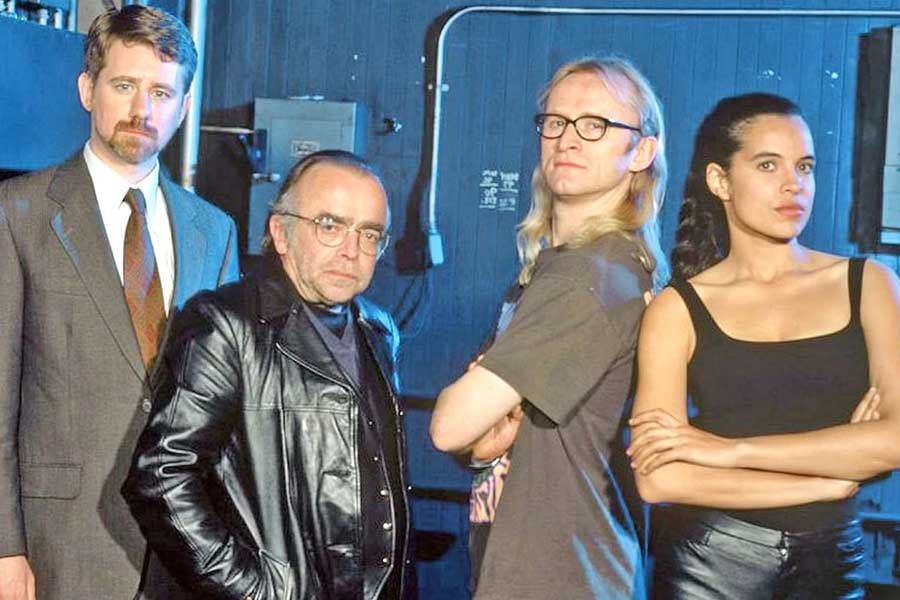
Talk to me about some of the characters, starting with Yves, played by Zuleikha Robinson. She began more as an adversary to the Lone Gunmen before becoming more of an ally. Who, or what, inspired that character?
Gilligan: All the smart, cool women who ever lived [inspired that character]. And Zuleikha, she was perfect in that role. She did such a good job. The thing I remember was trying to come up with a character name — and this is before you had an app to create anagrams automatically. We took the name Lee Harvey Oswald, and we were trying to rejigger it, and that's where we came up with "Yves Adele Harlow." Though, we knew that that was not her real name. We find out her real name later, right? [Editor's note: In the season 9 X-Files episode, “Jump the Shark,” her real name is revealed as Lois Runtz.]
Spotnitz: That was your idea, Vince. I thought that was such a clever idea, to take the anagram Lee Harvey Oswald. And I remember being worried about giving her the first name of Yves, because it’s a man's name.
Vince, you wrote the episode “Planet of the Frohikes." There are eight monkeys on screen at one time. How many apes were actually on set?
Spotnitz: I wasn't on set — but John Kousakis, our producer, would remember — but I suspect we had a couple apes. We probably used CGI to repeat them. That's my guess.
Gilligan: I didn’t go to set for that one, but I would have loved to have met the chimpanzees. The guy I really wanted to meet was Edward Woodward, who did the voice [on the computer that Peanuts the chimp communicates with]. He's one of my favorite actors; he was so great in [the 1980 film] Breaker Morant and the original Equalizer [TV series] in the '80s. I don't think any of us ever met him because he was in London, and they recorded it over a phone.
Spotnitz: But that was hilarious because — from the very beginning — your first thought for that role was, “It has to be Edward Woodward!” And then we got him. I couldn't believe it.
Gilligan: It was freaking awesome to get to write, in some small fashion, for the great Edward Woodward!
When did you start getting concerned about the fate of the show? Like you said, it started out strong, but then the ratings dipped with a move to Fridays.
Spotnitz: We knew we were in trouble fairly early on. We were really trying to persuade the studio to spend money to support the show. We did get them to spend money on newspaper ads for the last few episodes to try and help the ratings, but to no avail. They were as supportive of the show as they could be, actually.
I also think, looking back on it, it was season eight of The X-Files — we had already hit our peak, and we were already on the way down in terms of the mania for The X-Files. It was probably two or three seasons too late to do that spinoff. If we had done it in season four or five [during The X-Files' run], we might have had a different reception. 9/11, in my view, really killed The X-Files. The mood of the country was no longer government conspiracy and all that.
Gilligan: I'm glad to have this opportunity to say that Bruce, Dean and Tom were fantastic leads. These three guys were a pleasure to work with, and the show had heart. I remember something about, "Oh, you can't expect a show with those guys to be a hit because everybody wants Patrick Dempsey," or whomever the big guy was at the time. But it’s just timing.
I think Frank's right. A big part of it was 9/11, but another big part of it was Friday night versus Sunday. That used to mean something. Now, in an age of streaming, that's quaint. Timing is another word for luck, as far as I'm concerned. I always say if Breaking Bad had been six months earlier, or six months later, it wouldn’t have lasted more than a season. And if Lone Gunmen had been a year earlier, it could have been a big hit.
But then you were able to wrap up The Lone Gunmen with the "Jump the Shark" episode of The X-Files. How did that come about?
Spotnitz: There’s a story I've never told, but I feel like I can tell it now that it's been 25 years and Fox has been sold to Disney.
The deal that Tom and Dean and Bruce made — Fox screwed up. They paid them way more money than they meant to pay them. So, when the show got canceled, Vince, John, and I wanted to have a sendoff for them. We wanted to write “Jump the Shark.” Fox did not want to bring them back. They really tried to stop us; they were so mad. In their mind, they'd overpaid them for The Lone Gunmen. They were absolutely against it. And we just said, "We're doing it, so you'll have nothing to broadcast if we force their hand."
Gilligan: You made the deal. How is that the fault of the actors that you guys didn't know how to make a deal?
Spoiler alert for anybody that hasn't watched the “Jump the Shark” episode, but the Lone Gunmen don't survive that outing. They sacrifice themselves to keep a deadly virus contained. Was that always the decision, or was it something you went back and forth on?
Spotnitz: We went back and forth on it.
Gilligan: For years, that was not my favorite moment. But, it was a very dramatic ending, for sure. They got to be heroes.
Spotnitz: I do regret that that episode didn't end with a laugh — it just ends with sadness. That was a mistake. If you're going to do that, then you've got to bring back the joy that the characters represented, and we didn't.
What did you learn from your Lone Gunmen experience?
Gilligan: You don't learn anything from success. And I'm not being funny, I'm being 100% serious. When something's a success, you try to say, "It was because of this, it was because of that." But you're always wrong. There's nothing I would call a mistake about The Lone Gunmen — not even time slots or any of that. You just do your best, and everybody did their best.
I'm as proud as I can be of The Lone Gunmen, and to this day, I'd love for people to [read] this and say, "What show are they talking about?" And then look it up online and buy it. We put out DVDs.
Spotnitz: I got a kick watching the pilot again last night, because I could just hear Vince's voice and humor throughout. That runs through all of Vince's work. Even in Pluribus [Gilligan’s current Apple TV drama], the beginning of the first episode — with those scientists figuring out what's going on — that's his humor, which I love so much.
Like Vince, I'm so proud of The Lone Gunmen, and I had so much fun on that show. I enjoyed it as much as anything I've ever done, and that doesn't translate to success. Other shows where I had a much worse time were much bigger successes, and there's no relationship between the two things, seemingly. So, it’s a mystery. I learned what I don't know.
Gilligan: We were lucky to get 13 [episodes]. Nowadays, it'd be six. I just couldn't be more proud of it. It's just timely 25 years later.
We need The Lone Gunmen more than ever. Three guys who, trying to save democracy, save the rule of law. God bless them. I want to think they're still out there somewhere.