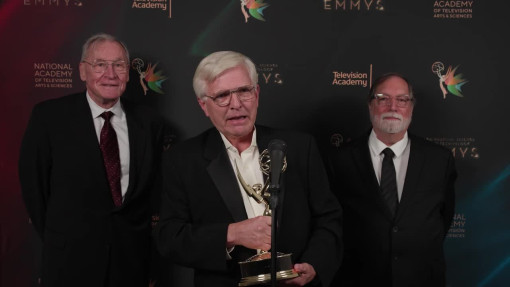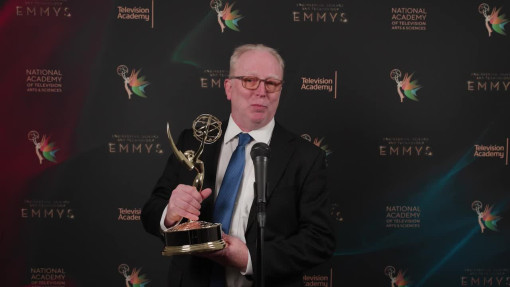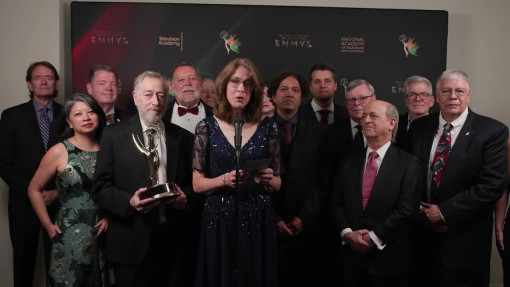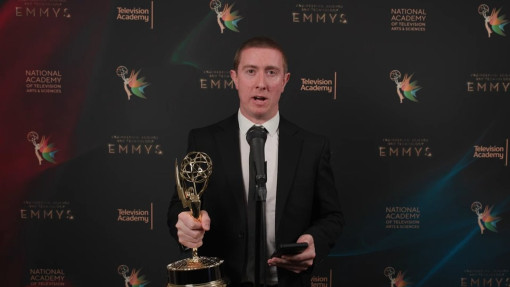

The Television Academy and the National Academy of Television Arts & Sciences today announced the recipients of their respective Emmy Awards given to individuals, companies or organizations for their developments in television engineering, science and technology. The awards ceremony will be held Wednesday, Oct. 14, at the Television Academy's Saban Media Center in North Hollywood, California.
This joint Engineering, Science and Technology recognition follows the announcement that the two organizations are currently exploring reunification. Previously, the organizations combined these ceremonies for the 2014 awards season.
The combined awards include:
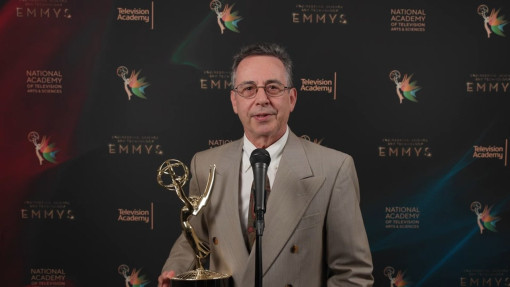
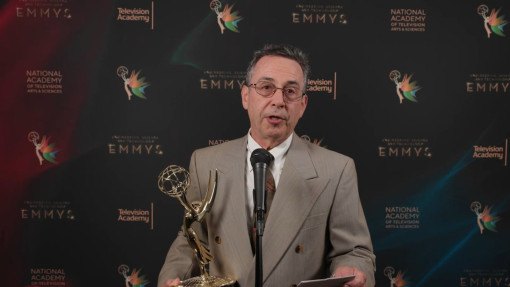
Charles F. Jenkins Lifetime Achievement Award: Barry B. Zegel (recipient)
Philo T. Farnsworth Corporate Achievement Award: Chapman/Leonard Studio Equipment Inc. (recipient)
Engineering, Science & Technology Emmy Award recipients:
Adobe Inc. for the development of Adobe Premiere.
Avid Technology for the development of Avid DNx.
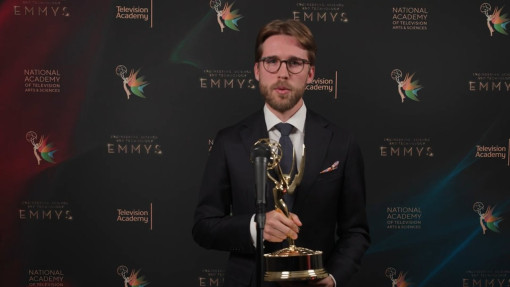
Benjamin Graf of Accentize for the development of Chameleon.
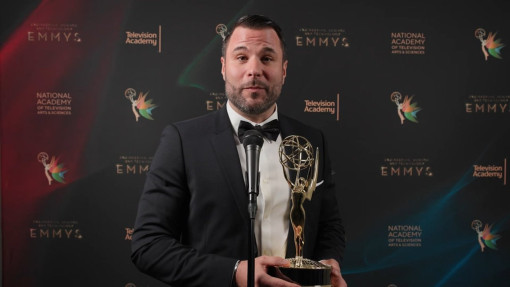
James Robinson of Hitomi for the development of MatchBox Glass.
Roland Hathaway, Darcey Crownshaw, Frank Balzer and Dean Hathaway of Snow Business USA for the development of Snowbase.
Starlink Services LLC, a subsidiary of Space Exploration Technologies Corporation, for the development of Starlink.
Curt O. Schaller and Dr. Roman Foltyn for the development of the Trinity 2 Hybrid Camera Stabilizer System.
For web-based, frame-accurate remote monitoring systems for distributed broadcast production, recipients include: SipRadius, NBCU, Grass Valley, CBS Sports, Disney, Game Creek, Amazon and Vindral.
For FPV drone camera systems for live sports broadcast coverage, recipients include: OBS, Proton, Wave Central and Above Media.
For standardization of ATSC 3.0 NextGen TV for digital broadcasting, recipients include: ATSC, the Broadcast Standards Association.
For development of AMWA NMOS discovery, registration and connection, recipients include: Advanced Media Workflow Association, Sony Corporation, British Broadcasting Corporation and Streampunk Media Ltd.
For SMPTE hybrid cable format converter and power injector, recipients include: Telecast Fiber Systems, Bluebell Opticom Ltd and MultiDyne Electronics Inc.
For AI-based face replacement and performance-preserving post-production transformation, recipients include: Disney Research, Rising Sun Pictures, Digital Domain and Metaphysic (Brahma AI).
"Television has always been shaped by those who dare to imagine what's possible and then create the technology to make it a reality," said Cris Abrego, chair of the Television Academy. "The recipients of our Engineering, Science & Technology Emmy Awards represent the extraordinary ingenuity and innovation that continues to propel our industry forward, and we are proud to recognize them."
"These organizations have given creators greater freedom, helped teams solve complex challenges and enriched the experience of viewing audiences everywhere," said Wendy Aylsworth and Paul Debevec, co-chairs of the Television Academy's Engineering, Science & Technology Committee.
"We congratulate and celebrate these great minds and great organizations who continue to advance our ever-evolving medium," said Terry O'Reilly, chair of the National Academy of Television Arts & Sciences. "The most meaningful technological innovations don't simply improve television, they redefine what it can be."
"This year's crop of winners are at the intersection of necessity and ingenuity, and we are thrilled to be able to team up with the Television Academy's committee for this exceptional night," said NATAS Technology & Engineering Chair Joe Inzerillo.
The following is a more detailed list of awards and recipients chosen for recognition by the Television Academy:
Charles F. Jenkins Lifetime Achievement Award
Honors a living individual whose ongoing contributions have significantly affected the state of television technology and engineering.
The Charles F. Jenkins Lifetime Achievement Award is bestowed upon Barry B. Zegel in recognition of his decades of sustained leadership that helped define and improve the technical infrastructure, standards and operations that are the foundation of modern television production. His career demonstrates the rare combination of engineering expertise, executive leadership, industry governance and mentorship that define the qualities of lifetime achievement honorees.
Zegel's professional career was spent at CBS, culminating as senior vice president and general manager of CBS Television City — one of the world's most influential and state-of-the-art television production facilities. Throughout that career, Barry championed the adoption of emerging technologies that improved how television is produced rather than simply maintaining existing systems, helped guide the industry through the high-definition television transition, and served as rapporteur for the United Nations' International Telecommunication Union (ITU) in Geneva, Switzerland. He played key engineering and operational roles for the CBS Network coverage of three Winter Olympic Games, including serving as director of Olympic operations for the Lillehammer Winter Olympics, earning him two Emmy Awards.
Recognizing that technologists lacked adequate representation within the Academy, Zegel was the prime driver in founding the Television Academy's Science & Technology Peer Group, creating a permanent home for engineers and technologists within the organization. This organizational legacy will continue benefiting future generations of industry professionals.
Philo T. Farnsworth Corporate Achievement Award
Honors an agency, company or institution whose contributions over time have significantly impacted television technology and engineering.
Recipient: Chapman/Leonard Studio Equipment Inc.
For more than 80 years, Chapman/Leonard has been a leading and pioneering custom camera support equipment manufacturer and supplier for television and motion picture productions, accredited with fundamentally expanding the creative possibilities of camera movement in production.
The company's original Hercules Mobile Crane offered crab steering, an electric battery drive and first-of-its-kind hydraulic self-leveling. The Lenny Arm became an industry standard for its modular design, wide payload and high reach. Their Hustler and PeeWee dolly series provided responsive boom hydraulics, maneuverability, and versatility on and off track. Their work in sports broadcasting led to the development of its Olympian series of sideline vehicles utilized in the Olympics and NFL. Chapman/Leonard continues to push boundaries with new inventions big and small, like the Hydroscope Telescoping Crane, which can be submerged underwater, and its smallest dolly, which utilizes a 4-stage nitrogen pneumatic column.
Founded in 1945 when Ralph Chapman created Chapman Studio Equipment to design and manufacture a more versatile camera crane, Chapman later merged the business with his son Leonard's company in 1965 to form Chapman/Leonard. Still a family-run business, Charles Leonard, Ralph's great grandson, is currently president and CEO.
Engineering, Science & Technology Emmy Awards
Presented to an individual, company or organization for developments in engineering, science and technology so extensive an improvement on existing methods or so innovative that they materially affect the production, recording, transmission or reception of television and have elevated the storytelling process.
Recipient: Adobe Inc. for the development of Adobe Premiere
Premiere is a professional non-linear editing system for assembling, shaping and finishing television content. Editors, assistant editors, story producers and post-production teams across all forms of television production worldwide use it daily. With over three decades of continuous development, it has repeatedly delivered capabilities that the professional editing industry subsequently adopted as standard practice. Its format-agnostic architecture makes mixed cameras, codecs, frame rates, and aspect ratios editable together in a single timeline, removing transcoding and conform operations as preconditions of creative work. Adobe continued to innovate Premiere by including machine-learning and generative AI functionality as part of native timeline operations rather than having to use external utilities. These intuitive features provide clear, transparent identification of AI-generated work throughout the production process. Often first to market with features, the impact of Premiere is cumulative and measurable. Work that once required specialist hands, dedicated bays, or a return to set now happens inside the edit room in tandem with creative decisions. Premiere has materially changed the speed, cost, and location-dependence of television post-production, putting professional-grade tools within reach for productions of every budget. For more information, please visit Adobe.com.
Recipient: Avid Technology for the development of Avid DNx
Avid DNx is a production mezzanine codec family designed to carry creative intent intact from acquisition through post-production and delivery. Its low-complexity intraframe compression and constant-bit-rate design give editors frame-accurate random access and predictable real-time playback on multi-stream layered timelines so creative teams can stay focused on a show's narrative and performance rather than renders and format friction. The same media conforms from lightweight, HDR-capable proxies to high-quality finishing without translation loss, using a single broadcast-ready master format in editing, color, VFX interchange, playout and archive. These properties, combined with support for all the professional color spaces and operating systems and being standardized by SMPTE, have made DNx a foundation of television production worldwide. For more information, please visit Avid.com.
Recipient: Benjamin Graf of Accentize for the development of Chameleon
Chameleon is an audio plug-in that analyzes location or studio-captured sound recordings and duplicates their reverberation characteristics. It uses a neural network to create custom reverb programs that mimic the reverberation tails and early reflections of the measured audio. This allows the user to apply these custom reverberation profiles onto other recordings. Prior to Chameleon's development, impulse responses had to be captured on set and loaded into a reverberation plugin, or manually finding similar preset reverb programs and manually adjusting their controls to create an acoustic match. Chameleon lets the user simply drag an audio file onto the plugin, or audition existing audio assets inside of the workstation, to create a reverb program and profile in a matter of seconds. The plug-in can also create surround reverb programs from mono or stereo inputs. This workflow allows audio professionals to quickly match reverberant audio captured at different locations, times and spaces. This also facilitates more seamless integration of ADR post-production dialog into the final sound mix. The quality, ease of use and speed of Chameleon lets audio professionals spend more time focusing on other creative aspects when mixing. For more information, please visit Accentize.com.
Recipient: James Robinson of Hitomi for the development of MatchBox Glass
MatchBox Glass transforms a standard mobile iPhone into a precision lip sync and latency measurement instrument, deployable instantly at the point of capture, replacing traditional manual test methods and dedicated hardware generators. It enables accurate end-to-end measurement of audio/video synchronization across live, remote, and cloud-based television production environments. MatchBox Glass generates a calibrated visual and audio reference directly in front of the camera and microphone, allowing true "from the glass" measurements. This eliminates the need for dedicated hardware, signal insertion, or controlled baseband access; historical approaches that are increasingly impractical in modern distributed production workflows. The result is a reliable product used ubiquitously in the live broadcast industry to ensure accurate synchronization at the audio/video capture source. For more information, please visit Hitomi.tv.
Recipients: Roland Hathaway, Darcey Crownshaw, Frank Balzer and Dean Hathaway of Snow Business USA for the development of Snowbase
Snowbase is a biodegradable, eco-friendly, artificial snow made from pure wood pulp cellulose. It is completely free of peroxide bleaches and chemical fire retardants, designed for both indoor and outdoor use at any temperature, and safe to apply on living flora and fauna. The immediate nature of Snowbase's application reduces both production time and cost. When airflow is applied to it, Snowbase lays, drifts, and settles exactly like real snow. When passed through a high-pressure, low-volume water mist, it instantly adheres to any surface, including vertical and inverted ones. It also retains water to mimic the slightly opaque look of real snow slush. Given that Snowbase is not an ice-based formula, it can remain applied for multiple hours and days without need for reapplication. Moreover, it can be modified by adding water, dirt, and other materials to represent the aging of snow. Snowbase cleans up just as efficiently as it applies: it can be easily cleared with standard air blowers or water hoses, keeping strike times short and costs low. For more information, please visit SnowBusinessHollywood.com.
Recipient: Starlink Services, LLC, a subsidiary of Space Exploration Technologies Corporation, for the development of Starlink
Starlink is a constellation of low-orbit satellites that enables high-speed, low-latency broadband almost anywhere on Earth. It has transformed the creation and the consumption of television, removing the connectivity constraints that long dictated where programming could be made and who could receive it. Orbiting at an altitude of roughly 550 kilometers rather than the 35,786 kilometers of geostationary satellites, it reduces round-trip latency from over 600 milliseconds to approximately 25 milliseconds, unlocking live contribution, remote collaboration and real-time review from locations that previously supported none. Its mobile, turnkey units allow productions to transmit live feeds and move footage to post facilities from virtually any location. Starlink has significantly extended the production and contribution capabilities of the television industry, allowing creation of stories from locations not previously accessible. For more information, please visit Starlink.com.
Recipients: Curt O. Schaller and Dr. Roman Foltyn for the development of the Trinity 2 Hybrid Camera Stabilizer System
The Trinity 2 hybrid camera stabilizer system offers unparalleled camera movement. The concept, design, and technical implementation enable users to operate the system effortlessly to produce innovative, highly creative, complex camera trajectories. Its versatility includes low to high transitions, 360-degree rotation, consistent stability and horizon, use of interfaces for cooperative control and the provision of metadata and modular setups for every situation. It can overcome weather or dynamic environment influences that previously hindered similar shots. It gives camera operators, cinematographers, and directors freedom for storytelling that previously required use of several different pieces of equipment over multiple shots. Now creatives can smoothly combine setups into one fluid movement, up or down stairs, through crowds and in tight spaces for long continuous takes. The Trinity 2 has become a mainstay for most major award shows, live concert films, high-end reality competitions, narrative action scenes, and major sporting events. For more information, please visit Arri.com.
The Engineering, Science & Technology Emmy Awards are made possible by Television Academy corporate partners: Decoy Wines, FIJI Water, Franciacorta, Ketel One Vodka, LG, People, Raising Cane's, The Ritz-Carlton and United Airlines.
For NATAS, the more detailed list of innovations recognized by the 2026 Technology & Engineering Emmy Awards are:
Web-Based Frame-Accurate Remote Monitoring Systems for Distributed Broadcast Production
Recipients: SipRadius, NBCU, Grass Valley, CBS Sports, Disney, Game Creek, Amazon, & Vindral
During the COVID-19 pandemic, the live television industry rapidly developed new technologies to enable high-quality, real-time production from remote locations. These innovations evolved through early 2024 and are now standard across major broadcasters, cable networks and streaming platforms, fundamentally transforming the live production landscape. The recipient organizations independently created and implemented these groundbreaking technologies during this pivotal period.
FPV Drone Camera Systems for Live Sports Broadcast Coverage
Recipients: OBS, Proton, Wave Central and Above Media
First-person view (FPV) drone camera systems represent a significant advancement in live sports production. The technology combines high-speed aircraft, miniature broadcast cameras, low-latency RF transmission and specialized stabilization systems to deliver immersive, athlete-following coverage previously unattainable with conventional camera platforms. The 2026 Winter Olympics demonstrated the technology's maturity and broad application across multiple sports.
Standardization of ATSC 3.0 NextGen TV for Digital Broadcasting
Recipients: ATSC, the Broadcast Standards Association
ATSC 3.0 standardization represents a significant advancement in television broadcasting, establishing the industry's first fully IP-based broadcast standard to reach commercial scale. Through a multi-year, consensus-based engineering, drafting and balloting process led by the Advanced Television Systems Committee (ATSC), the standard has enabled new capabilities including UHD, HDR, immersive audio and interactive services. ATSC 3.0 is now commercially deployed across the United States and internationally, reaching millions of households and driving significant changes across the broadcast equipment, consumer electronics and regulatory landscape.
Development of AMWA NMOS Discovery, Registration and Connection
Recipients: Advanced Media Workflow Association, Sony Corporation, British Broadcasting Corporation, Streampunk Media, LTD
SMPTE ST 2110, together with AMWA NMOS IS-04 and IS-05, established an open, standardized framework for transporting, discovering and connecting video and audio over IP networks. Supported by industry-wide testing initiatives, automated test suites and open-source implementations, these technologies accelerated the adoption of IP-based workflows across the television industry. Today, NMOS and SMPTE ST 2110 are widely adopted and have been used in thousands of television productions worldwide, fundamentally advancing the way broadcast media is transported and connected.
SMPTE Hybrid Cable Format Converter and Power Injector
Recipients: Telecast Fiber Systems, Bluebell Opticomm Ltd, Multidyne Electronics Inc.
SMPTE camera chains are fundamental to broadcast production, connecting cameras and base units through standardized hybrid cabling. Format converters extend these camera systems over existing single-mode fiber infrastructure for distances of multiple kilometers while maintaining video, data and power connections. The technology enables greater flexibility in venue and mobile production environments while significantly reducing cable weight and improving operational efficiency, with substantial savings possible when replacing long runs of traditional SMPTE camera cable.
AI-Based Face Replacement and Performance-Preserving Post-Production Transformation
Recipients: Disney Research, Rising Sun Pictures, Digital Domain, Metaphysic (Brahma AI)
AI-based facial transformation technology enables a performer's appearance to be digitally adjusted while preserving natural expression, movement, lighting and scene realism. These systems maintain continuity throughout a sequence and adapt to changes in pose, lighting, occlusion and performance. Applications include visual effects, de-aging, stunt work, identity protection and real-time production environments. Technologies developed by companies such as Metaphysic and Disney Research have been used in major film and television productions to digitally de-age actors and enhance on-screen performances.
Also honored at the upcoming October ceremony will be the technology "Pioneers":
Practical Transduction developed by Theodore Willard Case, Georges Claude and
First Demonstration of Recognizable Television by John Logie Baird
Excellence in Production Technology — Application
NATAS also announces the nominees in the competitive category, "Excellence in Production Technology — Application." Now in its third year, this category recognizes not the technology itself, but the innovative use of applied science and engineering products to produce television in new and unique ways. The winner will be announced on October 14, in conjunction with the show. This year's nominees are:
Good Morning America - ABC News - The Walt Disney Company
ABC News |The Walt Disney Company
Prime Vision NFL's Thursday Night Football (TNF)
SportsMEDIA Technology (SMT)
Star Wars: Skeleton Crew
Disney+
About the National Academy of Television Arts & Sciences
The National Academy of Television Arts & Sciences (NATAS) is a service organization dedicated to the advancement of the arts and sciences of television and the promotion of creative leadership for artistic, educational and technical achievements within the television industry. It recognizes excellence in television with the coveted Emmy Awards for News & Documentary, Sports, Daytime and Children's & Family programming, as well as achievements in television Technology & Engineering.
NATAS membership is made up of National members joined by more than 18,000+ broadcast and media professionals represented in 19 regional chapters across the country. Beyond awards, NATAS has extensive educational programs including its National Student Production Awards for outstanding journalistic work by high school students, as well as scholarships for aspiring filmmakers and broadcasters. For more information, please visit TheEmmys.tv
NATAS SOCIAL MEDIA
X: @theemmys
IG: @theemmys.tv
Follow the Television Academy on Instagram, TikTok, Facebook, Threads and X (@TelevisionAcad).
Download the complete press release here.
Contacts:
Jim Yeager
breakwhitelight (for the Television Academy)
jim@breakwhitelight.com
818.264.6812
Hillary Povar
Smithhouse Strategy (For NATAS)
PR@emmyonline.tv
818-292-6035