


Billy Magnussen agrees with those who say Silicon Valley's world-changing output is our era's equivalent of the Italian Renaissance's lasting effect on culture, politics and science. Yet his sharp-edged new AMC series, The Audacity, set amid the roiling egos and unflagging greed of California’s innovation hub, reminds us that behind many of those bold visions is a lot of behavior that qualifies as incredibly common sense–challenged.
Take Duncan Park, a brash tech mogul in the data-mining space whom no one — Magnussen included — would liken to Galileo or Leonardo da Vinci. Rather, with his desperate personal, financial and legal straits, he’s the central figure of chaos in a constellation of floundering Silicon Valley characters created by Emmy-winning writer Jonathan Glatzer. Magnussen, who plays Duncan like an out-of-control firehose, couldn’t be happier about embodying this particular renaissance’s humorously complicated underbelly.
“Duncan believes he’s changing the world, making it perfect — and his life’s a dumpster fire,” he says. “There’s that saying: If you want to change the world, make your bed in the morning. This guy doesn’t understand that. He has no clue what’s going on with himself. To dive into a character like that is awesome.”
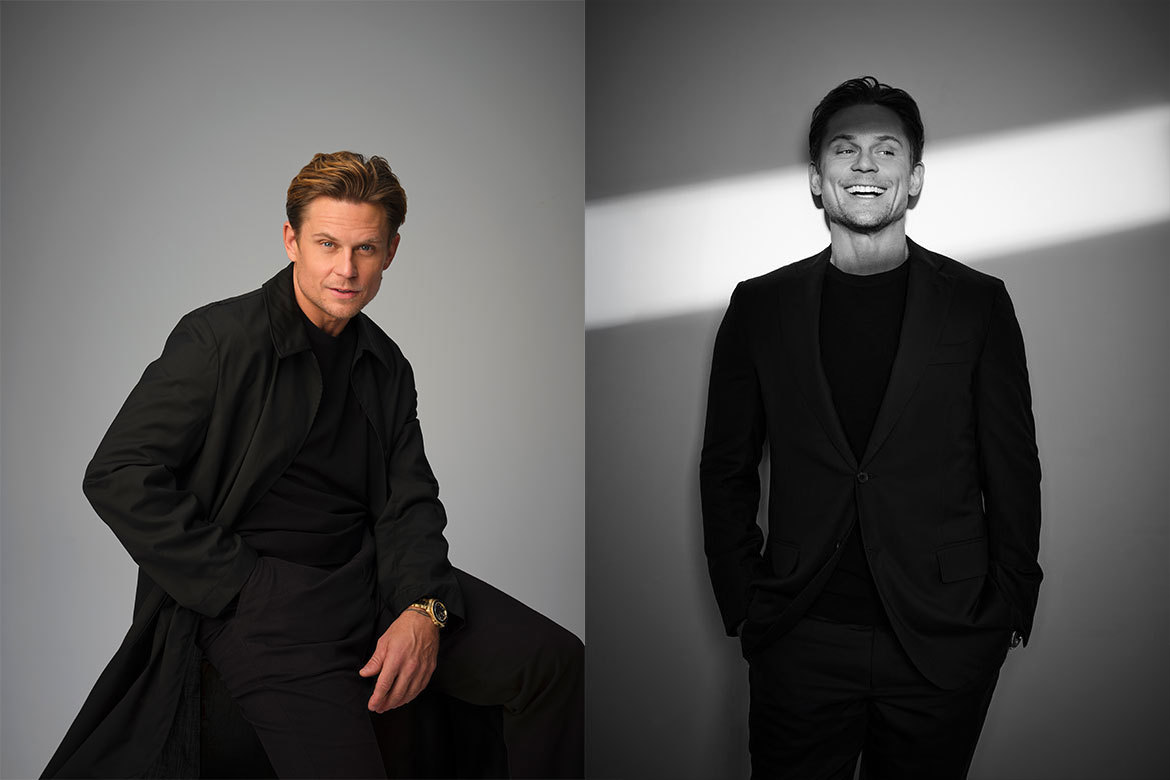
Which is perfect for Duncan, who swings from hyperfocused to the loosest of cannons like a mad conductor of destiny. He may have leapt headfirst into ethical and financial no-nos and lack most social filters, but he’s solving the future, he’d tell you, so where’s the harm? Apart from his crumbling marriage to social-striver Lili (Lucy Punch, Animal Control) and his daughter Jamison’s (Ava Marie Telek, Happy Face) belief that tech is destructive? He’s in therapy with Dr. JoAnne Felder (Sarah Goldberg, Barry), the Valley’s go-to psychiatrist for high-strung high rollers, including jaded tycoon Carl Bardolph (Zach Galifianakis, Only Murders in the Building). But that’s no indication Duncan is on any realistic path toward healthy self-actualization. If anything, when he learns something compromising about JoAnne and ropes her into a scheme to take professional advantage of it, it only proves he may be beyond help.
Watch the exclusive Under the Cover video with Billy Magnussen at his emmy cover shoot.
Magnussen isn’t playing a villain, however, and it’s his job not to think like that, anyway. “He does not believe he’s the bad guy,” he says. “Even though Duncan Park is this absurd, weird, narcissistic sociopath, he’s a flawed human being. Deep inside, a child. Catching that balance is so important in a lead character — to find a way to have the audience have empathy. Because I am on his side, and you have to inspire people to go on this journey. That’s one of the hardest challenges with a complex character such as Duncan. All these beautiful colors I get to display and find depth in, and I know I can do justice to what Jonathan intended.”
In getting The Audacity on its feet, Glatzer was thrilled to rewrite in response to what Magnussen was giving him. “When I auditioned Billy, his first instinct was to do what I was looking for — to, within a sentence, go from completely cocky to completely insecure, and the gear changes were just so effortless. Sometimes they weren’t, but you could see and hear the gears grinding in a way that was very human, looking for that doubt inside somebody so confident and how that confidence comes out of insecurity. It’s a tough thing to play, but Billy has this twitchy, frenetic ability to do that, and it’s really magnetic. The part of Duncan changed because of what he brought to it, more than any role. Initially Duncan was more of a big-picture guy, and with Billy it became about moment to moment to moment, because that’s how fast he changes. He became Duncan.”
For Glatzer, Magnussen’s eye-opening audition epitomized what he’d sought from The Audacity ever since he devised it: the coursing, inconvenient humanity inside a world fixated on the power of ones and zeros to optimize us all. But this wasn’t his first choice of a concept to make his showrunner debut. He’d been working with AMC on a series adaptation of Good Night, and Good Luck — set during TV’s first renaissance, the Golden Age of the ’50s — when plans fell through after the writers’ strike. Dan McDermott, chief content officer of AMC Net-works and president of AMC Studios, asked if Glatzer would consider pivoting to something about tech’s personalities and milieu. Modern tech, that is, since AMC’s pedigree includes the acclaimed dawn-of-PCs drama Halt and Catch Fire.
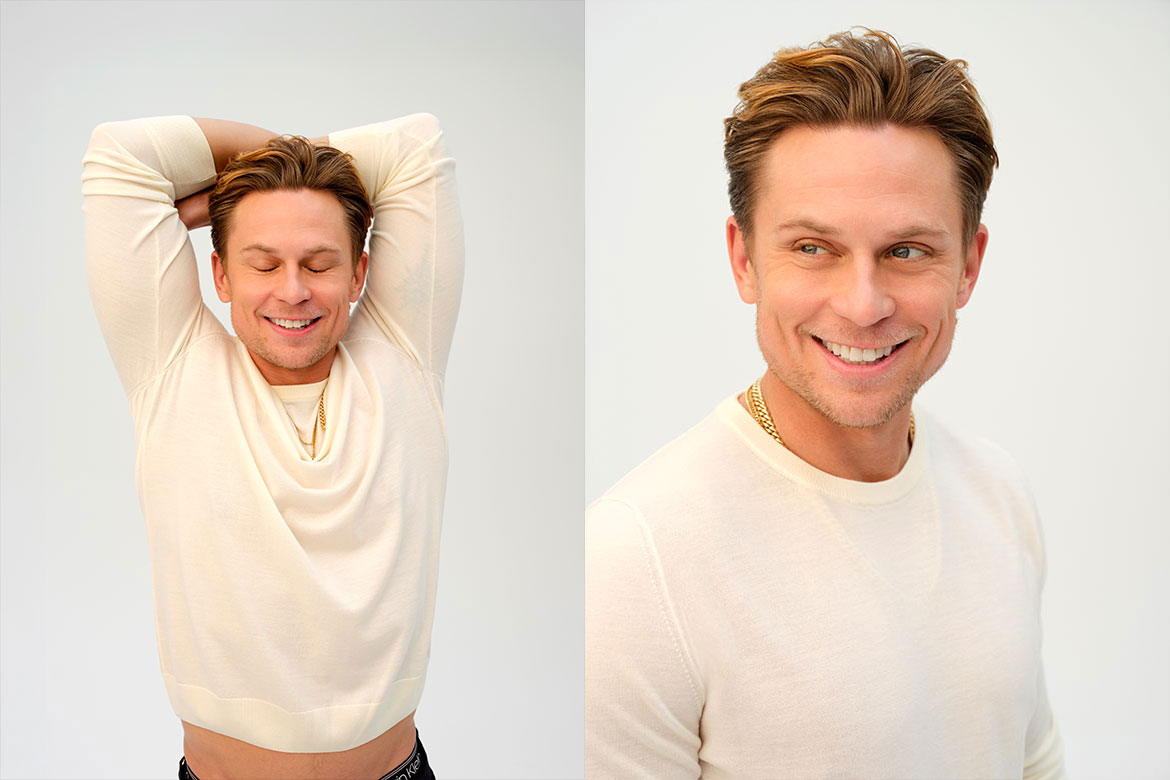
The last thing Glatzer sought, however, was the tech overlords’ perspective, since their power plays routinely clog the headlines. What was required, he felt, was an ecosystem view, centered a few tiers below. “This was an atmosphere different from any place I’d ever been,” he says. “Rather than doing something directly about tech, I wanted to focus on the denizens of Silicon Valley — the also-rans, the wannabe titans — and spider-web it from there, with a big enough lens to encapsulate spouses, kids, their tutors, their private schools, psychiatrists — all of them able to collide with one another. The tech world is the backdrop, but it’s also imbuing everything. Let’s just say my characters are people who could benefit from recognizing that they are fallible creatures, and that the limitations of life are actually what make life interesting and what make us human.”
That mindset — honed from Glatzer’s years in the antihero space under showrunners Vince Gilligan and Jesse Armstrong, hammering out stories about dishonest lawyer Saul Goodman on Better Call Saul and the dysfunctional Roy clan on Succession (which earned him that Emmy) — paid off handsomely. AMC greenlit The Audacity to series off his first draft of the pilot script and later renewed the show for a second season before its premiere — a rare achievement.
Sarah Goldberg plays Dr. JoAnne Felder, therapist to Billy Magnussen's Duncan Park.
Goldberg describes JoAnne as someone whose expert training is losing the battle to the Valley’s squishy scruples. “She came into her profession idealistic, setting out to help people,” she says. “But she’s always been seduced by something shiny across the road, just out of reach. She’s chosen this world. She’s not doing pro bono work in some inner-city school. She’s working for billionaires intentionally, and she starts to go, ‘If I’m the most intelligent person in the room, why don’t I get a little bit of this? Is that bad?’ She’s tiptoeing over the line and justifying that to herself. Most of the characters on this show are making short-sighted decisions with long-term repercussions.”
JoAnne’s difficult relationship with her awkward teenaged son, Orson (Everett Blunck, The Plague) — a child of divorce encountering the Valley for the first time — is one such problem area. In a cringeworthy scene, her chance at closeness crumbles when she forgets his birthdate. “I love how that scene was written — that pain she feels of knowing how much she’s failed him, but then quickly blaming him for something else,” Goldberg says. “That flip in someone who knows they’re wrong but becomes so defensive signifies a lot of the ways people operate in this world. Jonathan is very intelligent to give us the teenage lens, because there’s purity and honesty to it. [Orson] can see through the bullshit, and Everett is a fantastic actor. I think Orson is the heart of the show.”
To read the rest of the story, pick up a copy of emmy magazine here.
This article originally appeared in its entirety in emmy magazine, issue #5, 2026, under the title "Silicon Folly."