
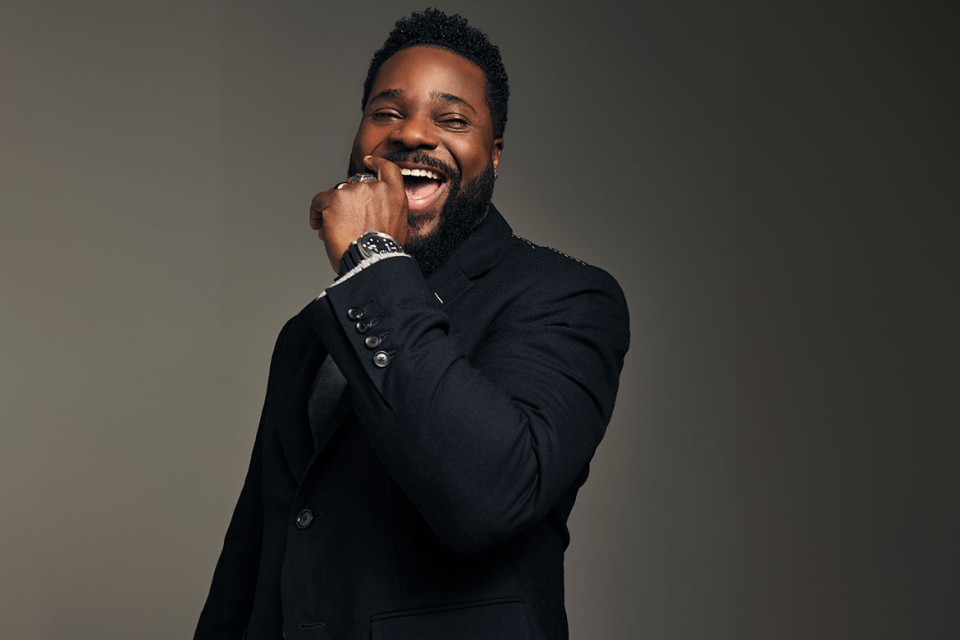
2025's news that Malcolm-Jamal Warner had died at the age of 54 provoked shock and grief far beyond the circle of people who knew him personally. An actor, director and musician, Warner played middle child Theo Huxtable on the smash NBC hit The Cosby Show (1984-92), making him a television star in an era when massive audiences sat down to watch the same show at the same time. As actress Taraji P. Henson put it after news of his drowning broke, "Malcolm, we grew up with you."
Warner was born in Jersey City and raised in Los Angeles by his mother, Pamela. His work on The Cosby Show was recognized with an Emmy nomination for Outstanding Supporting Actor in a Comedy Series in 1986, and he also directed five episodes of the sitcom. After it ended, Warner made a successful transition into an adult career as an actor and director on multiple TV shows, such as Malcolm & Eddie (1996–2000), Reed Between the Lines (2011, 2015) and The Resident (2018–23).
Warner was also a poet and spoken-word artist. In 2015, he received a Grammy Award for Best Traditional R&B Performance for his contribution to Robert Glasper’s cover of Stevie Wonder’s “Jesus Children.” Warner’s 2022 poetry album Hiding in Plain View was nominated for a Grammy Award for Best Spoken Word Poetry Album.
Warner was interviewed in July 2013 by Nancy Harrington for The Interviews: An Oral History of Television, a program of the Television Academy Foundation. The following is an edited excerpt of their conversation. The entire interview can be screened at TelevisionAcademy.com/Interviews.
What are your parents' names and what do they do for a living?
My dad is Robert Warner, Jr. He is presently a teacher at Chicago State University, but for most of my life he’s been a counselor, counseling youth in several rehab centers. He’s always been involved in the community and in some kind of teacher-counselor position. My mother, Pamela Warner, is actually one of my managers. She became my manager second season of Cosby. I had a manager, but because I was still a minor and everything had to go through her anyway, it just made sense for her to become my manager, keep the money in the family. She co-manages my career at this point. She has been a really wonderful part of my career and a big part of keeping me grounded and centered, growing up in the public eye.
How did you get into acting?
My mother was always trying to find things for me to do. It’s basketball one year. Then basketball season was over, and my mother’s friend suggested an acting workshop in Inglewood, California. I got into the workshop and found that I really liked being onstage. The first play that I ever did was called Alice, Is That You? It was based on The Wizard of Oz, and the concept was Dorothy gets to Oz and everybody thinks she’s Alice from Alice in Wonderland. I played the Tin Man. I remember opening night; my first line was, “Oil. I need oil.” And the audience cracked up. When the play was over and we came out for curtain call, getting a standing ovation, for me, this 9-year-old kid onstage, that was like, “I like this. I can do this.” I think that was when I got bitten by the bug.
How did your role on The Cosby Show come about?
When my agent first submitted me for Cosby, they were not interested in seeing me because they were looking for a 6’2” 15-year-old, and I was 5’5” and 13. Fast forward months later. Good Friday, 1984. My mother had the day off and decides we’re going to go to the movies. By the time we got home, it must have been about 5 o’clock, and we had all these messages on our answering machine from my agent saying I had this audition for this show with Bill Cosby. And we’re like, “Cool, but we just got home.”
My agent calls casting and convinces them to stay ’til I got there. I don’t think I got there until like 6, 6:30. On Good Friday. The casting director had already left, but his casting associate had stayed. We finished the audition, and she called the casting director back. “You’ve got to come in. You’ve got to see this guy.” I auditioned for him, and they told me to come back on Monday.
When I get there on Monday, there are three guys up for Theo. I was literally the last person they saw. It was the final callback, so network and studio were there. When I went in, I read Theo like I saw kids on TV. They were smart alecks and precocious. I’m reading with the casting director, and I’m hitting all the beats. I’m playing the precociousness to a tee, and they’re laughing in the room. I’m done, thinking I did a really good job. I look up at Mr. Cosby, and he has his face in his hand and says, “Would you really talk to your father like that?” I said no. He said, “I don’t want to see that on the show. I’ll tell you what. You go back out there. You work on it and come back and show me something different.”
It almost crushed me. But I had gone with my acting teacher, and we reworked it. When I came back in the room, I did a 180-degree turn, and they dug it. I finished, and he said, “That’s what I’m talking about.” I booked it that day. [Director] Jay Sandrich always said that I got the job because I knew how to take direction.
Was Theo based on anyone?
He was loosely based on Ennis, Mr. Cosby's son. The reason they were looking for a 6'2" 15-year-old was because Ennis was 6'2". I remember there being a joke in the original script where Cliff [Cosby] is talking to Theo and says, "Theo, stand up." Theo stands up, and there's a beat, and he sees that Theo is taller than him. He says, "Theo, sit down."
Ennis was having some difficulties in school. Once Ennis got tested and they realized he had dyslexia, Mr. Cosby added that to Theo's journey. So some things in Ennis's life translated into Theo's life. But Ennis was a really good friend of mine. It was never a matter of watching him and trying to emulate him for Theo.
Describe Theo's look.
You mean describe Theo’s looksss. Three S’s on there. Sarah Lemire, who was the wardrobe designer, loved bright colors and sweaters. Sometimes I’d watch the show and go, “Wow, I really wore that?” But she definitely keyed in on style. The Huxtables were always fashionably dressed. Not fashionably dressed in terms of following the trends, but fashion forward. I think through the course of the eight years I had every single hairstyle, except the Jheri curl and being bald. The height of craziness for me was when I had the high-top fade. One year it was high and dyed red with the little ponytail braid in the back.
Then there was a point when my facial hair started to come in. One episode, they had seen me on the monitor, and Jay Sandrich wanted me to shave. I did not want to shave. Because when young boys start shaving, because of the way our hair grows, we have to deal with ingrown hairs, and once you shave it starts to grow back thicker. Chuck Vincent, our first stage manager, who is Black and had his share of shaving problems, saw the look on my face and went to the control room and said, “Jay, please don’t make this boy shave. It’s not going to be a good look.” Jay and Mr. Cosby decided to let me keep my mustache. Then, later on, the beard came.
Theo was the first teenager on television with facial hair. Theo was also the first teenager on television to have his ears pierced. It’s a very little-known fact, but I get to say it here: I was a trendsetter, in essence. Now you see teenagers with facial hair and earrings, and it’s cool. But Theo was the first teenage character on television to rock that.
What do you think is the legacy of The Cosby Show?
Its universal appeal. The Cosby Show, for Black America and white America alike, finally legitimized the Black middle class, which had been around since the inception of this country, but as with everything, it's not legitimate until it's on television.
When the show first came out, there were white people and Black people talking about, "The Huxtables don't really exist. Black people don't really live like that." Meanwhile we were getting tens of thousands of fan letters from people saying, "Thank you so much for the show. My father is a doctor; my mother is a lawyer." We were able to show that to the world and say, "This is how Black people live." It allowed us to shatter the narrow vision of Black life, and introduced the reality that you cannot encapsulate Black life into one thing. There are so many different facets to the Black community. I would always say that just like Good Times cannot represent all Black people, neither can The Cosby Show. Cosby really, I think, etched in people's minds, "Whoa, Black people are not all the same."
In '86 you were one of the youngest people to ever host Saturday Night Live. What was that experience like for you?
That was pretty awesome, having grown up watching Saturday Night Live. When they asked me to host and asked me who I wanted on as a musical guest, I was like, “Run DMC.” So I got Run DMC on Saturday Night Live. And part of my opening monologue was me and Dana Carvey. I was so happy, because I had just learned this dance called “the wop,” so I made it part of my opening routine, and I had G.E. Smith and the Saturday Night Live band playing “My Melody” by Eric B. & Rakim.
I remember in between rehearsals, Run hears the band playing “My Melody” and he says, “Yo D, he got them playing Eric B. & Rakim.” So to see Run impressed because I got the Saturday Night Live band playing Eric B. & Rakim, it was such a treat for me, because I had a hand in bringing hip-hop to Saturday Night Live. To get that respect from Run was a blast.
In 1996, you started doing Malcolm & Eddie. How did that come about?
Malcolm & Eddie was a package deal. The agency had Eddie Griffin, and somebody came up with the bright idea of, "Let's do a '90s urban Odd Couple. Who else do we have in our roster that would be the Felix Unger character?" We met, and that's how that show came about.
That show was really frustrating for me, because at the time we were on the UPN network, which had mostly Black programming. And their programming tended to revert back to the more stereotypical humor. I had just spent eight years showing that Black people could be funny without being stereotypical.
Malcolm and Eddie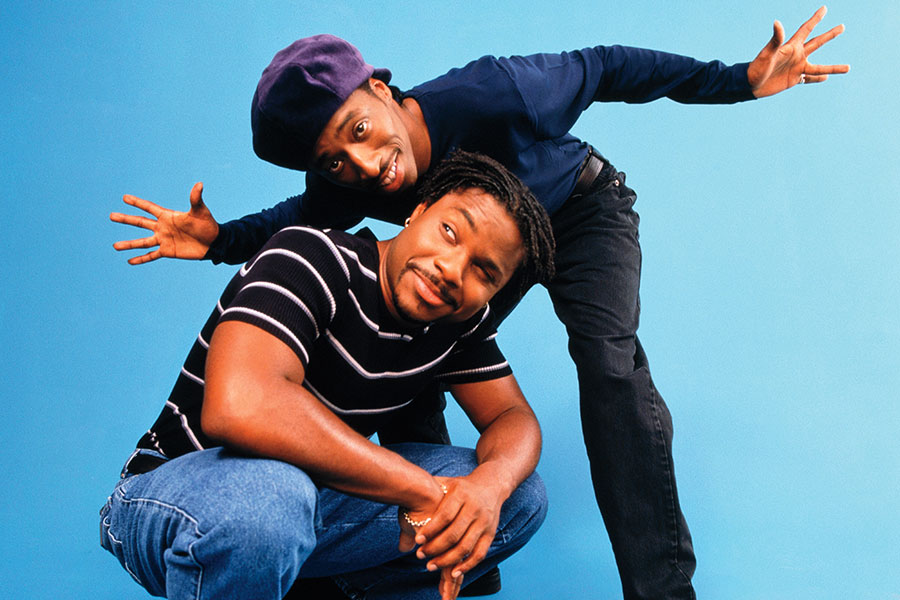
During that time is when I found music. I started playing bass, specifically because I realized the show was going to break my heart. I knew I needed a hobby; something that was not going to turn into a career. I'll just practice scales to a metronome in my dressing room, and that'll give me peace of mind.
I shortly found out that practicing scales to a metronome in my dressing room was not giving me peace of mind at all. I ended up doing jam sessions, then going to a musicians' institute and really learning how to play bass. I put a band together to make me practice, and then my band started playing the L.A. club circuit two or three times a month. It ultimately turned into another career. But it was being able to express myself as a musician and as a poet that allowed me an avenue of creative release that I was not able to do as an actor, especially with Malcolm & Eddie, and that I wasn’t able to do as a director. I was able to use a different voice and express my heart, as passionately and honestly as I needed to.
Then you went on to do Jeremiah.
I'd wanted to do a one-hour. I'd been doing sitcoms for so long, stuck on the soundstage, and I just wanted to be out in the elements. I started out doing dramatic work before Cosby. Cosby had really been my first comedy role. I wanted to get back to using the dramatic muscles. And Jeremiah was the show that allowed me to do that.
In the original pilot, there was a scene where my character ends up being hung from a tree, upside down. Even before I screen-tested, I had a conversation with Joe Straczynski, the writer and the exec producer–showrunner. I was like, "Dude, we can't do that." Also, you had Jeremiah, Luke Perry's character, who was smart and could read, and me, Kurdy, who was illiterate. Again, I was like, "Dude, we can't do this. NAACP will be all over this show." We had to have that conversation, before I even screen-tested. He agreed; he was going to make certain changes. That was another show where I was really intent on trying to do things differently so the Black guy is not just the sidekick. a show based on [actor-director] Robert Townsend's wife, Cheri, who is a psychologist. Loretha Jones at BET decided she wanted to do the show based on her, a psychologist balancing her career with her home life. I came in and read for the husband.
Initially the mandate was the show would be 70% office and 30% home. When they cast me, they realized they had to change the angle of the show: "We've got to do 60% home and 40% office." So it ended up being a show about these two doctors. She's a psychologist. I was an NYU English professor who taught online so I could stay home with my three kids. So here we are, both doctors, three kids, probably the closest show to The Cosby Show since The Cosby Show. A show about a loving family that happens to be Black. Everybody at the network was seeing it as this show about this loving Black family, and Tracee [Ellis Ross] and I were always trying to butt up against that, saying, "No, no, no, no, no. The show's not about a loving Black family. The show's about a loving family that happens to be Black."
Malcolm-Jamal Warner and Tracee Ellis Ross from Reed Between the Lines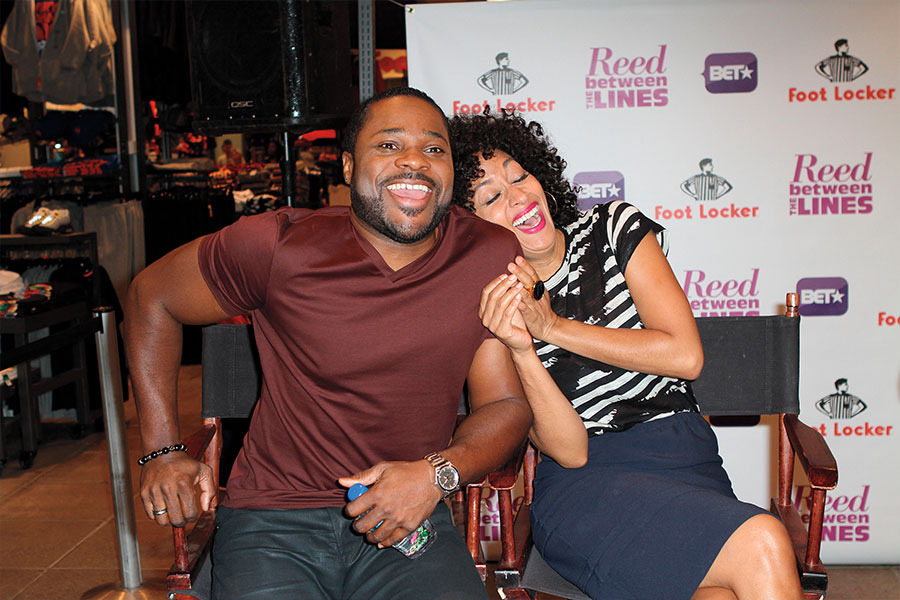
It may sound like semantics, but that's a very significant filter through which you approach executing that kind of show. So, from the onset we had some differences. But Tracee and I, we had such a blast together. We were co-captains on this ship. We really, really enjoyed each other, and I had gone on record saying it was the best non-physical love affair that I'd ever had. We were on the same page. Unfortunately, the ratings weren't that great, and we realized we were producing two different shows. I think when you watch the show you see it was a little disjointed.
What's your proudest achievement?
Honestly, I'd say my proudest achievement is being able to have a post-Cosby life and a post-Cosby career and still have my head on as straight as possible. I've had such an awesome life. I've had my ups and downs and all of that, but if I die tomorrow, I know I would go with a smile on my face. I haven't wronged anybody to get ahead. People that I may have hurt or wronged unintentionally, I've had the opportunity to own up to those things and be responsible for my part, and I have peace of mind. For me, you can't put a price on that.
This article originally appeared in emmy Magazine, issue #1, 2026.
The contributing editor for Foundation Interviews is Adrienne Faillace.
Since 1997, the Television Academy Foundation has conducted over 900 one-of-a-kind, long-form interviews with industry pioneers and changemakers across multiple professions. The Foundation invites you to make a gift to the Interviews Preservation Fund to help preserve this invaluable resource for generations to come. To learn more, please contact Sam Abney, director of development, at abney@televisionacademy.com or (818) 754-2829.