
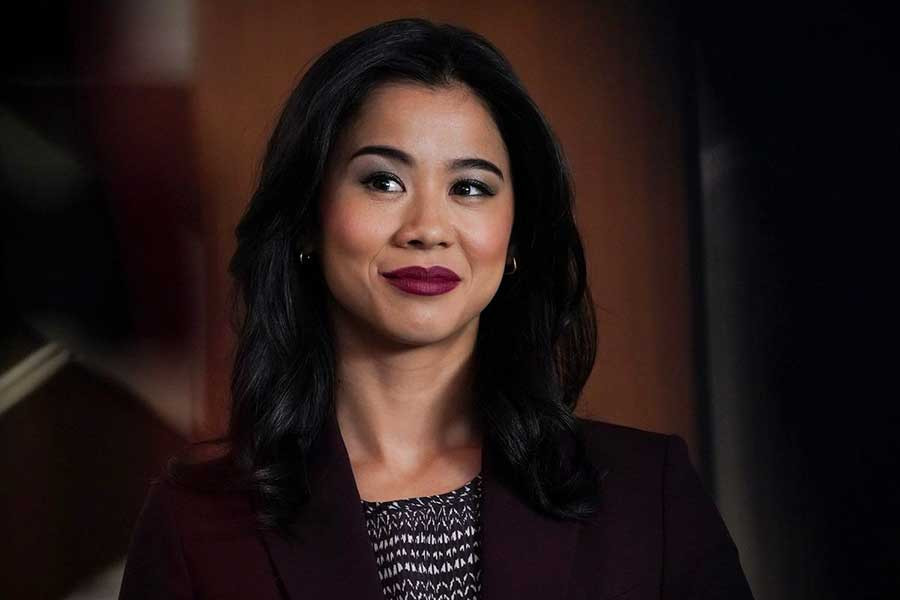
Life and art have come together for Leah Lewis, who plays second-year associate attorney Sarah Franklin on CBS’ hit drama Matlock.
In the series, which airs Thursdays at 9 p.m. on CBS, Kathy Bates stars as a wealthy retired lawyer who uses the persona of Maddie Matlock to infiltrate a law firm she believes hid evidence that could have saved her daughter from dying of an opioid addiction. In the season two finale, which aired April 23, it looks like Franklin is about to learn Matlock’s secret.
In real life, Lewis’s heritage is no secret. When she was six months old, the actor was adopted from an orphanage in Shanghai and grew up in a Caucasian household. Her character, Sarah Franklin, was also adopted into a Caucasian family, but the two are at very different stages of their adoptive journeys. Lewis — whose credits include the Netflix film The Half of It and Pixar’s Elemental — was a series regular on The CW’s Nancy Drew. She also booked recurring roles on Hulu’s Guidance and ABC’s The Good Doctor. Now, Lewis finds that her current role's personality and experiences often reflect those from an earlier period in the actor's real life — when she first began exploring her Asian American heritage.
Below, Lewis talks with the Television Academy about how growing up in a predominantly white environment shaped her experiences as an Asian American. She also shares how her role on Matlock helps her to explore what it means to be Asian American.
Television Academy: How did you land on acting as a career?
Leah Lewis: I started at seven or eight years old in community theater. One of the first things I did was play Molly in Annie, and then the teacup in Beauty and the Beast. The moment that I was performing, singing and dancing is kind of where it started for me. My love for theater growing up — and my love for how entertainment has moved me — has always been my main reasons for doing this.
Talk about growing up Asian American. What was your childhood like?
I was born in Shanghai, China, and was adopted into an American family. My younger sister, Lydia, was adopted from the same orphanage. My two parents were very encouraging of us being Chinese and were so happy to have adopted us. Growing up in Orlando, and even now when I visit there, I don't really see many Chinese people. My parents tried very hard any time we were around Chinese people to associate with them and learn from them. I was around 20 years old when I had a really big cultural shift; I realized that there was this huge part of me that I had not really tended to, being Chinese-born.
The more I started to broaden my community and actually hang out more with Chinese people, things changed. I realized there were a lot of things that I grew up with in high school that I had turned my back on.
Like what?
A lot of the stigma around being Asian — and for Chinese people, specifically — was that you had to be a certain thing. You had to be good at math. Or, "You're pretty — for an Asian." It didn't really strike me until I was older that that’s not okay. But when you're discovering that in high school, in a smaller town, high school can be mean!
What helped trigger your cultural awareness?
Part of it was the xenophobic rise when Covid happened. It was also work.
In The Half of It, I played this character who was a child of an immigrant. When that role came in, it really put the pedal to the metal in terms of solidifying what this all means to me, as Leah. Then, while filming Nancy Drew, I lived in Vancouver. That was one of the first times that I was seeing Chinese people everywhere. It was so cool to me.
Lewis and Kathy Bates in a scene from Matlock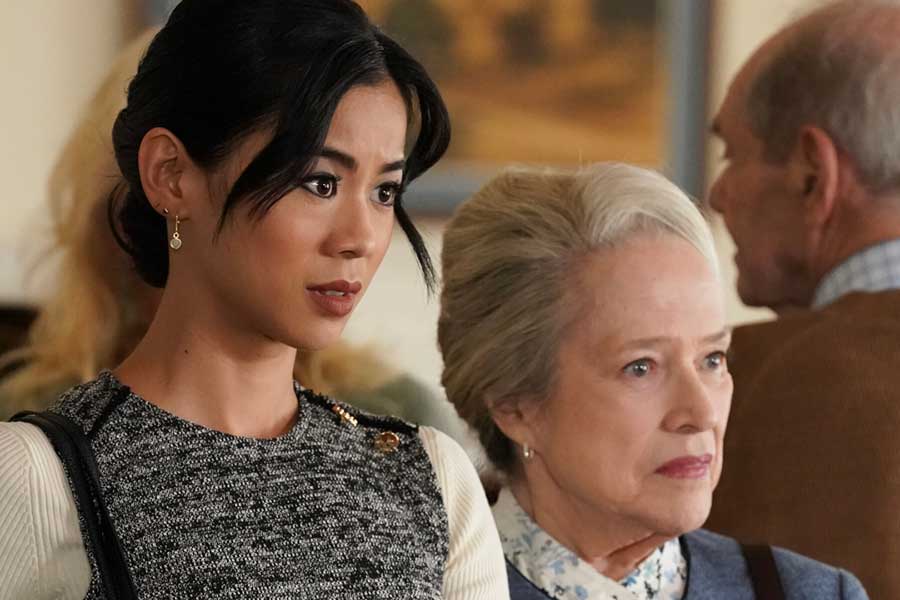
When you read the pilot for Matlock, did you quickly identify with the character of Sarah?
I grew up with two parents who are now very elderly. My father is 87, and I'm not going to share my mom's age, because she'd kill me. But Sarah is definitely averse to people who are a little older, who seem outdated to her. Seeing this character be so averse to Maddie Matlock reminded me of a younger version of myself — someone who was much more competitive and very blunt. It was hard for me to resonate with being rude to older people, because I love my parents so much.
I also love all of the older people that they've brought into my life. That was a weird jump for me to actively play.
What do you like most about playing Sarah?
She's so funny. I love how solution-forward she is when it comes to the work. I see her as incredibly ambitious and really deeply, hungrily clawing her way through figuring out who she is. I think that's the work we do as an actor, to find the why and to explore the layers.
When you're exploring Sarah’s adoptive journey, how has that affected your personal journey and growth as an Asian American?
There's a scene in an episode of Matlock from the first season ["Crash Helmets On"], where someone finds out that Sarah is adopted. Sarah goes through the list of things you say, like, "No, my parents didn't do this," or "Yes, they're white." Now, if someone talks to me about adoption, I'm happy to talk about my experiences with them — even though I've heard the same questions over and over again. When I was younger, when I was really out of touch with having both identities, I was just like Sarah. She does not want to talk about it, and I totally understand why. She’s trying to assimilate and close that door.
How does being Asian American affect your career?
I don't think anything was ever said to me, but it was very clear early on that — "You're not Belle [from Beauty and the Beast]," or "You're not Annie." The industry is changing, though. When I was auditioning for The Half of It, I thought, "Could it be that there's actually a role where an Asian woman is a lead, and I could actually book this?" It's hard going in — year after year — and being okay with knowing I'm likely not going to book this because this titular character happens to be Caucasian. It's in the little micro ways that somebody will tell you.
I think right now, though, we are in the middle of changing that.
With your experiences in mind, how do you feel about being Asian American now?
I'm really proud of both cultures — I don't think that's talked about enough, you know? I also think that kind of mentality has turned me on to being open and inviting to other cultures. However people choose to identify, I think we are all just trying to feel proud of who we are and where we came from.
This interview has been edited for length and clarity.