

On October 6, 2000, those who thought they’d seen it all when it came to TV crime dramas were proven very wrong.
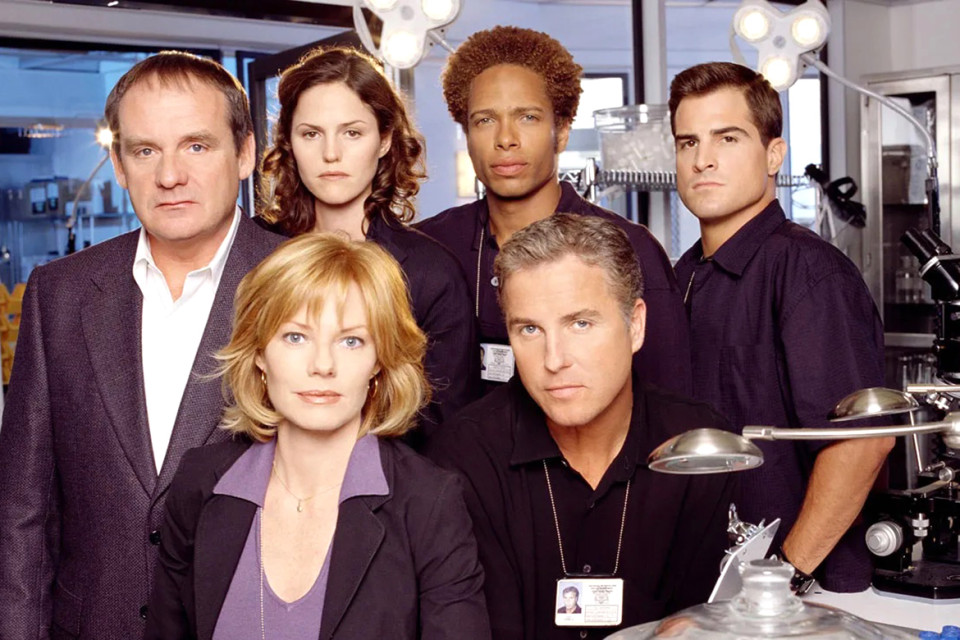
25 years ago today, CBS premiered CSI: Crime Scene Investigation and, in doing so, forever changed TV (and the procedural format) with the long-running series’ unique approach to making science the star of the show.
"It wasn't a police show, it was a forensic show," CSI creator Anthony E. Zuiker tells the Television Academy in an exclusive interview.
Zuiker, a Las Vegas native at the time and aspiring screenwriter, turned his idea for a TV series into a franchise that spawned four spin-offs and won six Primetime Emmy Awards over the mothership show’s 15-season run. CSI, the first show from feature film producer Jerry Bruckheimer (Top Gun, F1), also proved to be a ratings powerhouse; it became the number one show on network television in its third season and, for eight seasons, it was a Top 10 staple.
With an average episode netting 20-plus million viewers, CSI put forensics front and center, shining a spotlight (er, flashlight) on a vital but then-little seen side of law enforcement. In the process, Zuiker’s creation turned original series leads Marg Helgenbrger and William Peterson into TV stars.
As CSI celebrates its 25th anniversary, Zuiker shares his game-changing procedural’s origins, why forensics was his way “in” to the genre and how he helped cast the lead roles.
Television Academy: Where did the idea come from to put forensic science front and center in a crime show?
Anthony E. Zuiker: In 1998, I was watching a Discovery Channel show called The New Detectives. There was this particular episode about Linda Sobek, an L.A. Raiders cheerleader that was killed by a photographer. In that episode, there were three pieces of key evidence that stuck out to me as a layman just watching the show — and the light bulb went off.
I poured myself a glass of cabernet and I wrote the script in three days.
What was the reaction to that first draft?
We didn't change much. People were liking [the script] early and when I first went into pitch ABC, they passed. They didn't really understand what the show was. And then I went to go pitch Nina Tassler [at CBS] and she actually bought it in the room — which doesn't happen anymore.
The next thing you know, I was in production and I was sitting with Billy Petersen (as Gil Grissom) and Marg Helgenberger (as Catherine Willows). I remember the first time I saw the cut [of the pilot] on a VHS tape, it was sent to the house, and I'm like, "This is actually pretty good. Not bad."
How was the casting process for the show?
Billy [Petersen] was under a holding deal for seven years. He was on his seventh year and Billy Petersen is notorious for saying "no." If you ask him, he’ll say, "The reason I'm still in this business is because I say ‘no.’"
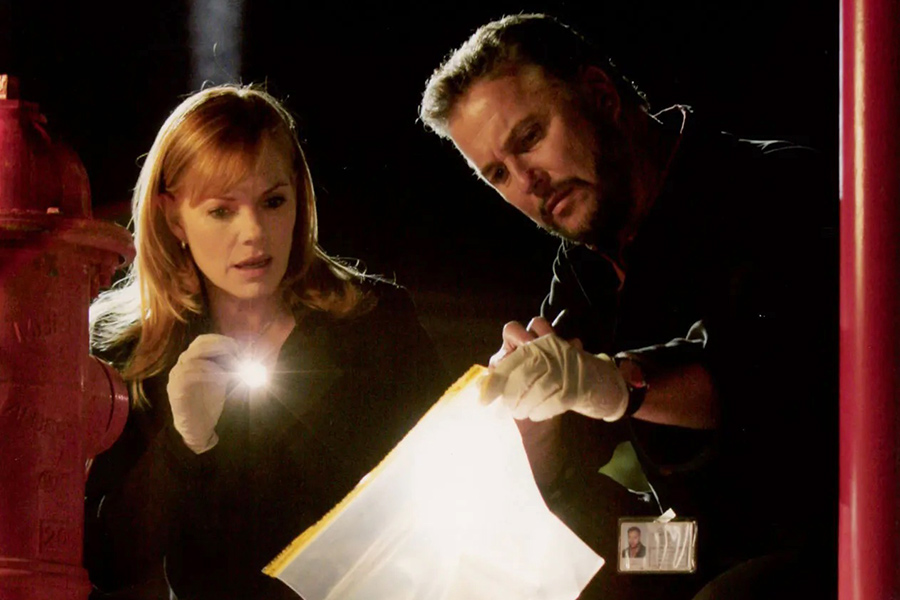
I had Billy locked in early. And then Marg — don't forget, she was coming off Erin Brockovich. But we got her involved and that was a big deal. Then, Jorja Fox (as Sara Sidle) and George Eads (as Nick Stokes) were cast pretty quick; we really struck gold.
You said the pilot script didn't really change much. How did you strike the balance between the “case-of-the-week” format and the character drama?
I was a little all over the place in terms of exactly what the show was.
In the pilot, we had these character arcs with Marg's character and multiple cases going on at the same time. Then Carol Mendelsohn and Ann Donahue came in as showrunners to partner with me and teach me, so we very quickly began to start doing “A” and “B” stories. We also toned down any ancillary character arcs and kept it about the mystery and the plot. That's when the show really got its rhythm.
What was unique about CSI being set in Las Vegas, which is where you grew up?
It's a handful of things. First, Las Vegas — as a setting and as a character — is the perfect backdrop for a crime drama in terms of just pure sex appeal and excitement. Second, you forget that there are CSIs and officers that work the graveyard shift, like 10 p.m. to 6 a.m.. I found myself riding along with the CSIs in real life and we were at Caesar's Palace at midnight, eating lobster bisque, and then we're in a cop car driving around to see blood and guts at three in the morning.
The show employed a unique visual style when it came to showcasing the forensics on a victim. Where did that choice come from?
That hook was inspired by a movie called Three Kings. We had those written in the scripts as "snap zooms," so that you snap zoom into the the cadaver and there would be use of extreme close-ups. They would do versions of flashbacks and true crime runs that were all part of the formatting — and it had to be [a part of it] because we were not doing a cop show. It was important that the methodology — our blueprint of the format — was our signature, and we could not be deterred from that.
The romance between Gil and Sara Sidle (Fox) was something that audiences really latched on to, even when those characters returned for the CSI: Vegas spin-off in 2021. Can you talk about the origins of that relationship’s creative development?
There was an episode where we had a rapist running around and there was a body in a wall, and Sidle was affected by it. She was very angry and was hitting the drywall, but then Jorja didn’t realize she had drywall powder on her cheek. In the scene, Billy reached over and just wiped off her cheek and that started the entire [romance] on accident.
What were the key elements that helped keep the show on track after so many years and spinoffs?
Obviously, there's only so many ways that you can kill somebody. It got a little challenging as the years went on.
But Carol Mendelsohn, Ann Donahue and Pam Veasey, those showrunners were highly instrumental in the success of those [spinoffs]. Over the course of all those years, they taught me television — all three of them. So I think the show’s success comes from a combination of really good acting and phenomenal scripts.
This interview has been edited and condensed for clarity.
CSI is now streaming on Paramount+.