
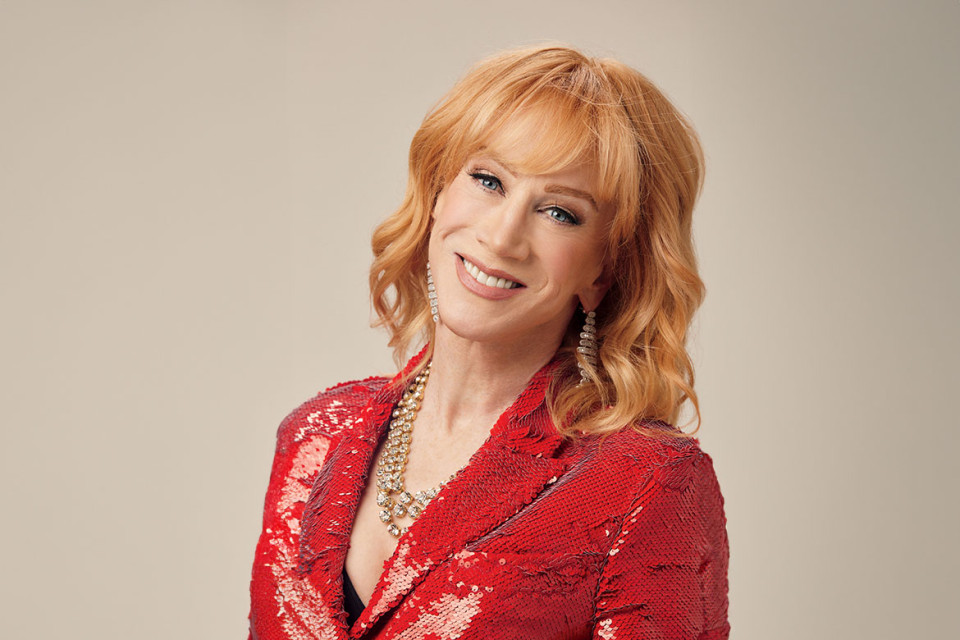
No one tells a tale like Kathy Griffin, and the story of making her 2005–10 TV series, My Life on the D-List, is as hilarious, surprising, poignant and chock-full of industry names as fans expect from the longtime stand-up comedian.
Originally aired on Bravo (currently streaming on Peacock) and following in the format footsteps of early-aughts reality series like The Osbournes, Newlyweds: Nick and Jessica and The Anna Nicole Show, D-List eschewed the glamour of life under the industry’s bright lights. Instead, it found comedy in scheming for publicity and perfecting the Hollywood hustle. Over six seasons, the show made household names of Griffin’s parents, John and Maggie, while not shying away from her real-life tribulations, including a divorce and her father’s death. It was nominated for six consecutive years as Outstanding Reality Program, winning twice, in 2007 and 2008.
Griffin recently completed a 75-date stand-up tour titled “My Life on the PTSD-List,” in which she mined the comedy of some very real personal traumas: lung cancer, a botched surgery, addiction and, yes, that 2017 photo and its subsequent fallout, which she refers to as “the cancellation to end all cancellations.” But, as you’d expect from the Guinness World Record–holder for most televised comedy specials, she’s not slowing down; a 21st stand-up special, her first since 2013, is slated for a YouTube release this year.
Here, with the candor that is her calling card, Griffin shares with emmy editor Stephan Horbelt her personal recollections of pitching, shooting and producing the reality series that cemented her D-list status. “It’s a fun, guilty pleasure,” she says of the show. “It’s still something I’m proud of.”
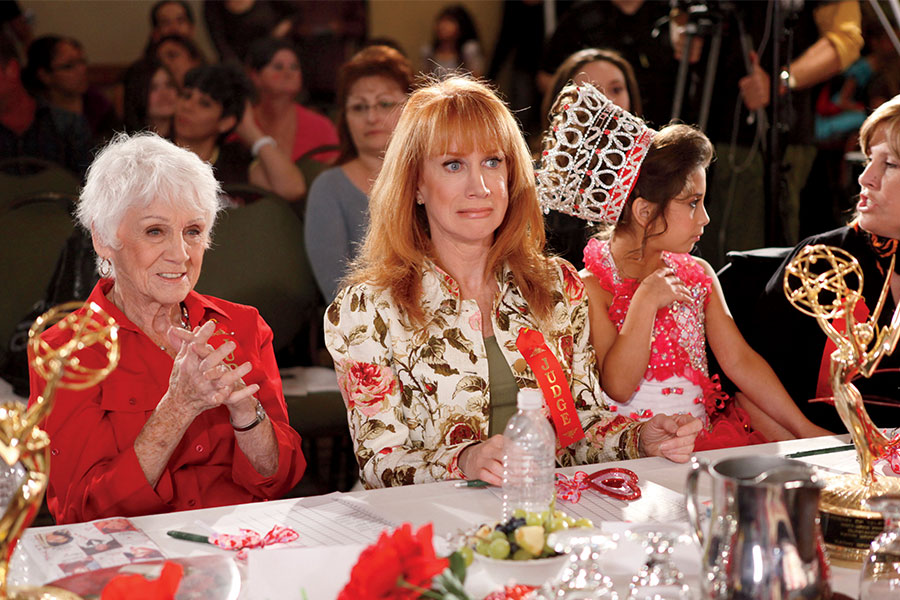 Kathy Griffin with her mother, Maggie, in an episode of My Life on the D-List
Photo credit: Bravo/Photofest
The funny thing is that I thought I was going to get a very expensive, fancy, four-camera, traditional sitcom, because that’s what [then-president of NBC Universal Television Group] Jeff Zucker promised me. I think Zucker thought, “We can save a bunch of money with Griffin, because technically she doesn’t need writers. And we’ve got this subsidiary called Bravo that does all non-union stuff.” So, surprise! He calls me into his office, and there’s [Bravo president] Jeff Gaspin. They’re like, “We want to offer you a series.”
The Osbournes and Newlyweds: Nick and Jessica were the big reality shows at that time, and I loved those shows. They were really real and not scripted. I thought, “Well, I guess I could do that.” I’ve been a magnet for crazy since I can recall. And that’s how My Life on the D-List started. It was a cheap way of doing a Roseanne or a Seinfeld or any of those personality-driven sitcoms. And we dove right in.
I thought I was going to get a big million-dollar-per-episode team of writers all fighting over who wanted to do the show, but I had no clue what I was getting into. I said, “Well, my goal is that no matter what, I want the show to be comedically driven.” I wasn’t interested in doing a meltdown show. Now, remember, this was prior to the Housewives. There wasn’t even Real Housewives of Orange County yet.
The only production company that was even interested was called Picture This, and the only other show they had done was — wait for it — Celebrity Poker Showdown. They were like, “We think we really know how to do this show, and we have a relationship with Bravo.” I didn’t know if I should be with a Bunim/Murray or Endemol or one of the big unscripted houses, but I got lucky with Picture This, because my show might have been the only one they were doing for a while. They really got to focus on it. But they were based in New York, which was a bit of a challenge.
If I had one regret about the show, I don’t think Bravo was as invested, just by virtue of the fact that I was the only show they had on the West Coast. The executives didn’t really visit set. I mean, they would come out once a season maybe, but we overshot the fuck out of that show. I mean, they shot with me for six months for six episodes! They shot and shot and shot, and it was never enough. When I did go back and watch episode one, I was like, “Jesus Christ, I’m exhausted watching this!” It’s like five locations, and they would sit me down for these lengthy interviews.
I got better at speaking in sound bites. It helped that I was a professional comic, but it took seasons to get them [on board]. I was like, “Hey, guys, I can’t just sit in a chair under the glaring lights and be hilarious for six hours.” I remember over the years being like, “Okay, can we get it down to four? Can we get it down to two?” By the end, I was just a bitch. I was like, “Look, you’ve got me for 45 minutes. You’re going to get what you need, and we both know it.”
Bravo and the producers always wanted to throw me out of a fucking plane. Every week they’d be like, “This week, Kathy goes skydiving,” and I was like, “I’ve been through enough!” I’d tell them that every single thing I did had to be a vehicle for getting from the D-list to the C-list or the B-list or the A-list. I said, “If that isn’t the driving factor, I won’t do it.”
By the way, I own my bad reputation at Bravo. I think they got sick of me real fast, because I was really serious as a comic. They’d say, “Let’s put Kathy in a golf cart, and she doesn’t know how to drive it, and she crashes into a bush.” And I’d be like, “So, like every other reality show? No. There’s nothing unique about that. That has nothing to do with getting onto the C-list. Now, Kathy tries to get into a celebrity pro-am golf tournament and tries to be partnered with a big star? That, I’ll do.” And I would do whatever it took.
I would sit down with my agent and my assistant, and we would plan: “Okay, if we’re going to be shooting for six months, let’s take the most D-list gigs possible. Let’s purposely put me in situations that are either funny-humiliating, interesting-humiliating or humiliating-humiliating. Just as long as people are laughing, and they understand that in my warped mind, I’m somehow closer to celebrity. All with the backdrop of my constantly inebriated and lovable parents and their vision of what Hollywood was, which was basically movie stars from World War II.
The show was me trying to still please my parents, but that’s what my life really was. I would bring my mom and dad to every single set. Even when I had three lines on ER, which was a juggernaut at the time, I would call the first assistant director and be like, “Hi, I’m playing scoutmaster number two. Yes, I’ll be there at 6 a.m. Would it be possible for my elderly and frail parents to come to set? They’re both very, very ill and could die at any moment. It would just mean the world! In fact, their dying wish is to watch a day of ER being filmed. They can? Oh, that’s great. Then I’m going to need a box of wine on set. I’m going to need a couple folding chairs. I’m going to need some big hats, so they don’t get a sunburn.”
Whether I did a commercial with [director] Joe Pytka, who’s infamously difficult — I love him, by the way — or whatever gig I was doing, no matter how D-list it was, my parents loved it. So, I was like, “Well, I can’t do this show without them.” And I was thrilled when my parents tested higher on my own show than I did, because I’m annoying and they’re lovable. I loved it when Bravo would call and say, “We need more John and Maggie,” because that was always the most fun stuff to film.
Now, when I see reality shows that are clearly, as they say, “soft-scripted” — but maybe a little more than soft-scripted — I think, “Thank God I didn’t have to do that with John and Maggie,” because, first of all, they were wasted most of the time. Second, you couldn’t tell them what to do, because they knew better, especially about all things Hollywood — of which they really knew nothing. But I was right behind them, because I knew second to nothing. And that’s how we went. We just bulldozed our way into stuff, but there was not one scripted word.
There’s an episode [in season three] where we go to Ireland to spread my dad’s ashes. There was some budget issue around getting our little skeleton crew there. By the way, many episodes we did with one camera. The budget was so low: one shooter, one sound guy, one producer, no writers. We would just try to pull stuff off by showing up and making up a story. So, I went to an event the tourism board of Ireland was having in New York. One of the producers goes, “By the way, we’re still not cleared to shoot in Ireland at all,” and I’m like, “What?” So, I’m all dressed up in a fancy outfit and in hair and makeup, and I’m like, “Okay, time to glad-hand.” I remember going around to any kind of diplomat or someone with diplomatic ties or someone who if I said I would do free stand-up for their kid’s confirmation, they would let us film there. Eventually we got cleared.
Part of me is afraid to watch the show. I’m afraid of the things I’d be canceled for that I said on camera. I tell my younger friends that unless you lived through the aughts, you couldn’t believe how inappropriate they were. The comedy mandate between 2000 and 2010 was to be as vicious and wrong as possible, and I was the woman who made the moment. I was very wrong, very inappropriate. I apologize for all of it. I take it all back. I don’t even remember half the shit I said, but of course there were moments I’m actually glad were captured, because I do like when people say D-List was a real time capsule for that moment. And I’m proud of that. I think it did capture how we dealt with stuff back then. By and large, I’m proud of the show, and I’m glad I have a record of those moments — even the tough stuff, like my divorce and my dad passing.
When my father died, the show made a video about him. They went and found some older stuff, working with my brother, John, and included my dad’s real memorial. The production company was so respectful of honoring Maggie’s wishes. She didn’t want to film anything at all, but they showed her the video they made. She was crying, she was laughing. They put so much TLC into it, because they really loved my dad.
My parents were a riot. They would wrap themselves! We’d be rolling with them, and my mom would go, “Okay, guys, this has been great. I’m going to have a little vino.” And my parents would take their own microphones off, which unfortunately they learned how to do. I’d be like, “Excuse me, we’re filming for two more hours,” and my mom would say, “Oh, Kathleen, you’re a riot. Anyway, we’re going to Rage in West Hollywood, because those gays have the best happy hour. Bye!” And they would just leave. They would wrap themselves. Divas!
I was often shut down from being able to show up somewhere as part of the show. I’m going to go with a conservative estimate of 50%. You do not know how many times I would beg, borrow and steal, as my mom would say. I would lie like a rug. I would make shit up. I would say I was bringing along some other celebrity that I didn’t even know. I mean, it was like the attitude that I have to this day when it comes to selling tickets: whatever it takes.
My last tour, I got to play Carnegie Hall for the sixth time, but I still can’t sell out Omaha. I’m still doing the goddamn college newspaper. I’m doing local radio. I’m doing the jazz station. I’m doing local public TV. I’m doing podcasts no one’s ever heard of. That’s who I’ve always been, and that’s who my parents raised me to be. And I think that’s the thing people respond to.
In terms of the show coming to an end, I felt like the powers that be at Bravo wanted it more scripted. When they started sending me lines, I was like, “You know, this isn’t why you hired me. You hired me because I’m a comic, and I can come up with funny one-liners.” In my opinion, they weren’t allowing it to be as real. And I always wanted more episodes. I’d say, “If you’re going to shoot for six months, I’d like the same as the other shows. You guys, there’s so much on the cutting-room floor.” That was one of our battles, and that’s where being a producer on the show is not fun.
I got the best compliment from Alyson Hannigan of How I Met Your Mother. I saw her at a party somewhere, and she goes, “Kathy, you’ve done a very clever thing. You’re doing a sitcom disguised as a reality show.” And I was like, “Thank you, that’s exactly what I was hoping for. That was my goal.”
Now, there’s a lot more “middle-aged women fighting and flipping tables” reality TV. Maybe the time had just passed for a reality show to basically be a sitcom.