
It’s only fitting that the story of Six Feet Under begins with Alan Ball in mourning.
In late 1999, the TV creator-writer was devastated to learn that ABC was canceling his sitcom Oh, Grow Up! after just 11 episodes. He went home to Marietta, Georgia, over Christmas break and poured his feelings into a spec script for HBO about a family that runs a funeral home.
"I was grieving the death of my other show," he says. "And I was also trying to preempt myself from going back to the network world. My heart and soul were in that pilot."
In the process, he revived his spirit, his career — and the surrealistic American family TV drama.
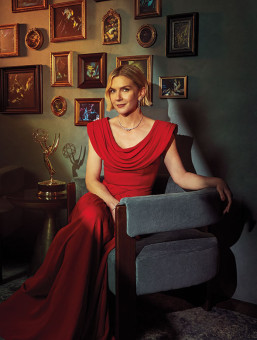
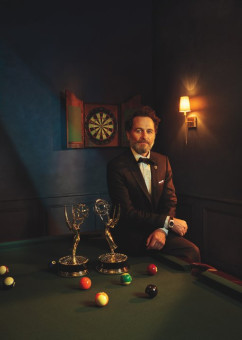
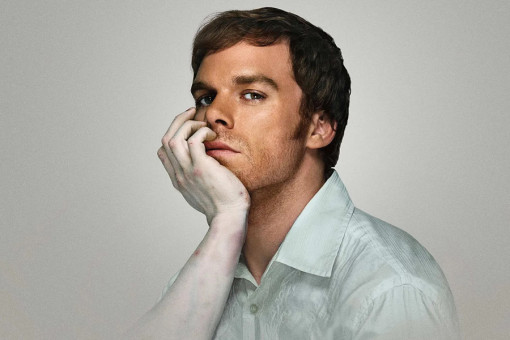
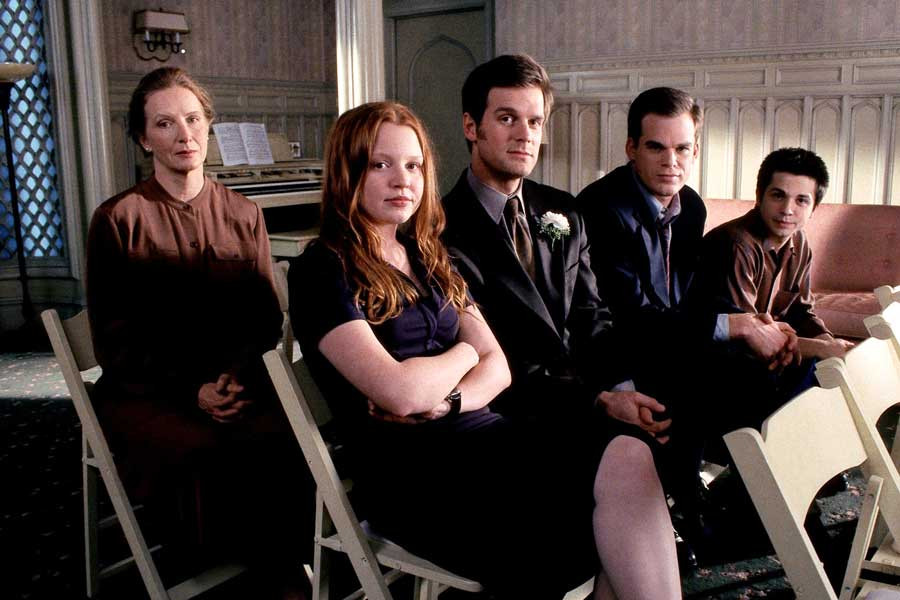
Six Feet Under chronicled the Fisher children of Los Angeles following the sudden death of patriarch Nathaniel (Richard Jenkins). Oldest son Nate (Peter Krause) had a penchant for sex and drugs; David (Michael C. Hall) was gay yet lived on the straight-and-narrow; Claire (Lauren Ambrose) stood out as the rebellious wild child. Digging deeper, the series explored the trio’s complex relationship with their widowed mom (Frances Conroy), the people in their orbit (hi, Jeremy Sisto and Rainn Wilson!) and each other.
Upon its premiere on June 3, 2001, Six Feet Under became a key part of HBO’s juggernaut Sunday-night schedule in the early-aughts. Forget that the drama, with its pitch-black humor and striking visuals, explored loss in the most unnerving of ways — millions of viewers became deeply invested in the characters’ emotional struggles and personal arcs. The payoff? One of the most satisfying series finales in TV history.
Ball was nominated for six Emmys during the show’s five-season run, winning in 2002 for Outstanding Directing for a Drama Series. (He also received a Best Original Screenplay Oscar in 2000 for American Beauty). He went on to create another HBO hit, True Blood, and was a 2021 Emmy nominee for his Prime Video movie, Uncle Frank.
All these years later, Six Feet Under remains a huge source of pride: "All the writers and actors cared about the show," Ball says. "That’s what the show was all about." In honor of the series’ 25th anniversary, he shared his memories with the Television Academy.
Television Academy: Did these 25 years go by in a whirl?
Alan Ball: Yes and no. I mean, in a way, it seems like yesterday. But it also seems like 100 years ago. As one gets older — or as I get older — it does seem like time is speeding up.
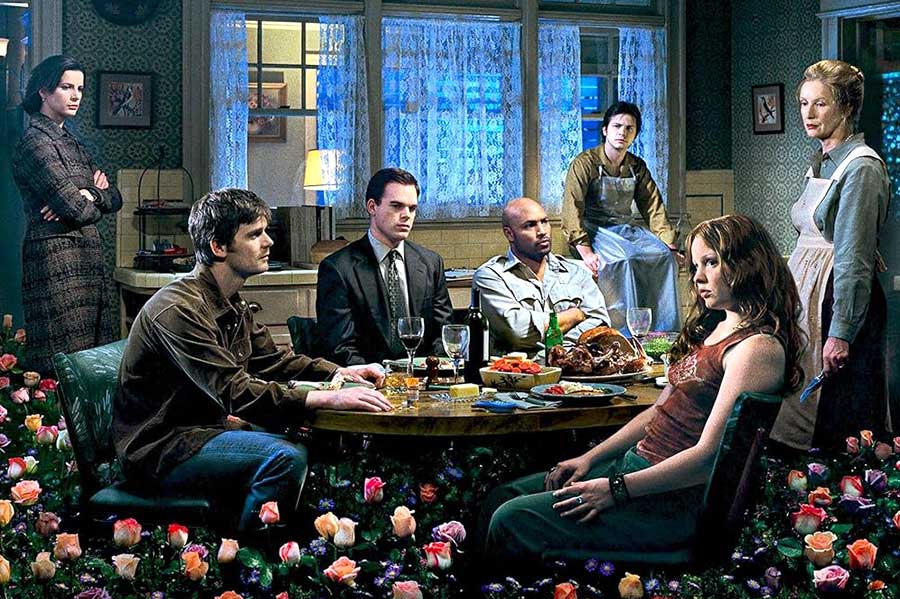
And if anything, the series made viewers realize that we’re all on borrowed time.
But I don’t ever feel like the show was necessarily about death — it was about life in the constant presence of death. We just don’t go around thinking that way. Does that make sense?
The show started as a spec script for HBO. How did that come about?
American Beauty had just come out. [HBO executive] Carolyn Strauss asked me to go to lunch, and I thought, “Hell yeah.” Like everybody else in America, I'd been watching The Sopranos, and I was like, "TV can be so much more than what I thought it could be." And she said, "I've always wanted to do a show about a family-run funeral home." Something in my brain just clicked because I spent a lot of time in funeral homes growing up — a bunch of people in my family all died around the same time. I vividly remember the surreal weirdness of the funeral industry: Everything is soft, and there’s low-lighting in the funeral parlor as you were dealing with this primal tragedy. But I didn’t think I could do it until ABC canceled my sitcom.
How did HBO respond to your script?
The one note I got from [CEO] Chris Albrecht was, "It feels a little safe. Could you make the whole thing just a little more fucked up?" What I had learned during my time in the sitcom world was to make everything and everybody nicer, and to articulate subtext. So I did a second pass on [the script] — I do know that a lot of it had to do with Brenda [Rachel Griffiths] and Nate. I tried to make her a little more complicated and strange. And the executives responded to it.
Did you write the pilot with any actor in mind?
I don't work that way. For me, the character is interesting enough in and of itself. There was some pressure from HBO to have a recognizable name — the one thing that satisfied them was Rachel Griffiths. At the same, she had been nominated for an Oscar for Hilary and Jackie.
According to Ball, HBO was excited about casting Rachel Griffiths as Brenda due to her 1999 Oscar nomination.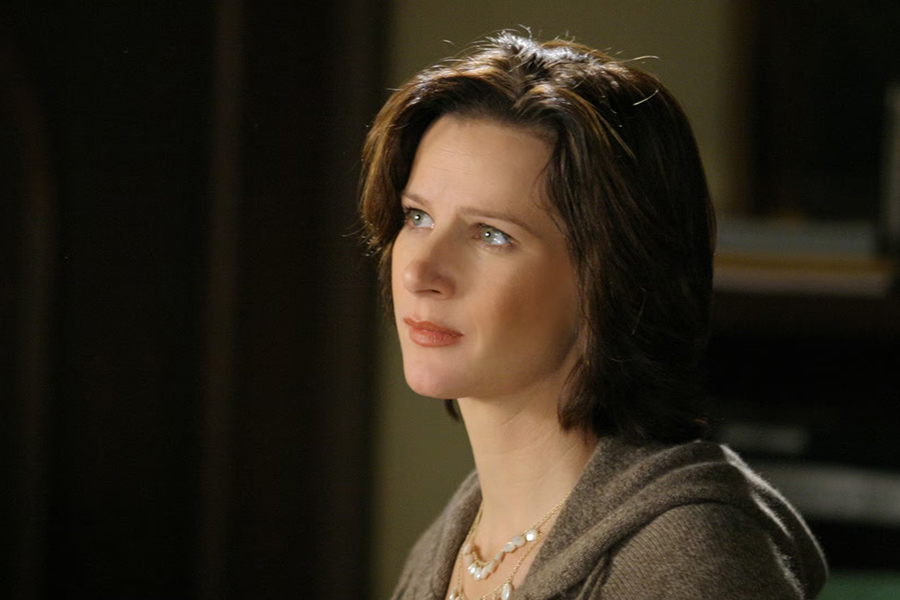
How did you find Peter, Michael and Lauren? Did you know them at all beforehand?
Peter had a recurring role on the Cybill Shepherd sitcom [Cybill] that I had worked on. I did not know Lauren. I did not know Michael C. Hall. I did not know Franny [Conroy]. At the time, all the auditions were in person. I was in the room with the actors. I don't even remember watching any reels or any auditions that were put on tape or video. Of course, that's completely changed now.
Could you sense right away they were the right actors for the roles?
l remember the audition between David [Hall] and Keith [Mathew St. Patrick]. They were at the viewing for Nathaniel's funeral in the pilot. Michael did a little shoulder bump with Mathew. And I saw that character coming to life for me in a way that I totally recognized, but it also surprised me. I was like, "That's the guy."
Did you feel a lot of pressure to deliver something great for HBO?
I don't really remember thinking about it in those terms. I just wanted it to be the most cohesive, most dramatic, funniest version of the script as possible. This was a very personal world for me. I do remember that a lot of people from HBO's marketing department were like, "Oh, how are we going to market this show? It's so dark." But was it dark? I guess you could look at the Fishers and go, "They're kind of dysfunctional." But only in the sense that they're not really emotionally forthcoming. They are all living in their own worlds. Nobody was a drug addict, nobody was abusing anybody. I guess it was just the fact that they ran a funeral [home] and there were a lot of dead bodies around.
There’s a lot of dark humor in it, too.
I wanted it to be funny. I was 13 when my sister died, and everybody was brokenhearted. I got in a room with a couple of my cousins, and we started talking about my sister — all the funny things she had done — and we started laughing hysterically. It was such a welcome release from the grief, so I always wanted the show to really have a comedic edge to it.
What do you recall about your big Emmy night in 2002?
I was really nervous. The whole night I'd been sitting there watching people win, and everybody was so, so funny and clever on the stage. And then I got up there. I had a speech prepared, but my voice was shaking. It was really humiliating — but I felt very fortunate to win it.
We can’t not talk about that iconic series finale montage, in which viewers see how and when the main characters die. What’s the quick backstory on it?
I knew going into Season 5 that it was going to be the last season. So, in the writers’ room, we were thinking about how we were going to end the show. Somebody — not me — said, "We should just kill everybody." We all laughed, but then I thought about it, and I was like, "No, actually, we should be with each one of these characters at the moment they die." It was so perfect that I’m actually embarrassed that I didn’t think of it myself.
Krause and Ambrose in Six Feet Under's series finale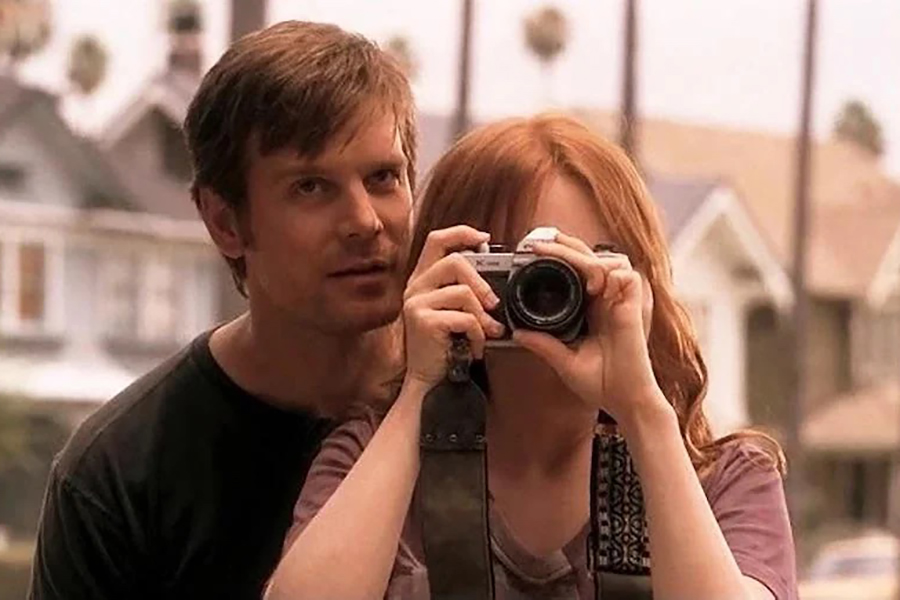
That Sia song, "Breathe Me," is key to the montage. How did you find it?
We had a meeting with our music supervisor. He played maybe five or six songs, and Sia's just really seemed right. We built the editing of that final episode around [the song]. I don’t know if this is true, but somebody told me that Sia was — at the time — considering giving up her career. But after the series finale, she changed her mind.
Why do you think the series ultimately connected with so many people?
It was something we hadn't really seen before — a procedural that took place place in a funeral home. In terms of the characters, there was also something for everybody. You could always find someone to identify with. And we could find something funny in the darkest of places, which was unusual. So I just have to nod to the writers, the actors and the whole crew — and the production design, costumes, cinematography and music.
Do you think Six Feet Under is in its proper place in the annals of TV history?
I don't know. Sometimes, I will see something online like "The 20 Best Gay Couples on TV" or "The Best Gay Characters in TV History," and I'll go through it. Keith and David will not be there, and I'll be like, "What the fuck?!" I’ll also sometimes see a link to "The Best 100 TV Shows,” and I can't stop myself. I start scrolling because I need to find Six Feet Under.
And what is your epitaph for the show you created?
A lot of times I’ll meet young writers, and they’ll ask for advice. I always say, "Don't write about what you think will sell, or what you think people are looking for — write something that you care about and that’s personal to you." It has to be more than just scenes and words on a page and actors saying their lines. That’s what Six Feet Under was to me.
The interview was edited and condensed for length and clarity.
Six Feet Under is streaming on HBO Max.