

The game show, long a broadcast-TV staple and viewer favorite, has made it to academia. In the fall of 2024, Cal State Los Angeles launched a three-course undergraduate program on game-show creation, development and production. It has since been reworked into two courses, with a curriculum designed to prepare students for careers in the genre.
And, in the spirit of game shows, that program began with a conversation between a producer and a professor while both were attending the Television Academy Foundation’s annual Media Educators Conference (MEC) two years previously.
“This is the room where it happened,” Harry Friedman, the Emmy-winning former executive producer of Jeopardy! and Wheel of Fortune told the professors attending the 2026 conference, gathered in the Board of Governors Room at the Saban Media Center at Academy headquarters in the NoHo Arts District. He and others involved in creating and teaching the courses were among the participants in MEC’s “Get in the Game: Teaching Game Show Production.”
The panel was one of 11 inspiring and informative MEC offerings this year. Held October 21–23, the conference serves as a bridge between the classroom and the television industry, providing professors at colleges and universities with the latest information and career tips for their students from top industry pros, along with networking opportunities.
Also covered: emerging technologies and storytelling, vertical production and microdramas, episodic directing, showrunners, the legal aspects of film-festival submissions, launching an entertainment career and the Foundation’s other educational and archival programs.
Click here for "The Power of TV: Creating with Care" photo gallery
The conference began with “The State of the Industry,” an annual discussion with leading entertainment journalists about current and future television issues and trends. Topics included Skydance’s acquisition of Warner Bros. Discovery and the effect of corporate consolidation; the impact of AI on jobs; audience behavior (horror is especially popular); and essential career skills, among them social media fluency, curiosity and, said Los Angeles Times staff writer Samantha Masunaga, resilience:
“The industry is arguably more chaotic than it ever has been. It's smaller than it has been, and yet the next generation of entertainment professionals is finding their own ways to make it in here [such as posting content on YouTube]. That sort of resilience and that sort of ingenuity is very inspiring.”
The Foundation’s free, public series The Power of TV presented “Creating with Care,” an examination of the collaboration and intention in making the Peacock limited series The Good Daughter, an emotional story about the lasting effects of gun violence and sexual abuse on two sisters.
Participants included Karin Slaughter, writer-EP-showrunner of The Good Daughter; Steph Green, director-executive producer, ofThe Good Daughter; Jennifer Simmons Kaleba, vice president, communications, RAINN; and Renee Davidson, vice president, communications, Brady: United Against Gun Violence. Anne Vasquez, executive director of the Foundation, moderated the discussion, which addressed responsible storytelling when dealing with trauma, not only on screen but for those working on the project and viewers who might be survivors of gun and/or sexual violence.
Karin Slaughter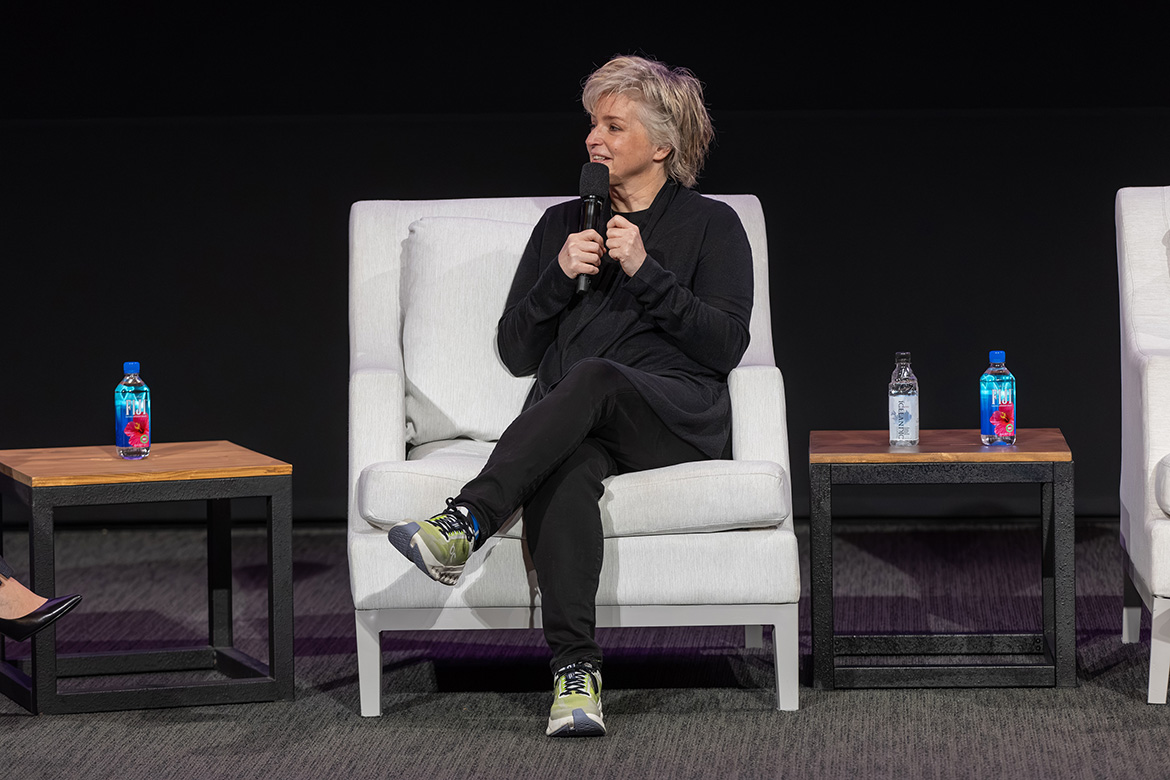
For Rob Eckard, a 2017 Foundation summer intern in episodic production who is now a screenwriter and an assistant professor of creative writing at the University of Wisconsin-Eau Claire, the showrunners and Power of TV panels topped his list of conference favorites. He wanted to attend MEC, he said, “to be able to listen to panels of professionals and experts across the whole spectrum of the industry, and to make sure that what I'm teaching is true to what's happening today, because I think students are viewing university and college less as an opportunity to learn and more as a necessary step in order to enter into a career."
The panel on game shows was the favorite for Dr. Danyelle M. Greene, a documentary filmmaker and assistant professor at Florida Atlantic University in Boca Raton. Students, when assigned a TV pilot to create, often choose game shows, she said.
“When I heard the curriculum they were talking about, I kind of started glowing, because it sounds like it would be so much fun but also educational for our students, giving more grounding for something that they're already interested in,” she added.
Greene also appreciated the opportunity to network and exchange ideas with fellow professors; they’ve organized a group on the GroupMe app to maintain connections.
All in all, attending MEC, she said, “was life-changing and career-changing.”