

It’s not like teens were invisible from TV screens in the fall of 1990. There were genius ones (Head of the Class, Doogie Howser M.D.). Friendly ones (The Wonder Years). Wisecracking ones (Growing Pains, Saved by the Bell). Street-smart ones (The Fresh Prince of Bel Air, Parker Lewis Can’t Lose). Even ones that originated as movie characters (Ferris Bueller).
But none of these teens were truly taken seriously, as they were predominantly presented in the sitcom format. That meant their personal challenges were only addressed via occasional “Very Special Episodes” wrapped up in under 30 minutes.
Enter Beverly Hills 90210.
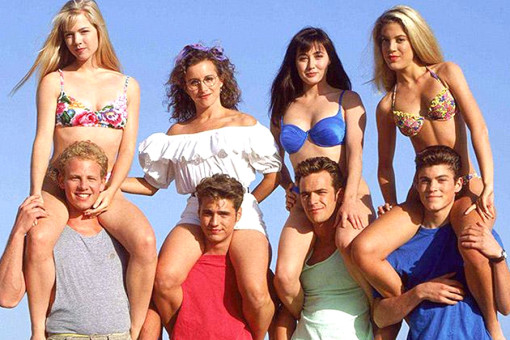
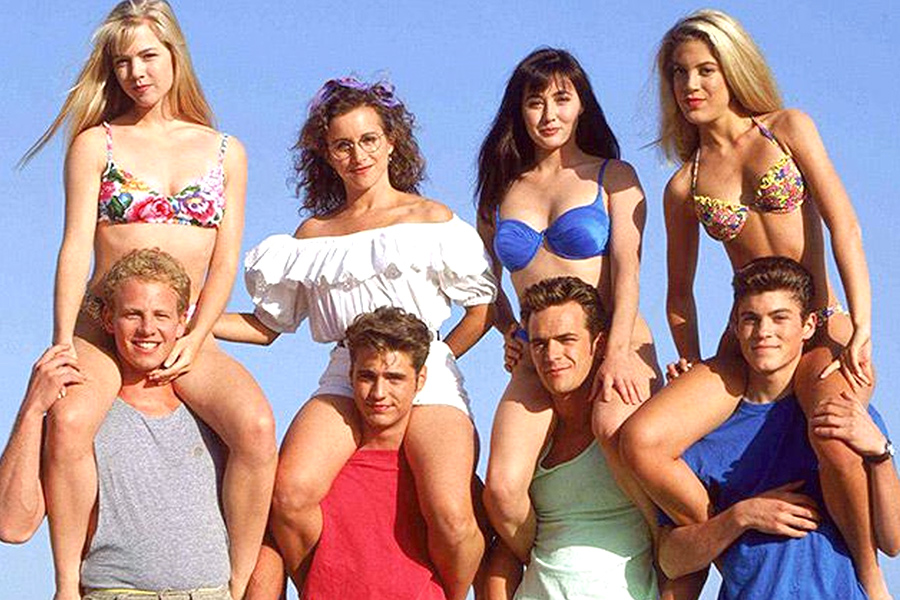
The brainchild of a young TV writer named Darren Star, the hourlong serialized drama — which premiered on October 4, 1990 — focused on Brandon and Brenda Walsh (Jason Priestley and Shannen Doherty), newly uprooted twins from Minnesota struggling to fit in among their flashier peers at fictional West Beverly High.
These teens didn’t kowtow to their parents; they made independent decisions and got into trouble and had sex (!). Heck, the parents were billed at the end of the opening credits.
"A show like 90210 had never existed on TV before," says Brian Austin Green, who, at age 16, was cast as gawky freshman David Silver. "To all of a sudden read for a teen soap, I was like, ‘No this is stupid. This will never work. My mom will never watch this.’ It felt like there was no audience for it."
Fox executives felt the same.
Though TV powerhouse Aaron Spelling was an executive producer, the network buried 90210 on Thursday night at 9 P.M. — opposite the NBC juggernaut Cheers. Ratings were pitiful. However, thanks to a slew of fresh episodes that aired during the summer of 1991 — let’s all hang at the sunny Beverly Hills Beach Club! — and a cover star-friendly cast, 90210 eventually became a phenomenon with nearly half of all American teens tuning in every week. True, the show only earned a single Emmy nomination during its 10-season run (for guest star Milton Berle in 1995, ha!). But 35 years after its premiere, the series still remains a cultural touchstone.
Here, Green — one of four cast members who stayed with 90210 throughout its entire tenure — reminisces about the show’s humble beginnings and long-lasting impact to The Television Academy.
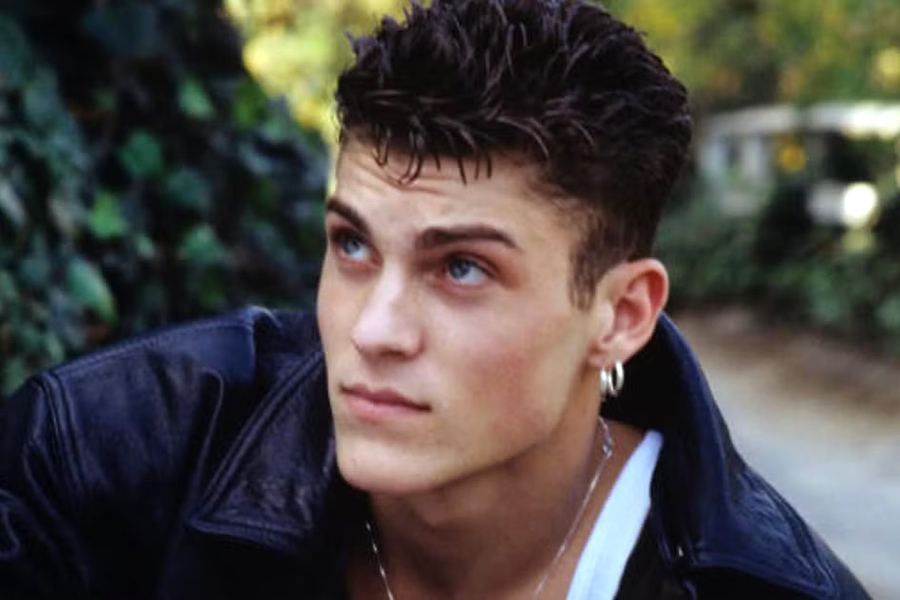 Brian Austin Green as David Silver / FOX
Television Academy: How did you end up on 90210 back in the day? You were young, but this wasn’t your first rodeo.
Brian Austin Green: No, I had been at this rodeo for years. When we did the pilot, I had probably done eight or nine pilots [at the time] and, like, 75 commercials. I was also on Knots Landing for four years. Tori [Spelling] was the one who brought me to her dad's attention. I was in Teen Beat and Tiger Beat, and she was like, "Hey, you should read this guy. He's in all sorts of things. I really like him."
What was it like reading for Aaron Spelling?
I did not understand who he was. Everyone was like, "Aaron Spelling is doing this show!" I was like, "Who?!" So, yeah, I just wandered in to read like I had done it a million times. It wasn't intimidating for me until I got into his office, and I saw how fucking awesome it was. Then, I was like, "Oh, this dude must be really big time." He had a pinball machine and, like, a 75-foot-long couch. But even after I booked the pilot of Class of Beverly Hills — which is what it was called at the time — I didn’t like it.
Why not? Because the genre was so new?
It just seemed like a ridiculous idea! Like, the kids are the star of the show?! And then we had Fox — which was this really weird, fledgling network, with a small roster of shows. It couldn’t compete against NBC, CBS and ABC. It didn’t have many affiliates across the country. So, after we finished the pilot, I was like, "Okay, cool. Nice to meet you all. Bye!" I thought we’d just move on to the next pilot season.
When filming that pilot, which of your cast members really made an impression on you?
Luke Perry wasn’t in the pilot, but he and I already had a great relationship because we did a Dr. Pepper commercial, and we really bonded sitting around all day. And then Shannen and I had known each other for years before 90210. I remember when we got to set, it was like, "Oh my God, we're working together on something. This is fucking crazy!" So the two of them had the biggest impact on me just because we already shared history.
What about Tori? Was it a coincidence that your characters soon ended up together?
Yes and no. In the beginning, the writers had a much different idea for our characters.
David was a nerdy kid. Donna had very little to do, and she was a sidekick — there wasn't much there. But Tori and I got along really well because we were so close in age; she was only one month older than me. The other cast members were further along. Hip-hop didn’t mean as much to them; fashion didn’t mean as much to them.
And how did you feel about the show’s chances after its premiere?
Fox originally picked us up for 13 episodes. Nobody really watched. Nobody could understand the title with all those numbers. But Fox didn’t have anything else to put on in its place during that time. So they picked us up for the back nine. But Aaron Spelling had this truly genius idea to do these summer episodes. So, when all the other shows went into reruns and kids were on summer break, our show was still airing original episodes. Overnight, the show went from nobody watching to everybody watching.
When did you personally sense the popularity shift?
It was during that first summer in 1991. I clearly remember being at a gas station, and there was a carload of young girls whose parents were filling up the car. The girls were like, "Oh my God, are you on that show?" And I was thinking, Holy shit, you've seen the show?! Also, the cast went to Disneyland for an event, and it was just mayhem. I felt like we were, like, part of New Kids on the Block.
Can you talk about Darren Star? What exactly do you think he did right?
Darren is a trailblazer. He found some space — a void — in television that was missing, and he filled it. First, he filled it with 90210. Then he filled it with Melrose Place, which was about people out of school and living in an apartment complex. Then he moved on to Sex and the City and found this very relevant world of professional women. All these shows were grounded in reality.
For 90210, he wanted to make it a true school experience — he created these characters that all fit and made sense. Yet, they were different from each other. Dylan [Perry] had all the money, but he was dealing with a failed family home. Andrea [Gabrielle Carteris] was just trying to fit in because she didn’t have money. The twins were completely out of place. David was an outcast. [Darren] made sure that every viewer was represented in some way — that’s why his shows are so relatable.
Does this anniversary feel melancholic for you because Luke and Shannen have since passed? It’s such a harsh reality.
The two of them are on my mind on a daily basis. Like, I can’t believe I’ve lost two people I was a kid with. Luke died suddenly at 52, which is my age right now. We never thought that we would lose him so young. So, it’s very surreal.
At the same time, it's definitely changed my perspective on life. I don't take things for granted the same way as I did when I was younger, and it's because I now realize how fast it can all go away. I would do anything in the world to still have them here.
What do you make of the show’s legacy? Has it received its proper due over the past 35 years?
I’ve always thought the entire original cast should have a star on the Hollywood Walk of Fame. The show is one of the biggest things that's ever been on television, and it created a genre that didn't even fucking exist until we came along.
Maybe if we had stopped earlier in the run — like when it was still a cool high school thing — then maybe things would be different because we didn’t go out on top. People grew out of it. But I can’t do anything about that. At this point, for me, the show’s legacy is seeing and hearing about the positive effect it had on people’s lives. That still means a lot to me.
This interview has been edited and condensed for length and clarity.