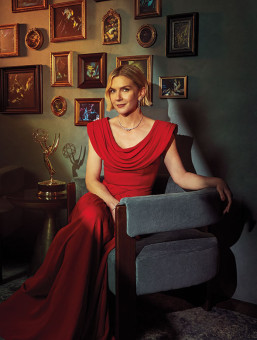


Emmy Rossum, who left her mark as Fiona Gallagher on Showtime’s oft-nominated Shameless over eight seasons, developed and stars in Hulu’s new thriller Furious as part of a mission to get more women’s stories on screen.
Loosely inspired by the 1987 film Black Widow, Furious has Rossum playing an FBI agent hunting a female serial killer –– a premise that might cause some to expect seeing a heroic “strong woman” catching an archetypal villain. Yet, as Rossum tells emmy, when she read one particular sequence in the script from Dying for Sex's Elizabeth Meriwether, Rossum was so disturbed by the would-be hero’s behavior she almost threw the script across the room.
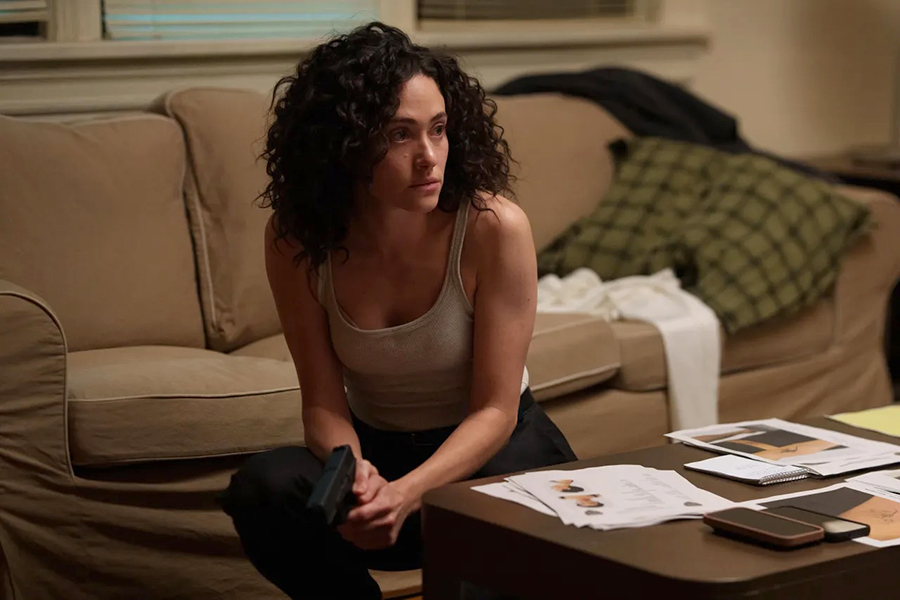
“I was terrified,” she reveals, referring to a scene where her Agent Alice Black, a survivor of physical and sexual abuse, coordinates a hookup that involves intentional, agreed-upon fighting as foreplay. It’s an intense, perhaps head-scratching revelation, particularly once viewers understand the killer’s true motivation, and Furious’ broader themes about misogyny, pervasive sexual violence and the thin line between justice and revenge. “What are we saying about women?” Rossum mused before realizing Alice’s complicated, conflicting trauma responses are what make the character real –– and the story hew closer to the truth for survivors of abuse and exploitation.
“I really believe that the parts of ourselves that we feel discomfort [about] are the shame parts that we need to shine a light on. Those can make the most interesting characters,” Rossum says, hinting at how Furious shatters conventional wisdoms that portray trauma and abuse survivors –– or for that matter, women in general –– in one-dimensional, easy-to- define archetypes.
Here, the Furious star and EP breaks down why she developed the series, the rigorous training she underwent to play an FBI agent and the literally shocking method she used to shake off her character in this dark thriller before going home to her kids.
Television Academy: You play the lead role, Alice Black. And you’re also the executive producer under your company, Composition 8. How did this show come to be?
Rossum: I challenged myself to start watching old movies. Black Widow was one I was taken by. The reason I started my company was to investigate and tell stories about contemporary womanhood and work with as many women as possible. With Black Widow, I thought, "Oh, wow, this is an opportunity to do that."
I brought [the project] to Hulu, who I had originally developed Angelyne with. They gave me a short list of writers, which featured Elizabeth Meriwether at the top. Liz watched the movie and loved it, so we built the script together.
People who know Liz from New Girl might be surprised to see her take on this dark material. Did you think this was a departure for her?
She started with New Girl, but Dying for Sex was pretty profound. The way that she tackles womanhood is unflinching and real. When things feel challenging, she runs towards them. Having levity and comedy in a show [like this] gives the story somewhat of a buoyancy and a break from the darker elements of it — which is important. I found that especially helpful with our show.
Can you talk about Alice’s background and how her past impacts her role in the FBI?
She had previously been a detective at the NYPD, which is not an easy job to get. She left due to an abusive relationship [with a former colleague]. They were someone who was her oasis, her family and a friend — but it ultimately turned violent and controlling. She chose to start over at a much lower, entry-level position at the FBI. Why? Because she didn't feel comfortable even filing a report about what was happening. She brings a lot into this new job. One of the most fascinating things about her is how Liz really dug into Alice's sexuality — how her past, her trauma and her job affect the way she is.
For someone so controlled in their job and in themselves, she needs a certain level of intensity to break through, and that's why we see her go online and recruit guys on Tinder — not to fuck, but to fight. When I read that, I almost threw the script across the room. I was terrified at that scene. What are we saying about women? The more I sat with that, I knew it was a fire I needed to run towards — because the parts of ourselves that we feel discomfort [about] are the shame parts that we need to shine a light on. Those can make the most interesting characters.
What are the central themes of Furious?
Rossum: At its core, it’s about justice and vengeance — and the very thin line between them. It’s about women who have been underestimated, doubted, written off and let down by the system. They are looking for justice for themselves and on a larger level.
Why did you choose to play the detective, Alice, rather than the serial killer?
I felt an immediate connection to the character. It had actually always been conceived that I would play that role. After doing 110 episodes of Shameless — and squeezing that lemon until there was no juice left — this felt like a character that could have real legs year after year.
Rossum and Quincy Tyler Bernstine in a scene from Furious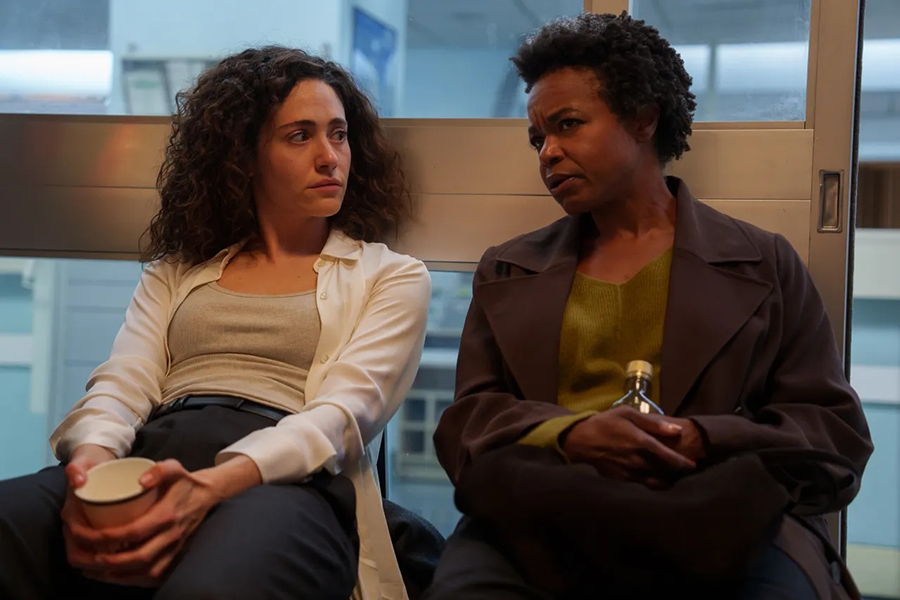
What went into your preparation for the physical and tactical demands of the role?
We worked with the scripts for about a year and a half, followed by intense prep. We met with former and current FBI agents, females and males [as well as] former and current NYPD detectives. I traveled to Texas to do weapons training. [One day], my trainer sneak-attacked me by having another person on the course as a surprise offense. I was panicked and shocked. I realized then that I shouldn't feel confident about my skills to be in law enforcement, because I’m way too sensitive.
With such intense scenes, how did you shake off the character at the end of the day?
I’ve had to develop strict routines for "transition hygiene." When I leave the set, I take a shower alternating hot and cold water to shock my body back into myself. It’s vital because I’m going home to two kids (ages 3 and 5), and I can’t bring that intensity home.
Where did the title Furious come from?
We had been tossing around alternative titles for a long time, since the story had evolved so far past Black Widow. Liz finally came up with Furious, which is based on the Furies from Greek mythology — the goddesses who enact vengeance. The moment she pitched it, we all knew that was it.
What do you hope the audience takes away from the series?
I love the idea that the audience's allegiance will constantly shift between Alice and Catherine [the serial killer]. You’re left questioning who you align with — the FBI agent or the killer. It is a propulsive, fun, sexy crime thriller, but it challenges the binary ideas of good versus bad. It forces you to sit in the uncomfortable gray areas of real life.
Furious stars Emmy Rossum, Lola Petticrew, Scoot McNairy, Quincy Tyler Bernstine, and Jake Lacy. It was created, written and executive produced by Elizabeth Meriwether. Emmy Rossum executive produced for Composition 8, along with Ronald Bass, Matt Olmstead, and Sam Hoffman. Brian Kirk executive produced and directed episodes 101 and 102. 20th Television and Searchlight Television produce the series.