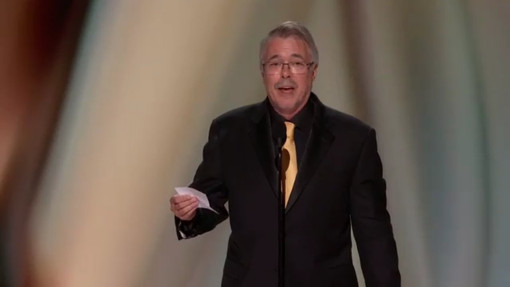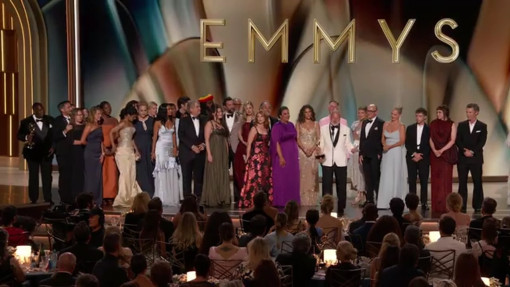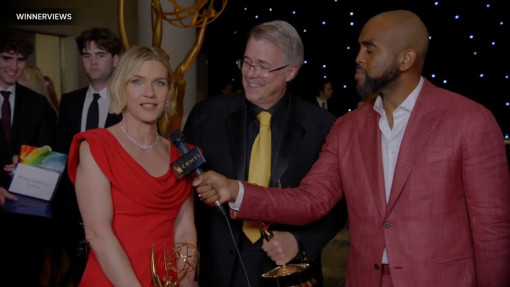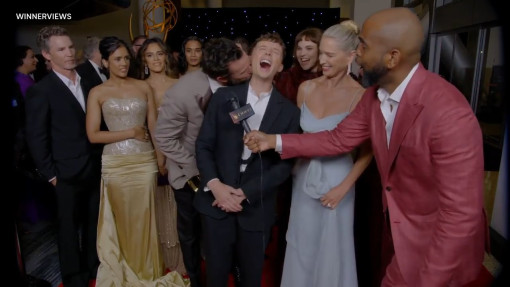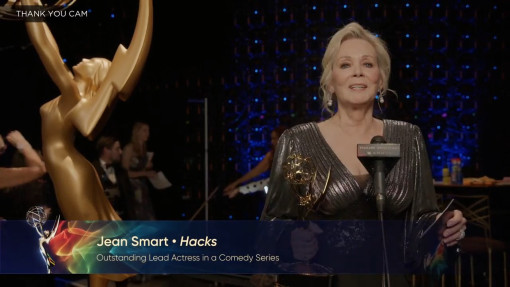


Pluribus, The Bear, The Shards and Abbott Elementary were among the shows on hand for the third and final day of Televerse.
The festival concluded on Sunday with back-to-back FYC screenings and panels featuring creatives, execs and actors that took audiences behind the scenes of their Emmy-nominated shows. Here are all the highlights from the fest:
Love Story: John F. Kennedy Jr. & Carolyn Bessette: FYC Presentation
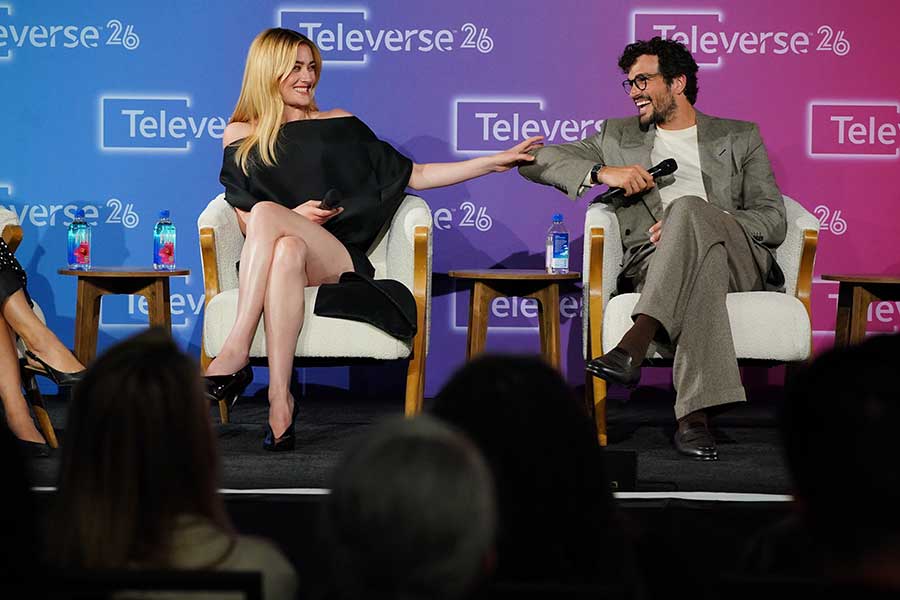 Stars Sarah Pidgeon (who is nominated for Outstanding Lead Actress in a Limited Series), Paul Anthony Kelly and Constance Zimmer (nominated for Outstanding Supporting Actress in a Limited Series) provided key insights into how they interpreted the late couple’s whirlwind romance and tragic end for FX’s Outstanding Limited or Anthology Series nominee Love Story: John F. Kennedy Jr. & Carolyn Bessette. Casting directors casting directors Nicole Daniels, CSA and Courtney Bright, CSA joined the actors on the Televerse stage to unpack how the show chronicled the real-life events that led to the plane crash that took the lives of JFK Jr., Bessette-Kennedy and her sister, Lauren Bessette.
Vanity Fair’s senior Hollywood correspondent Rebecca Ford moderated the panel, which began with a question for the casting directors about choosing relative unknowns for the iconic lead roles. “The physical match can only take you so far,” explained Daniels. “We weren’t looking for an imitation.” Added Bright, “It was a long search because it was so important to get it right.”
Following that, the actors described the experience of filming the series. Pidgeon discussed how she achieved her own sense of her character’s identity and noted that she and Kelly learned from each other. After watching herself in a clip from the series where she portrays the monumental grief experienced by the mother of Carolyn and Lauren, Zimmer noted, “It’s very weird to watch myself crying — and be crying. Playing Ann Marie was an incredible experience, and I don’t want anyone to ever forget her.”
Star Trek and the Evolution of VFX and Virtual Production
From left: Star Trek's Benji Bakshi, Chris Fisher, J. Alan Scott, Andrew Coutts, Martin Quinn, Henry Alonso Myers and Dan Curry, VES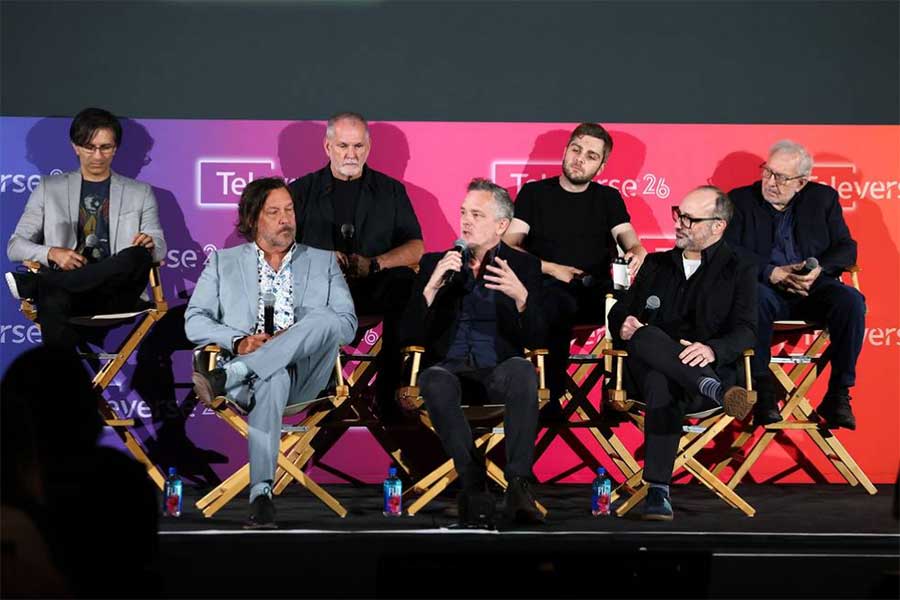
For six decades, Star Trek’s vision for the 23rd Century and beyond required skilled visual effects artists and technicians to execute it. Some of the franchise’s most vital contributors to realizing that vision joined Televerse to celebrate Star Trek's 60th anniversary. Their revealing discussion focused on how Trek’s various series evolved to incorporate advances in modern visual effects, tools that enabled these creative individuals to “boldly go” farther with each technological advancement.
Topics that the panelists discussed included the benefits of virtual production and the challenges of employing Star Trek staples like makeup and animatronics. Workflow in post and the look of the VFX also came up, with panelists sharing that writers and directors are now involved early on with those critical decisions. “What used to be a post process [has been] moved into prep,” Strange New Worlds director Chris Fisher said. “What you’re seeing is that the world building is done in prep — instead of in post — with the director, the DP, the showrunner and the VFX producer all on board. All the best minds are working together, it's beyond a big shift."
Longtime Trek VFX producer and supervisor Dan Curry, VES — who worked on Trek shows Deep Space Nine, Voyager and Enterprise — reflected on just how much things have shifted compared to his time working in the Final Frontier. "Shows used to be done in post long after the episode had wrapped and the director had moved on," Curry recalled. “Our biggest challenges [were] budget and time, and then getting everything to support the story." Curry went on to explain how he and his team brought the famous warp-drive effect to life: "[It] required a separate exposure on film and it could require all day to do one shot. We had to do that without help of the episode's director.”
Despite the massive leaps in technology over the past 60 years, sometimes even the modern shows go back to classic staples. “The goal is never to make it cool. The goal is to make it real,” Fisher said, noting that sometimes production will incorporate an oil painting backdrop into a shot if it feels right. “The best way of doing things isn’t always the newest or the latest [technology].”
AI Across the Entertainment Value Chain: From Creation to Connection
Artificial intelligence is often spoke of with concern and anxiety, but this Televerse panel focused on AI as a tool to increase efficiency and expand opportunities for entertainment professionals to focus on the essential creative work conceived and performed by humans. Moderator Holly Leff-Pressman, Chief Client Engagement Officer, ScreenEngine/ASI, led the discussion with Tania Missad, EVP, Insights, Strategy & Analytics, Sony Pictures Entertainment; Evan Britton, founder and CEO, Famous Birthdays; Jay Sullivan, CEO, Fandom; Eric Iverson, chief technology officer, United Talent Agency; and Michelle Slavich CMO, Promise Advanced Imagination.
The conversation began with findings from a consumer survey that framed the topic:
• 82% of audiences are aware that AI is already being used in entertainment.
• Acceptance is much higher when AI supports production rather than replaces people. For example, 75% consider AI-assisted visual effects acceptable, while approval falls below 30% when AI is used to replace writers or performers.
• 84% want disclosure when AI has played a role in creating content.
• Perhaps counterintuitively, Gen Z and Gen Alpha are among the most skeptical audiences, with 63% saying they would avoid AI-heavy content.
The key takeaway: Audiences are not rejecting AI outright, but they want to understand how it is being used.
As the discussion continued, the group agreed that AI's greatest impact is currently in data analysis, workflow automation and productivity enhancement. Anderson noted AI’s ability to summarize contracts, organize research and help teams process huge volumes of information far more quickly than before. In a similar vein, Missan said that a driving goal of her team’s work at Sony is, "How do we give our executives time back by automating data processes that people already found boring?"
AI is also being used to enhance development and previsualization. "One of the hardest things about being a storyteller is getting someone to believe in your vision,” said Slavich, who described how the use of AI-driven previsualization can help creators communicate their ideas before a project is greenlit by demonstrating world building, character design and story concepts far earlier in the process.
Using AI to speed up processes, said Anderson, allows companies to "operate at the speed of culture." In the past, trends, fan affinities or emerging communities might be identified too late to take action. But AI allows organizations to analyze vast amounts of cultural data in real time, identify niche audiences and respond while interest is still building.
Despite enthusiasm for AI's capabilities, the panel agreed that it is most valuable when it simplifies and expedites processes, not when it replaces creativity. It was framed as a tool that enables writers, artists, executives and fans to spend more time doing uniquely human work. The goal is not automation for its own sake, but to create more opportunities for storytelling, fan connection and creative expression.
Revenge 15 Year Reunion
Revenge star Emily VanCamp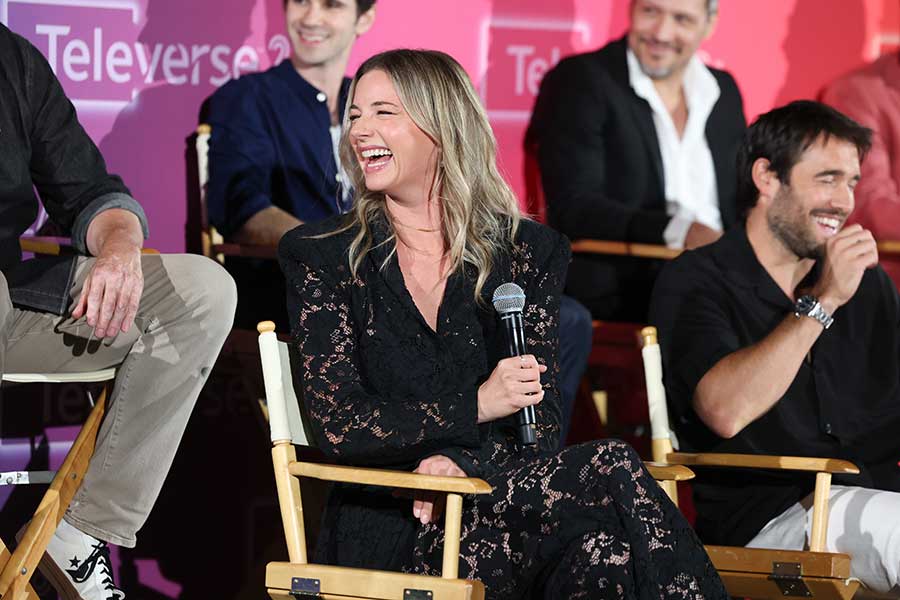
When Revenge premiered on ABC in 2011, audiences quickly made this modern reimagining of The Count of Monte Cristo a bona fide hit.
The twisty, Hamptons-set thriller centered on Emily Thorn/Amanda Clarke (Emily VanCamp) and her riveting vendetta to exact retribution on the powerful family that destroyed her father. Fifteen years later, the cast of Revenge reunited at Televerse with creator and showrunner Mike Kelley to share behind-the-scenes tales about the making of their watercooler phenomenon.
Joining VanCamp and Kelley at the fest were Henry Czerny, Josh Bowman, Ashley Madekwe, Gabriel Mann, Connor Paolo and Nick Wechsler. The panel was also joined by surprise guest Karine Vanesse, appeared on the show later in its run. For Kelley, the origins of the series trace back to something he thought network television needed at the time. “For me, the glitzy primetime soap had been missing for too long,” Kelley said.
For VanCamp, she was searching for a lead role in a series — but there was a catch. "The [Revenge] producers weren't sure they could see a dark side in me," VanCamp recalled. "I had just finished on [ABC's] Brothers and Sisters and I was looking for the next thing. I wanted to challenge myself, so my goal was to show them I could do [this part]."
Kelley's goal for the series evolved past its Count of Monte Cristo inspiration, thanks to the character of Victoria Grayson (Madeline Stowe), Emily’s nemesis. “They’re both very strong and very damaged people,” Kelley said of the two characters. “Emily couldn’t destroy [Victoria] without ending the story, and Victoria couldn’t expose [Emily] without ending the story. We ended up doing this dance [between them] for a long time.”
Even though it has been 15 years since the show aired, the cast remains very fond of their time on it. "We truly adore each other," VanCamp said. Madekewe added, "It was a really special chemistry that I haven’t experienced since."
Your Friends & Neighbors: FYC Presentation
Jonathan Tropper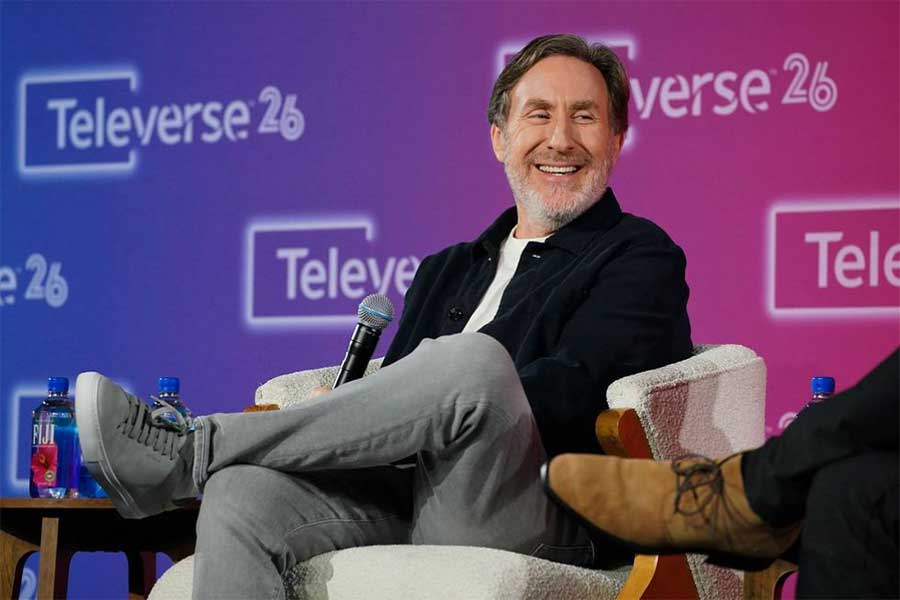
Creator and showrunner Jonathan Tropper (Lucky, Banshee) and actor Hoon Lee (Barney) took Televerse attendees under the hood of Apple’s Outstanding Drama Series nominee. Given that the two men have worked together a lot — Hoon had series regular roles on Tropper’s Banshee (the actor’s very first series regular role), See and Warrior before working together on Your Friends & Neighbors — the panel offered an enjoyable back and forth between friends.
Tropper, now a prolific name in TV and film, discussed his career trajectory from novelist to screenwriter. Seeing his own novels being optioned but not made is what initially led him to screenwriting, and he has since worked on all sides of the process, including adapting other people’s work: “It’s much easier to destroy other people’s dreams,” Tropper joked.
Asked about the show’s premise, Tropper confirmed it’s based on his own “angst and emotional trials” while living (and getting divorced) in Westchester, NY. As “a novelist among hedge fund guys,” he says he watched a lot of people get “stupid rich” and the bad behavior that followed.
For Lee, his role on the show presented a challenge he wasn’t necessarily expecting: “I have a lot of comfort in genre shows,” he said, “and to play someone closer to who I am in real life was surprisingly challenging.”
Another highlight of Tropper and Lee’s discussion was insight into the show’s other cast members: the show’s lead, Jon Hamm, to whom Tropper pitched the series before writing the pilot; Tropper’s “four-month process of stalking James Marsden,” who joined the show for season two; and Olivia Munn, whose character was initially slated for a one-season arc but was brought back due to her chemistry with Hamm.
The Art of Building Character through Style
Costume designers from one Marvel series and two Apple dramas took the Televerse stage to share trade secrets on how they work with talent and creatives to help design the characters that populate their respective series.
Esther Marquis (For All Mankind), Daniel Selon (Agatha All Along, and a 2021 Emmy winner for WandaVision costumes) and Elizabeth Lancaster (The Morning Show) gathered to reveal how even the most subtle of wardrobe details can say volumes about characters and their emotional states.
“The spacesuit is an iconic piece of clothing,” said Marquis. In For All Mankind, the suits need to be paired to their function in space travel, as well as to the era the show is depicting. As she enumerated the challenges of creating imaginary (yet still plausibly functional) suits, Selon interjected to give Marquis her due. “It’s amazing that Esther has to solve these technical spacesuit issues,” he pointed out.
Selon provided interesting insider tidbits about the Agatha All Along costumes. “Silhouette was important because we knew the show would have a lot of low lighting,” he said. “Kathryn Hahn wears a coat that became a protective device. It’s not just a garment. There’s a story behind it.” All of the characters wear costumes with hidden details, making the show a joy to work on, Selon said. “This project will forever be a jewel in the crown of my career.”
Rounding out the discussion was Elizabeth Lancaster, who talked about the range of clothing in The Morning Show, from Marion Cotillard’s Celine to the numerous climate protestors on the streets of New York City. “Celine is the queen,” Lancaster said. “Her look, her every movement, is calculated, and her clothes and jewelry reflect that.” In season three of The Morning Show, cast members took a flight into space. Lancaster revealed that she had a long phone conversation with Marquis, who helped Lancaster design the low-earth-orbit spacesuits. “It’s all about collaboration,” said Lancaster, to which Selon and Marquis enthusiastically agreed.
Pluribus: FYC Presentation
Pluribus creator and showrunner Vince Gilligan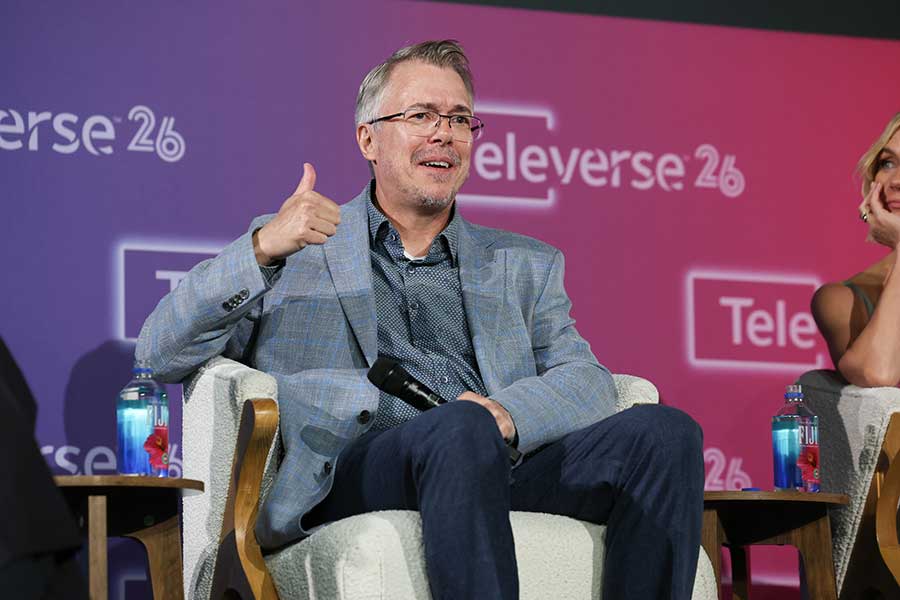
Creator and showrunner Vince Gilligan was joined by cast members Rhea Seehorn, Karolina Wydra, Carlos-Manuel Vesga and Jeff Hiller.
Ferguson, an Albuquerque native, asked Gilligan about his relationship to the city, which has become inseparable from his work since Breaking Bad. Although tax incentives initially drew production there, Gilligan said he keeps returning because of the region’s extraordinary natural beauty — especially its dramatic skies. “It reminded me of a John Ford Western,” he said. “You get these amazing cumulus clouds, and we love those.” Just as important are the crews he has worked with for more than a decade. Ultimately, although Pluribus could have been filmed anywhere, Albuquerque prevailed.
The panel also dug into the surprisingly lengthy and sometimes humorous journey to the show's title. Gilligan explained that Pluribus comes from the Latin phrase E pluribus unum ("out of many, one"), chosen for the great seal of the United States in 1776 and a concept closely connected to the series. “It took us the longest time to come up with a title,” Gilligan said. “The bosses at Apple didn't really like it.” Of the many suggestions, Gilligan insists one of his own was the worst: Be Kind, Remind, which he called “the dumbest fucking thing.”
Seehorn, who worked with Gilligan over six seasons on Better Call Saul, spoke of her trust and confidence in his vision.
“I knew from the quality of his writing all the way back to Breaking Bad, and then working with him on Better Call Saul, that I absolutely trust him,” she said. “I trust him with where the character is going. I trust that it's going to take turns that I didn't expect but will always feel authentic.”
When asked about the status of season two, Gilligan candidly acknowledged that it will take time. “Listen, you go at your own pace,” he said. “I wish it went faster. In the future, no one's going to know how long it was between seasons. I’ll be dead, and you can watch them all straight through.”
The Shards: Advance Screening and Q&A
Igby Rigney, Hayes Warner and Graham Campbell 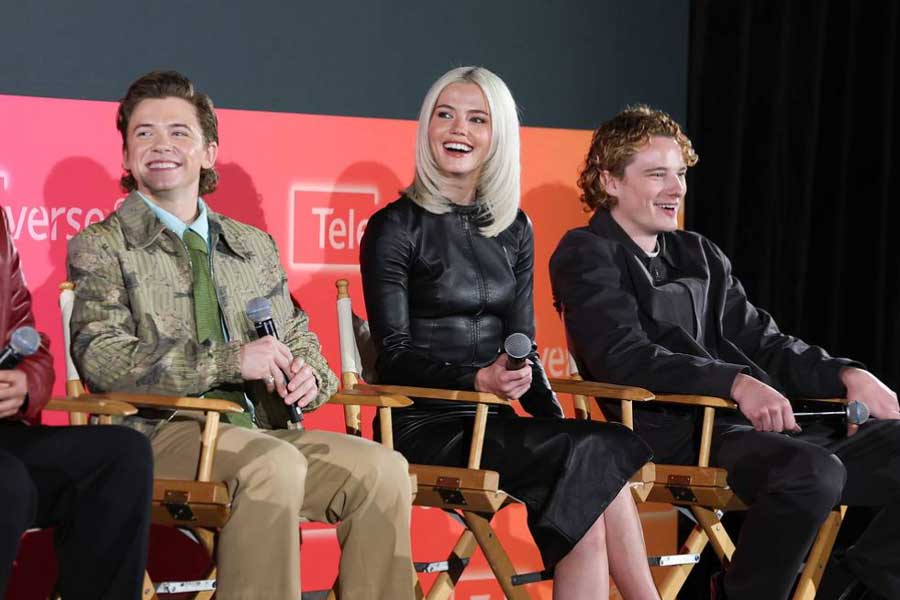
Three cast members from the currently airing FX thriller — Igby Rigney, Hayes Warner and Graham Campbell — were joined by co-EP Lou Eyrich and costume designer Joshua Marsh for a lively discussion following a sneak peek at a pivotal scene from the show’s fifth episode — a televised dance-off.
Eyrich has worked with the show’s cocreator, writer and EP Ryan Murphy for over 25 years, including on two other high school–set series of Murphy’s, Popular and Glee. (Those shows, of course, featured fewer gruesome murders.) But she said Murphy’s excitement for this series in particular was in full effect: “The show was so electric from the start.”
Costumes are a huge part of the series, set in 1981 Los Angeles, and Marsh discussed the work required to create the show’s visual vibe, for which he pored over archival photography from the late ’70s and early ’80s. “It was important for us to create characters that were of this time, but also aspirational,” he said. And Marsh’s work was also integral for the actors, who discussed how much costumes helped them find their characters.
Much of the panel’s discussion centered around filming this fifth episode’s dance-off. The cast says they worked with Derek Hough and other choreographers, spending months watching American Bandstand and learning dances, for a strenuous four-day shoot. “They did some cruel and unusual things to us, including making us dance in a parking lot in front of the crew,” said Rigney, to which Warner added, “I watched Igby learn how to do the worm.”
Tracker: A Conversation with Justin Hartley
Tracker's Justin Hartley with panel moderator Ash Crossan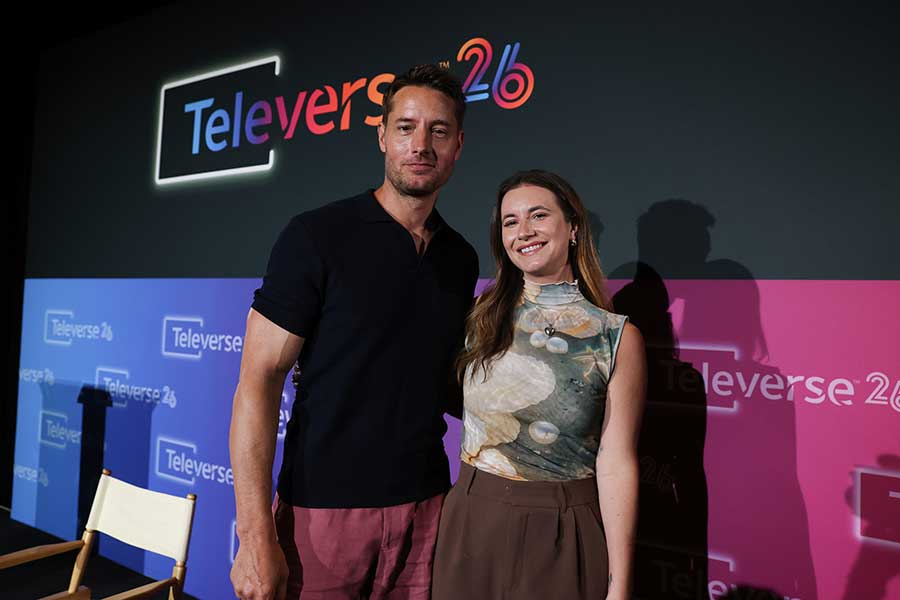
Attendees joined Tracker star and executive producer Justin Hartley (This Is Us) for an exclusive conversation about CBS's breakout hit. Hartley plays Colter Shaw, a lone-wolf survivalist and keen tracker who scours the country to help private citizens and local law enforcement solve complicated crimes and mysteries. Ahead of season four’s return on October 4, Hartley shared what he sees as the show’s secret recipe: “People connect to Tracker because Colter is a guy who doesn’t judge. He’s willing to help. It’s fulfilling: You get to see justice served. And it’s also pure entertainment.”
After three seasons with the show based in Vancouver, Tracker is moving to L.A. Regarding the move, Hartley noted, “Vancouver will always have a special place in my heart, but to be able to bring work back to L.A means a lot to me. Colter travels from place to place, and L.A. allows us to do a lot more in terms of variety of locations.”
Finally, Hartley weighed in on a fan debate regarding his character: Does Colter Shaw pay his income taxes? Hartley said, “I think he does pay taxes. He would want to stay on the right side of the law.”
Abbott Elementary: Comedy Series Nominee FYC Presentation
Quinta Brunson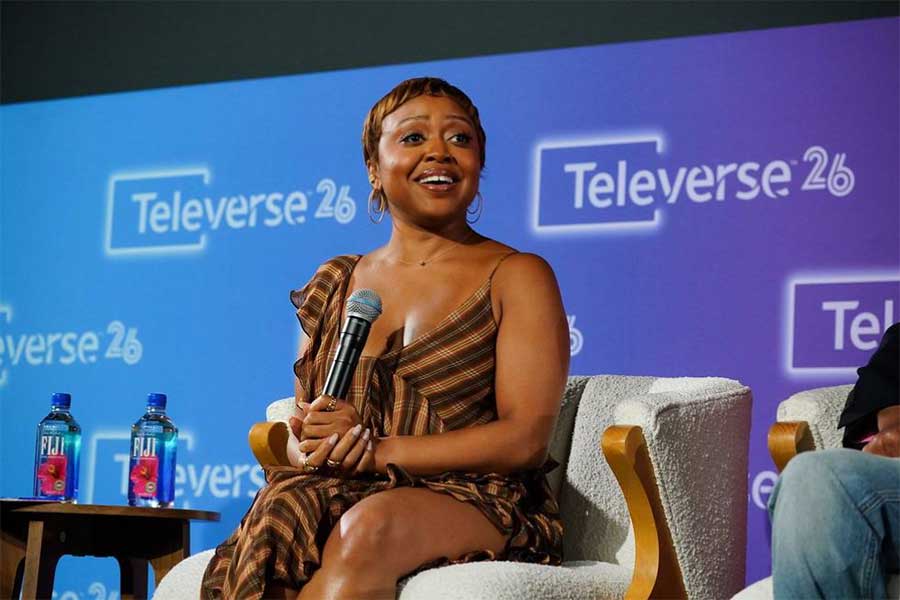
“Season five was an opportunity to address issues that teachers are facing,” Brunson said. The season also tested the romantic relationship between Jeanine and Gregory, played by Brunson and Williams. “I knew the audience would lose their minds over the Jeanine-Gregory breakup,” Williams said.
Abbott Elementary’s fifth season featured an episode filmed at a Phillies baseball game, which Einhorn described as the hardest episode he’s ever done. His reaction to hearing the plan was disbelief: “Seriously? At a live ballgame? Four hundred extras and 14 pages of dialogue?” To which Williams added: “And Kyle Schwarber hitting four home runs!” The team agreed that for that episode to work, “everything had to go right, and it did.”
Industry veteran Einhorn shared his secret to comedy directing: “I want to distract the viewers so they don’t see the joke coming,” he said. Brunson wrapped up the panel with a nod to the fans. “Being a network show, we can’t do some of the things the other shows do. We can’t swear. We can’t have sex. But we have the greatest audience. We’re the most popular show with people in jail, and I’m really proud of that.”
The New Nonfiction: How Digital Creators Are Shaping Unscripted Storytelling
Zach Kornfeld, Katie LeBlanc, Janet Hsieh and Brent Coble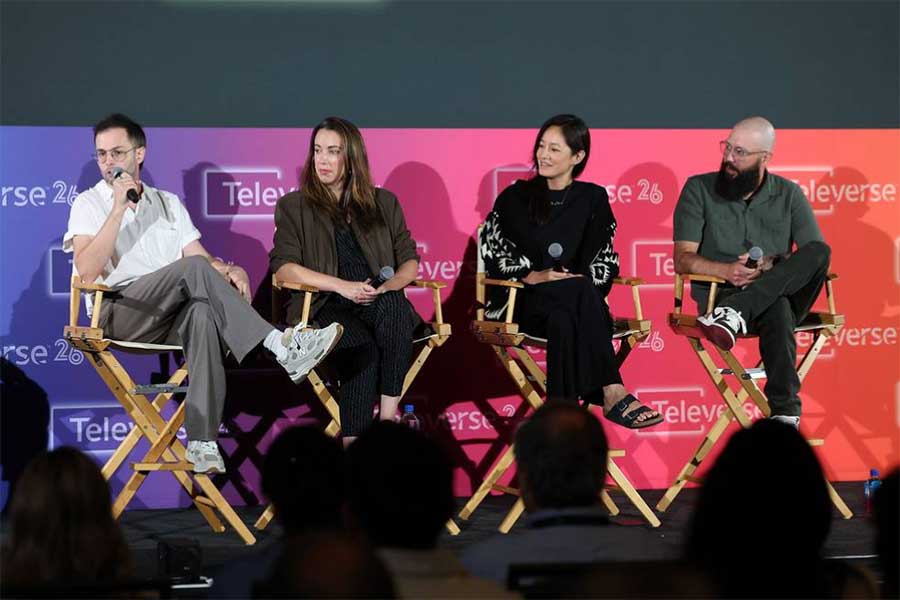
Youshaei opened by asking the group to describe the difference between a video and a show. “Shows are episodic in nature,” Kornfeld said. “People come back every single week. You have repeatable parts of that format. I think the important distinction is that time spent on the internet is default forgettable. Most of the time you’re scrolling. You see something, you keep going. Our job is to create something that is memorable.”
Coble added, “Videos are a very transactional experience. You could be sent a video, watch it once and move on with your life. That is a single transaction. But a show, hopefully, accomplishes two things: relevance and relationship. You build a relationship with your audience. The iconography, the logo, the faces, the thumbnail and knowing what the mechanics are create a familiarity. Almost any topic can be put inside of that format and you go, ‘Oh, I've seen this show before. I know what I took away from it and how it made me feel. I would like to experience and feel that again.’ A show creates that repeat relationship, which eventually blossoms into creating a community it. A video does not do that.”
The name of a show is also important. Hsieh explained that she chose Getaway, rather than simply using her own name, because she wanted to create a brand that could grow beyond her. A title allows other hosts, formats, products and partnerships to exist under the same umbrella. Several panelists agreed that naming a show after a person can make it harder to license, sell, expand or hand off to future hosts. A show name creates intellectual property; a personal name creates dependence on the individual.
LeBlanc said, “There are so many streamers and FAST channels looking to YouTube for licensing and distribution deals. It would be much harder to do that if it were just Janet [Hsieh] versus Getaway. From a business perspective, there's a lot more flexibility and opportunity.”
Other topics of conversation included the relationship between data and creativity. With vast amounts of granular data available about engagement, watch time and other key metrics, it can be tempting to chase clicks, but most agreed with Kornfeld’s statement that “data should inform, not dictate” creative decisions. Taste, judgment and artistic vision must still come into play.
Prioritizing the largest number of views is understandable, but sometimes a meaningful video with relatively fewer views can touch people and make a difference in their lives. “It's up to every creator or company to decide that,” Hsieh said. “There's no right or wrong, obviously. It's really the core of who you are, and hopefully you can find a balance.”
International Intrigue: Inside the World of Global Imports & IP presented by Parrot Analytics
Jamie Otero, VP, Partnerships, Parrot Analytics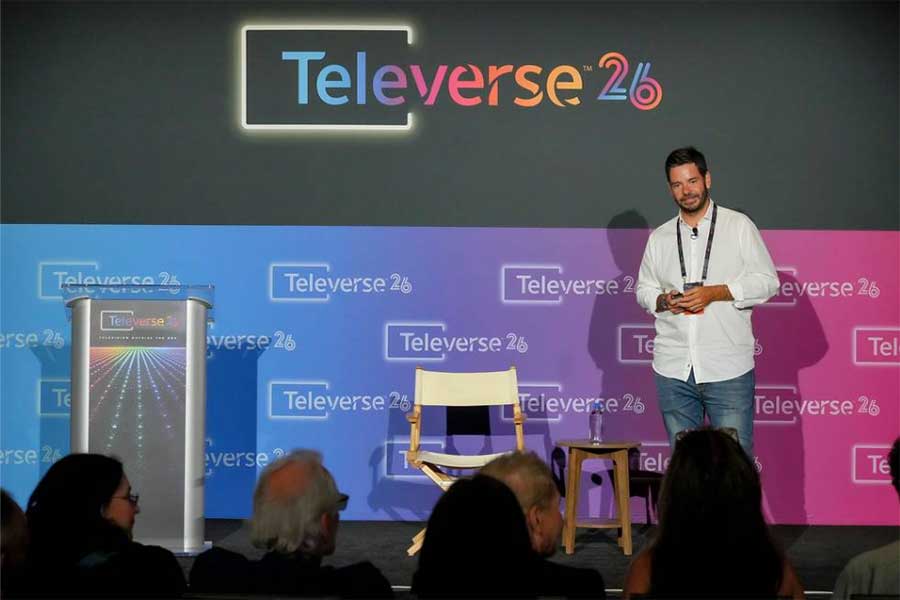
When lockdown audiences here in the U.S. exhausted their watchlists, they quickly turned to international television for content. In doing so, they made imported hits like Squid Game and Money Heist increasingly popular, which would go on to pave the way for shows like Heated Rivalry to carve a massive niche for itself in pop-culture.
This interesting panel explored how audiences and execs spot stories that travel and which countries are leading the global expansion of IP and how overseas trends shape and define what makes it to air.
Jaime Otero, VP of partnerships at Parrot Analytics walked the audience through how two of the biggest streamers — Netflix and Amazon Prime — now have catalogs that are made up of approximately two-thirds international content. Many of the shows on those platforms come from Asian countries, like K-dramas and anime. Interestingly, Spain’s Money Heist became a bigger hit abroad than it did in its home country. Squid Game remains in its own category, however. Otero called it an “evergreen cultural phenomenon,” with its second season hitting heights that surpassed the massively successful first season.
While Squid Game's second season soared in terms of viewership, Otero offered a sobering stat about domestic viewership. "U.S. content consumption is decreasing in 78% of countries around the world. It’s still leading, but it’s slowly but steadily showing a shift where international distribution is heading. We expect this trend to continue for the years to come."
The Bear: FYC Presentation
Courtney Storer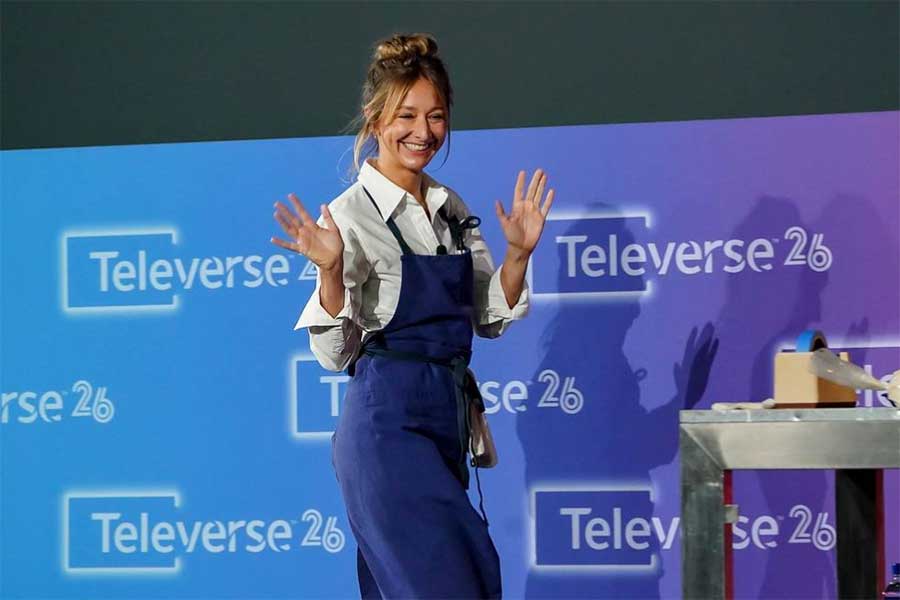
Outstanding Comedy Series nominee The Bear gave Televerse attendees a real treat with Courtney Storer, co-executive producer and culinary producer. (She is also the sister of The Bear's creator, Christopher Storer). She arrived on stage to recreate the famous (and delicious) cannoli that Marcus (Lionel Boyce) made in the second season.
“All the dishes we make on The Bear are real,” Storer revealed. “We really sit down and make this food.” With desserts and pastries serving as a key element of Marcus's character arc, similar culinary ventures and pursuits are used to service different characters and their journeys. “The food has to be rooted and grounded in the character," Storer said. "There has to be some sort of component that ties into what we’re trying to say."
When it comes to working with the cast on how to prep the show's numerous meals, Storer only teaches the actors what they need to know. In doing so, they and their character are aligned within the story. “It’s important to make the cast feel confident, but not get too far ahead of their character journeys."
Big Brother: 1,000 Episodes Inside the House
Big Brother fans were ready for anything at the Televerse panel, where moderator Denny Directo of Entertainment Tonight was joined on stage by executive producers Allison Grodner and Rich Meehan, host Julie Chen Moonves and season 24 winner Taylor Hale — who now hosts the spinoff Big Brother Unlocked. They gathered Sunday to commemorate the 1,000th episode of the iconic CBS reality show in which a group of contestants — known as HouseGuests — live in a house for three months under 24/7 camera surveillance. They have no cellphones or contact with the outside world as they compete for a $750,000 grand prize.
It’s still going strong in its 28th season, but Big Brother faced challenges when it premiered in July of 2000. The ratings were far below Survivor, which launched two months earlier and had already become a hit for CBS, “and the reviews were horrendous," Chen recalled. “There was talk that we might get canceled midseason.”
After that rocky start, the network made a major change for season two by bringing in Grodner, who introduced some key adjustments, such as having the HouseGuests compete to become Head of Household each week. Grodner also allowed the HouseGuests — rather than the public, as had been the case in the first season — vote to determine which fellow guest would be evicted. “We had created something that I don’t think we had heard of [at the time], which was a reality soap opera," Grodner said.
At the time, Chen was a newly hired morning anchor for CBS News. She had dreams of becoming a correspondent for 60 Minutes. So, when the head of CBS News offered her the opportunity to host a 10-week reality show, she demurred.
“I said, ‘If I take this job, are you ever going to let me be a 60 Minutes correspondent?’ He was very honest and said, ‘No, probably not.’ I said, ‘Thanks, I think I’m going to ride it out doing the morning news and hopefully get 60 Minutes.’ Then he said to me, ‘Well, you know, you're a new employee of this company, so we could technically assign you this job. And if you turn down this assignment, it could be looked at as insubordination.’ I said, ‘When's the next flight to Los Angeles?’ But it was a blessing in disguise, because I love it.”
(Side note: She later found out that the job was first offered to Meredith Vieira, who turned it down.)
Hale, who had represented Michigan in the Miss USA 2021 Pageant, became a contestant when a casting director sent her a direct message asking if she wanted to try out for The Amazing Race. Hale wasn’t interested, but when the offer shifted to Big Brother, she accepted and was selected for season 24. She ended up winning, making her the first Black woman to take the top prize in the show’s history.
“The importance of that win is never going to be lost on me,” Hale said. “But what's the most important is that I'm not the only one anymore. We've had two more Black women since — and in a row, back-to-back.”
Reflecting on the longevity and impact of Big Brother, Chen spoke of the show as an opportunity for self-reflection. “I always say playing Big Brother is like having a mirror like this to yourself,” she said, holding a hand inches from her face. “You never know how the world perceives you fully and completely until you play Big Brother. We all have a dark, ugly side. And we all have a very loving side. What is Big Brother going to bring out? It's like an intervention: Who do I want to show up as in life, outside the house? What did I like about who I was in the house? What did I not like? What can I run toward, and what should I pivot away from? I think that's the greatest gift of all.”
First Frame: Creating Main Title Sequences the Marvel Way
Carson Hood and Doug Appleton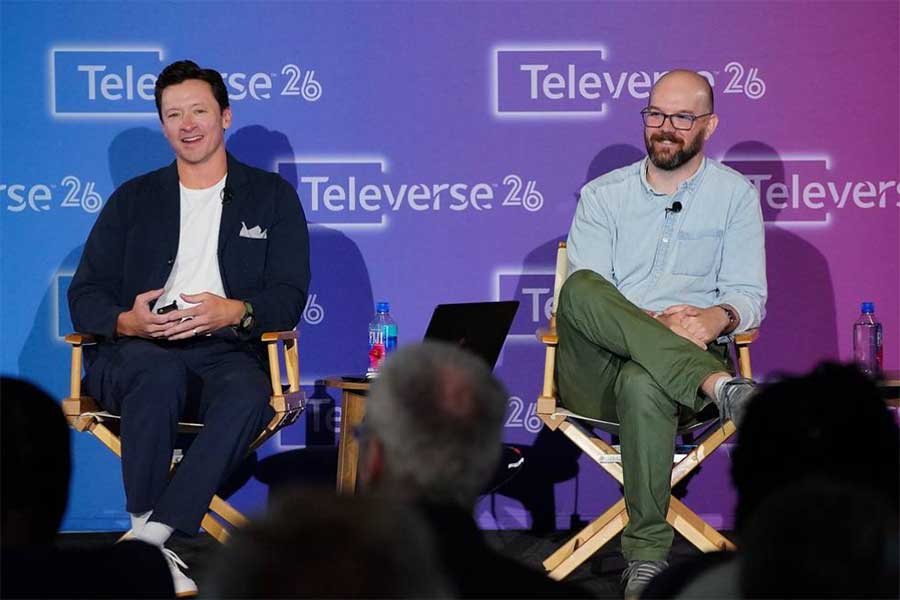
Onstage, the pair dissected the production of two MCU series’ title sequences — WandaVision and Daredevil: Born Again — including how the shows’ stories, narrative themes and visual themes were made part of the pitch process; what went into a successful pitch for each series; and after winning the pitch, how they crafted the sequences themselves (“Are we retelling the story? Expanding it? Creating an abstract metaphor?”).
“The secret sauce is getting back to the why,” Appleton said. “It’s crafting a title sequence that could only belong to this one show.”
A highlight of the discussion was how Easter eggs find their way into these title sequences. Though they naturally require ultimate approval by Marvel, most of the fun fan-service nods found in the titles actually originated with the team at BGSTR.
John Candy: I Like Me: FYC Presentation
Colin Hanks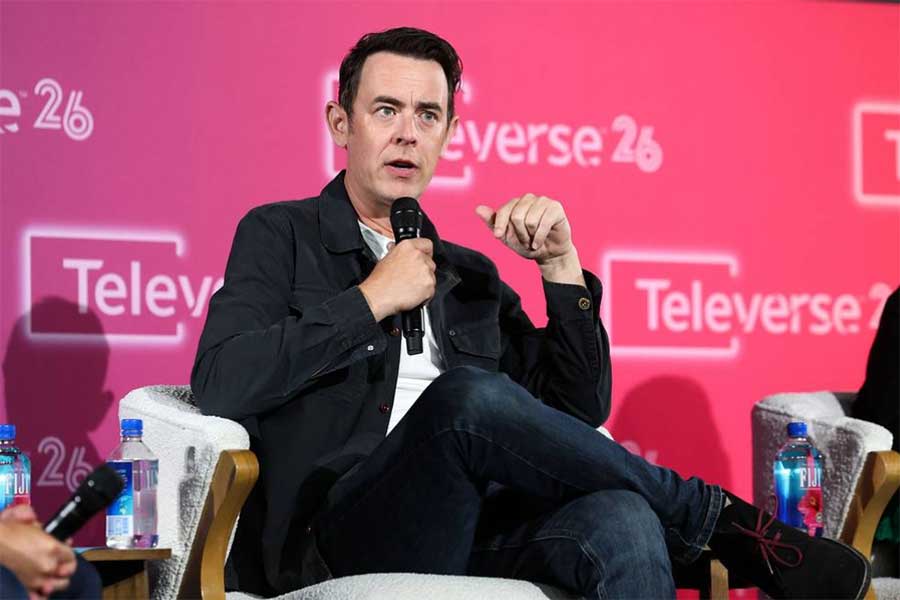
John Candy: I Like Me director-producer Colin Hanks closed out Televerse 26 with an entertaining panel centered on his documentary about the life and legacy of the late John Candy. Co-executive producer Jennifer Candy-Sullivan and producer Sean Stuart joined Hanks, who shared that the origins for this doc began with a phone call from Ryan Reynolds.
"Reynolds wants to make a documentary about Candy, and he wanted me to direct it," Hanks said. After giving the project some considerable thought, the director signed on and approached the subject matter in a way that would appeal to both the beloved comedian's fans and a new generation. “John was the kind of guy who, when he smiled, it felt like the sun was shining on you," Hanks said. "But there were things that made him who he was. They started to take a toll on [his mental health]. This idea that he was even more relatable than we ever knew — that was the way in [to this project]."
With the film earning five Emmy noms, Stuart feels they met their goal of introducing John Candy and his work to a younger audience. "John was part of the tapestry of our childhood,” Stuart said. “So, it was pretty amazing to see 14-year-olds watching this movie and getting emotional.”
For the latest news about this three-day event, visit Televerse.