
When the 2002-2007 ABC comedy George Lopez was in development, Lopez, who cocreated the series and starred as a manufacturing plant manager and family man, was shown a potential kitchen set that had dried chili peppers hanging from the wall, a tortilla press and a container with still more chili peppers.
“What is this?” Lopez asked. Said someone from the network, “Well, how is the family going to know that they’re Latino, that this is a Latino household?” To which Lopez replied, “How about the Latinos in the kitchen?”
More than two decades later, the comedian’s daughter Mayan Lopez said she always keeps that scenario in mind with her own work. She cocreated, with her father and Debby Wolfe, the 2022-2025 NBC family sitcom Lopez vs. Lopez. She and her dad starred in and were producers on the show, which aired its last episode in February.
For the show’s run, “What helped was just telling the truth, and the universal themes of story — not erasing the culture per se in those practices, but even going more niche and more specific, doing comedy, but not in a ‘bit’ way,” Lopez said, of organically integrating cultural references into its Latino family’s stories. “These are just the circumstances or the places that these characters are: a swap meet or church or a [traditional Christmas Eve] Nochebuena celebration. That worked for 45 episodes.”
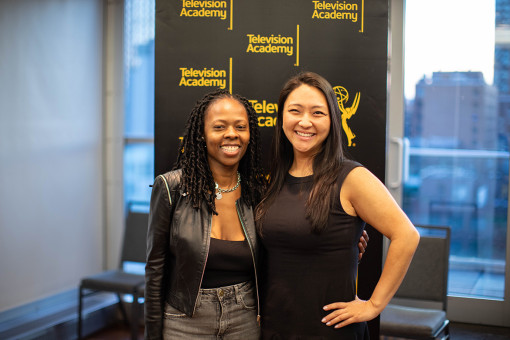
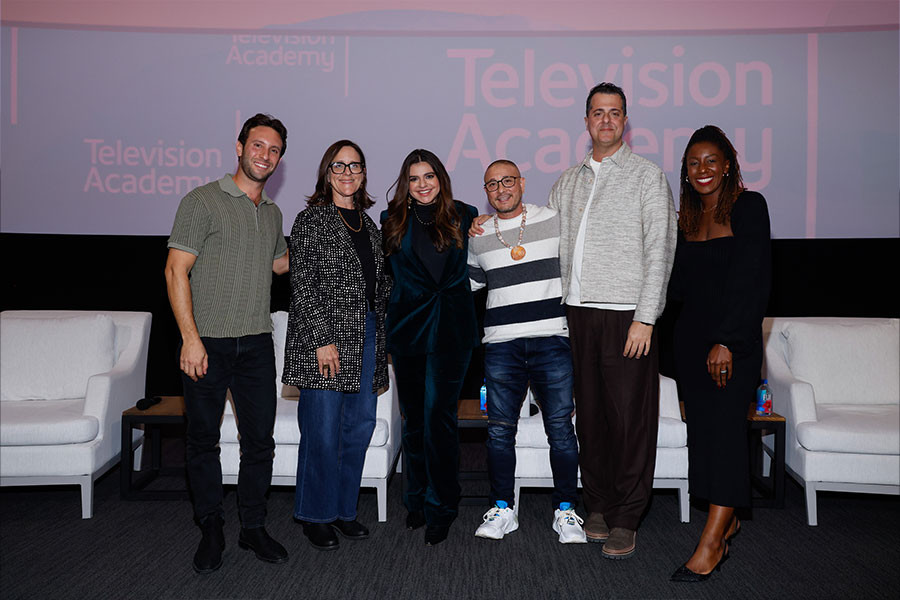
Lopez’s remarks came during the Television Academy’s fourth annual Inclusion Summit, which this year featured a panel of industry pros discussing how to incorporate authentic representation and inclusive narratives in television storytelling, both on camera and behind the scenes.
Held December 4 at the Saban Media Center in the NoHo Arts District, the panel also included casting director-producer Jazzy Collins, CSA, a 2023 Emmy winner for the Peacock reality competition series The Traitors; casting director Josh Einsohn, an Emmy nominee this year for the Netflix anthology series Monsters: The Lyle and Erik Menendez Story; writer-producer Freddie Gutierrez, whose credits include Nickelodeon’s comedy series That Girl Lay Lay; and writer-producer Rebecca Sonnenshine, a 2021 double Emmy nominee as an executive producer and writer of the Prime Video drama series The Boys. Jesse Turk, principal consultant and facilitator at the Academy’s DEIA partner firm ReadySet, was the moderator.
Lopez’s organic, honest approach was her way of successfully bringing representation and inclusion to her work. Sonnenshine achieves those results via “having a very strong vision and being able to keep telling the executives about the story — you can get them on board,” she said. “It’s all about your storytelling drive, and then it just becomes a story to people, and so they don't mind, they're not as scared.”
For Gutierrez, who is Chamorro — the Indigenous people of the Marianas Islands — and originally from Guam, the success he’s proudest of is measured in minutes: a 2022 11-minute episode segment of the Nickelodeon pirate-themed animated series Santiago of the Seas.
“The thing that helped me was finding the commonalities even in [the show’s] Afro-Caribbean culture and [my] Pacific Islander culture,” he related. “And I was able to pitch an idea of a girl being magically transported from the Pacific into the Caribbean. It was the first time my ancient language was spoken on television. It was kind of cool. You may be a small culture, but you have a lot in common with the rest of the world.”
Both Collins and Einsohn count casting people with disabilities among their triumphs. Specializing in reality, Collins cast Tina Friml, a comedian who has cerebral palsy, in the Dropout TV streaming stand-up improv show Crowd Control.
“Being able to put Tina Friml on that stage and absolutely blow it out of the water — that is the representation we need to consistently see on the screen,” she said. Collins later noted the importance of casting people whose stories had not yet been told; disability consultant-advocate Raven Sutton became the first deaf contestant on the Netflix social media-inspired competition show The Circle and brought her interpreter onscreen as well.
For This Is Us, Einsohn was tasked with finding a man who was visually impaired — but a wonderful singer — to play Kate and Toby’s blind son Jack Damon, as well as a youngster, preferably also with vision challenges, to play Jack at age three. And he did: Blake Stadnik and Johnny Kincaid, respectively. (Another visually impaired child, Karl Seitz, played Jack at age eight.)
“I know what that representation meant to a community that is often not served, and that one felt great,” he noted. “But I’ve been very fortunate to have a number of different searches like that, where we ended up with somebody really special.”
Ironically, Einsohn said that he has “a love-hate relationship” with the word “authentic,” because in scripted casting, he is legally forbidden to ask candidates about such personal elements as age, ethnicity, country of origin and sexuality; in reality casting, it’s fine for Collins to ask about contestants’ backgrounds.
“So, it is hard sometimes to cast authentically,” he said. “If somebody wants to volunteer, it’s great. If it is out there publicly [such as on social media], I’m allowed to know it and to consider it, legally speaking.”
Other challenges include misconceptions panelists may have encountered in their careers. “The biggest one for me, as I think it is for most writers of color, is that we can only write for our ethnicity,” Gutierrez said. “We have to float in between so many different worlds, and see the world in such a different perspective, that I think we have the best perspective, in a sense, because we see it from so many different angles. I haven’t written for a Pacific Islander show yet in my 20-something-year career.”
Both casting directors had earlier said that they have brought in people of diversity to work in casting. Alluding to that, Sonnenshine said, one misconception is that “it only matters what you see on screen. I think it’s really important to make sure you are diversifying your crew and having gender parity where you can, which is hard because it’s been such a male-dominated industry for so long. But it really does make a difference in what you see, and it changes a lot when you have more perspectives from everything from your P.A.s to your production designers.
“They bring all this knowledge and personal perspective into what you’re doing, that shows up in ways you don’t realize. So, it’s not just about the faces you see on your screen, but it’s who’s making all of it happen.”
Authentic representation and inclusion have become more prevalent in television, but there’s still work to be done. “I hate that we celebrate inclusion, because it’s so scarce,” Lopez said, having noted that Lopez vs. Lopez had been the only Latino show on network TV. “It really shouldn’t be something that is so precious, because there should be more, but we just have to treat it almost, I feel, like not as precious, but like this is just a story that I’m telling. Take away that pressure, that you have to put things out there, and it’s for the community and this and that. Those could be valid, but still, be a creative.”
Or as Gutierrez noted, “We’ve all seen the success stories, and we keep saying, ‘Thinking outside the box,’ and I'm just hoping one day we’ll all be in that box. You don’t have to think outside — we’ll just be in it.”