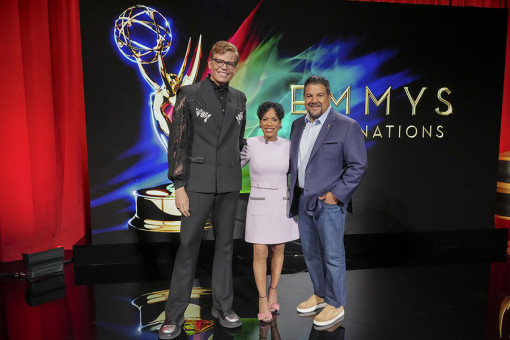


Watched any good podcasts lately?
There was a time when that question seemed incongruous. Not anymore.
Although video has been an option for podcasts since their emergence in the early 2000s — and it has long been a component of some well-known podcasts, including the massive Joe Rogan Experience, which launched in 2009 — most remained audio-only for years. But by 2025, the video podcast had evolved from a boutique subset of a predominantly audio medium into a television-scale entertainment category with the potential to rival — some would even argue supplant — the traditional TV talk show.
Like so many media trends in recent years, the spike in popularity of video podcasts can be traced to increased proliferation of internet-enabled smart televisions — an estimated 80% of U.S. households own at least one smart TV, up from 66% in 2020. This, in turn, led to a massive uptick in viewership of YouTube on televisions. How massive? Viewers globally now watch more than 1 billion hours of YouTube content on TV screens every day.
Not surprisingly, as more podcasts migrated to YouTube — which introduced discovery and search tools for podcasts in 2022 and has been improving them ever since — podcast consumption soared to new levels.
Worldwide, on all devices, YouTube says that more than 1 billion viewers consume podcast content on the platform every month. In December of last year, Bloomberg journalist Ashley Carman reported that, in October, YouTube audiences streamed more than 700 million hours of podcasts exclusively on televisions — an increase from 400 million just a year before.
The Ringer's Bill Simmons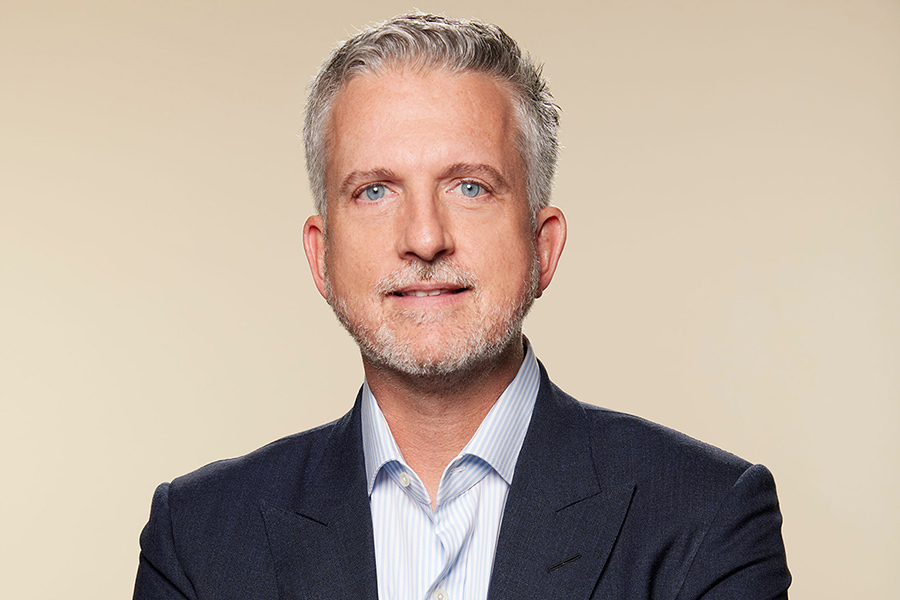
Those numbers pointed toward what some media analysts had long predicted: the acquisition of video podcasts by other television platforms seeking to expand their content offerings with high-engagement, modestly priced content and, possibly, usurp some viewing time from YouTube.
Perhaps the likeliest candidate was Netflix, whose co-CEO, Ted Sarandos, made news during the streaming giant’s April 2025 earnings call when he said, "As the popularity of video podcasts grows, I suspect you’ll see some of them find their way to Netflix."
Less than a year later, a popular video podcast did indeed find its way to Netflix when The Bill Simmons Podcast debuted on the streamer on Sunday, January 11. Although it was not the first time a podcast had moved to a television platform, the arrival of Simmons’s program represented a milestone as the first of many titles that would no longer post full episodes to YouTube and instead reside on Netflix.
In addition to Simmons’s sports and pop-culture show, more than a dozen others from his Spotify-owned Ringer Podcast Network now on Netflix include The Zach Lowe Show, The McShay Show, Fairway Rollin’, The Rewatchables, The Big Picture, The Dave Chang Show, Conspiracy Theories and Serial Killers.
Shortly after the October 2025 announcement of the Spotify partnership, Netflix closed podcast deals with two other companies, iHeartMedia and Barstool Sports. According to news reports at the time, these would bring at least 18 other podcasts to Netflix.
iHeartMedia titles include The Breakfast Club, hosted by Charlamagne Tha God, and Dear Chelsea, hosted by Chelsea Handler, as well as Behind the Bastards, My Favorite Murder and The Psychology of Your 20s. The Barstool shows include Pardon My Take, Spittin’ Chiclets and The Ryen Russillo Podcast.
The same week it launched the Simmons podcast, Netflix affirmed its commitment to podcasts with the announcement of two original and exclusive podcasts of its own. The White House with Michael Irvin, a twice-weekly sports-themed show led by Irvin, the former Dallas Cowboys standout, premieres on January 19, and The Pete Davidson Show, a weekly program hosted by former Saturday Night Live star Davidson, begins on January 30.
Fittingly — and further confirmation that video podcasts had penetrated the mainstream — Simmons’s podcast premiered on Netflix the same night that the Golden Globes gave its first-ever award for Best Podcast. The winner — even more fittingly, given its provenance as part of the Ringer Podcast Network — was one of 2025’s breakout hits, Good Hang with Amy Poehler. (Which currently is not moving to Netflix.)
So, are these podcasts or talk shows? The answer is… yes.
The question was already in the air last June at VidCon in Anaheim, where podcast experts opined on several panels. After one discussion, noting the out-of-the-gate success of Good Hang with Amy Poehler, which had premiered three months earlier, Jonas Woost, cofounder of the podcast data consulting firm Bumper, said, "One could ask, 'Is that a podcast?' Well, there are people with microphones. But she comes from a TV background, and now she’s got a podcast that is fully available on video, and she talks to other people in the TV world. I guess we'd call it a podcast because it conveniently fits into that description.
"But I could also be convinced that it’s actually not a podcast — it’s a talk show that she happens to also put online on demand, and we call it a podcast. But audiences don’t even think about that. They just want to see Amy Poehler."