
In the months following 9/11, most TV shows — from ER to NYPD Blue — avoided narratives surrounding the terrorist attacks on the World Trade Center and the Pentagon. Characters just continued to exist in their own fictional worlds, thereby giving viewers a welcome escape from an unfathomable reality.
But The West Wing wasn’t like most shows.
In its depiction of life and times inside the White House, NBC’s acclaimed, Emmy-winning political drama took on heavy issues like public policy and international conflict without any dumbing down. So when the producers reconvened and picked up the emotional pieces after 9/11, they struggled in deciding how to properly carry on with their third season.
“We were dealing with a television show about Democrats and Republicans trying to figure out the best solution to something, and we had already tackled world events,” explains executive producer Thomas Schlamme, who also directed several episodes of the series. “But this was something truly different and difficult.”
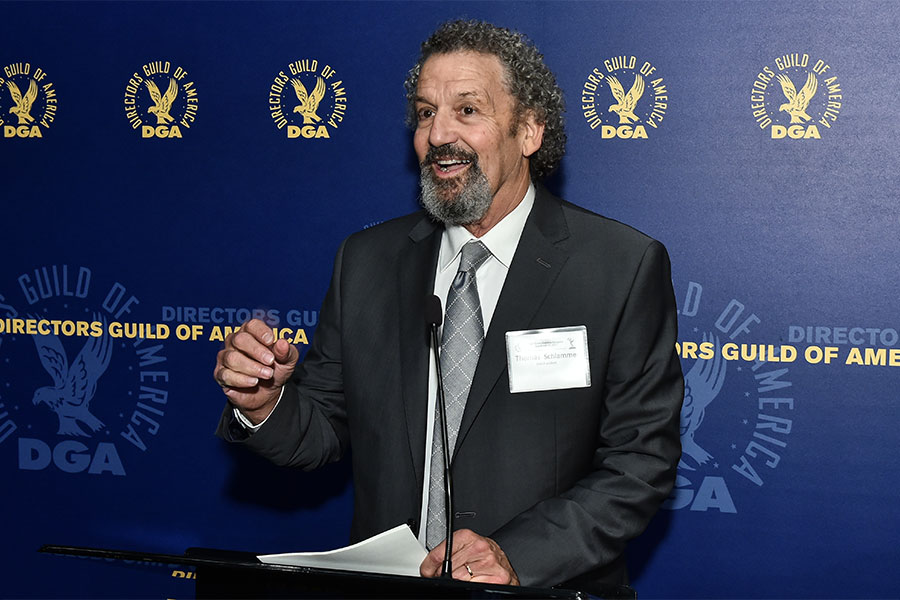
Then, he adds, Emmy-winning creator and showrunner Aaron Sorkin spoke up with a declaration: “He said, ‘I can’t sit down and continue to write The West Wing as if this didn’t exist.’”
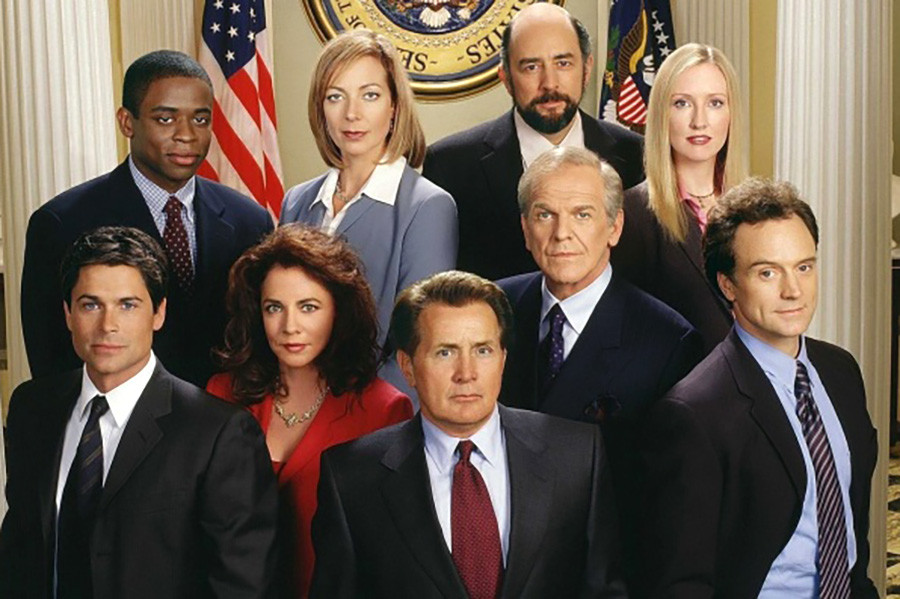
As a result, Sorkin immediately hunkered down and scripted a bottle episode in which a group of high schoolers visiting the White House are forced to go into lockdown in response to an unspecified threat. During the wait, they engage with senior staffers — including White House Chief of Staff Leo McGarry (John Spencer), Deputy Communications Director Sam Seaborn (Rob Lowe) and President Josiah “Jed” Bartlet himself (Martin Sheen) — in a conversation about terrorism and security.
Titled “Isaac and Ishmael,” the installment was filmed and edited within two weeks of the terrorist attacks and aired on NBC on October 3, 2001. As an introduction when the episode originally aired, cast members spoke directly to the camera and explained to audiences that they were about to watch a unique “storytelling aberration” rather than a standard entry. (The clip can be found on YouTube, but was removed from the streaming version.)
Residuals from the episode continue to go to the New York Firefighters 9/11 Disaster Relief Fund and the New York Police and Fire Widows and Children’s Benefit Fund.
Bradley Whitford and Allison Janey in a scene from "Isaac and Ishmael."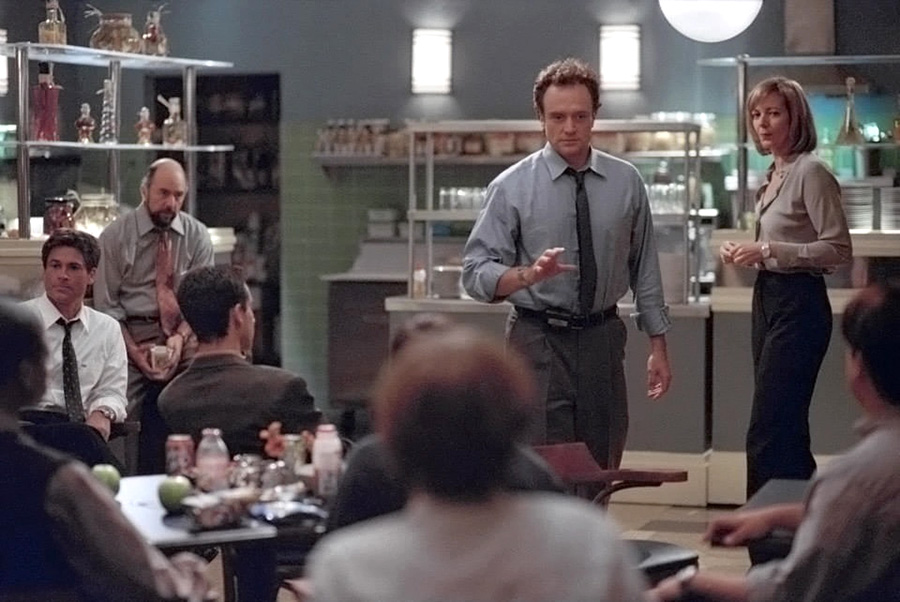
Looking back, Schlamme thinks “Isaac” was “a way for Aaron to try to acknowledge the world we were living in. Then, in the following week, we had to be able to say that we were moving forward.”
Twenty-five years later, Schlamme reflects on the special episode for The Television Academy.
Television Academy: What do you remember about that first production meeting for “Isaac and Ishmael” in the immediate aftermath of 9/11?
Thomas Schlamme: I remember that the [third season] premiere, a two-parter called “Manchester,” was already shot and edited. We were ready to go. Then we all came back to the office — I think on the 13th of September. [Executive producer] John Wells was there, so were Aaron and people from Warner Bros. We were all trying to figure out what we were going to do — not just with The West Wing, but with television.
We were all in this fog, trying to make very rational decisions about the best way to proceed when everything still felt mysterious and frightening. There was talk that L.A. was going to be hit and even the studios were going to get hit. There was an enormous amount of security in the office. The world was starting to shut down.
It really was a fraught and uncertain time.
Yes. And it’s so hard for all of us who lived through it to completely remember, emotionally, what we were feeling. It’s also very hard for somebody who didn't live through it to understand what life felt like that morning, seeing the World Trade Towers fall. Everything got put on pause.
What were your discussions like in terms of how to move on with the show?
We were in the middle of shooting a new episode. There was a [story] element of a lockdown with some kids, but it was nothing like “Isaac and Ishmael.” We were a couple of days into it, and we clearly knew we were going to have to abandon that. Once NBC made the decision that we probably would not be premiering after the incident — I will put this pretty much on Aaron, in that he wanted to do something new.
How did you feel about that approach?
A lot of these big decisions were really a bilateral decision between Aaron and myself. I will be very honest and say that I was not in favor of it. I thought it was too soon. I was wrong. I understood why he needed to do it.
What was it like putting together this kind of episode at such an accelerated pace?
It was all hands on deck, and our departments never blinked.
It wasn't even a completed, written episode when we started. As Aaron was coming up with it, we would say to him, “Just give us whatever you got.” But no actor was going, “Oh my God, I have all these pages and how the hell am I going to learn [my lines]?”
After filming, we moved as quickly as possible. We’d be cutting in the editing room, so Chris [“Isaac and Ishmael” director Christopher Misiano] would come in and take a look. The sound editors worked overnight. Everybody was working Saturdays and Sundays. Whatever we needed to do, we got it done. The whole process took about three weeks.
Why did you have the actors break the fourth wall at the beginning? Was there an underlying message?
I shot those talking heads. We wanted to tell viewers that we were putting on a play for them, and we explained to them how the proceeds would be donated. The actors never made money from that episode, either. We wanted to say we were also doing this to try to move forward and to get people back. I think part of the reason that the cast and crew were working around the clock was because they believed in what we were doing.
A scene from "Isaac and Ishmael"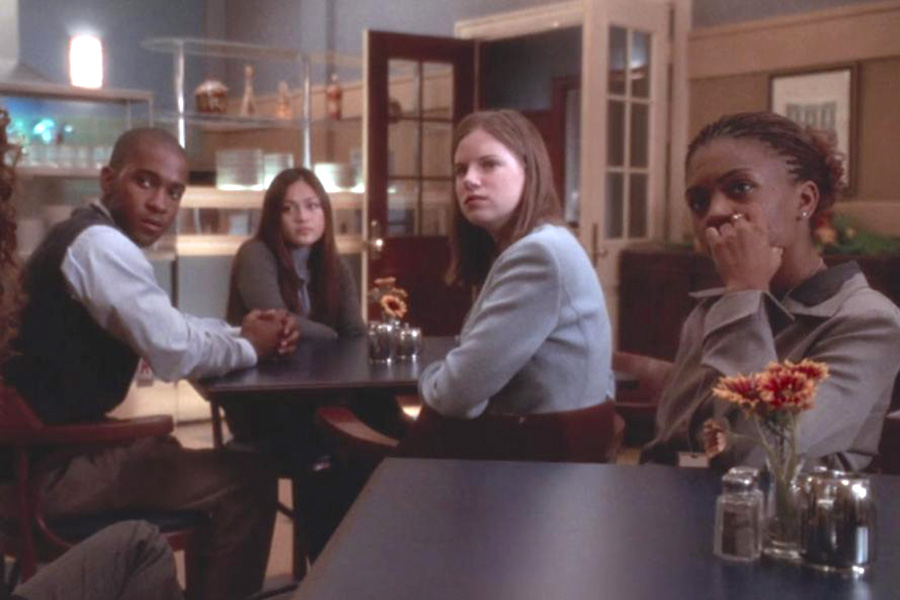
What moment stands out for you from the finished episode?
The most important thing we did was take a character who probably had the most powerful moral compass — which was Leo — and turn him into somebody who was only reacting emotionally. He was not using any part of his brain that his amygdala had fired off. He was in a fear-based world, and he was making really bad judgments. He was saying things that would be interpreted, at that moment, as clearly racist. It showed how easy it is, at this moment of crisis, to slip into areas that we would not be proud of later.
A couple of other elements were really important. You know, the history lesson in the show can be argued one way or the other. You can go, “Well, that's your history.” So, there was a point-counterpoint. There's a whole sequence between C.J. [Allison Janney] and Toby [Richard Schiff] about civil liberties. Do we enact the Patriot Act? Do we give up civil liberties? Are we under a situation where we no longer have to be nitpicking about civil liberties? That's a fascinating thing we are still struggling with.
Why is “Isaac and Ishmael” still an important installment of the series, 25 years later?
It is a time capsule. You can watch the episode and wonder, “What was the nation feeling at that moment? What was it like to walk down the street as a dark-skinned, Muslim-looking person?” The kids were also talking about what kind of place exists where you’re in a coffee shop that could potentially be bombed and the response was, “Israel.” The response could now also be Gaza, or Syria, or Ukraine, or Iran or America. Twenty-five years later, we're still dealing with the exact same issues. The emotions are still there.
I also think there's something beautiful in that episode — beyond the history lesson, there’s a belief in the next generation. There’s a really touching moment when Brad Whitford’s character has a talk with one of the [students]. He says to just keep doing what you're doing — don't get stopped by this, don't get overwhelmed by your fears. That’s never a bad thing to hear, especially now.
This interview has been edited for length and clarity.