

If you stand in a crowd and call out, “Clear eyes, full hearts…,” odds are high that a stranger will reply, “Can’t lose!”
That’s a key metric writer-producer Jason Katims uses to assess the enduring love for Friday Night Lights, especially as it celebrates its 20th anniversary. The iconic, inspirational, emotionally overwhelming NBC drama about Texas high school football and the community caught up in it debuted 20 years ago, on October 1, 2006.
Peter Berg wrote and directed the highly regarded pilot episode, which was a fictionalized version of the real-life story first documented in H.G. Bissinger’s bestselling book, which had been adapted into a 2004 film starring Billy Bob Thornton. (Berg also directed and cowrote the movie.) In the pilot, the Dillon Panthers’ new coach and “molder of men,” Eric Taylor (Kyle Chandler), struggles to navigate the football season when his all-star quarterback, Jason Street (Scott Porter), suffers a career-ending injury on the field that leaves the player paralyzed. The consequences of this event ripple effect across the team and the town, especially for Street’s cheerleader girlfriend Lyla Garrity (Minka Kelly), his alcoholic, rebellious best friend Tim Riggins (Taylor Kitsch), Coach Taylor’s wife and high school guidance counsellor, Tami (Connie Britton), and newbie QB Matt Seracen (Zach Gilford). Riggins’s on-again, off-again girlfriend Tyra (Adrianne Palicki) and Seracen’s closest pal, Landry (Jesse Plemons), also enter the Taylors’ orbit.
For the series, Berg wasn’t sticking around past the pilot, so TV veteran Katims (My So-Called Life, Roswell) came aboard as showrunner. In doing so, Katims turned NBC’s underdog gridiron drama into a modern classic, one that earned him an Emmy in 2011 for Outstanding Writing in a Drama Series. Chandler won the Emmy for Outstanding Lead Actor in a Drama Series the same year.
For the show’s 20th anniversary, Katims looked back on his experience with the Television Academy, casting key roles and how he and his writers landed on a key season one story point.
Jason Katims: It didn’t feel like broadcast television, even then. It felt like it was something else.
I met with [NBC’s then-senior vice president of primetime series] David Nevins and some other execs, and I had two questions. The first was, “Would we be able to shoot this show in Texas?” At the time, that was not typically the way it was — you would shoot the pilot somewhere else, and then figure out how to make the show in L.A. [The execs] said their intention was to shoot [in Texas]. And then the second question I had was, “What was going to happen with Jason Street?” In broadcast television at the time, it felt that what happened to Jason [being paralyzed from an on-field hit] didn’t happen. You didn’t see that happen on TV. And I didn’t know how to do a version of the show where, in episode six, he was going to rejoin the team. And they said, “Well, there were no plans,” and it was up to me. That was how I came onto the show.
Kyle and Connie had very strong takes on who Eric and Tami were, and what they should and shouldn’t do. What was it like to work with them, and how did you want to depict their relationship — which was among the more memorable and realistic marriages ever shown on TV?
It was fantastic. They’re brilliant. There was a certain magic that happened anytime that they were on screen together, so it was an absolute joy to work with them.
Every episode, we had, like, seven or eight stories. We had so many characters. Coach and Tami, their marriage was beautiful — but a lot of the drama in their storylines came from the surrogate parenting stories [involving the players] that they had.
As you’re working with these actors and figuring out how to tailor the characters to their strengths, how did you flesh out new relationships like, say, Tami mentoring Tyra?
Tyra was one of the bigger revelations for me. If you look back at the first couple of episodes [of season one], it’s hard to really know who she is. She was charming and winning, but it was hard to put your finger on what her deal is exactly. There was an episode where we go into Tyra’s house, and you meet her mom and her older sister. When I saw that scene in the cut — with them living in that place out on the edge of town, and her mom is charming but damaged — that’s when I really understood the character. Tyra’s story was definitely one of my favorite character arcs of anything I’ve ever done.
FNL's Tim Riggins (Taylor Kitsch) and Tyra Collette (Adrianne Palicki)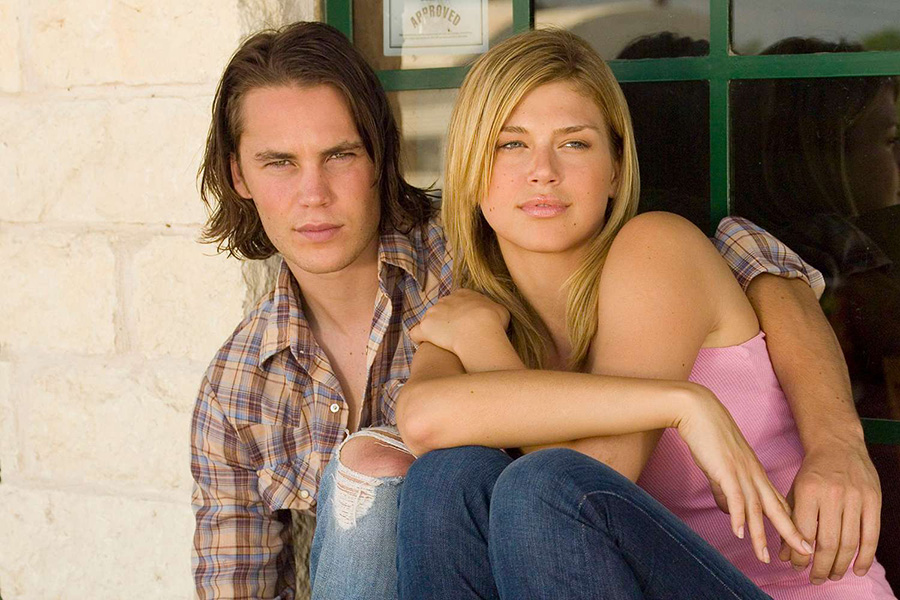
Tyra’s also at the center of maybe the most emotionally potent sequence on the whole show. At the end of “Mud Bowl,” episode 20 of the first season, you’re cutting back and forth between this big game being played in the mud and Tyra in the parking lot being attacked and fighting this man off. How did you and everyone else involved figure out how to make moments like that so potent, and make the audience feel them as deeply as we did?
Obviously, you do the best work that you can — and there’s a lot of people that are collaborating on it. And, every once in a while, you have a show where you feel like there’s a certain fairy dust quality that’s sprinkled on it. On Friday Night Lights, the sum was greater than its parts. In some of these moments, there was a powerful combination of visuals and music.
Doing the Mud Bowl football game part of “Mud Bowl” was a really wild experience. It was such a ridiculous idea for a story — that we were going to play a game in a cow pasture. When we were prepping that episode, our line producer, Nan Bernstein, called me from Austin. She said, “Look, Jason, I have some great ideas for where we’re going to shoot the game for ‘Mud Bowl.’ There’s a middle school soccer field that we can do it on.” And I was like, “No, it’s got to be a cow pasture.” A couple days later, she’s like, “Well, we found this really, really sad elementary school football field.” I said, “No, the idea is it’s a cow pasture. It’s the whole story.” She kept coming back to me [with alternative locations]. Finally, she was so frustrated, she said, “Jason, we can’t shoot in a cow pasture. Where are you going to put the lights? Where are people going to sit? How are people going to park?” And I was like, “Nan, you realize you just wrote a scene for me.” [Laughs].
That’s amazing.
And, of course, we did it! We shot it on a cow pasture, and it became so beautiful, because everybody just committed to the idea and did it. There were moments that it just felt lifted up. I always think about the sequence in the second episode of the show, [“Eyes Wide Open”], with the slow-motion “Devil Town” sequence. They’re preparing for the game, people are giving them cookies and decorating their houses and putting signs up. And the song “Devil Town” is playing. It’s just so powerful, this sort of visual storytelling combined with the show’s soundscape.
A scene from "Mud Bowl"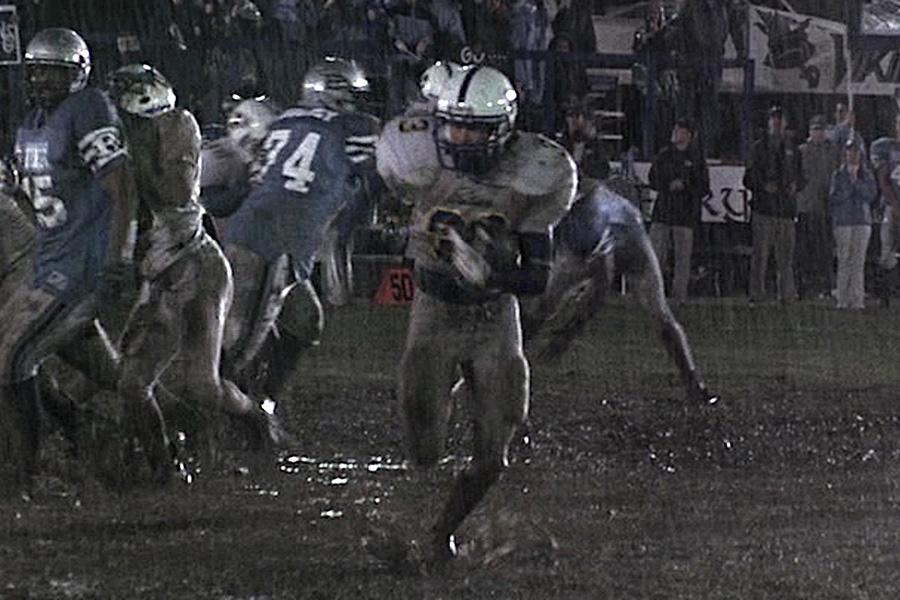
The stories that we wrote, they also feel like they have a ring of truth to them. We did everything in real places — we had a scene in a gospel church, so we went to a gospel church. The pastor, the choir, the congregation? Those were all real. We popped an actor into it, and that’s how we shot it. All of these things combined to give it both this feeling of reality and authenticity and this mythic, heightened thing. Friday Night Lights had both those things working simultaneously.
The first season ends with the team winning the state championship. Why did you decide to end it that way, versus the real story, where the team puts up a valiant effort but falls short?
Dating back to the movie, there was a discussion where certain people felt that if the final game had a different ending, then the movie would have had a different result at the box office [laughs]. With the show, if they win state, you’ve got this cathartic ending. If the team doesn’t win state, then you’ve got more of a drive into the next season. At the time you’re doing it, however, you don’t know if that [finale] is going to be your last episode or not. So, we approached it like, “What if we don’t come back for a second season?” It wasn’t a small possibility, so we had to balance all those things. Then, we would just argue in the writers’ room about it.
Tami Taylor (Connie Britton) and her daughter, Julie (Aimee Teegarden) 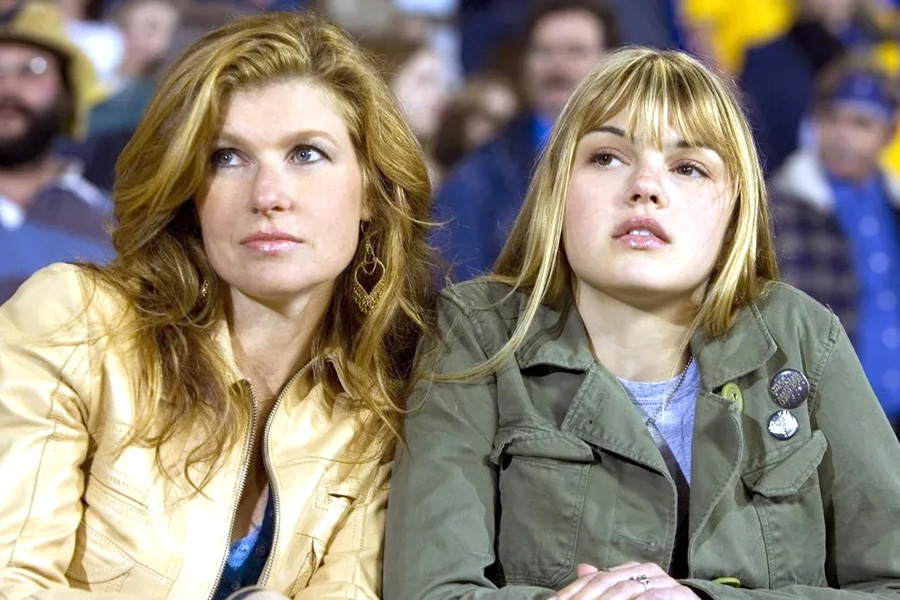
It was sold as a show about football, but you could do these amazing stories that had nothing to do with the sport — like when Tami gets upset after finding out that her teenage daughter, Julie (Aimee Teegarden), wants to have sex with Matt.
There were some breakthrough moments for us in doing the show — moments that were so deeply human — where it’s not about football, you know? We had a storyline between Tim Riggins and his older brother, Billy (Derek Phillips), and a story about Street getting into playing murderball. Those were a breakthrough for us: We realized, “Oh, we don’t have to be playing football, we don’t even have to be practicing football. This could be the show.” That Tami/Julie story was another breakthrough. It was so intense and so big, and you get it from both points of view. That story was written by Liz Heldens, who was the first person to reach out to me and say, “I want to be on the show.” At the time, I hadn’t even thought about Liz for the show. I just thought I was doing a football show, and [Liz] was known for doing these very female-centric, relationship shows. I was so touched that she was so passionate about it. Stories like that are what she could see in the show — that it was as much about mothers and daughters as it was about coaches and football players.
This interview was edited for clarity and length.