

Glamming up movie stars used to involve hair, makeup and lighting. Studios crafted wigs for actors like Judy Garland in The Wizard of Oz and shored up men’s hairlines with custom rugs. Makeup pioneer Max Factor invented Pan Stik, a creamy foundation that makes skin look immaculate on a 30-foot screen, and for matinee-idol shots, gaffers set up “Paramount lighting” (placing the key light high up, directly in front of the face) to sculpt jaws, make cheekbones pop and conceal double chins. Not for nothing was Hollywood called the “Dream Factory.”
Those practical effects, as ingenious and innovative as they were in their day, pale in comparison to today’s VFX makeovers. A director on Fox’s Glee, for instance, told Vulture in 2016 that a so-called “pimple pass” was ordered for most episodes to ensure the young cast was blemish-free. Bravo’s Real Housewives franchise is also said to use post-production digital cleanup on its stars.
Making middle-aged skin look immaculate on screen is impressive, but it barely scratches the surface of what industry insiders call “beauty work.” If an actor shows up in the dailies with a five o’clock shadow, he gets a digital shave in post. Hair thickening is an easy fix, including everything from filling in bald spots to pumping up the volume using AI and “hair plugins,” but that’s just for starters. Sheen, highlights and roots — even the hairstyle itself — can be significantly altered with this ubiquitous and increasingly undetectable technology.
Jean Harlow poses in "Paramount lighting"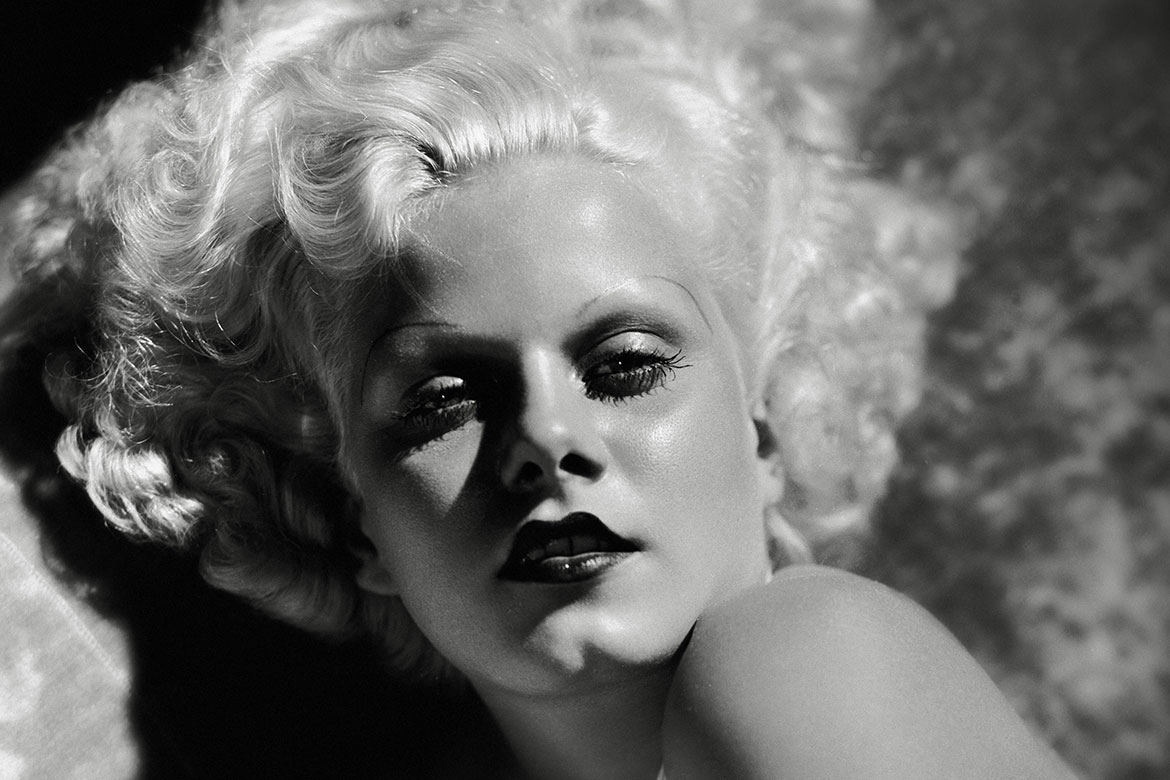
Scars or tattoos? Forget about fillers and concealers; just a few mouse clicks and poof. If a sleep-deprived actor shows up on set pale and blotchy, with bags under their eyes, don’t schedule a reshoot. Call the VFX beauty team for general optimization, along with thickening eyelashes, erasing ear and nose piercings, expunging crow’s feet and moisturizing and smoothing skin. Forehead lines, laugh lines, marionette lines, any lines — gone. Erasing jowls and cellulite are common requests. There’s also major body work, whether adding definition to a rom-com hunk’s pecs or performing a nip and tuck on his love interest. Lighting can also be changed, either for a flattering glow or to boost the eye catchlight in a love scene. Crying on cue is no longer torture, as a trickle of digital tears is a basic render. Given enough time and money, almost any cosmetic enhancement is possible.
Only a handful of actors have addressed this delicate subject. Emmy nominee Michael Shannon (Death by Lightning) said in a 2016 New York magazine interview, “In post-production, if they want your nose to be a little smaller or bigger, that’s up to them, man. Some attractive person gets out of a swimming pool dripping wet? Nobody wants to see how they really look. It’s fantasy.” The late Paul Reubens, star of the 1986–90 children’s series Pee-wee’s Playhouse, was also candid about his shape-shifting face. When Netflix greenlit Pee-wee’s Big Holiday in 2015, beauty work was used to recreate the actor’s signature man-child look. “I could have had a facelift, and we would have saved $2 million,” he told The New York Times, revealing the film’s generous beauty-work budget.
Then there’s Lili Reinhart, who played Archie Comics icon Betty Cooper in The CW’s live-action teen drama Riverdale. In 2025, two years after the series concluded, Reinhart posted a video on Instagram that sounded like a public service announcement for her fans: “On Riverdale, we would have something called a ‘beauty pass.’ ... If you had a really bad breakout on set … they could go through and sort of wipe it out in the frames. … So, to anyone out there, maybe it’s helpful to know that the perfect skin you see on TV and in the movies is sometimes not really what’s going on.”
Eric Levy, co-owner of Clean Plate FX, a Los Angeles–based VFX house that specializes in beauty work, says that when it comes to these cosmetic upgrades, as with plastic surgery, less is always more. “Nobody — the producers, agent or actor — wants anything done that’s too obvious. The person on screen is still going to look like that person in real life. But if they’re older, we can soften the neck folds. If they’re a bit heavy, we can use SplineWarp, a tool that allows us to alter a body’s dimensions, slimming the face, arms and waistline.”
Paul Reubens in Pee-wee's Big Holiday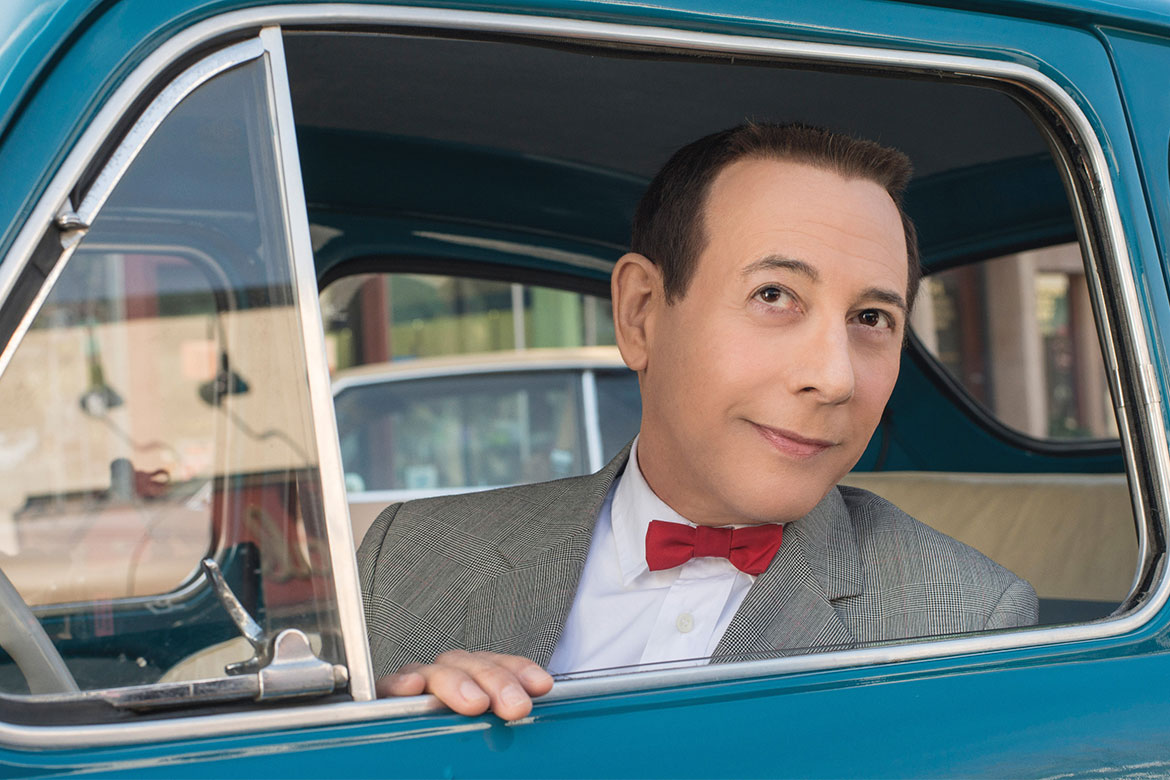
Levy is careful about the details he divulges. A code of omertà within the industry — combined with highly enforceable NDAs — has prevented VFX artists from revealing too much. This is the part of the job he finds frustrating. Unlike, say, costume designers and makeup artists, there are no “Digital Facelift” credits. As further precaution, even the companies that do this beauty work aren’t always mentioned in the closing credits. All the better to keep Dream Factory 2.0 as anonymous as the background actors in a Game of Thrones battle scene.
In Hollywood, a town where IMDb profiles and self-promotion can define a career, Levy is an anomaly. He has many famous clients, but he refuses to name-drop: “We can never show our work, because we’re under strict NDAs. I can’t show you the before-and-after footage. I can’t mention the actors’ names. I can’t say, ‘Oh, here’s the person we did this fantastic job on,’ or ‘Look how much better this actor looks.’”
So, like a gossip columnist fearing reprisal, he floats another blind item: “I did a comedy special where the guy constantly tilted his head down while on stage. With a strong top light coming in, his hair looked really thin. Well, not anymore.”
This VFX subgenre first emerged in music videos and beauty commercials of the mid-1990s to sell CDs and shampoo. Two decades later, the technology — much improved — seeped into film and television. The tech has steadily become better, faster and cheaper, to the point where beauty work is now a postproduction standard even on shows with mid-tier budgets. Along the way there were massive leaps in digital tools and computer processing power, but what really revolutionized the field was 3D head tracking. It accelerated the workflow from months to mere days. Instead of tedious frame-by-frame retouching, VFX artists could simply make slider adjustments on a single master frame. Prices dropped by an order of magnitude; beauty work that used to cost a million bucks is now $100,000.
It’s an open secret that beauty work is routinely negotiated between producers and agents before any contracts are signed. An A-lister can specify who gets the job, ensuring that a veteran VFX artist — typically someone who has worked with them on previous projects — handles the cosmetic pass in post. Actors who wield enough clout may hold the contractual right to sit in on editing sessions. They, or one of their representatives, will take notes and sign off on the beauty work before the footage locks and drops.
This is as much about business as it is about vanity. Actors are no longer just performers; they’re brands whose faces and bodies must remain as consistent as possible over the course of their careers, not unlike continuity in a character’s wardrobe. Networks and streamers are on the same page, primarily to secure talent attachment and protect a project’s prospects. A seven-figure beauty-work line item for a prestige series could be just the cost of doing business.
Having stars look their best also benefits a project’s marketing and international sales. Not to mention the fact that on a set, time is serious money. Paying a VFX studio for beauty work after the shoot can sometimes make more financial sense than halting production to switch out the lighting or reapply physical makeup. Moreover, with video and streaming quality continuing to improve, making actors look as flawless as possible on screen future-proofs their content libraries.
With the threat of litigation always looming, Levy has resorted to producing a before-and-after video starring himself and his wife, Emily. Shot in their home kitchen, the 80-second clip showcases Clean Plate FX’s proprietary head-tracking software. In the video, Emily demands her own beauty pass. “So, you want me to use you as a demo to perpetuate Hollywood’s impossible beauty standards?” Levy deadpans. He punches a keyboard, and Emily’s face is instantly covered with a constellation of data points. That’s the 3D head tracking. A few more keystrokes and … bam, she looks 15 years younger. “Do my arms!” she commands. Click, click, click. Welcome to the gun show. The tables turn, and Levy performs a beauty pass on himself: skin smoothing, eye-bag removal, teeth whitening and, at Emily’s urging, better hair.
Many TV viewers don’t realize how many actors have beauty work done in post. “It’s weird, because everybody knows about Instagram filters and Photoshop,” Levy says, “but when I tell someone what we do, they’re surprised and are like, ‘Even this actor, on that TV show?’” He has a theory: “I think it’s the long run time of TV shows. People are used to seeing 30-second beauty-filter reels. They’re thinking, ‘You couldn’t possibly make the actors look good for that long.’ But we can.”
From Max Factor makeup and Paramount lighting to digital dermatology and SplineWarp, the technology may have changed but the mandate hasn’t: physical perfection. “It’s Hollywood! Everyone wants to look beyond great on screen, and the audience expects it, too,” Levy says. “These actors are our superheroes.”
This article orginally appeared in emmy magazine, issue #11, 2026, under the title "Pixel Perfect."