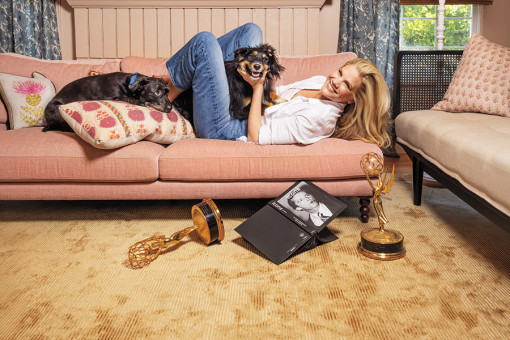


Actor Norman Reedus snatched his character’s crossbow from The Walking Dead. After Breaking Bad ended, Bryan Cranston acquired his character’s signature porkpie hat and wraparound sunglasses. When Late Night host Seth Meyers asked Cranston’s costar, Aaron Paul, what he’d taken home from the AMC crime drama, Paul replied, “Literally everything I could.” That included the charred pink teddy bear from season two and Gus Fring’s (Giancarlo Esposito) “half-blown-off head” from the graphic season-four finale. Displayed prominently in Paul’s media room, the gruesome prosthetic often frightens guests.
That’s all trivial compared to the audacious stunt pulled off by Jack McDermott, an eccentric actor, writer and director of B-movies and shorts in the 1920s and ’30s. Weary of sharing a boarding house with fellow industry strivers, he purchased a modest lot in the Hollywood Hills and, working with construction materials from various film productions, built a Shangri-La that was as much a museum as a residence.
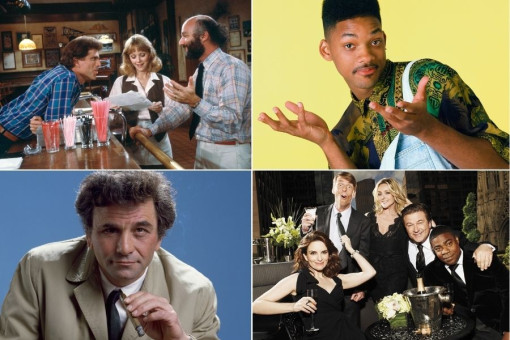
Breaking Bad's Bryan Cranston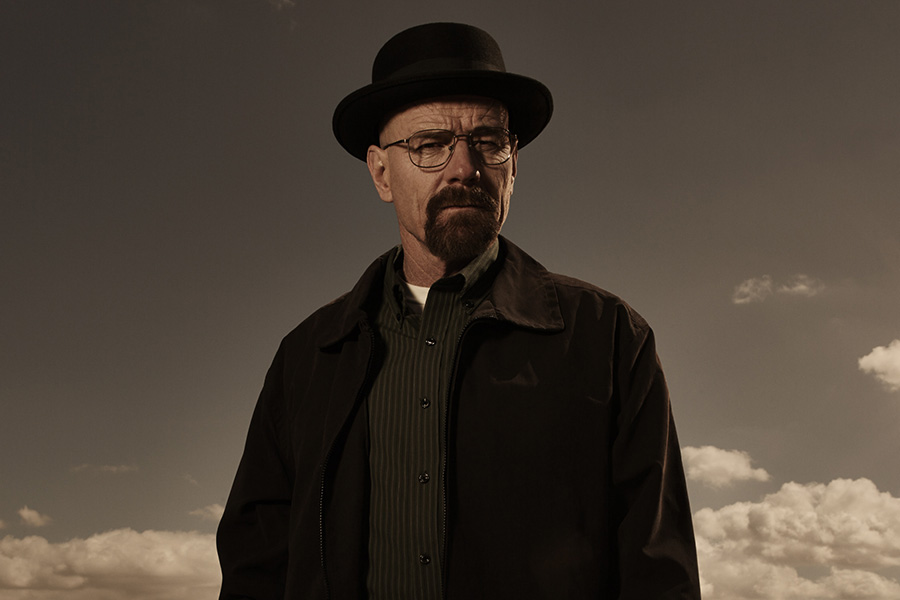
In addition to using the studios as his personal Home Depot for lumber and roofing, McDermott appropriated false fronts, finished sets and hundreds of individual props (including furniture) from backlots to fulfill his ambitious vision. He started by carting away six full rooms designed for The Song of Love (1923), a silent adventure set in North Africa. The task was arduous. Each room was carefully dismantled and the pieces transported up Mulholland Highway by donkey to be reassembled onsite.
The house — a jumble of styles ranging from Gothic to Moorish — became a party destination for stars like Douglas Fairbanks and Mary Pickford. The living room featured swords, disembodied prop heads and faux-blood-stained walls. Guests dined on an immense table used in the mega-budget United Artists release Robin Hood (1922). Another statement piece was a life-size goddess statue from Salomé (1922), sometimes called Hollywood’s first art film. The four cannons on the roof came from a replica of the USS Constitution used in the war epic Old Ironsides (1926).
Those were simpler times. During the silent era, once a film wrapped, props and wardrobe were considered trash. Cast and crew could pick up castoffs by dumpster diving or just walking off with whatever they pleased. This was especially true at the “Poverty Row” independents, owing to limited storage space and meager budgets. Expensive props were occasionally sold or rented to other studios, but that was the exception.
The transition to talkies, which required a large investment in new technology, meant even more cost-cutting, making the idea of stockpiling stuff financially untenable for the independents. McDermott explained his obsession with hoarding studio property to Photoplay magazine in 1924: “I take it and make it fit somewhere in the house. It has played its part, and it’s been discarded — I save it from oblivion.”
As the major studio lots expanded, recycling props and wardrobe became standard practice to defray rising costs. By the 1960s, MGM’s wardrobe department held roughly 300,000 costumes. Its prop department, considered the largest in the world, maintained an inventory of more than a million items.
Formal archival preservation and curation, however, wouldn’t become studio policy for another decade. The turning point, when props and costumes were elevated to memorabilia, came in 1970. That’s when MGM, flirting with bankruptcy, liquidated a huge inventory of undervalued assets. The David Weisz Company purchased the contents of seven MGM soundstages for $1.5 million. Billed as the “sale of the century,” the auction lasted 18 days and listed more than 20,000 lots, ranging from costumes and props to vintage cars and set pieces.
The lots that made headlines were wardrobe and props. Dorothy’s ruby-red slippers fetched $15,000, and the titular prop from 1960’s The Time Machine went for $4,000. A single bidder, actress Debbie Reynolds, dropped $180,000 — mostly on costumes. The auction ended up grossing more than $8 million ($67 million, adjusted for inflation), proving that movie memorabilia was not only collectible but valuable.
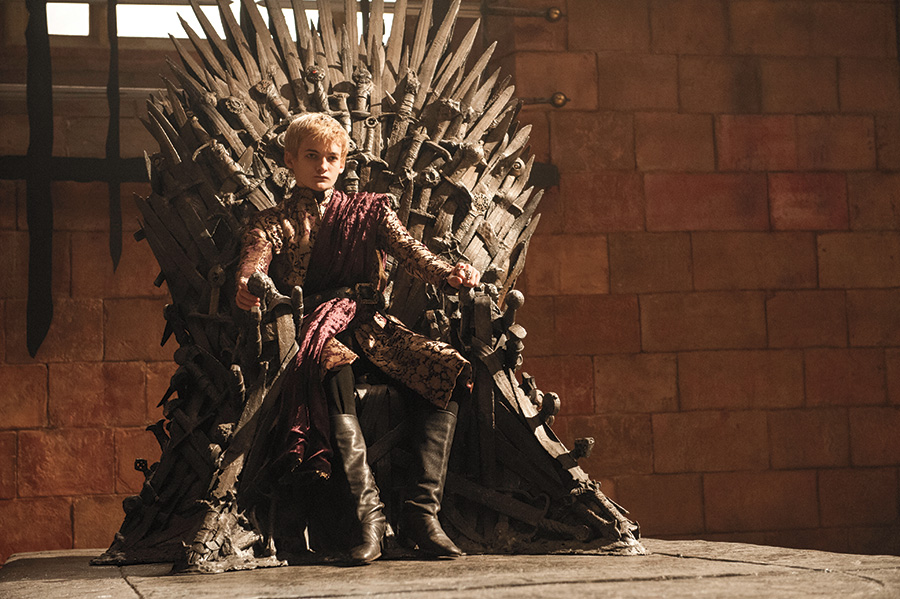
Those prices may have raised eyebrows at the time, but they pale in comparison to the sums props and costumes command today. In 2024, Dorothy’s ruby-reds (one of five surviving pairs) sold for $3.25 million. That same year, the phenomenal success of “Game of Thrones: The Auction” resulted in Westeros memorabilia surfacing on millions of Instagram reels. The prized lot was a “touring replica” of the Iron Throne. Used at promotional events, the 310-pound behemoth — “dragon-forged” from the swords of Aegon the Conqueror’s fallen enemies — sold for $1.49 million. When the hammer finally dropped, the room erupted in applause, as if a Van Gogh had just set a record.
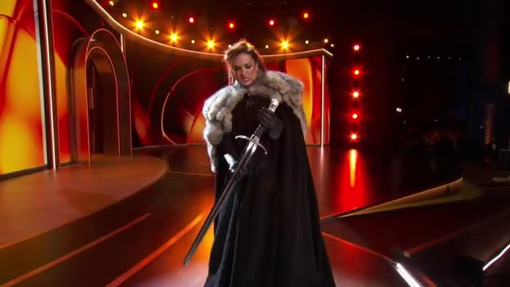
Jon Snow’s (Kit Harington) Longclaw sword ($400,000) and Night’s Watch costume ($337,500) also ignited bidding wars. Other notable items included Jaime Lannister’s (Nikolaj Coster-Waldau) golden Kingsguard armor and Oathkeeper sword ($212,500 for both) and a hand-painted map of Westeros ($237,500). More than 900 lots were sold, and more than 4,500 bidders worldwide participated. Total gross: $21,115,718, making this sale, as Heritage Auctions’ press release put it, “the most successful auction of costumes, props and more from a single film or TV show.”
According to Brian Chanes, senior director of Heritage’s Hollywood and Entertainment department, the market for props and costumes is “growing by leaps and bounds.” Yet he says TV memorabilia auctions with multimillion-dollar grosses are rare. “In many shows, the clothes are off the rack; you can’t tell if the actors actually wore them. If those outfits were on mannequins, nobody would recognize them,” he says. “But if it’s a costume from Game of Thrones or an iconic sci-fi show like Star Trek, where you see the Starfleet insignia, it’s branded, and it’s valuable.”
Star Trek's William Shatner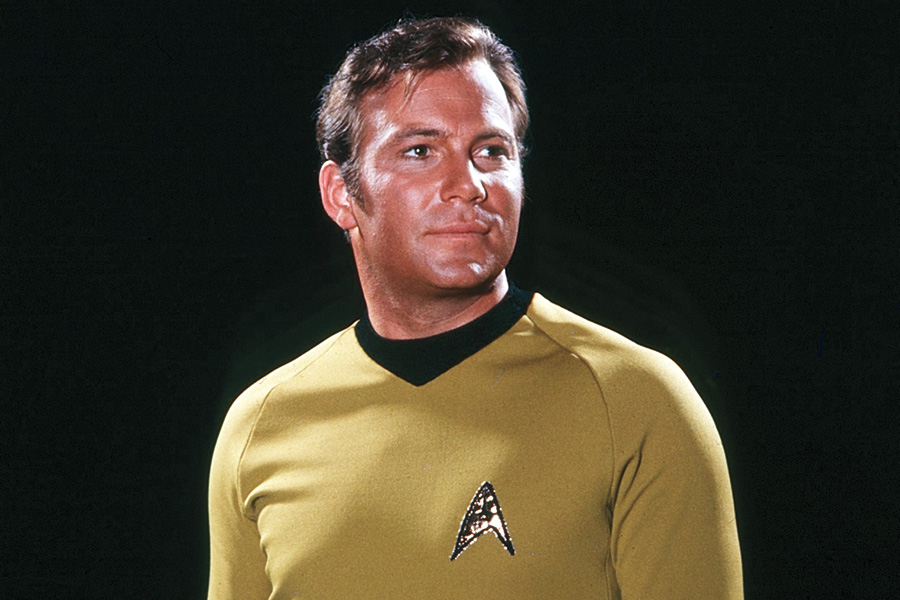
That’s an understatement. Last year, a costume William Shatner wore on Star Trek’s first season went on the block. The pre-sale estimate was $65,000 to $85,000. It sold for $455,000. Julien’s Auctions rated the condition as “good … displaying vibrant burnt yellow in tone.” The auctioneer threw in a DVD of the series’ first season.
Value-added branding also applies to props. As with all collectibles, provenance is everything, intrinsic value irrelevant. The small papier-mâché picture frame that once adorned Monica Geller’s (Courteney Cox) apartment door on Friends sold at auction for $35,000. Set designer Greg Grande repurposed the damaged frame (he’d accidentally broken the glass) as a whimsical accent for her door’s peephole. Anyone who missed out on that 2021 Heritage Auction can bid today on the “expertly painted butter yellow” frame; the owner is open to offers above $150,000.
At 2010’s “Lost: The Official Show Auction,” the winning bid for five Apollo-brand candy-bar wrappers was $625, 12 cans of DHARMA Initiative beer sold for $5,000, Daniel Faraday’s (Jeremy Davies) journal went for $20,000 and Dr. Jack Shephard’s (Matthew Fox) death ensemble of bloody gray T-shirt, grimy jeans and work boots pulled $10,000. The shiny blue DHARMA Initiative van, a 1971 Volkswagen Transporter driven by Roger Linus (Jon Gries), raked in the most cash: $47,500.
ABC Studios included a certificate of authenticity with every on-screen lot from J.J. Abrams’s sci-fi adventure (2004–10). The Lost pilot cost a reported $10 to $14 million, and each subsequent episode cost another $4 million, so the auction’s $1.8 million gross was relatively insignificant. On the other hand, ABC was spared the expense of dealing with more than 4,000 items, including an 11-foottall hunk of fuselage from the doomed Oceanic Flight 815 airplane ($9,000).
The complete version of this article originally appeared in emmy magazine, issue #9, 2026, under the title "You Must Remember This."