
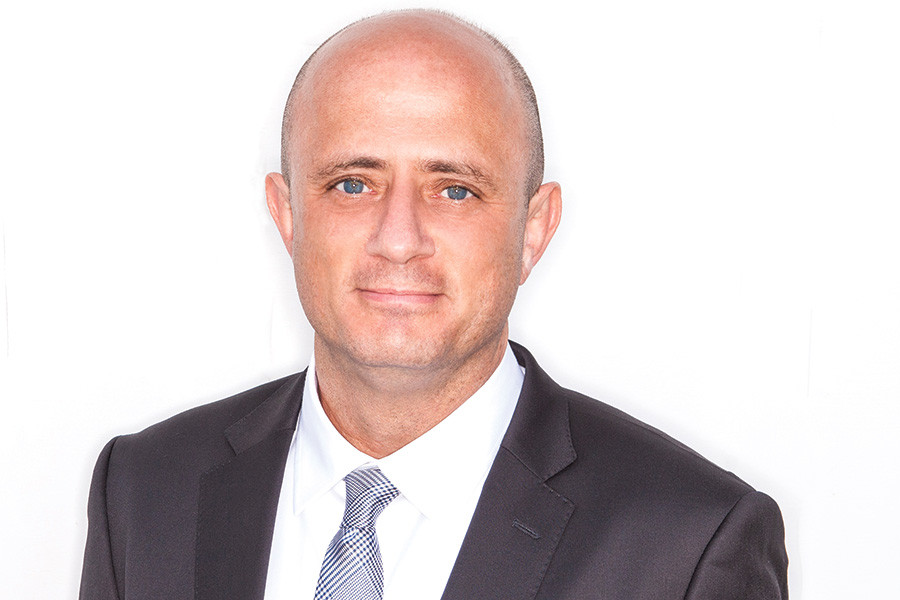
In 1996, when Eric Kripke was a Television Academy Foundation summer intern in the directing (single-camera) cateogry, director Karen Arthur hosted him on the set of the CBS telefilm Journey of the Heart, an inspiration drama based on the true-life story of a mother determined to attain the best possible life for her blind, autistic, musically gifted son.
“It was a very heartwarming story,” he recalls. “Not really my tone, but it was an amazing experience.”
In the years since his internship, the Ohio native has made a name for himself with genre projects, starting with the long-running paranormal drama Supernatural (2005–20) on The WB and The CW; he created the series and was showrunner for the first five seasons. Other projects include NBC’s post-apocalyptic drama Revolution (2012–14) and the time-travel series Timeless (2016–18), which he created and cocreated, respectively.
Kripke’s first professional credit was The WB’s short-lived 2003 drama Tarzan, a modern retelling of the classic jungle-king story, which he codeveloped and cowrote. His first venture into horror was the 2005 feature Boogeyman, which he cowrote.
In 2019, Prime Video premiered The Boys, a satire about corrupt superheroes, based on the comic-book series by Garth Ennis and Darick Robertson. Kripke was executive producer, showrunner and a writer and director on the show, which ran for five seasons and ended in May 2026. It drew critical and audience acclaim and, in its final season, an estimated 57 million viewers per episode globally.
Kripke directing the season one finale of The Boys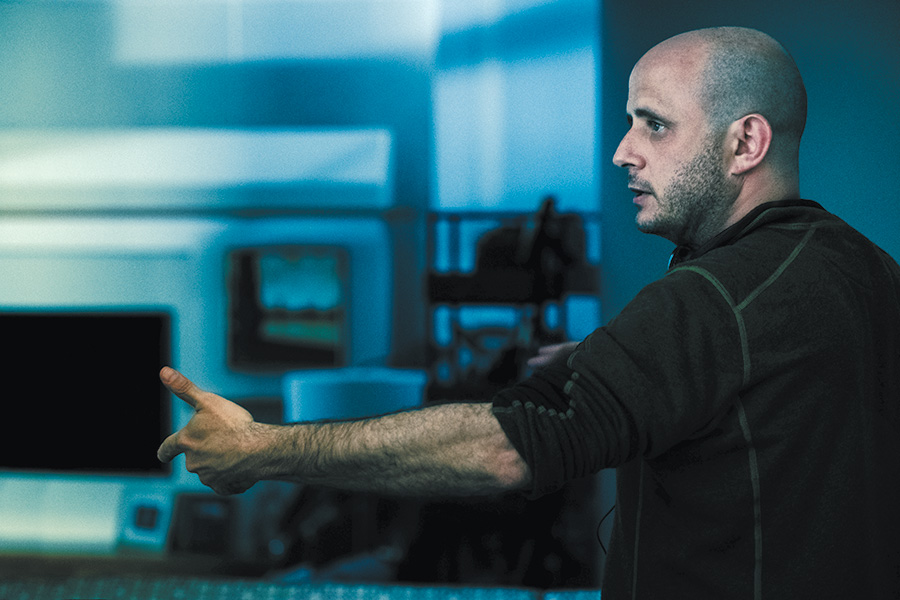
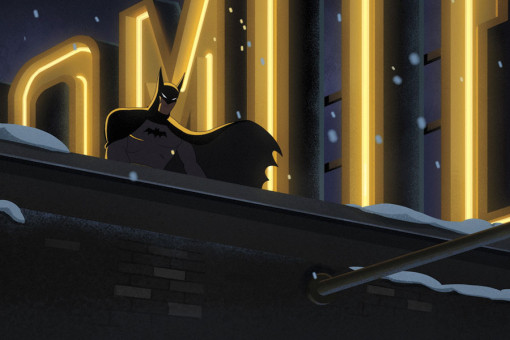
The Boys won four Emmys — for stunt coordination, stunt performance and music and lyrics — and was nominated for the Outstanding Drama Emmy Award in 2021. The show earned five more Emmy nominations this year. An animated spinoff, The Boys Presents: Diabolical, won an Emmy for individual achievement in animation and was nominated for Outstanding Short Form Animated Program. The live-action Gen V spinoff ran for two seasons, and a companion web series, The Boys: VNN (Seven on 7), ran between seasons two and three. Next year brings a prequel series, Vought Rising, for which Kripke is an executive producer.
“I like working in horror, science fiction and fantasy,” he says, “because it’s so fun to subvert the genre — twist it, poke it, try to find something new in it — but, more importantly, any good science fiction or fantasy is just a metaphor for something that’s happening in the world.
“[The Twilight Zone creator] Rod Serling, who was the world’s best at it, said that any good fantasy is 98% reality. It allows you to be subversive and say things and make points that would be impossible to do in straightforward drama; you would either be too on the nose or too deadly earnest. But if you can dress it up in superhero suits or monsters, you can say some radical, interesting things. I love that Trojan horse, that you can use it to elevate your story and make your characters complicated and make your commentary really biting and innovative.”
Q: How did you come to participate in the Foundation Summer Internship program?
A: I was a production major in what was called the USC School of Cinema-Television at the time. I don’t remember, but my assumption is that the film school turned me on to the program. I applied as a directing intern, got it and worked post-graduation. It was technically my very first paying job in the industry.
The director was this absolutely incredible, dynamic woman named Karen Arthur. She was the first female director to win a directing Emmy, for Cagney & Lacey in 1985. She was directing a TV movie called Journey of the Heart, starring Cybill Shepherd; Stephen Lang was the love interest.
Q: What did your internship involve?
A: I had been on independent and student film sets, and I’d directed a student film, but I’d never, for any extended period of time, been on a professional set. Karen was the best in terms of giving me access to everything: I got to sit in her office when she was casting and sit in on all the production meetings and the table reads. I was with her every single day of production. It shot for about a month, and it was an invaluable experience to spend that much time on a real set and really understand the mechanics of it.
I was, in effect, her assistant, so anything she needed, I would run to get. I helped wrangle extras. I got to play “Tuba Player Number Three.” I was busy every day, always figuring things out for her and helping her keep everything organized. She would answer every question I ever had and let me watch next to her at video village, and shadow behind her as she was giving the actors direction. She was remarkably open in letting me have access to what she was doing.
Q: What were your greatest takeaways?
A: I found it comforting in a way, because every set pretty much runs the same way, whether you’re making a student film for $2,000 or this movie for probably $2 million. Some of the projects I’ve worked on since then are in the tens of millions, and the process is by and large the same. So, there was the comfort of, “I know how this works; I understand this rhythm.”
But there was also the eye-opening part, because so much of the job is managing personalities, and they don’t teach you that in film school at all. What happens if an actor has a bad day, or someone gets sick or somebody doesn’t like the scene — how does a director navigate all that? Karen was a master at it, making everybody feel heard and comfortable. A director’s job is to create a safe space for their actors to play, and you don’t learn that in film school. I also learned the subtle intangibles, like how and when to talk to a director versus when to leave them alone. And useful things like where to stand, so you’re not going to be in an [actor’s] eyeline or where the DP wants to put the lights or the camera. Those are lessons that I carry with me today.
Another thing that was incredible was to have a paid internship when you’re a penniless college graduate. They paid me something like $2,000, and for a 21- or 22-year-old kid, that’s a lot of money; you could live for two to three months on that [in 1996]. It gave me breathing room to figure out how to get situated — I was dead-set on breaking into the industry — so, that’s something I’ve always been really grateful for.
Kripke with Jack Quaid on the set of The Boys' season four finale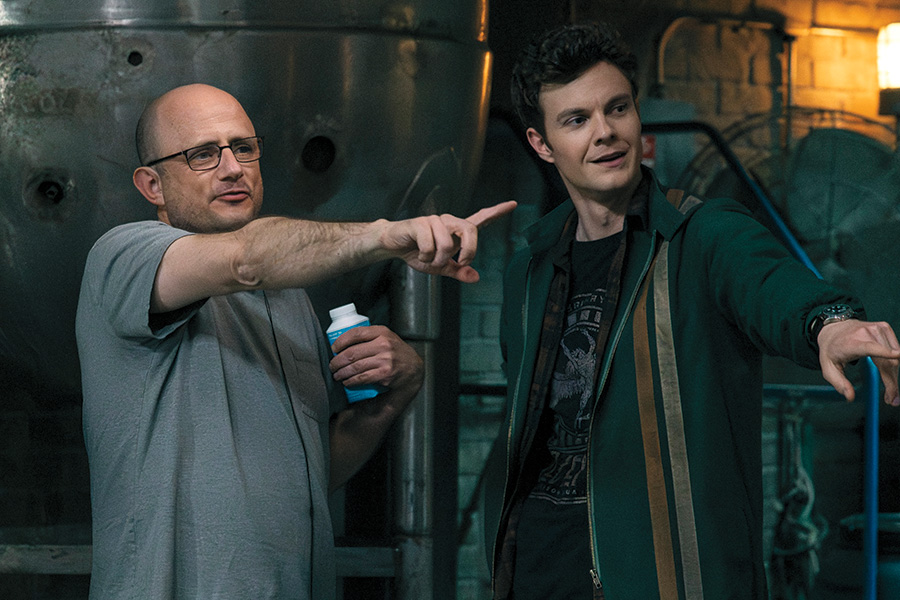
Q: Are you still involved with the Foundation?
A: Very much so. I talk to them at least a couple of times a year, and if they’re raising funds and I’m able to get them something unique from one of my shows, I will. For auctions, we’ve donated signed scripts and the opportunity to have a character named for you in the final season of The Boys. I’ve had Academy Foundation interns come work at my office, and I’ve spoken to some of the kids. I’m well aware of what the Academy Foundation internship did for me. I’m grateful, and I pay them back as often as I can.
Q: The Boys made quite a critical and audience splash over its run. What would you like to say about the show now that it’s ended?
A: The Boys was meant to be a funhouse-mirror reflection of the world we’re living in. Over the seven years that we made the show, the world consistently got crazier, and frankly, we had a hard time keeping up. Every time we would come up with something that we thought was the craziest thing we’d ever seen, the world would just go ahead and do it. So, it’s hard to do satire in this day and age, but I also take a certain grim pride that we’ve been able to be prescient in almost a Simpsons kind of way. I’ll take that.
Q: And you have the Vought Rising prequel coming out next year, on which you’re an executive producer.
A: We’re just finishing editing on it. I think it’s really good. It’s got sort of that Boys tone, but it’s much more of a noir mystery. It’s like L.A. Confidential with superheroes, and it takes place in 1950. There’s a lot we haven’t told the public about yet — what’s in it, and, really, what it’s about. I think we have some good tricks up our sleeve.
Q: You’ve been so successful in bringing shows to fruition. What do you think contributes to your track record?
A: I would say my best advice is to treat people with kindness and make sure they feel heard and respected and safe. Give them the space and the trust to become passionate about your show, because when people feel respected and valued, they’ll work twice as hard. I’ve never understood the screamers or the people who are petty, because aside from the fact that you’re being a bad person, it’s also bad management.
When people feel that their bosses are kind and conscientious, they deliver some truly astounding things. That’s something I try to take with me from project to project. I want everyone to have an incredible experience, because if they do, they’ll work harder, and then they’ll want to come work for me again.
Q: What advice would you give to people who’d like to break in to fantasy, sci-fi and/or horror writing?
A: I’ll speak of writing in general, which is that writers write, and you have to write every single day. Writing — and filmmaking, really — is far more a craft than it is an art, in my opinion, and you only become good at it through practice and repetition and failure and logging countless hours trying it. But if you write a lot and read a lot and also read scripts a lot, you will eventually make it. It might not be the way you thought you were going to, but as long as you write and have persistence, you can make it. Now, you have to be committed to: “I’m going to do this for the rest of my life, and it’s either this or the gutter.” You have to have that level of commitment. But if you do, and you work every day at it, by and large, you’ll make it one way or another.
Before he created the hit shows Supernatural and The Boys, Eric Kripke was a Television Academy Foundation intern learning the ropes on his first set. Thousands of students like Eric are searching for opportunities to launch their careers. Create the next success story by donating to support emerging creatives.
This article originally appeared in emmy magazine, issue #10, 2026, under the title "Eric Kripke."