If you're seeking ways to connect with working television industry professionals, both in front of and behind the camera, joining our organization offers you unparalleled access, benefits and opportunities.
Photo Credit:
20th Century Fox/Courtesy Everett Collection
Magazine
September 17, 2026
L.A. Law Turns 40: The Oral History
The cast and creative team reflect on the Emmy-winning legal drama that reshaped the genre with its controversial cases, office politics and complicated romances.
Set in the "greed is good" era of yuppies and Ronald Reagan, L.A. Law — a compelling blend of drama and humor — prompted nonstop watercooler chit-chat with its glammed-up look at lawyer life.
Unlike earlier legal dramas like Mr. District Attorney, Perry Mason and The Defenders, L.A. Law featured three-dimensional characters arguing cases that reflected controversial and serious issues like capital punishment, AIDS and racial and gender discrimination. At the same time, it revealed the lawyers' own moral dilemmas and delved into their saucy sex lives.
Producer-writers Terry Louise Fisher, a lawyer, and Steven Bochco, who'd already created the acclaimed police procedural Hill Street Blues, cocreated this show, which aired on NBC from September 1986 to May 1994. Each episode carried multiple storylines for its charismatic ensemble.
Two other key writers were lawyers. For David E. Kelley, who'd spent three years practicing law in Boston, it was the start of a major TV career; he became showrunner when Bochco left just before season four. William M. Finkelstein, an attorney who began his TV career as a story editor on L.A. Law, became executive producer for the final two seasons.
The main cast at McKenzie, Brackman, Chaney and Kuzak (as the firm was known initially) included Harry Hamlin (Michael Kuzak), Corbin Bernsen (Arnie Becker), Susan Ruttan (Roxanne Melman), Alan Rachins (Douglas Brackman, Jr.), Richard Dysart (Leland McKenzie), Susan Dey (Grace Van Owen), Michele Greene (Abby Perkins), Blair Underwood (Jonathan Rollins) and Jimmy Smits (Victor Sifuentes). Jill Eikenberry (Ann Kelsey) and Michael Tucker (Stuart Markowitz) were married in real life when they signed on, and their characters wed in the second season.
Dysart, Larry Drake (who played clerk Benny Stulwicz), Bochco, Rachins and Fisher died in 2015, 2016, 2018, 2024 and 2025, respectively.
In 2002, NBC aired L.A. Law: The Movie, a reunion for most of the major cast. In 2021, ABC commissioned a pilot reboot but opted against a series pickup. Today, the original L.A. Law streams on Hulu and Disney+ and is also available on Prime Video.
Emmy contributor Jane Wollman Rusoff spoke with the surviving main cast and some of the crew about this influential series, which won the Emmy Award for Outstanding Drama Series four times (in 1987 and '89–91).
ELEMENTS OF A HIT
David E. Kelley (executive producer, showrunner, writer): We deliberately presented a more glamorized version of the law. The real world offered a little more drudgery.
William M. Finkelstein (executive producer, writer): Previous legal shows didn't have quite the flash of L.A. Law. Our cases had drama, but it was also the romantic interests and resentments in the office — unabashedly soap opera.
Michele Green (actress, Abby Perkins): With L.A. Law, you saw what these lawyers were like and the firm's internal politics. Some were dirtbags. Some were fighting the good fight. Some were money-grubbing.
Harry Hamlin (actor, Michael Kuzak): People still come up to me and say, "I became a lawyer because of you." I always say, "I'm so sorry. I apologize."
Jimmy Smits
Photo Credit: NBC/Photofest
CAST OF CHARACTERS
Corbin Bernsen (actor, Arnie Becker): My character appeared to be a rogue and a devilishly handsome ladies' man. I saw him as this guy who couldn't figure out life. He was very good at his job, but on a personal level, he was unable to have a full relationship. Roxanne was the one person he allowed in. I think he loved her, but I don't know about being "in love."
Susan Ruttan (actress, Roxanne Melman): Once, I walked in on Arnie [being intimate with] one of his clients. I said, "Pig!" and walked out the door.
Jill Eikenberry (actress, Ann Kelsey): I just loved how Ann took Douglas to task. He was such a hard-ass. I've always liked when women say that kind of stuff to men who try to boss them around. And viewers loved that Ann was taller than Stuart, though there's actually only an inch and a half difference between us, so they made my heels higher, my shoulder pads bigger and my hair puffier. I towered over him.
Michael Tucker (actor, Stuart Markowitz): At the yearly firm party, Ann was in her cups a little, and she picked up Stuart. It was like he'd died and gone to heaven.
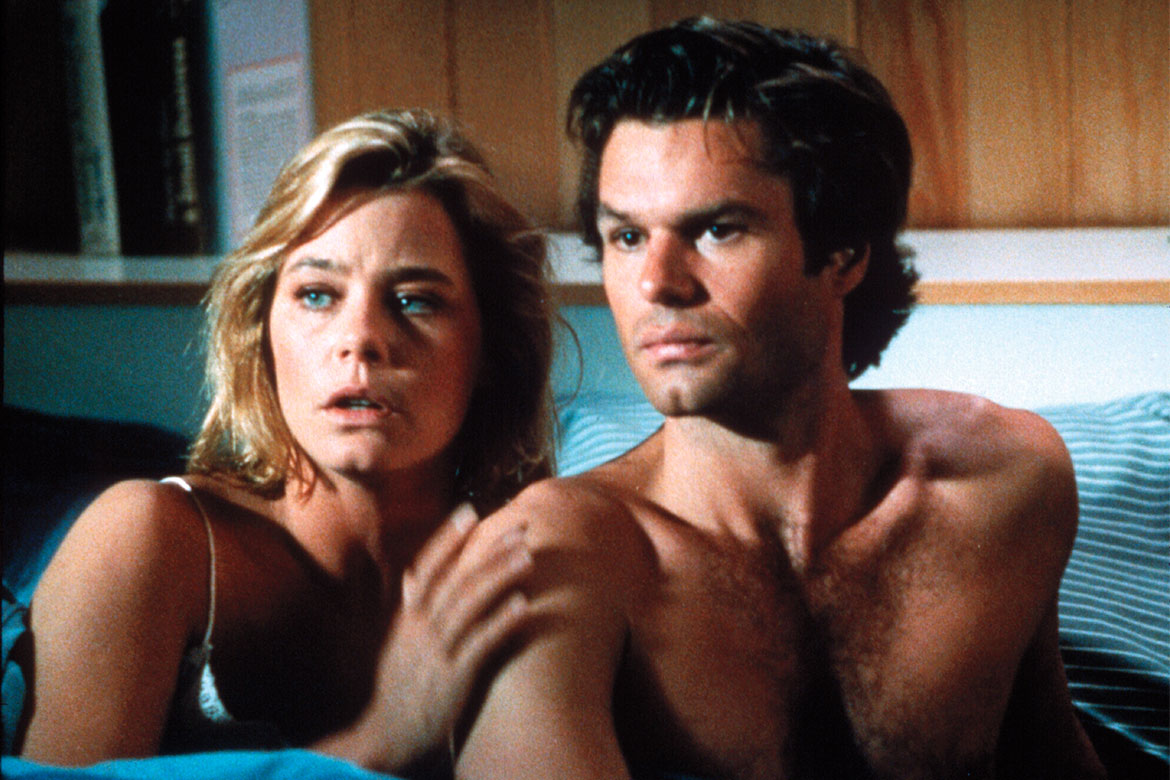
Susan Dey (actress, Grace Van Owen): Grace was a very driven woman. She understood who she was with the law but not who she was outside of the law, though she had this vulnerability. The only really great thing about portraying a judge [her character became a judge in season four] was that I didn't need costume fittings, because I wore a black robe — and jeans underneath. But finally, I went to one of the producers: "I hate this role." They took me out of the chair, and I became [a lawyer at the firm in season five].
Blair Underwood (actor, Jonathan Rollins): Jonathan was unapologetic, bold, aggressive. He wasn't concerned about opinions people had of him, especially those who didn't look like him. When I visited South Africa, they told me I was the most hated man in the country, because Jonathan was having an interracial relationship with Zoey Clemmons [Cecil Hoffman]. The show was number one in South Africa, but there were protests to take it off.
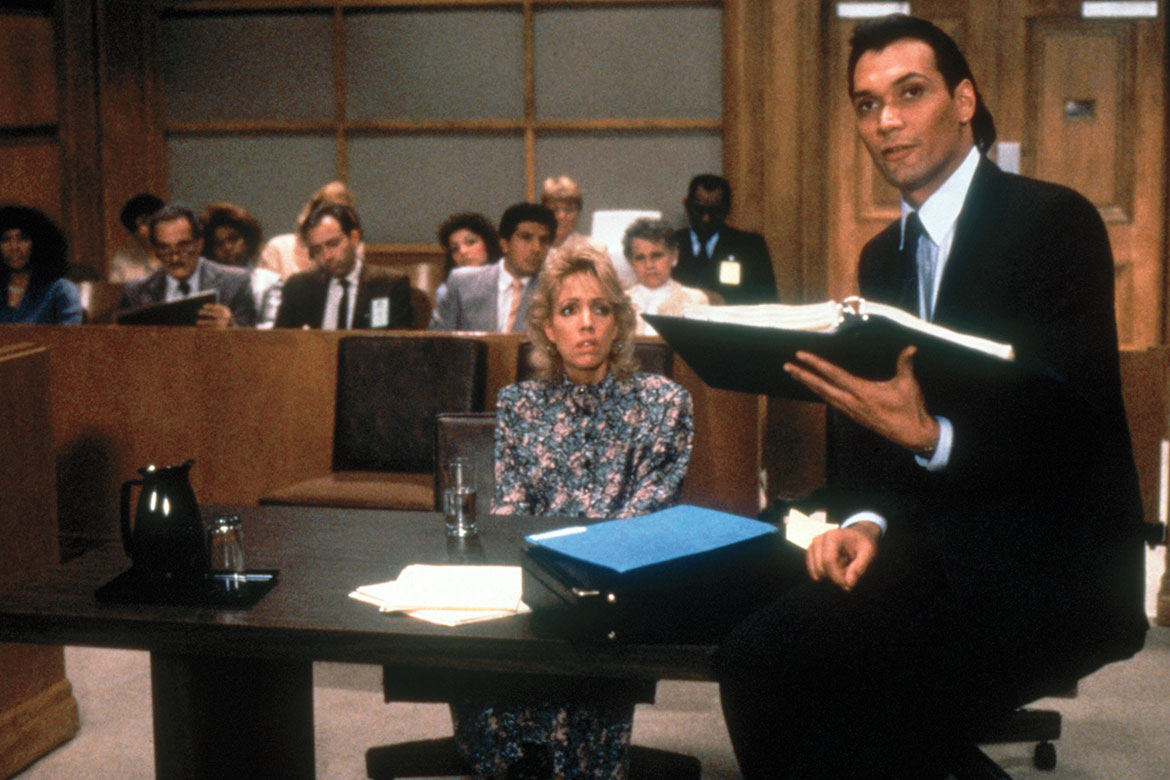
Jimmy Smits (actor, Victor Sifuentes): The first season, they didn't address the fact that my character was Latino. I'm so thankful. It was just "Let's make him a frickin' good lawyer." There was a lot of swagger to Victor. I purposely wore sneakers when they were filming closeups to have a little bounce and show that swagger in the courtroom.
SIGNING ON
Hamlin: At first, I turned the part down because I didn't want to have a TV contract for five years — and they weren't going to pay me enough money. I knew I'd be in debt at the end of the first season. But Steven told me that if the show was a hit, I'd be able to get the money I needed. At the end of the first season, I went to them. They told me to jump in the lake. I said, "But you told me if the show was a hit, you'd pay me more." They said, "Forget that." They had lied to me. I worked my ass off to make that show a hit.
Eikenberry: Steven called to say he'd written this law show and was interested in Mike and me being regulars. I didn't really want to do television, because I was a theater actress. Mike was cringing in the corner: "Are you nuts?!"
Tucker: Soon after we shot the pilot, Jill was diagnosed with breast cancer. She had a lumpectomy and needed radiation. I told Steven we couldn't do the show. He said a dear friend was head of radiology at UCLA Medical Center, and that Jill could get off the set at 5 p.m. every day for treatments. We told nobody, because Jill didn't want to be known as a person with cancer just as she was about to be known as a television star.
Underwood: My understanding was there was a lot of consternation among Black audiences: Why is there not a Black character on the show? So, they went about creating one [for season two], which had always been part of the calculus. I had a little piece of hair at the back of my head, like a rat tail. At my second audition, Steven and Terry Fisher said, "Would you be willing to shave that hair off?" I said, "Absolutely!"
Kelley: I'd been a lawyer for three years and was also doing some creative writing. A script I wrote on my own fell into Steven's hands. I took a leave of absence from my law firm [to write for the show]. I loved this new practice of law where I was allowed to make up the facts. [Laughs]
I'd been in the business three years when Steven handed me the keys to the car. [Head of NBC Entertainment] Brandon Tartikoff thought it was insane that this kid was going to be charged with running the network's top dramatic hit. I was too young to know I should have felt daunted. I met with him. He said, "Why you?" I pitched him [episodes] that would allow us to tell the same kinds of stories that had succeeded in the first three years.
Mike Post (composer, theme and score): I asked Steven and Greg Hoblit [the pilot's director] to come to my studio. Greg described the trunk of the car slamming, the license plate coming into focus, long shots of big glass buildings. I said, "We've got to do California!" Then we agreed [the theme] needed to have the majesty of the law. "What else is the show about?" I asked. They said, "Sex."
ACTORS ON SET
Dey: Harry was such a prankster. I remember him mooning us over at craft service.
Tucker: Jill and I were walking to one of the stages to do a bedroom scene when we ran into John Ritter. He was a friend, and we asked him to come along. We got them to shoot a take where Ann and I are lying in bed having a serious discussion with John lying between us, but we never acknowledge that he's there. It got sent off to dailies, and they loved it. Of course, it was never on the air.
Hamlin: Dick Dysart had removable fake front teeth. If things got too dour during the conference-room scenes, he'd take them out and smile. We'd all crack up.
Finkelstein: I had a thing about comedians playing dramatic roles, so we had Buddy Hackett, Jerry Stiller, Charlie Callas. I tried to get Milton Berle to come on, but he never did.
Tucker: Billy [Finkelstein] would run into Milton at the Friars Club. Milton would grab him and say, "Why aren't you writing for me?" Not true. Billy had offered him two or three scripts, but he turned them down.
Bernsen: Arnie had a domineering mother. My own mother, [actress] Jeanne Cooper, came in to play her. She had these fake nails — long, red talons — that she wore on The Young and the Restless. I said to Steven, "Wouldn't it be great if she stuck her finger in a filet mignon that's dripping blood, holds up the steak with her fingernail and goes, "I wanted this well done!" Steven wrote that scene. It was really funny.
REMEMBERING ...
Kelley: If the story didn't work, Steven [Bochco] would say, "Don't rely on gimmicks to slide it by the audience."
Hamlin: Steven was vindictive. When he reneged, he wrote me out of season two. He was mad that I wanted him to live up to his promise to pay me more.
Smits: Steven was always a man of his word.
Underwood: Dealing with the network, Steven spoke truth to power.
Green: Terry Louise Fisher created L.A. Law. She'd been an attorney and created the characters and entire idea of the workings of a law firm in L.A. She was on the show the first season, and then Steven Bochco pushed her out.
Ruttan: Dick Dysart played Leland McKenzie with rigid wardrobe and behavior, but he was really the absolute opposite: a hippie and big peace activist.
Bernsen: Larry [Drake] was so good at playing the [cognitively] challenged Benny. He taught Arnie a lot about life. Arnie was, "I've got everything, yet I'm not fulfilled." But this guy, who's challenged and has nothing but a sweater-vest and nicely combed hair, has everything.
Ruttan: It was so tragic when Alan [Rachins] died. He was the nicest man in the world.
Susan Dey and Harry Hamlin
Photo Credit: NBC/Photofest
THE EPISODES
Finkelstein: You always tried to connect the storyline to a character or two of the main cast. Bochco used to say that if the episode hung on who won or lost a legal battle, it wasn't going to be a good episode.
Tucker: [In a widely discussed 1986 episode called "The Venus Butterfly"], a client in jail whispered a secret sexual technique to me that he called "The Venus Butterfly." [My character] wanted to try it. So, Ann and Stuart are in bed at the Hotel Bel-Air. Afterward, she cozies up to him: "Do you think we could do it again?" The whole trick was that the Venus Butterfly was never shown or explained. Nobody knew what it was.
Green: [In "He's a Crowd," 1991], Amanda Donohoe played an attorney, C.J. Lamb, who joined the firm. They decided to make her gay or bisexual. Then I think they thought, "Let's plug in Abby, because we don't have a lot of stuff going on for her." So, C.J. planted this smooch on Abby, and Abby reciprocated. The network said, "You can't have two regular characters on a series involved in a gay relationship. It has to be a one-off." But it was groundbreaking to have that kiss on television.
Kelley: We weren't sitting in the writers' room saying, "Let's have two female characters kiss." It was our reacting to a chemistry we were seeing on screen between the two actors.
Hamlin: [While working on "Good to the Last Drop," 1991], we were all in the makeup trailer and heard this gasp. It was Diana Muldaur reading the script for the first time, in which her character [lawyer Rosalind Shays] was about to die in an elevator shaft. It was a shock to her, and no one [in the cast] was happy about it either.
Kelley: We felt that Rosalind needed to go out big. So, we wrote that the elevator wasn't working that day, and that's how she left us. If I had to do it all over again, I probably would have given Diana a heads-up, because it was a bit of a jolt to her, even though she knew her character was finite.
Ruttan: [In "Since I Fell for You," 1991], Arnie and I were doing something we shouldn't have, and I was in my underwear. Suddenly we came crashing through the ceiling in front of everybody.
Underwood: [In "Noah's Bark," 1990], my client had Tourette's Syndrome. So, while I was direct-examining him, he's calling me "n****r." The jury and everyone else was appalled. Standards and Practices didn't say anything; it was a different time from nowadays.
Dey: [In "Pump It Up," 1991], Grace has had a really tough day, and Michael shows up with a helium balloon. He inhales and proceeds to talk like a duck. Then she does it, too. It was one of those moments where they could share their vulnerability, and it was so beautiful.
Kelley: One episode involved a tobacco storyline. Broadcast Standards didn't want us to say or imply that smoking could cause cancer, but we all knew it could. The facts were what they were, but the fear of litigation controlled the day. It wasn't worth getting sued over.
Tucker: Jill and I were in a restaurant with [real-life entertainment lawyer] Howard Weitzman. An irate woman comes up to our table: "You're reducing the legal profession to cheap drama. Everyone's having affairs." When she went back to her table, Howard said, "You see the guy she's sitting with? He's head of her firm. She's having an affair with him."
This article originally appeared in emmy magazine, issue #10, 2026, under the title, "Laying Down the Law."