
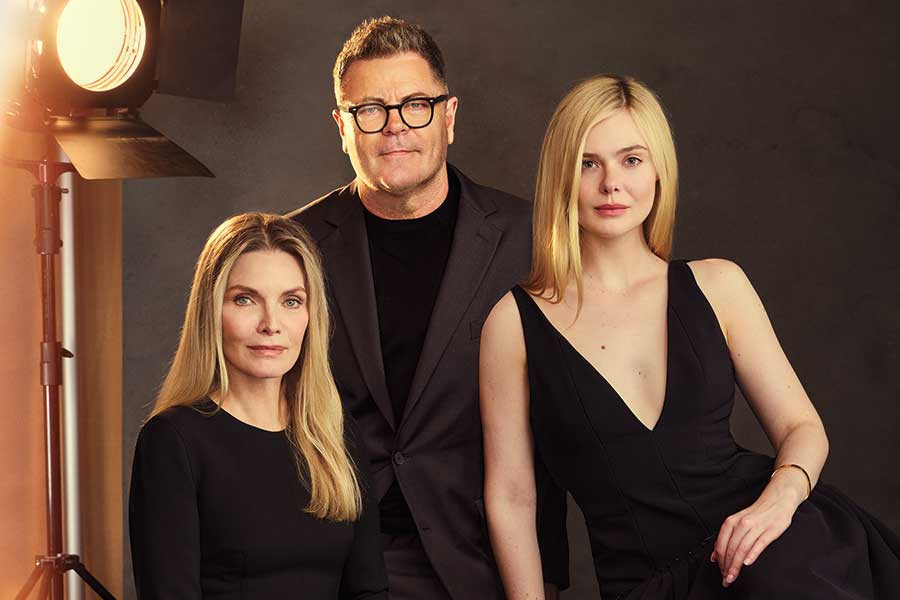
The title, Margo’s Got Money Troubles, gets right to the point. But the measures Margo (Elle Fanning) takes to resolve those particular troubles lead to so many more, with some dubious help from her parents, Shyanne (Michelle Pfeiffer) and Jinx (Nick Offerman). Just about everyone in the new Apple TV series is one wrong move away from a meltdown.
Margo started out as a 2024 book by Rufi Thorpe, which attracted a number of Hollywood players, thanks to its rich pageant of loving dysfunction. Fanning, Pfeiffer, David E. Kelley, Nicole Kidman and others ended up joining forces to executive produce the eight-episode comedic family drama.
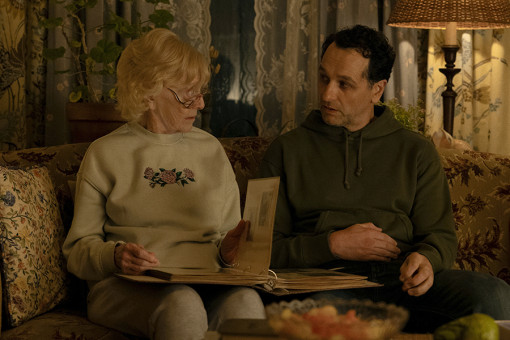
When the series begins, Margo is a naïve college freshman living in Fullerton, a working-class Orange County city. She becomes pregnant after an affair with a married professor (Michael Angarano, Laid) and must quickly find a way to afford life with baby Bodhi. Shyanne, a former Hooters waitress, is furious about everything, from the professor to the baby, as it’s all too reminiscent of her own single motherhood. Jinx was a professional wrestler who conveniently forgot to tell Shyanne he was married and only showed up occasionally throughout Margo’s childhood.
Jinx now returns — retired, divorced, eager to help and shakily recovering from an opioid dependency after years of damage from pro wrestling. He clearly still pines for Shyanne, who worries that the whole mess will jeopardize her relationship with innocent, churchgoing Kenny (Greg Kinnear, Shining Vale), with whom she isn’t entirely honest about her past. A cosplaying roommate (Thaddea Graham, Bad Sisters) and a wrestler-turned-lawyer (Kidman, Scarpetta) help round out the cast.
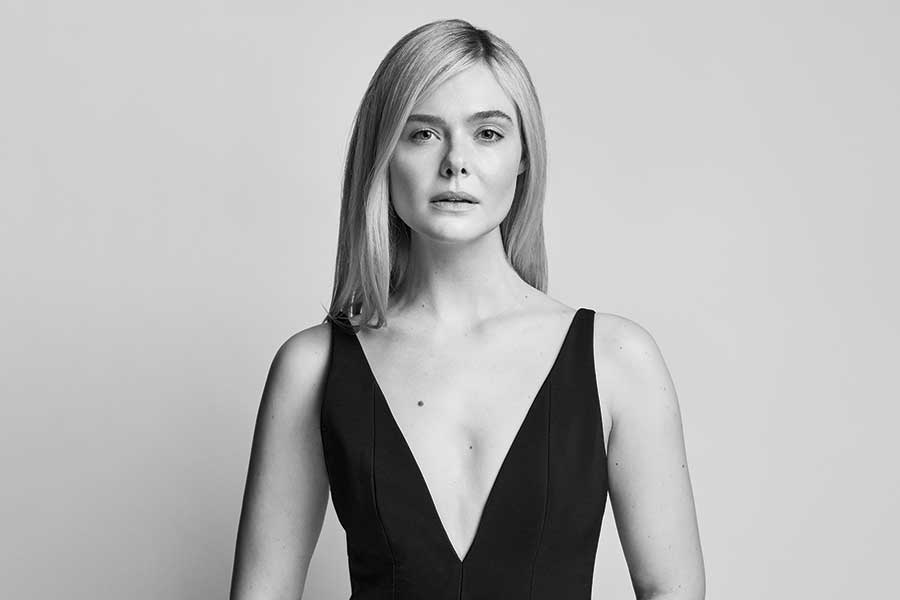
Elle Fanning 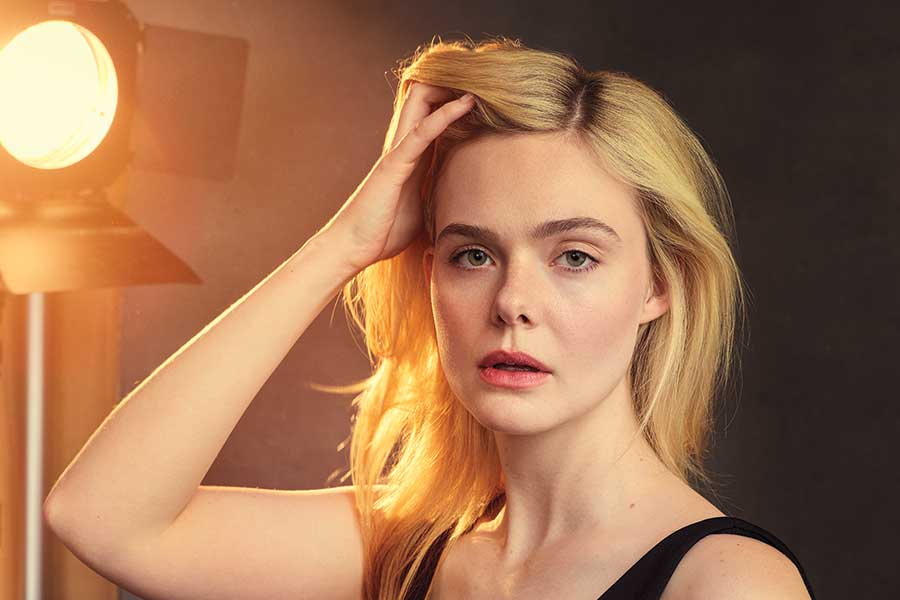
Sitting together in a little room during a big press junket, the leading trio of actors parse their roles and relationships. They seem to delight in each other off screen as much as they work each other’s nerves on screen.
Pfeiffer (The Madison), who has worked with both Fanning (The Great) and her sister, Dakota (All Her Fault), over the years in such films as Maleficent: Mistress of Evil and I Am Sam and the Showtime series The First Lady, was delighted to be reunited. “I love Elle so much, and I just can’t get enough of playing the Fannings’ mom,” Pfeiffer says. “That’s going to be my legacy.”
She recognized Shyanne the moment she encountered her in the book. “I’m from Orange County,” Pfeiffer says. “I’ve been to Fullerton, I know these women, I’ve been friends with these women, I love these women. They’re awesome. The minute I read this I just got excited about playing it. That doesn’t always happen when you read something, but it sure is nice when it does.”
Of her own resonance with Margo, Fanning says, “I don’t necessarily think that I have to have a certain personal connection to be able to play someone. Sometimes the exciting part is that you’re so drastically different.” That said, “The optimism is something that we share. And her humor.”
“You’re a very joyous person,” Pfeiffer tells her.
“Thank you,” Fanning replies, grinning. “Margo has a kind of dry, witty side to her, but it takes a lot to get her discouraged and bring her down. A lot of things are trying to drown her, and she keeps popping up.”
Michelle Pfeiffer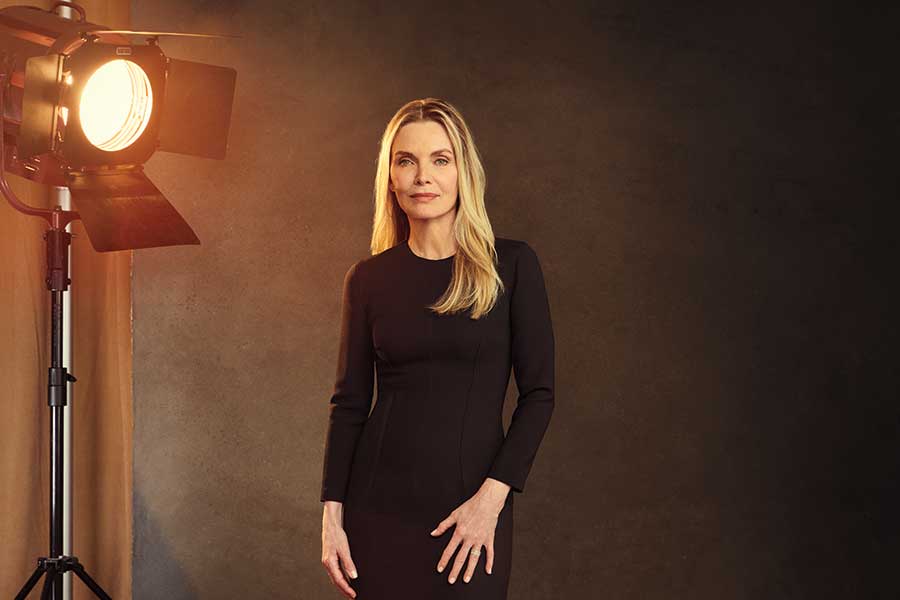
Fanning had been tapped to read the audiobook, “which was so cool,” she says. “I was finding Margo’s voice in real time, because the way that Rufi writes is so vivid, and I was kind of acting it out. I already knew at that point that I was doing the show, so that was really formative.”
Offerman (Death by Lightning) relates to Jinx’s vulnerability. “The thing that keeps me up at night, if anything will, is if I [think about] my character and my morality,” he explains. “I have an incredible mom and dad who are still with us, and I think, ‘Am I a good enough man? Am I living up to what my mom and dad want me to be?’ I feel that so strongly in Jinx, where he desperately wants to be a good guy, he wants to be a good dad, he wants to be a good lover, he wants to be the hero of any circumstance. But unfortunately, he has these frailties that I know too well.”
Offerman spent three months weight-training, adding muscle to play Jinx. Then he worked with the hair, makeup and costume teams to color his beard and add a spray tan, tattoos and jewelry — “all the accessories of his armor, as it were. It just does so much work for you visually if you walk into a room like that, versus me walking into a room,” he says. “So that’s the hard carapace, and only Jinx knows the trembling soft underbelly underneath.”
All agree that Shyanne is much tougher than Jinx. “I think women generally are,” Pfeiffer says.
Offerman recalls when Kidman showed up to wrestle in the ring on her first day of work. “Nicole had the flu so bad, she should’ve been in the hospital,” he says. “We only had the set for the day, and — this was such a bad-ass movie-star move — she showed up and gave every scene we needed, every line, every look, every reaction, and then went to the hospital.”
He calls the role of Jinx “the best part of my life,” adding that he can’t quite understand how he landed it. He’s the only one who can’t. Fanning remembers wondering during the casting process, “‘Who the heck is going to fill these shoes and be someone that’s believable to have had this wrestling career?’ Obviously, that requires a huge amount of charisma and kind of a big personality, but under that, the vulnerabilities and the softness and the demons that he’s facing that are uncovered throughout the show.”
Reached later, Kelley (The Lincoln Lawyer) says that as soon as Offerman’s name came up, they stopped looking. “He was perfect for everybody,” he says. “The story goes to some tough places, and some scenes that not every actor would want to embrace and want to play, and Nick shied away from none of it.”
“When they were talking to Nick, I was so excited, like, ‘Please, please say yes,’” Pfeiffer recalls. “He’s so heartbreaking. And he’s so tender. He’s way more tender than me. We’re a little typecast.”
Nick Offerman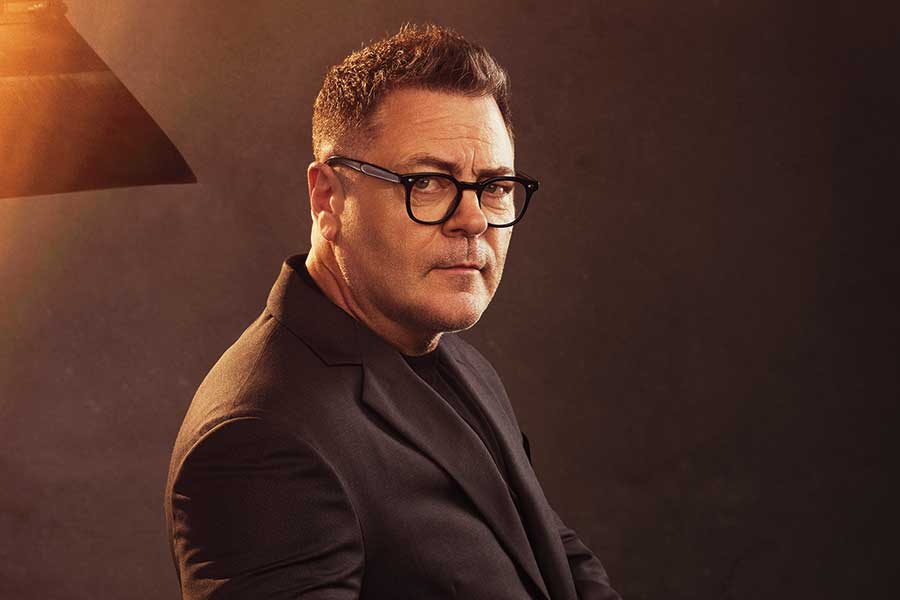
Pfeiffer hadn’t worked with Kelley, her husband of 32 years, until this project, “but it was too special to say no,” she says.
“We’ve preferred to keep our creative worlds separate. But when I read the book, I could only see her as Shyanne,” Kelley notes, adding that he soon learned the other producers had the same thought. “Shyanne’s a really tough cookie, and she can be very aggressive, but at the same time, just unflinchingly loyal and loving with her daughter. It may not always be fun for Margo to bear the brunt of the love, but she can always count on her mother, as the series sort of reveals as we go along. And then Elle and Michelle are very close, and you can see the chemistry they have on screen. It feels authentic, which speaks to both of them.”
Shyanne is a very reluctant grandmother; a running joke in the series shows her unable to hold the baby without making him cry. That was a problem, Fanning says, because “the babies loved Michelle. We’d be like, ‘They’re smiling. Hide the face.’”
Jinx, meanwhile, is a natural with Bodhi. But on Offerman’s first night of work, the baby couldn’t be soothed by any means. “And I was like, ‘Wow, this is what I signed up for,’” he says of the screaming child. “This is so challenging. This is acting, with an air horn in your ear, whispering sentiments to Elle Fanning and being [tearfully] emotional.”
Fanning had her own first: “I’d never worn prosthetic boobs” before, she says, until she had to for the breast-feeding scenes. Pfeiffer begins to chime in that this was her first time too, to play the well-endowed Shyanne, until she remembers she wore them on her first TV job (as an extra on Fantasy Island). “This is coming full circle somehow, and I don’t know what that means.” (Another full-circle moment: Fanning’s childhood studio teacher was on set to take care of the babies.)
Neither Jinx nor Shyanne can help Margo support herself and Bodhi financially, so after failing to find well-paid work without an apparent skillset (beyond creative writing and waitressing, which she can’t do with a newborn), she discovers OnlyFans. Once Margo joins forces with other content creators, she begins using her writing talents to create imaginative scenarios, and she’s surprised to feel a sense of fulfilment in work that also includes baring her body for money. Of course, unexpected consequences ensue, some of which are exacerbated by her family.
“It’s a show that is very unique in its tone,” Fanning says. “It’s like life. There’s a lot of humor, and it’s so heartfelt and heartwarming, but then there are also these dark themes and a lot of tragedy as well. I was very drawn to Margo’s messiness.”
Fanning’s immediate connection with the material was astonishing, Kelley says. “She blew us all away right from the first read-through. Usually, my history with table reads is that they can expose what’s wrong with the script, or they can expose potential pitfalls or deficits of how a script is interpreted. I don’t ever recall a read-through where an actor was so tonally spot on. We read through the first two scripts, and they called for a lot of different muscles; there’s a lot of emotional and dramatic and comedic pinballing going on. So, it’s very easy to go too far here and not far enough there or be undercooked in this moment and overblown in the next. She hit every note.”
Kelley adapted the book with Eva Anderson (Dispatches from Elsewhere) and a small writers’ room. “Eva was definitely a coshowrunner,” he says. “She was on the set, she wrote a big chunk of the series, and she was brilliant at it.” Particularly when it came to the OnlyFans aspects, he adds. “I said from the outset, this is a world that I’m happy to help bring to light, but this shouldn’t be in the hands of a 70-year-old man. I’m going to let Eva run point on some of that stuff, because first of all, I tend to be a prude, and that’s probably not the best approach with a lot of this material, but Eva’s very funny and much hipper than me.”
Pfeiffer was grateful that Kelley only visited the set occasionally. “He knew that he wasn’t wanted,” she jokes, before elaborating, “I don’t like anybody coming to visit me — my friends, my family, my agents — and people love coming, but I just get nervous; it takes me out of what I’m doing. And of all the people that I do not want to disappoint, it is my husband [who tops the list]. I have such respect and admiration for him, and I have admired and been so envious of other actresses having the opportunity to speak his words all these years, and I was nervous going into it. And Shyanne is a big character, and I didn’t want to let her down either.”
Another big character, by all accounts, was Dearbhla Walsh (Bad Sisters), who directed the first two episodes and further set the show’s tone. “Dearbhla is up there with David and Eva in terms of powerfully affecting the show,” Offerman says. “She’s a hurricane — a really big personality — so it added to the joyful, benevolent chaos of the show and our set, where the stakes are so high, but comedy keeps befalling us at every turn.” He says that while shooting scenes at the pro-wrestling ring, Walsh climbed up onto the ropes “in flip-flops, no less” to show what she was going for.
“She would get very, very animated, and sometimes she’d act it all out,” Pfeiffer adds. “She’s very funny, very entertaining.”
Kate Herron (Loki) and Alice Seabright (Say Nothing) took turns directing next. “They all had different ways of working, so it was always a little unnerving at the beginning,” says Pfeiffer, who hasn’t worked with multiple directors since early in her career. “But then of course they would win you over, because they helped you and were refreshing in a way, and they had new ways of getting things out of you.”
“They both really improved my performance,” Offerman says. “I said to both of them at different times, ‘Thank you, you made me look so much cooler as an actor.’ When I’d made a simpler, more obvious choice, they were like, ‘What about this more sophisticated choice?’ and I’d say, ‘That’s why Megan Mullally picks my shirts,’” referring to his wife.
As the show progresses, the characters’ behavior only gets messier; love, fear, anger and shame can make for a volatile cocktail. They fight fiercely, but they also love fiercely, even to the detriment of their own needs.
“What I love about Rufi’s book and our show is its trumpeting of the value of humanity,” Offerman says. “These are pretty extreme examples of the things we do to take care of ourselves and our loved ones — pro-wrestler drug addict, former Hooters waitress, OnlyFans performer and cosplay enthusiast. But for me, the message is: We all have our performative sides — the show that we put on for the world to take care of ourselves and our loved ones — and that can have costs. It’s so important to have empathy and understand that everybody’s just doing their best.”
Margo’s Got Money Troubles is executive-produced by showrunner David E. Kelley along with Elle Fanning, Dakota Fanning and Brittany Kahan Ward for Lewellen Pictures; Nicole Kidman and Per Saari of Blossom Films; Matthew Tinker for David E. Kelley Productions; and Michelle Pfeiffer, author Rufi Thorpe, Eva Anderson, Boo Killebrew and director Dearbhla Walsh. The series is produced for Apple TV by A24.
This article originally appeared in emmy Magazine, issue #5, 2026, under the title "The Love of the Grind."