

Playing with beloved IP can be a tricky quest — especially when said property is a classic video game like Sega’s Golden Axe.
First introduced in 1989, Golden Axe was a side-scrolling, beat-em-up game set in a medieval fantasy land where players battled beasts and armies to ultimately reach and slay the evil giant Death Adder. Golden Axe spawned spin-off games, limitless nostalgia and now, an animated series on Paramount+
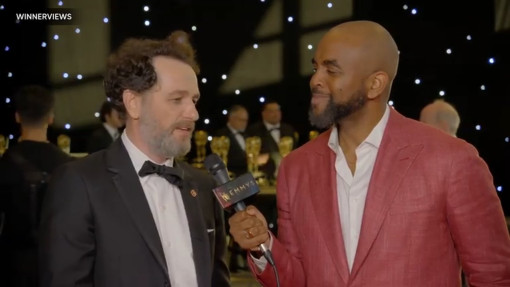
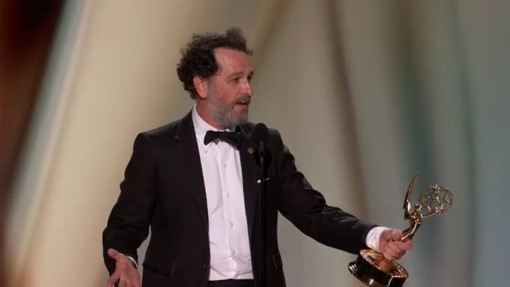
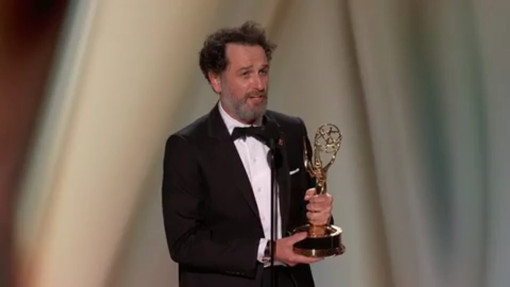
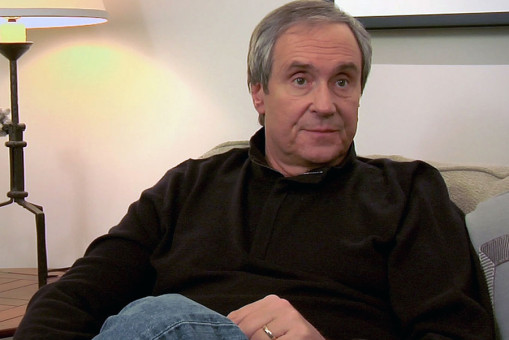
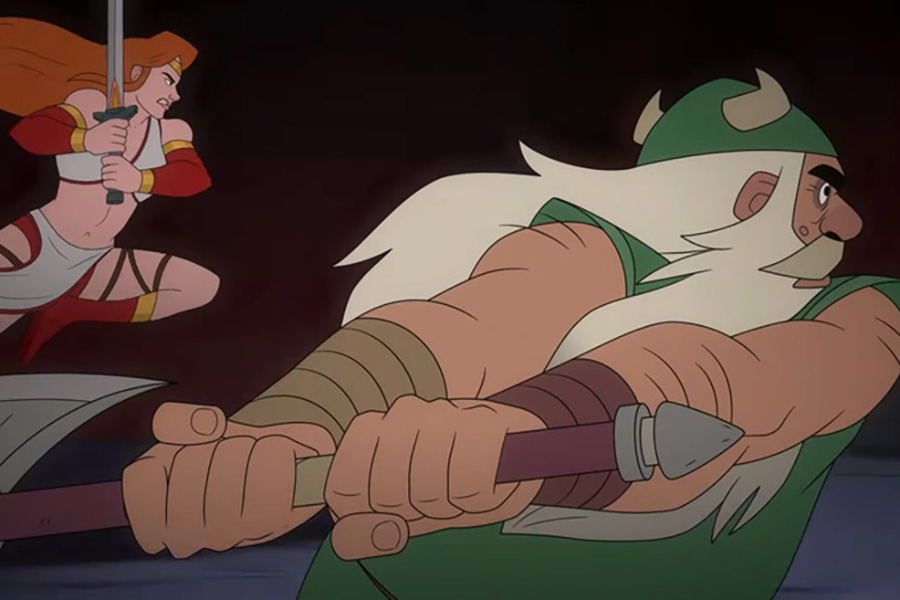
Mike McMahan — creator of Star Trek: Lower Decks and two time Emmy-winner for Rick and Morty — showruns Golden Axe with fellow cocreator and EP Joe Chandler (American Dad!). On Golden Axe, McMahan and Chandler mine and expand the fantasy world into a vast, off-the-wall universe that’s as joyfully silly as it is respectful of the source material. In their hands, Golden Axe's three heroes — Gilius Thunderhead, the grumpy drunk dwarf voiced by Emmy winner Matthew Rhys; warrior sorceress Tyris Flare (Lisa Gilroy); and the smug-but-sweet barbarian Ax Battler (Liam McIntyre) — emerge as fleshed-out, deadly serious but impossibly goofy conquerors. Despite their differences, they are all united to stop Death Adder.
Crusading through a mythical world filled with crazy creatures, magic and endless jokes, the trio navigates a surreal realm with life or death stakes that's also a sharp-witted celebration of the game. With the series premiering Sept. 16 on Paramount+, McMahan and Chandler spoke with the Television Academy about world-building, adapting IP into something unique and why it was (naturally) important to give undead skeletons feelings.
Television Academy: Being of a certain age and remembering Sega games from childhood, I was instantly thrown back to that era watching this. Why did you want to take on this project?
Mike McMahan: It started with me being a huge fan of the swords-and-sorcery genre. I lean more toward Conan than Lord of the Rings, but I had worked in sci-fi for a long time on Rick and Morty, Solar Opposites and Lower Decks. I’d worked on the Sonic the Hedgehog movies for Original Film, and a producer there asked if there were any old games that I would be interested in looking at to turn into an adult animated comedy. Golden Axe was one of those arcade games that I always had access to when I was a kid. My immediate reaction was that I wanted to do a hack-and-slash fantasy project with Golden Axe. It was outside of what I had done before, but based on a game I loved. And I had been wanting to work with Joe Chandler forever, so we joined forces.
Joe Chandler: Mike brought the opportunity to me, and for me, it was the exact same thing. I didn’t have Nintendo; I had Sega — I felt like that made me part of the cool kids' club. I played Golden Axe relentlessly. Getting a call asking, "Do you want to make this game you think about every day into a show?" was a total no-brainer.
McMahan: Golden Axe is a side-scrolling hack-and-slash brawler, but it also has a lot of fun to it. It’s not super serious — you ride these awesome beasts that can mess up the bad guys, and the [character] names are really funny. We didn’t have to do some big, dark, edgy, hyper-violent thing with this show. We got to do a genre thing while having fun at the same time.
Golden Axe's trio of main characters: Ax Battler, Gilius Thunderhead and Tyris Flare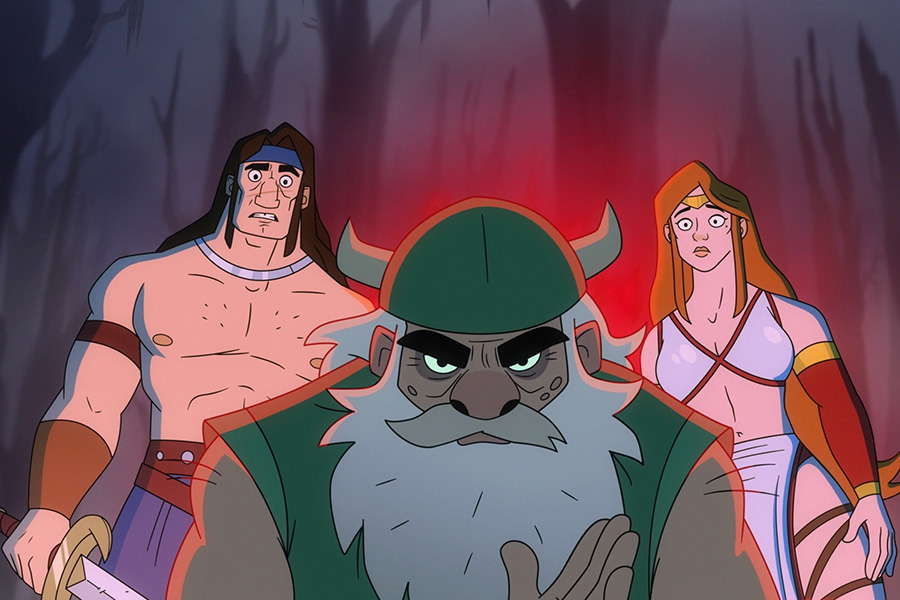
How did you land on the show’s tone and create a serialized story with real stakes for these characters?
McMahan: Joe and I talked about it being serialized with real stakes first. To make an animated comedy in 2026, you need something that surprises people. You want that comfort of inviting it into your home, but also that feeling of, "Wait a minute, I haven't seen it done quite like this before."
We wanted every episode to be part of a serialized quest that feels like the game, but remains funny throughout. Joe and I had a rule — all the jokes had to feel like they were in the world. We tried to keep it where the jokes are coming from the characters and the stakes are real for them.
Chandler: For us, the challenge was making sure it wasn't just a straight-up parody of fantasy. Many fantasy comedies are pure parody. We wanted to make a loving fantasy show first, and then let the comedic tone come naturally from our sensibility and the writers we hired. The comedy is the part you sprinkle on top, once you have a foundation that matters.
I loved how these warriors — and even the creatures they encounter — have real inner lives and emotions. In the pilot, there’s a giant monster — Moggabog — but instead of a standard boss fight, he starts crying because he's lonely and wants friends. How did you approach making a sort of timely Golden Axe with those kinds of cultural, character-driven elements?
McMahan: It was less about specific cultural references and more about writing up to every character. In an adventure movie, you run up against a cave troll, cut them in half and then you just leave them behind. And for us, it's like, “well, how does that cave troll feel? How do the skeletons feel?” Lower Decks felt like that to me, too. You have these characters that you could treat as side characters, but what if everybody was a main character to themselves? What [kind of] comedy comes from that?
How did you cast Matthew Rhys to voice the drunken dwarf, Gilius Thunderhead?
Chandler: For Gilius, we wanted a dramatic actor who takes the work seriously — someone who has won Emmys. I compared it to my time at American Dad! working with Patrick Stewart. People didn’t initially realize how funny he was until he was given that space. He turned out not only to be a great actor, but supremely funny.
I was driving home after a casting call, listening to Conan O'Brien's podcast, and Matthew Rhys was the guest. He was speaking in his natural Welsh accent — just being the most charming, hilarious guy on the planet. I called Mike from the car and said, "I think we should be talking about Matthew Rhys for this." We got super lucky that he was excited to do it.
How did you balance honoring game canon with keeping the series accessible for those who perhaps didn’t play the game?
Chandler: What’s cool about games from that era is that they aren't overstuffed with lore. There are signposts, but there's no character monologues for three minutes with all this backstory. There’s this nice layer of stuff that is really fun to look at — there’s a village on an eagle — but we don't know anything else about it.
McMahan: It’s like, How’d that get there? If you're brand new to this [world], and you didn't grow up putting quarters into arcade games, it just feels like a fun video game world with cool characters and real stakes. If you're a diehard fan, then there are treats everywhere that don't bog down the storytelling. When you play a game for the first time, nobody expects you to know everything going in — you discover it all as you play. That’s what the show should feel like.
There were previous attempts to adapt Golden Axe, including comics and a planned live-action film. Was adult animation the right way to finally crack it?
McMahan: Joe and I speak the language of animated comedy. We both worked for decades doing this. We were the right people for this one because we were fans, because we loved it and knew it had to be as totally fun to watch as it was to play. We had to feel good watching it. But there's room for other stuff. These characters are so fun to play with that it invites wanting to examine [this world] more. Star Wars holds a zillion comics and novels and fake history books and guides. And I think IP can be this walled garden that feels like homework, or it can feel like this shared experience that feels fun. As long as you love and respect it, IP becomes like a superpower. This is what I experienced with Lower Decks. If you really love the thing you're playing with, then you get to be additive instead of commenting on it or being cynical. You're expanding it in a cool way.
What are you most excited for fans to discover as they go on this journey?
Chandler: I’m excited for people to see how much we built out the world from the foundation of the game. I can’t wait for fans to spot visual markers from the game, and see how far we took them.
McMahan: I love this team. In the game, when it opens, there's a blue skeleton holding the lead characters that you can play. I always chose Gilius Thunderhead — he was this green battle dwarf with a big beard. He looked unlike any other lead character that I had played at the time. I thought that Gilius was going to be my favorite character, but by the end of the season, we've got Tyris — this Amazonian warrior played by Lisa Gilroy. Liam McIntyre plays the big, hunky axe-battler guy —this cast is so funny, and the characters are so dynamic. You just fall in love with them. You want to spend more time with them and these adventures. By the end of it, I was like, "Oh man, if we get to make more episodes of this, which hopefully we can, I want to keep the whole team together. All of these folks together are really, really special.”
By the end of the [first] season, I think everybody's going to feel like that, too.
Golden Axe is now streaming on Paramount+.
Golden Axe is produced by CBS’ Eye Animation Productions, CBS Studios’ animation arm; Sony Pictures Television; and Original Film. Mike McMahan and Joe Chandler co-wrote the first episode and co-created and executive produce, with Chandler serving as showrunner. SEGA’s Haruki Satomi, Shuji Utsumi and Toru Nakahara will also executive produce alongside Neal H. Moritz, Pavun Shetty and Toby Ascher of Original Film. Titmouse serves as the animation studio for the series with Chris Prynoski, Shannon Prynoski, Antonio Canobbio and Ben Kalina serving as executive producers.