


As the multicam maestro behind sitcoms like Spin City and Scrubs, Shrinking cocreator Bill Lawrence jokes that he’s among the last of a bygone era. Though he’s clearly adapted to streaming just fine (he cocreated Ted Lasso), Lawrence knows Shrinking is only possible because of cultural changes since network TV’s halcyon days.
"It would have been hard back then to go, 'There’s a therapist whose wife got killed, he’s being a horrible dad, one of his coworkers has Parkinson’s and he’s got a young Black man living with him who almost beat a guy to death at a soccer game. And,'" Lawrence says, '"it’s a comedy.'"
Grief, it turns out, can be funny, at least when shaped by Lawrence and cocreators and executive producers Brett Goldstein and Jason Segel (who also plays Jimmy, the widowed shrink). Now in its third season, Shrinking bucks conventional wisdom by juxtaposing deep dives into trauma and sorrow with levity and humor. At a time when therapy is so mainstream that teens know its buzzwords from TikTok, Shrinking takes struggles seriously — which is partly why the jokes hit so hard.
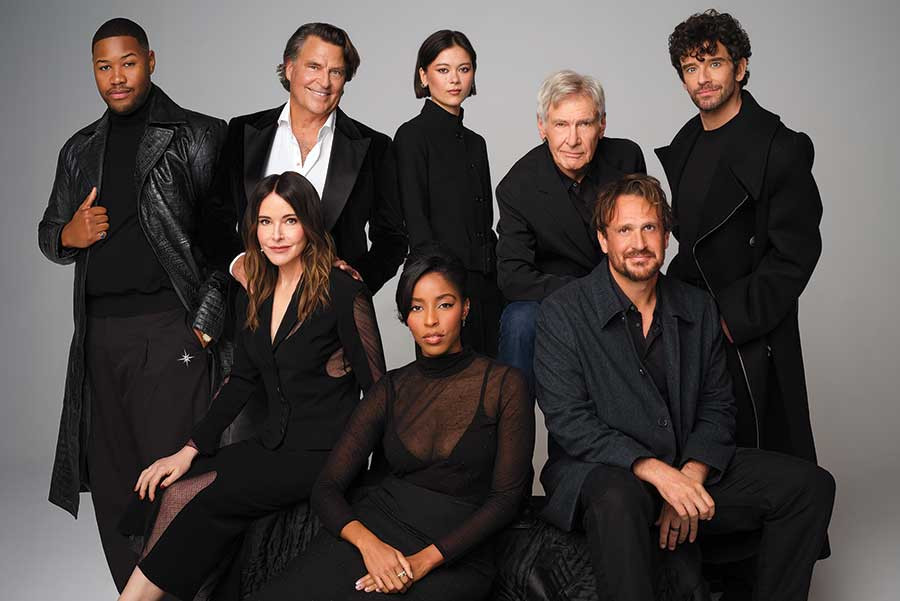
Depicting a chosen family of folks dealing with their own stuff — Jimmy’s daughter, Alice (Lukita Maxwell); patient-turned-pal Sean (Luke Tennie); coworkers Gaby and Paul (Jessica Williams and Harrison Ford); neighbors Liz and Derek (Christa Miller and Ted McGinley) and gay college BFF Brian (Michael Urie) — Shrinking shakes tragedy and laughter together into a cocktail that’s drawn praise from fans and critics alike. The show has nine Emmy nominations, including noms for Segel, Williams and Urie, plus Ford’s first in his six-decade career. And the series recently picked up a renewal for a fourth season.
As Shrinking moves through its initial three-year roadmap — season one's theme was grief, two was forgiveness and three is "moving forward" — the team shares recollections, character insights and thoughts on what its evolution looks like.
Shrinking's Jason Segel 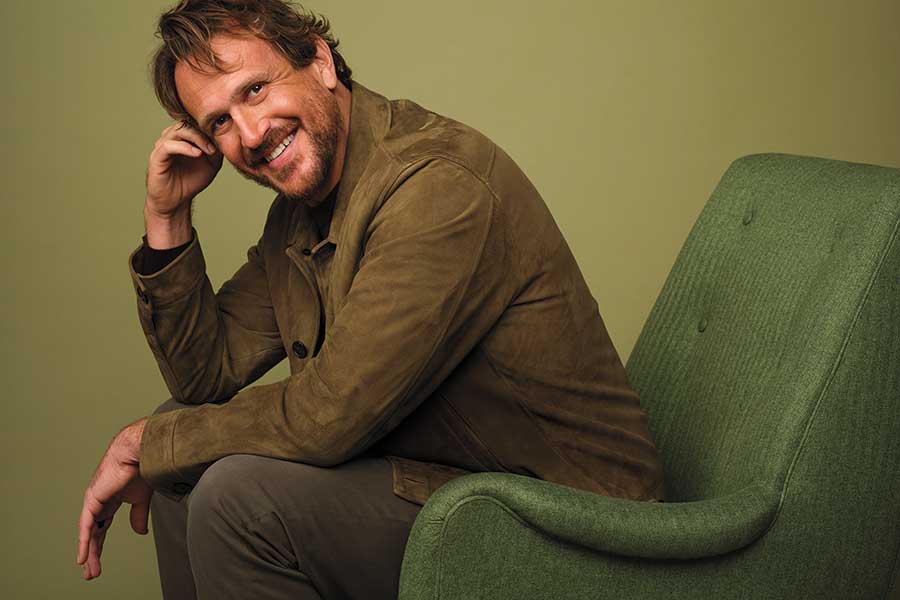
What made you sign on to this project, and what conversations did you have about your character?
Christa Miller (music supervisor; actress, Liz): Bill and I [Lawrence and Miller are married] fell in love with Brett [on Ted Lasso]. He was writing a dark comedy about therapy, and I was like, "Bill, I'm going to do Brett's show." Bill said, "I've been thinking about doing a comedy about therapy." Bill and Brett decided to do the show together. There were other things going on, but I was like, "I don't care what's coming down the pike. I'm doing this show." I certainly didn't audition. But it would be funny if Bill had me audition.
Jason Segel (cocreator; executive producer; writer; actor, Jimmy): This idea of a therapist continuing to practice while going through a nervous breakdown felt ripe for comedic tension. My big contribution in the early stages was this observation that people tend to root for characters I’m playing, so we should push him as far into unlikability as we could, because I believed I could pull us out of that nosedive.
Harrison Ford (actor, Paul): I thought the writing was so good, and the character was so interesting. So, it was an opportunity to do something different. Brett Goldstein arranged a meeting to discuss the script. He came to my apartment. I opened the door and said, "I’ll do it."
Luke Tennie (actor, Sean): I saw an interview with Brett, Debby [Romano, casting director] and Jason, and they said the part was not written the way that it is in the show. I thought I did the most exactly-what’s-on-the-page take. Come to find out he was supposed to be this wound-up, angry guy. It was obvious to me that in moments where he snaps, he becomes something else, so he must be a pretty soft-spoken dude [other times]. I was doing it wrong — but they liked it.
Michael Urie (actor, Brian): Brett had either seen Buyer & Cellar [Urie’s one-man show that won a Drama Desk Award in 2013] or he knew about it and always had in his mind, "This guy can do a one-man show." He wrote me that aria in season two, and every time we get a new script, I wonder, "Is there going to be another big chunk?"
Ted McGinley (actor, Derek): I was originally just a day player. People resonated with [the character], and they ended up keeping this guy. It gave me some weird freedom, because I had to figure out who Derek was a bit on my own.
Watch an exclusive video behind the scenes of Shrinking's emmy cover shoot.
Jimmy’s journey to healing is complicated by his daughter, Alice. How has their relationship developed on screen and off?
Segel: The Jimmy-Alice relationship has always been the primary arc for Jimmy. It’s been a beautiful balance going from her parenting Jimmy to kind of being equals, to Jimmy having to step in and parent. Lukita is also in her formative years, so she’s growing up in front of my eyes.
Lukita Maxwell (actress, Alice): I love Jason so much. When I met Jason, the feeling of trust and of passing the ball back and forth was immediate. He’s there for me when we’re not shooting. He texts and checks in on me, and not necessarily about acting — he’s checking in about my life. He knows how to break the rules, and he has his own comedic rhythm and physicality that’s always funny.
How did you ensure depictions of therapy were grounded and real?
Bill Lawrence (cocreator, executive producer, writer): Generally in TV, therapists are plot devices for other characters. One of the things that got us breaking the trope was asking, "What are therapists like?" They have their own tragedies and dreams and hopes. The other is we try to stay away from platitudes like "Hurt people hurt people." We always say, “If you see it on Instagram, it’s not good for the show.”
Jessica Williams
Shrinking is set in Pasadena. Why that city, and how does the setting influence the story?
Segel: I live in Pasadena. I love it. When we were conceiving the show, I was doing Winning Time, and we wanted to shoot this at the same time. I told Bill the only way I could make it work is if we shot near my house. We came to realize that Pasadena, Altadena and those surrounding areas feel distinct from Los Angeles. If it took place in L.A., it would be like, “Oh, this is self-centered L.A. people doing therapy.” Pasadena feels like normal people searching for relief.
Jessica Williams (actress, Gaby): We were supposed to start shooting this third season when the fires happened; the house we use for Gaby’s home and the base camp in Altadena burned down. It was important to shoot in Pasadena and Altadena. It just adds so much.
McGinley: My wife and I live in the Palisades. I’ve been displaced for over a year now. So, it was pretty amazing to go from the damage done to our own home to having to also wait to go into Altadena, because the homes we filmed in had to be remediated. Pasadena and Altadena have this amazing, tactile surface. It’s old, it’s new, it’s complicated. Luke, Michael and I were [on Apple TV’s Shrinking float] at the Rose Parade. We want to represent the area well — it means something to us.
The men on Shrinking are honest and tender with each other. Does this seem revolutionary to you?
Segel: I’ve always been a soft boy; I’ve never been drawn to real macho stuff. I know you can’t tell by looking at me.
Tennie: When Sean’s father walked into the hospital [in season two] and told him, "I’m sorry," and he wanted to be a part of his life, that example can give young men who look like me hope.
Ford: I can acknowledge that it is somewhat different. I think it does provide a positive reinforcement. I’m pleased about that.
McGinley: It’s a fair representation of different kinds of men. Derek is like a child in some ways. Humor has become a way to keep people a bit back. Being an old dude with two boys, I have learned a lot from this show. Being a father, a husband, a friend, they’re all imperfect. You need to be able to change and listen — that’s number one on our show.
What’s your working dynamic like — on set and off?
Urie: I’ve never seen Jason holding a script. He’s always off book. Because of that, we are all always off book. It’s a really prepared cast, which is thrilling, because it means we’re playing from the right place.
Tennie: Jason is this wealth of knowledge, but I don’t want to bug him. His whole disposition is like, "I’m a resource. Ask whatever you want." It feels similar to Sean and Jimmy, but in the reverse. Sean is always trying to resist sharing, and Jimmy’s always trying to get Sean to crack open. It tickles me to think about the parallels.
Harrison Ford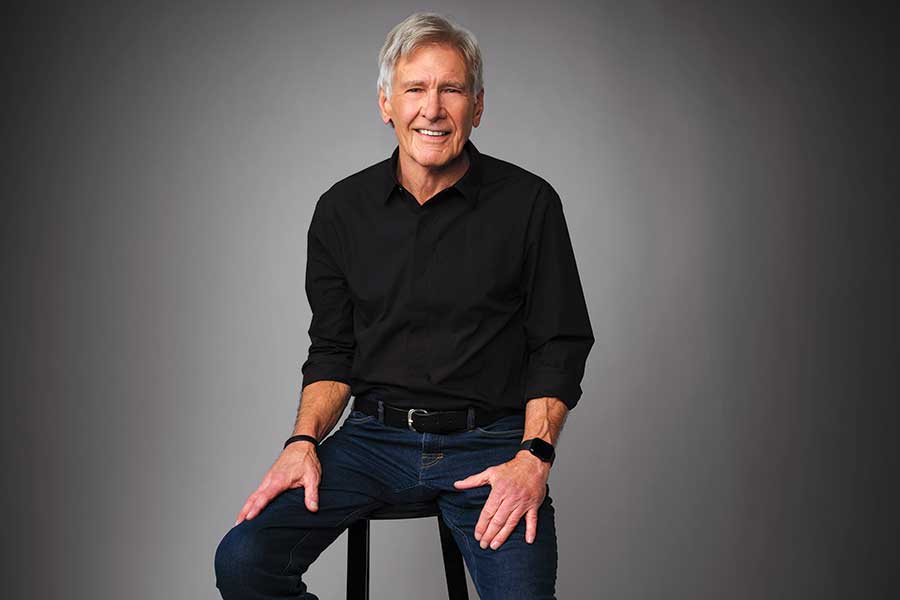
Miller: I always have questions for Bill. I don’t get to unilaterally say, "This is the music." [Executive producer] Neil Goldman and I wanted to get a song that Bill didn’t love into the show. We found a spot. So, I texted Bill, "Neil and I are going to bug you about this song." He let us have the win.
Williams: A lot of times with Black female characters, there’s this perception that because she’s Black and witty, she does not have a shaky inner dialogue. But that person has problems like everyone else. For the people in charge that are white, it’s about pushing past that sassy trope and giving her some scenery to chew on. Bill wants to hand the character over to the actors, and I feel really blessed to have the white guys in charge be open to that.
Ford: Part of what I love about this show is when I go to work to do a scene, I don’t know whether we’re going to end up laughing or crying.
Shrinking is executive-produced by cocreators Bill Lawrence, Brett Goldstein and Jason Segel, along with Neil Goldman, James Ponsoldt, Jeff Ingold, Liza Katzer, Randall Keenan Winston, Rachna Fruchbom, Brian Gallivan, Ashley Nicole Black and Bill Posley. The series is a production of Warner Bros. Television and Doozer Productions.
To read the rest of the story, pick up a copy of emmy magazine here.
This article originally appeared in its entirety in emmy magazine, issue #2, 2026, under the title "Shrink Piece."