

In honor of the late Louise Lasser — who passed away on July 6, 2026, at the age of 87 — here is emmy magazine’s recent feature celebrating the 50th anniversary of her classic series, Mary Hartman, Mary Hartman.
In 1976, five years after turning television on its ear with All in the Family, Norman Lear set his sights on creating a daytime soap-opera parody — an idea that predated even his signature sitcom. This year marks a half-century since the premiere of his cult-classic comedy-drama, Mary Hartman, Mary Hartman.
The show poked fun not only at a specific TV genre but at the medium itself, and it went on to influence a slew of offbeat hits, including Susan Harris’s spoof Soap (which premiered on ABC a year after Mary Hartman), along with later shows like Twin Peaks, The Larry Sanders Show, Desperate Housewives, Arrested Development and Curb Your Enthusiasm. Mary Hartman was also the first entertainment program to originally air five nights a week in syndication after all three networks rejected it.
From the start, Lear knew exactly what he wanted: a campy, high-concept satire that examined the effects of consumerism on the American housewife, chockful of bizarre storylines, sexual innuendo and double-entendres. To ensure authenticity, he hired Emmy-winning writer-producer Gail Parent (who’d cowritten the “As the Stomach Turns” soap spoof for The Carol Burnett Show) and veteran daytime-drama scribes Ann Marcus, Jerry Adelman and Daniel Gregory Browne as cocreators.
Parent wrote the story bible and conceived the premise of a blue-collar family living in the fictional town of Fernwood, Ohio, after she saw a picture of a factory worker on the cover of Life magazine. Marcus came up with the main character’s name, which became the show’s title — mentioned twice to mimic the repetitive dialogue of soap operas. To direct, Lear chose Joan Darling, a distant cousin who’d recently had a costarring role on the ABC legal drama Owen Marshall, Counselor at Law. She went on to become the first woman ever nominated for a directing Emmy, for the classic “Chuckles Bites the Dust” episode of The Mary Tyler Moore Show.
With his core team in place, Lear began assembling the cast, starting with Mary, played to neurotic pigtailed perfection by Louise Lasser. While she may have been exactly what he was looking for, Lear, who died at the age of 101 in 2023, told the Television Academy in 1998, “I don’t remember whether I had ever seen Louise Lasser before.” Lasser — who’d been married to Woody Allen and had small parts in five of his films — offers a much different account. She says she was initially reluctant to sign on, even though she was flattered by Lear’s offer and intrigued by the script.
Lasser as Mary Hartman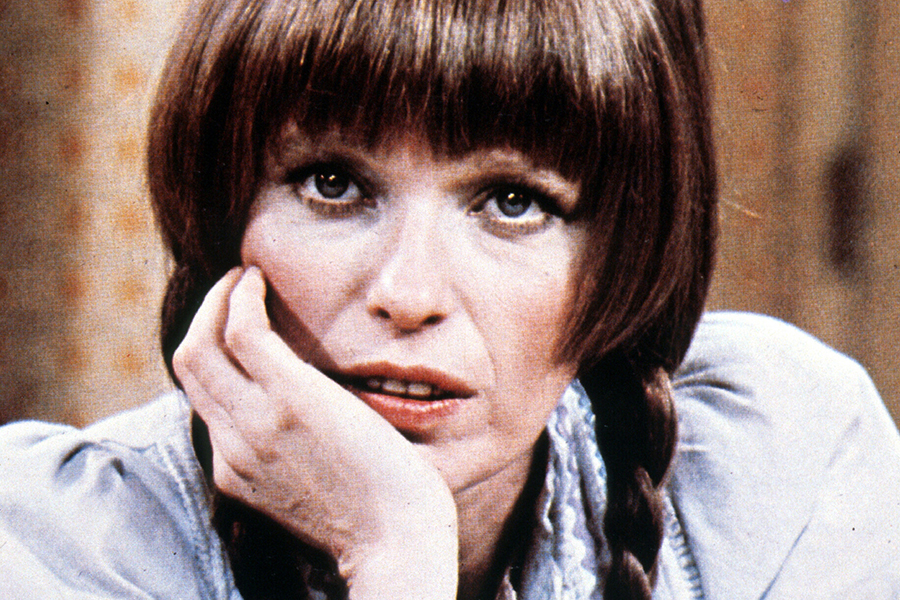
“Norman had seen me in something,” she recalls. “I can’t think of the name of it, but he had seen me do a little part and said, ‘I want her.’ I was thrilled when he called, even though my agent knew I didn’t want to do a soap opera, and I didn’t want to do a series. I thought it stunted your growth, but Norman was relentless.”
With Lasser on the fence, Lear turned his attention to casting Mary’s philandering auto-worker husband, Tom. Greg Mullavey, who’d recently made a guest appearance on All in the Family, improvised a love scene during his Mary Hartman audition. “We were in a conference room in Norman’s offices. I got up on the table as if it were a bed and Louise got up there with me,” he remembers. “Norman loved that choice.”
So did Lasser, who finally said yes and recalls of the audition, “We were very intimate and did it right there on the table.” The second female lead — Mary and Tom’s next-door neighbor, aspiring country singer Loretta Haggers — went to Tulsa native Mary Kay Place, who’d begun in the Lear ranks as a writer’s assistant on Maude and, like Mullavey, had also appeared on All in the Family. Rounding out the cast were Debralee Scott, Graham Jarvis, Victor Kilian, Dody Goodman, Claudia Lamb, Dabney Coleman and Ed Begley Jr.
Mary Hartman, Mary Hartman debuted on January 5, 1976, at 11:30 p.m. without a laugh track or a studio audience. In its first episode, an angst-ridden Mary worries about the mass murders of their neighbors, the Lombardi family, who’ve been brutally rubbed out along with their livestock (two goats and eight chickens) by a teenage serial killer who eventually kidnaps Mary.
The storylines became even more outrageous: A serial flasher, later revealed to be Mary’s grandfather; a drowning — in a bowl of chicken soup; impalement on an artificial Christmas tree; electrocution in a bathtub; and Mary’s perpetual obsession with the “waxy yellow buildup” on her kitchen floor.
And so it went, as Mary Hartman quickly became the most talked-about show in America, with more than 128 independent stations signing up. It garnered multiple Emmy nominations and one win, for Mary Kay Place, honored for Outstanding Continuing Performance by a Supporting Actress in a Comedy Series in 1977.
“It was certainly one of the darkest, most satirical shows ever seen on television, and the fact that it premiered during America’s bicentennial year makes it even more significant,” notes Ron Simon, senior curator of the Paley Center for Media, which has the entire series in its permanent collection. Adds Robert Thompson, director of the Bleier Center for Television and Popular Culture at Syracuse University: “For those who revisit the show now, it stands as a time capsule of just how brilliant and sophisticated television could be.”
Norman Lear and Lasser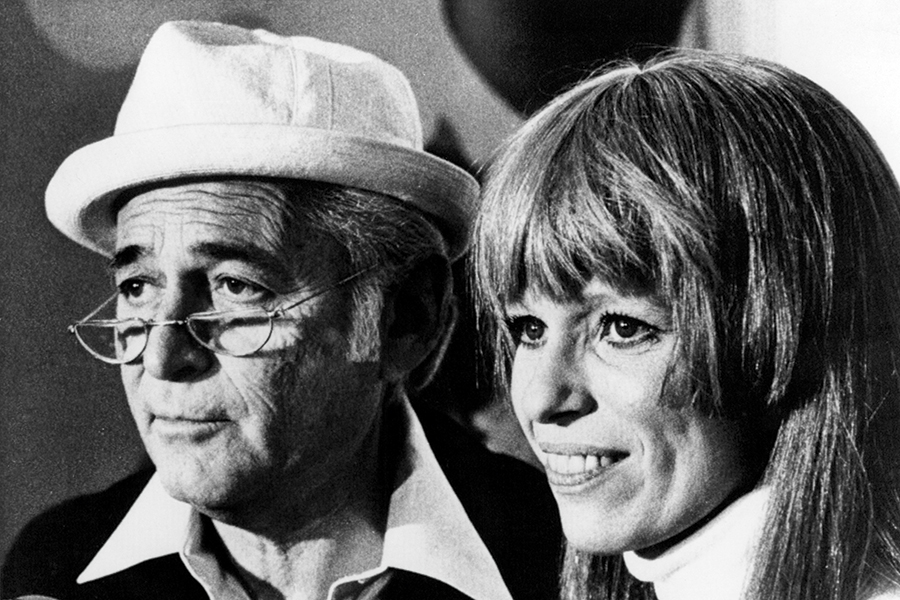
The show became such a phenomenon that many stations began branding themselves part of “The Mary Hartman Network.” It made the covers of TV Guide, The New York Times Magazine, People and Rolling Stone within its first six months, and it was parodied by everyone from Carol Burnett and Bob Hope to Donny and Marie Osmond.
Despite massive success, difficulties mounted behind the scenes, with soaring production costs, a frenetic shooting schedule and Lasser’s increasingly erratic behavior. This came to a head in May 1976, when she was arrested at a Los Angeles boutique after her credit card was declined.
“I wasn’t feeling well, and I was running a fever,” recalls Lasser, who’d attempted to purchase a dollhouse as a birthday gift for the show’s costume designer. “For some reason, my American Express card wasn’t working, and I didn’t have the right amount of cash, but I expected them to let me have it anyway because of who I was. When they didn’t, I said, ‘I’m not leaving without my dollhouse.’ Then I sat down in a chair, and I wouldn’t budge. The next thing I knew, the cops were there.”
While she was initially detained for causing a public nuisance on top of two outstanding traffic violations, things took a turn for the worse when the officers discovered a small amount of cocaine in her purse. Lasser maintains, “It had been given to me; I put it in my purse and forgot about it.”
Released that same afternoon on bail, she was subsequently ordered to undergo psychiatric treatment. Meanwhile, the show’s writers came up with a way to weave what would become known as “the dollhouse incident” into the season-one finale. Mary refuses to leave a local toy store in Fernwood without a dollhouse right before she’s scheduled to appear on The David Susskind Show, then has a nervous breakdown.
After logging an astounding 325 episodes in just 17 months, an exhausted Lasser left Mary Hartman in July 1977. The show continued for one more season as Forever Fernwood. With a new director (Mary Hartman head writer Dennis Klein) and 1950s heartthrob Tab Hunter playing Mary’s father, the series followed the lives of Mary’s family and friends without her. “It lacked a focal point,” says Claudia Lamb, who played Mary and Tom’s daughter, Heather. “It was like being at a party at someone’s house where the host left.”
Shortly after Lasser’s departure — and in typical Lear fashion — Forever Fernwood spun off the equally zany late-night talk-show parody Fernwood 2 Night, which costarred longtime Mary Hartman actor Martin Mull and Mary-verse newcomer Fred Willard. Cocreated with Alan Thicke, this first-ever late-night parody premiered in the summer of 1977. It was so popular that real celebs (Burnett, Charlton Heston and Burt Lancaster among them) wanted to appear on the show, so Lear and Thicke rebooted it in 1978 as America 2 Night, which also costarred Mull and Willard and lasted 65 episodes.
Unlike most of Lear's seminal sitcoms, none of those in the Mary Hartman lineage have experienced strong reruns since the franchise folded nearly five decades ago. In 2021, it briefly looked like the series might get a second life; Sony Pictures announced on Lear’s 99th birthday that plans were in the works for a TBS reboot starring Emily Hampshire (Schitt’s Creek) as Mary. But that never happened.
The first 25 episodes of season one are available on DVD; others can be found on YouTube and the streaming service Dailymotion. As for its enduring legacy, Mullavey calls Mary Hartman a “maverick as good as anything that’s ever been on TV.”
“Most of the critics loved us, because the show demonstrated that innovation and a different approach to storytelling is what you have to take a chance on, even though it often comes with great risks,” he says. “I think it’s going to be remembered for that for a long, long time.”
This article originally appeared in emmy magazine, issue #7, 2026, under the title: Mary Hartman, Mary Hartman at 50.