

Frances McDormand said it best: “I don’t need a great director. I need a good editor.”
Don’t argue with a woman who’s taken home two Emmys and four Oscars and is also married to a great director (Joel Coen). She knows that even if the script plumbs the human condition, the cast is A-list and the director channels Kubrick, the critics won’t swoon unless someone — hunched over a keyboard, clicking through hundreds of hours of raw footage — makes all the right cuts.
McDormand isn’t the only one holding picture editors in such high regard. Bryan Cranston praised Lynne Willingham for enhancing his portrayal of meth kingpin Walter White on Breaking Bad, and Veep star Julia Louis-Dreyfus hailed editors as “unsung heroes.” Actor Brent Sexton (Tracker) put it more bluntly: “The bottom line is that your performance is made in the editing room.” There’s more to the job than burnishing performances. To use the old film-school tropes, the editor is the “first audience” and the “final writer.” That means they see all the rushes before anyone else, cut each scene and string them all together, following the script. They might go off-script, dropping or shuffling scenes, to shore up the plot. They also decide whether to stay wide or cut to closeups. They even change words of dialogue. There’s tone, rhythm and pace to consider, too.
It’s a difficult job, made even more difficult when the project is a comedy like HBO Max’s Hacks. What’s the big deal? Editor Roger Nygard (Curb Your Enthusiasm), who wrote a book on the subject, Cut to the Monkey: A Hollywood Editor’s Behind-the-Scenes Secrets to Making Hit Comedies, explains, “If you watch a drama and the editing is not necessarily tight, it’s still dramatic. But if you watch a comedy and the editing isn’t perfect, you immediately know something’s wrong. The editor’s skill, or lack thereof, is much more obvious with comedy, because either you laugh, or you don’t.”
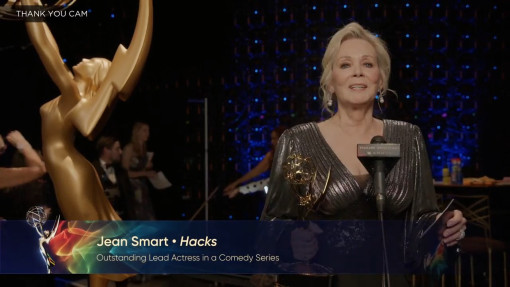
Hacks has plenty of laughs, or, to use the editor lingo in Nygard’s book, a high “JPM” (jokes per minute). Much of that humor is mined from the complex relationship between the main characters: legendary Las Vegas standup Deborah Vance (Jean Smart) and her young protégée and gag writer Ava Daniels (Hannah Einbinder).
The resulting Boomer–Gen Z tension is the fertile comedy ground that’s made Hacks such a critical success. Created, executive-produced, directed and written by showrunners Lucia Aniello, Paul W. Downs and Jen Statsky, the series has racked up 12 Emmy wins, 62 nominations and countless fans. But there are five other people whose below-the-line credit often goes unnoticed. Meet the editors who shaped the fifth and final season of Hacks: Rob Paglia, Joseph Ettinger, John Daigle, Peggy Tachdjian, ACE and Jon Philpot. This is the kind of talent McDormand is talking about.
ROB PAGLIA
EPISODES 1, 5 & 9
Rob Paglia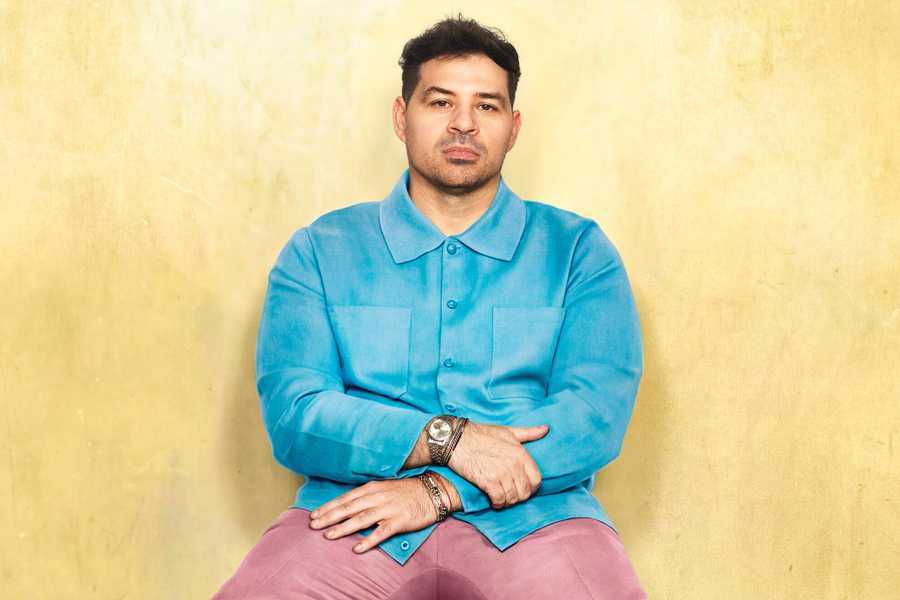
The key to comedy is... timing.
When characters on Hacks exchange a barrage of one-liners at screwball speed, one thing is certain: Every cut has been meticulously analyzed and dissected into tiny increments. That tradition dates to the medium’s early years. According to Mel Brooks and the late Carl Reiner, the difference between a joke landing and falling flat might hinge on only two frames. That’s 0.0833 seconds.
Hacks editor Rob Paglia, who also cut Einbinder’s 2024 stand-up special, Hannah Einbinder: Everything Must Go, confirms the margin for error in comedy is slight: “There are 24 frames in a second, but a lot can happen in a single frame. Sometimes an actor will do something with their face that’s almost imperceptible — a micro-expression. I’m counting those frames. If I shave two off at the end, eye contact is lost. That might be great, or it might be bad, depending on what I’m looking for.”
Example? “I’m working on that right now in episode five, where Deborah is delivering a line to the actor standing opposite her. There are three reaction shots. The first two are facial expressions. In the last one, the character looks up to the sky, then looks at her and then says, ‘Okay.’ I have to decide if I want all three options, or is that too much? Do I only want two of them, or do I simply cut it at ‘Okay’? This is just one of the 5,000 decisions I make when cutting an episode.”
With three episodes on his plate, that’s a lot of decisions. How does he manage it? “Everything is about timing,” he says.
Think of a scene as a song, and all the frames as notes. If too many are removed, or left in, the timing is botched, and the music is dissonant. Like jazz, the idea of comedy editing is to experiment, improvise, escalate tension and release it. The release is a laugh, and the biggest laugh is “the button.” It could be a sight gag, a joke or just a goofy reaction shot. Comedy editors are always on the lookout for this comedy gold. Ideally, it slots in at the very end of a scene, because the final laugh should always be bigger than every laugh before it. That’s Comedy 101: End strong, get the big laugh and move on. If the button turns out to be in the middle of a scene, that’s where the scene ends.
Strong scripts and showrunners who value editors’ opinions are a good place to start, and a talented cast is a bonus. “The things Jean and Hannah do are amazing,” Paglia says. “I’m constantly in awe of them when cutting.”
For everything else, there is a bag of tricks: If Einbinder’s eyeline is slightly off, Paglia blows the shot up 10% and moves the frame a bit right or left, so her eye level matches with the other actor. “Anyone who isn’t an editor doesn’t realize the intricacies of what we do,” he says. “There’s another scene in episode five where Deborah’s sister says, ‘You always make me play the maid.’ The showrunners wanted the line changed to ‘You always make me be the maid.’ It seems like such a minor thing, replacing one word and syncing it up. But the line might end up dipping, when what we want to do is raise it.”
To pull this off, he uses Time Compression/Expansion (TCE), a plugin for Avid Media Composer, the industry’s default nonlinear editing system. “With TCE, I can extend, shorten or even change words. If you don’t overdo it, the lip sync is perfect.”
Paglia, like all the show’s editors, works from home. With video conferencing and cloud-based computing, the “editing room” is now virtual. It’s been that way since Covid, and there’s probably no turning back. He works six days a week, seven if on deadline. It’s not banker’s hours either. The average shift is 12 hours, but the schedule varies, depending on how many hours of rushes are delivered each day.
“On Tuesday, I might get one scene or no scenes, but the next day I might get nine,” he says. A productive day is four minutes of footage edited. It’s a long slog from editor’s cut to director’s cut to picture lock.
Not all those hours are logged in the editing bay. Paglia was asked to observe a complex scene in episode one while it was being blocked. “They had an idea of how to shoot the scene, but they wanted me to see everything to make sure they were getting all the pieces I needed to cut it together.”
When creative control is mentioned, the excitement in his voice is palpable. “Our showrunners are fantastic to work with. There are many times when I fight for something — a joke, or a score I think plays better, whatever it is — and they’ll say, ‘Sure, put it back in.’ That’s a trust that’s been earned.”
JOSEPH ETTINGER
EPISODES 2 & 7
Joseph Ettinger 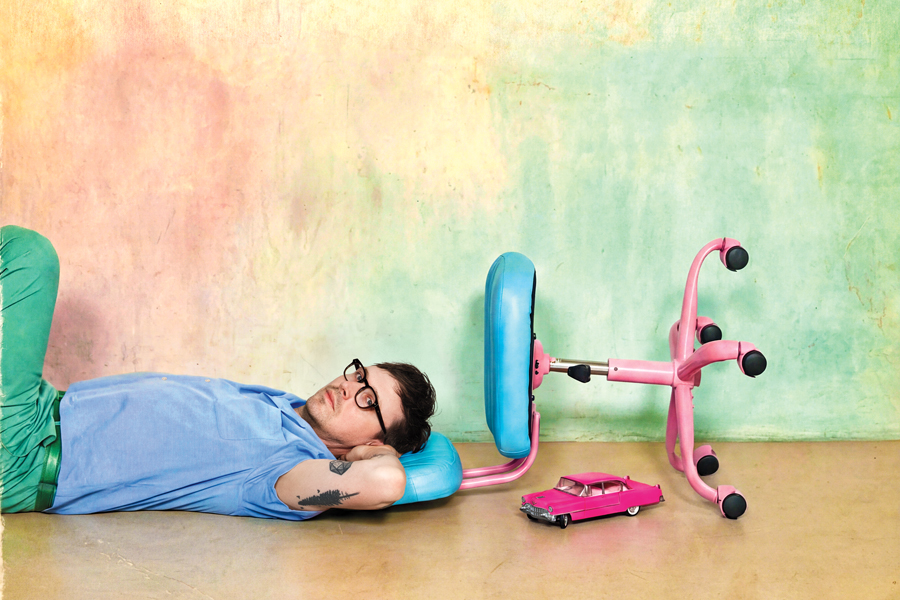
Comedy editing has changed drastically over time. Not just from the days of I Love Lucy and The Dick Van Dyke Show, but since people started watching 15-second TikToks of dogs and babies.
This evolution happened, as Ernest Hemingway once wrote, “Two ways. Gradually, then suddenly.” In the ’90s, shows like Seinfeld and Friends featured more cuts than earlier comedies had, but the classic setup-punchline-tag model still ruled. The aughts brought shows like Arrested Development, Community and 30 Rock, joke machines that moved at an incredible clip. Since then, editors have ramped up the pace even further: punchline, punchline, punchline.
Joseph Ettinger (The Righteous Gemstones) is relieved that Hacks hasn’t followed this trend and become, to use an editor’s pejorative, “too cutty.” Still, he understands what it means to live in a post-digital world of algorithms and fleeting attention spans.
“The tempo for comedy today is very frantic; audiences expect to be constantly entertained and get an adrenaline rush” he says. “That’s true across genres. It’s not just more cuts, it’s about filling up the frame.”
The evidence is irrefutable. “Look at the new Dune show. The cuts aren’t rapid-fire, but there’s a huge VFX spaceship dominating the scene. Then look at an old X-Files episode. It’s different — much more methodical. There’ll just be a lengthy shot of Scully’s back, or a shot of something in a dark room. You’re sitting on pretty empty frames. That doesn’t happen anymore.”
He groans when he hears the word “cutty” and says, “Sometimes, to land a joke, you have to give it a bit of breathing room.” Meaning, stay on the shot; don’t cut.
He lets this sink in but doesn’t want to give the wrong impression. The Hacks directors and showrunners aren’t anti-cut, and neither is he. The show unspools quickly, but not too quickly.
“This is still a punchy comedy, but it’s also grounded with the characters, and their world is grounded, too. We don’t add a ton of zany special effects or over-the-top stuff, and we don’t do sound jokes. Unlike lots of network comedies, we don’t live in that world.”
Sound jokes (think sad trombone) may not be Hacks’s style, but the show’s sound design and its granular manipulation is. Half the job is sound design, which refers to everything that comes out of the TV speakers: foley effects (footsteps, a door closing), ambient noise (ocean breeze, crowd chatter), music (score, soundtrack), sound processing (reverb, EQ) and more.
Juggling the various elements of an episode’s sound design is particularly demanding. Ettinger admits it’s “a heavy lift” to nail the right sonic formula. The aim is to design specific, plausible, emotional spaces — whether it’s the Las Vegas Strip or Deborah’s Late Night studio — that envelop the viewer like a fog. Good sound design enhances the story, establishes location and sets the mood.
It also includes temporary ADR (automated dialogue replacement), which is required anytime a line can’t be salvaged due to distortion by wind, traffic or technical issues. Watch an early cut, and you might hear Ettinger’s voice coming out of Paul W. Downs’s mouth — a disconcerting bit of audio that gets fixed in postproduction by the rerecording mixers.
Put all these layers together, and the sound design is ready for its closeup. Once everything gels, a detailed and seamless world is conjured from a slew of audio files.
“People underrate how much sound paints a world for the audience,” Ettinger says. “When you’re watching a show, it just washes over you. But the little textures, the little decisions you make with sound, can amplify certain objects or places and tell the audience what to pay attention to.”
ADR is just one of many editor tricks. With today’s technology and software, almost any flubs — from improper lighting to simple continuity errors — can be corrected with keystrokes and mouse clicks. “I can fix a lot of things in the edit, but it’s always better to get it right in the first place,” he says. “Then I can make that footage look even better.”
Still, mistakes happen. Last season, during a languid scene in which Marcus (Carl Clemons-Hopkins) and Ava are passing a joint back and forth, some lines were skipped or added during improvised takes, resulting in continuity errors. Ettinger explains the alchemy that made the scene play: “I built a visual effect where I cut four different pieces together into one frame. I got the arm in the right place, the head saying the right line, Marcus looking in the right direction as he receives the joint from Ava ….”
Illusions of this magnitude, when done well, impress even their creators. “It was a really unhinged ask,” he says of the elaborate cut-and-paste job. “They were a little worried about that shot, but I don’t think anybody really noticed it.”
Four fragments of video, from four different takes, stitched together into a single frame, creating something that never happened. In the trade, that’s called “Frankensteining” a shot. Ettinger laughs. “Yeah, it was definitely a monster.”
JOHN DAIGLE
EPISODES 3 & 6
John Daigle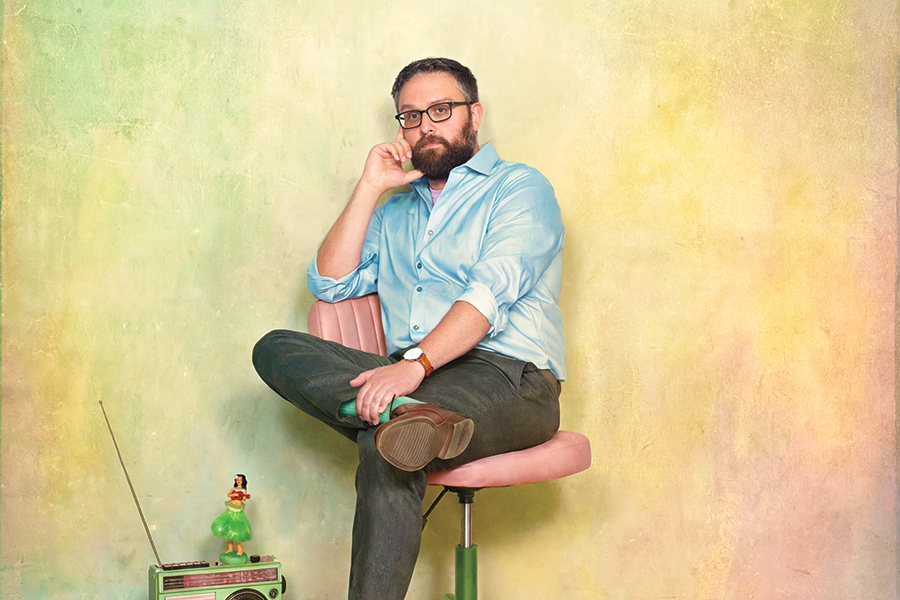
When raw footage is delivered, the day’s best takes are indicated in the accompanying notes. They’re called “circle takes” because, in the era of film stock and arc lights, the script supervisors on set literally circled specific takes in the daily log to highlight the director’s favorite shots. If John Daigle (The Other Two) sees a “VF” (very funny) next to a circle take, all the better.
Sometimes, though, the most hilarious moments are buried in dozens of hours of footage and can only be discovered through painstaking work. The humor may not have been obvious when the scene was written or shot, but it sparkles like fireworks when Daigle sees it on a 4K monitor.
Every take is dropped in a “clip bin,” a folder located on a secure hard drive that contains all the media assets — video clips, audio files, images and graphics — that Daigle needs to construct his editor’s cut, the first pass (aka “assembly cut”) that will be delivered to the director.
Once he finds the button, the job becomes easier. Like novelists, who know how a chapter ends before they begin writing, editors find it easier to fill in the blanks when they know what the kicker is. That’s why the button is so vital.
Hacks has many buttons — an embarrassment of buttons, really. This, paradoxically, makes Daigle’s job both easy and difficult. Easy because there are jokes galore, and difficult because sometimes his favorite bits don’t make it. These are the so-called “darlings” — cherished scenes, shots or lines that creatives love but that don’t serve the tone or pacing. “Killing your darlings” means ruthlessly excising beloved gems.
Two years later, Daigle is still fixated on a season-three darling that didn’t make it to air. “There were beats and moments in there that got in the way of the rhythm of the piece,” he laments.
He breaks down the lost scene: “Deborah and Ava are both home from their dates. They’re so giddy, jumping up and down in the kitchen, reliving how exciting the evening was. It was special, because they’re becoming best friends. Then they open the fridge to get ice cream, and everything falls on the floor. It’s all very clumsy and charming and funny, but you could feel the rhythm sag. It became ... baggage.”
He emphasizes that although he’s cutting what is technically a comedy, the show is more than the sum of its jokes. “Hacks is so hysterical, but it’s also a very human show where you really care about the characters, the dynamics between them and their relationships and lives. The tone is this incredibly well-balanced sense of comedy and humanity, which is what has kept it going.”
When Daigle marks up a script, he’s thinking about the story “musically.” That’s a word editors frequently use when discussing their craft. “I’m not just talking about the musicality of the narrative, or the songs,” he explains. “I’m talking about the rhythm of the story. As I’m reading, I’m playing every scene out in my head, finding the rhythm.”
The show’s soundtrack is eclectic and frequently upbeat, ranging from throwback pop hits to retro-soul cuts by Freddi-Henchi and the Soulsetters, an obscure blues band Hacks editors like for the dynamic intros and outros that bridge scenes. There’s also a score library with original Hacks music that includes character themes and riffs written for different styles and tones.
“As I make the cuts, I’m playing with different tracks and music themes to get an idea of the scene transitions,” Daigle says. “There’s an immense body of content I can pull from, and our music supervisor, Matt Biffa, is amazing. He’s this elegant English gentleman who is a walking encyclopedia of popular music.”
There may be a note from the showrunners indicating a song they envision for a scene. He’ll listen to the track on Spotify while reading the scene, tapping out the beat, imagining how it will mesh with the action on the page.
The showrunners always have the last word, but sometimes the editor’s temp tracks end up in the episode. Daigle, though, prefers to cut his footage “dry” (sans music). “I like to see how the scene exists on its own. That way, I can get the rhythm right without the influence of the temp music.
“This show doesn’t snap together like a sitcom would,” he says. “There’s a lot to explore in terms of performance and writing — in terms of nuanced moments and what’s explored on set [i.e., improvised].” The goal is to capture all that genius in the editor’s cut, which is always “fat” (long). He estimates an average running time of 42.5 minutes. About seven minutes will be cut before it’s sent to HBO for review.
“I pour everything I’ve got into my cut,” he says. “I treat it like it could air the next day. I labor over it, because it’s the first time anyone’s going to see that episode, and the people who have worked so hard writing and mounting it deserve to see my very best work.”
PEGGY TACHDJIAN, ACE
EPISODES 4 & 8
Peggy Tachdjian, ACE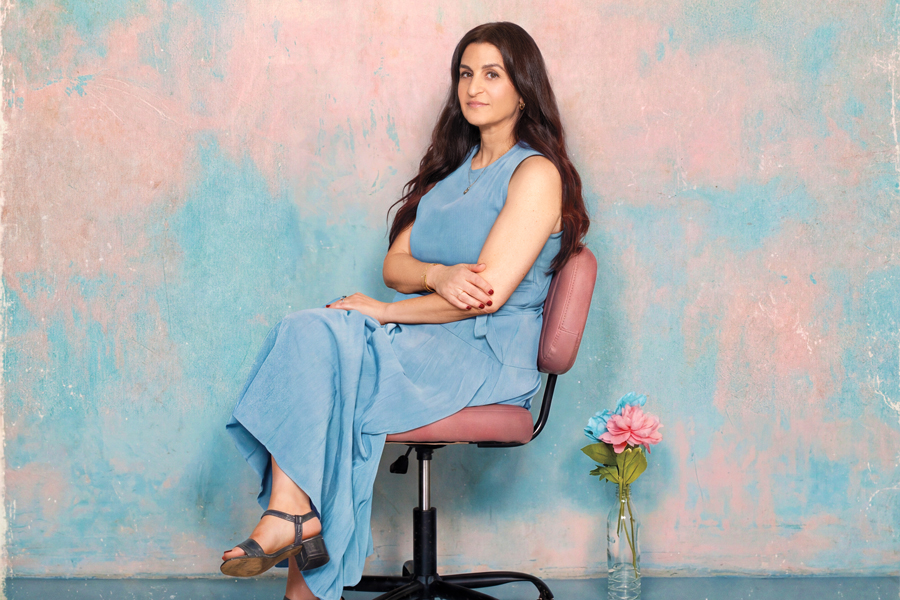
During filmmaking’s infancy, all the “cutters” were women, because it was one of the few industry jobs available to them. Men dismissed the tedious process of snipping and gluing strips of celluloid together as “women’s work,” similar to sewing or knitting. That changed by the early 1920s, when directors began collaborating with the best cutters on the lot. “Editor” quickly became a coveted title, and the men took over. '
Things have improved since then, especially in the TV world, where female editors gained a foothold and have thrived. Jessica Brunetto (Adults) established the house editing style for Hacks — restrained but snappy — and earned three Emmy nominations for her work during the first several seasons.
Other Hacks editors have included Susan Vaill (Abbott Elementary), Ali Greer (Rooster) and Marissa Mueller (Bad Thoughts). For season five, Peggy Tachdjian, ACE (Only Murders in the Building) joined the team.
Asked if men and women have different editing sensibilities, Tachdjian hesitates. “I don’t want to get into clichés, because there are very sensitive men out there, but there’s an empathy that comes with being a woman, especially if you’re telling a woman’s story.”
The more she thinks about it, the more she embraces the idea that women are ideally suited to edit a show like Hacks: “I bring value to what I’m cutting because of my perspective. Editing is about making people identify with your characters, even when they’re unlikable. As a woman, I see nuances that make someone more appealing or humanized. I can make people fall in love with characters — that’s my editor superpower.”
Years of cutting reality TV, from Bad Girls Club to RuPaul’s Drag Race, has a lot to do with that. “There’s a lot of comedy and action in reality, but there’s also the occasional ‘emotional scene,’ and that was passed to me, like, ‘Send it to Peggy. It’s not working, but she can fix it.’ And I could, because I knew how to make it more emotional, whether it was cutting to a more longing look, adding music or staying on a shot longer.
“It’s a stereotype but, when applied to me, it’s definitely accurate. Reality TV made me a better editor, because I had to look for ways to connect to those characters. There’s an art to editing both, but scripted is easier,” she says, “because you don’t have to search for the story in the footage. It’s already right there on the page.”
Her first love was journalism, which early on led to editing documentaries. “I love anything that’s rooted in the truth and is honest,” says Tachdjian, who won a 2025 Emmy for editing Monsters: The Lyle and Erik Menendez Story. (She has eight nominations in total, including nods for Born This Way and Only Murders.)
One reality-TV habit she’s kept is looking at every frame of raw footage. Not just those between “Action!” and “Cut!” but the stuff that happened before the take was slated (head footage) and after the actors broke character (tail footage).
She says this happens frequently: “The director will ask, ‘Does Jean ever smile as a reaction to that line?’ And I’ll say, ‘No, but she does smile at the end of the take, after you call ‘Cut,’ because whatever Hannah said was really funny.’ Then I’ll go find it. This might be obsessive, and it might slow me down a bit, but it’s valuable information. There might be minutes of footage after a take. Every once in a while, you find a little treasure in there.”
Those snippets would be much harder to find without her assistant editor, Caroline Wang. Among her other duties (Tachdjian says she’s “really good at sound design”), Wang is also the editor’s backstop (confirming what’s really funny), cheerleader (encouraging good cuts) and clip-bin archivist (labeling and organizing hundreds of hours of raw footage).
It’s that last task that earns assistant editors their paycheck. “In comedy, there’s so much improv, and we have to script-sync all that footage,” Tachdjian says. “Because when a showrunner says, ‘What other versions of this line are there?’ I can go to the keyboard and pop through each take.”
Talking about this drudgery darkens her mood. She knows what this grunt work entails. Every editor, after all, was once an assistant. “It takes so much time. I hate asking Caroline to do it, because there are so many creative things she could be doing, but it’s really important to the post process.”
Like every editor, Tachdjian highlights the importance of sound design. Not just as a way to create a sense of place, but to create a sense of humor. Broad comedies often use music to signal an upcoming joke or amplify a punchline. Tachdjian prefers to do just the opposite. “I love it when you’re in a scene, and the music is going but abruptly stops. Then the character delivers their line. It makes you kind of perk up and laugh.”
JOHN PHILPOT
EPISODE 10
Joe Philpot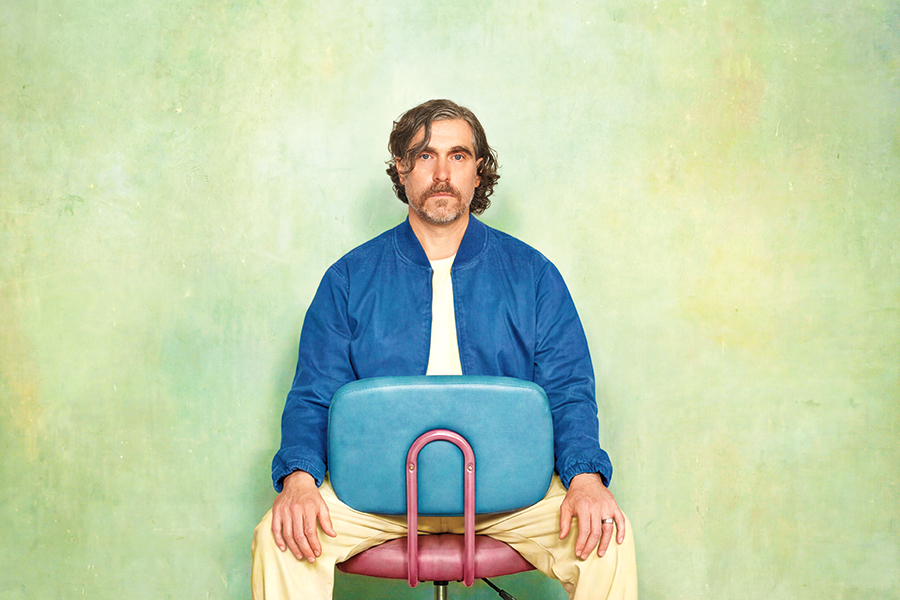
When Jon Philpot was tapped to cut the series finale, his colleagues were neither surprised nor jealous.
More than his seniority (10 Hacks episode edits in all), it was his previous career that sealed the deal. “The finale has a lot of music, and Jon used to be a professional musician,” showrunner Lucia Aniello says. “As an editor, he relates to music in an extraordinary way. He just feels the material. That’s exactly what we needed for this last episode.” Paul W. Downs concurs. “I wanted Jon to cut the finale. Not just because he’s musically gifted, but because his taste is so similar to ours. From the beginning, when he started in season two, his editor’s cuts deviated the least from what ended up being the final cut.”
Despite this postproduction simpatico, Philpot (Dying for Sex) feels the immense responsibility of tying a bow on such a popular series. “The weight of cutting the finale is definitely not lost on me,” he says. “There’s a lot of pressure.”
Jen Statsky feels the pressure, too: “The scariest thing about doing a finale is that very rarely do people talk about how good a series finale was. You only hear about the ones that miss the mark. So, my hope is that no one ever talks about the Hacks finale.”
Philpot doesn’t refer to the Hacks showrunners by name — and never separately. When discussing his bosses, he speaks of the trio as a single entity: “JPL,” short for Jen, Paul and Lucia. As in, “I’m here to help JPL achieve the best version of their show by any means necessary. That’s the mandate.”
To avoid series-finale infamy, Philpot has been obsessing over one of the show’s signature touches that will make episode 10 memorable: carefully curated needle drops. Fans will recall the backstage prep montage that preceded the launch of Deborah’s Late Night series. Numerous songs were suggested only to be rejected. The music had to be energetic and allude to Jean Smart’s character, indicating she was about to shatter the glass ceiling. Every song came up short.
It wasn’t until Philpot paired Queen’s 1989 single “Breakthru” with the footage that the scene finally clicked. The song was relatively unknown; a hit in the United Kingdom, it failed to chart in the United States. That meant a reasonable sync fee (as opposed to the six-figure fees for chart-topping music) and a new playlist track for fans.
“Yeah, that was me,” he says. “I wanted that scene to feel like Queen. So, I went through their vast catalog and started looking. Then it was right there, staring me in the face. The song’s title was thematically what the scene was supposed to be.”
Philpot knows his ability to hit lyrical sweet spots is why he was hired. “With everything I cut, I put the story first. I think about the song and how that relates to the story. And, as I’m cutting, I’m always thinking about what I’m trying to communicate, or what I’m trying to help JPL communicate.”
The other thing that’s occupied him in the editing room is, of course, the sound design. To illustrate, he begins to describe “the big dance scene” he’s working on that has an emotional component. The sounds he uses — apart from music and dialogue — will be carefully chosen to complement each character. Pressed on specifics, he adds, “These aren’t necessarily factual sounds.”
He means, for instance, altering and mixing the sound of an earthquake rumble and whirling helicopter rotors to convey a character’s terror and angst, as happened last season (in episode four, “I Love LA”) when Deborah suffered a panic attack in the middle of her first Late Show monologue.
Deconstructing the finale’s sound design makes Philpot uncomfortable. It’s not that he’s reluctant to divulge the technical points. It’s because doing so would involve spoilers. “There are many thematic things in the episode that reference the show’s ending,” is all he will say on the subject.
The job has been even harder because of the emotions it stirs up. “It’s a pretty heavy thing,” he says, “working on these scenes knowing this is the end of my time on the show and the cast’s time together as characters.”
As the former lead singer of a Brooklyn indie band (Bear in Heaven), Philpot has played in front of tough crowds. “It feels good to work on something people care about so much,” he says. “Hacks is such a beloved show.”
What about the anonymity? Having fronted a rock band, what’s it like to work behind the scenes? “The editor is like the drummer in a band,” Philpot says. “They keep the beat and control the pace, but nobody sees them. Their job is to stay in the background and make everything sound as cool as possible.” So, he’s Ringo? He chuckles and cites a decidedly more thunderous drummer. “No, I’m John Bonham.”
Hacks is executive-produced by creators Paul W. Downs, Lucia Aniello and Jen Statsky along with Michael Schur, David Miner, Morgan Sackett, Joe Mande, Aisha Muharrar, Nate Young and Ashley Glazier. The series is a production of Universal Television, a division of Universal Studio Group.
Hacks is now streaming on HBO Max.
This article originally appeared in emmy Magazine, issue #8, 2026, under the title "A Cut Above."