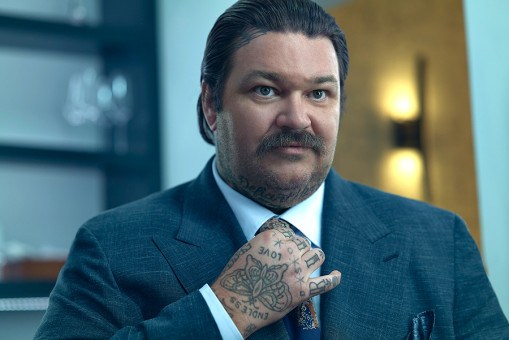

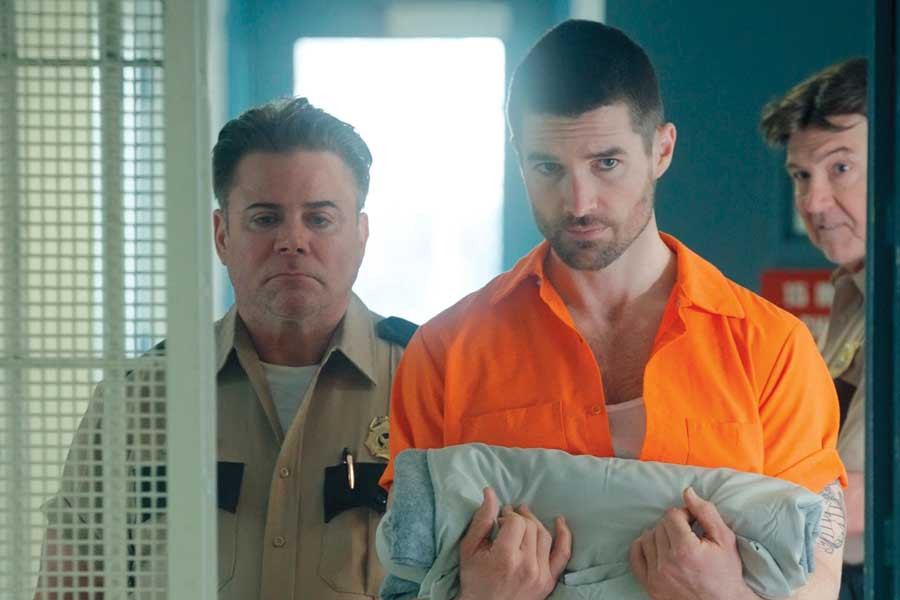
To be honest, Noah Fearnley didn't really want to work the front desk at the Hotel Oceana Santa Monica. But his acting gigs on Lifetime movies had wound down, and the blink-and-you’ll-miss-’em roles on various TV series just weren’t moving the needle. “I ended up really struggling,” he admits. So, when he received an offer in 2023 to be the romantic lead in a new entity called a “microdrama,” he decided to go for it. The movie-length, multi-episodic series was titled Love by Contract, and he played a wealthy businessman who hires a woman to be his wife. “I didn’t know if this was for me,” he says. “But I wanted to act.”
One microdrama turned into two, which turned into three and four and more. Though Fearnley still wasn’t sure the unusual model was the right fit, he continued to say yes. Soon, people started recognizing him in airports and asking for photos. Now he’s one of the most sought-after actors in the space, with about 50 microdramas on his résumé and "15 to 20" offers on the table. “The experience has changed my whole world,” he says.
And yet, he adds, "I was the only guy at my agency doing it for a long time. Everybody was looking at me like, ‘What are you doing? What is this stuff?’"
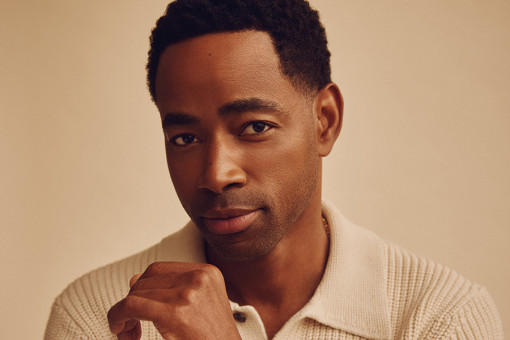
Noah Fearnley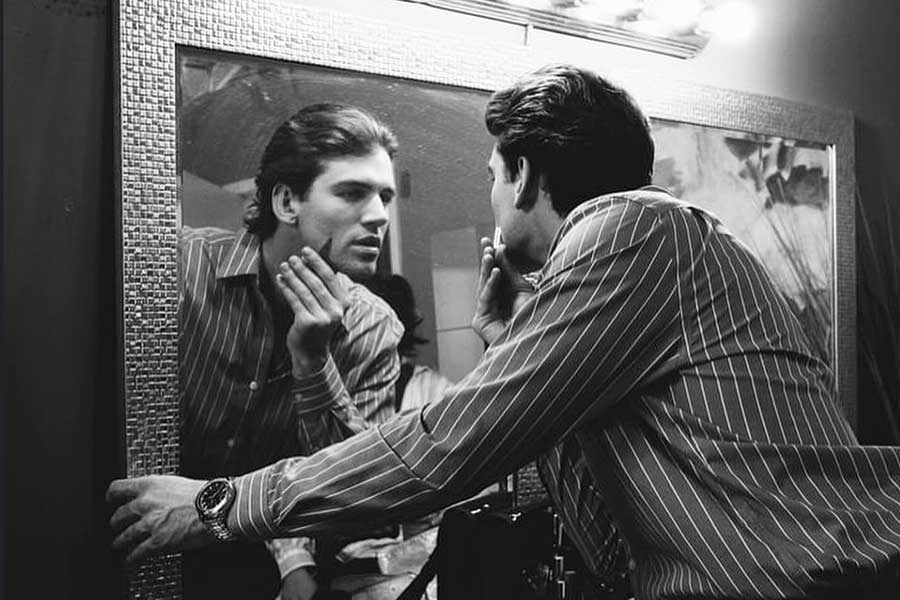
The answer: a revolutionary bite-sized entertainment medium that originated in China and has proven massively successful in both revenue and viewership. Also known as a “vertical” (because it’s filmed in that direction for optimal viewing on a smartphone or tablet), a microdrama is a scripted, mobile-only serial divided into 60-to 90-second episodes that end on juicy cliffhangers. In other words, it’s an ideal concept for anyone with a microsized attention span. Which, well, seems to be everyone.
The first few chapters of a microdrama can usually be found on social media feeds. Hooked-in viewers are directed to a specialized streaming app to swipe for more. The money is primarily made through a “freemium” model in which people pay for credits or purchase a subscription plan to unlock additional content and find out how the stories end.
No, these series will never be compared to Breaking Bad and Game of Thrones — at least in the near future. Many play like soap operas and supernatural fan fiction, with the most popular involving forbidden love affairs among virgins, vampires and billionaires ... or all of the above. But these stories are what the mostly female market demands. In just three years, revenue for serialized short-form dramas in China rose from $500 million in 2021 to close to $7 billion in 2024, according to a report by research firm Media Partners Asia. The Double Life of My Billionaire Husband has hit around 450 million worldwide views since its premiere on the ReelShort app in 2024.
“I’m honestly surprised at how pervasive and how broad the appeal is for mainstream audiences,” says Lee Hollin, the executive vice president of television and head of current programming for Lionsgate Television (The Studio, The Rookie). (Hollin moderated a panel on the subject for the Television Academy, where he serves as a governor of the television executives peer group.) “Historically, somebody in my linear television content role would look at that and think it’s not going to connect with an audience. But viewers love the production value and the performances and the writing. And they’re willing to pay.”
Now the microdrama phenomenon is poised to hit pay dirt in the domestic market.
According to an analysis from Sensor Tower, total revenue from apps like ReelShort, GoodShort and DramaBox in the United States reached nearly $350 million in the first quarter of 2025. As a result, many veteran TV executives and creatives are diving in.
Lloyd Braun, the former chairman of ABC Entertainment Group, recently created the Hollywood studio and streaming platform MicroCo and tapped former Showtime president Jana Winograde as chief executive and Susan Rovner, former chairwoman of entertainment content at NBCUniversal television and streaming, as chief creative officer; E! Entertainment cofounder Alan Mruvka started the mobile-first vertical streamer Verza TV in November. CSI: Crime Scene Investigation creator Anthony Zuiker has already written two series for GammaTime, an app that launched in October. Meanwhile, Taye Diggs signed on in January to star in and executive-produce the series Off Limits & All Mine for the U.S.-based app CandyJar. And traditional media companies are getting involved. In October, Fox Entertainment invested in Holywater — a 55 million–user media company that operates platforms such as My Drama, My Passion and My Muse — with the promise that development deals with “top Hollywood talent” were coming soon.
SAG-AFTRA and WGA have also inked new agreements to protect their members and give them opportunities to work in the market. SAG-AFTRA, in fact, announced a new media contract in October specifically created for “the unique needs” of microdramas costing $300,000 or less. (The contract for members of the DGA also covers work for verticals, as part of its farsighted 2007–08 negotiations, which addressed “low budget projects made for emerging platforms.”)
“There’s so much interest in the space and so much demand for content,” says Scott Brown, a former digital creator who now makes microdramas via his company, Second Rodeo Productions. “A lot of people are making big bets that this is going to be a sustainable business.”
One word: Quibi. Founded by Jeffrey Katzenberg in 2020, the short-form content studio and streaming service for mobile devices never caught on — burning through $1 billion of funding and shutting down within six months. Though 10-minute episodes of big-budget series faced an uphill battle in a competitive content landscape, its brain trust was on to something.
While Quibi quivered, a different model called duanju (“short drama”) quietly emerged in China. It didn’t rely on recognizable talent or glossy production values. Instead, the key was platform integration and addictive serialized narratives sourced from web novels. The format took off during the pandemic among entertainment-starved viewers craving quick, bingeable content.
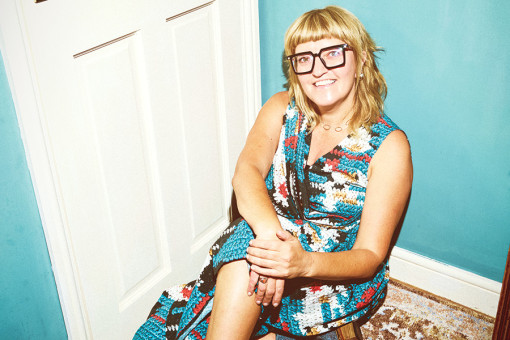
Yaxing Lin on the set of ReelShort’s Ms. Swan, Teach Me Love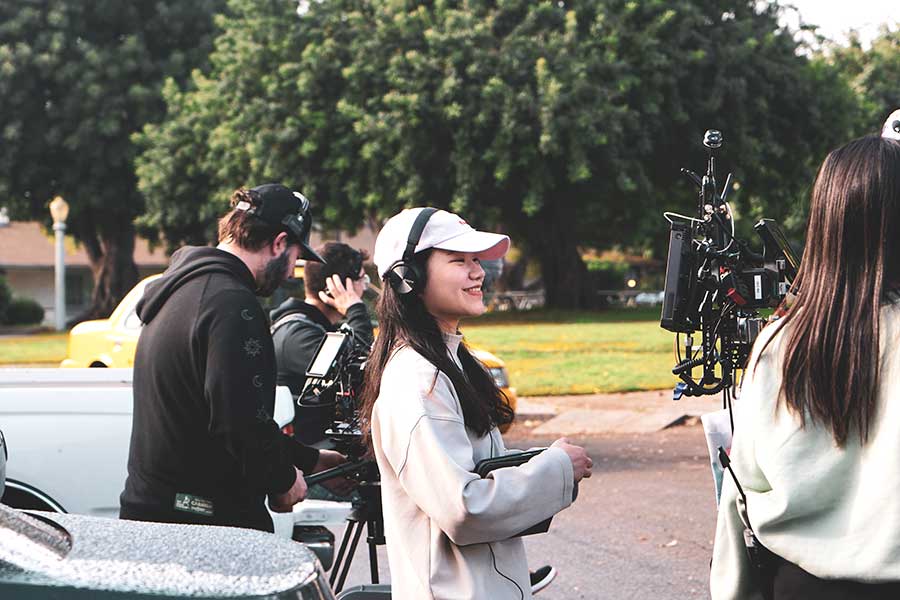
By 2023, platforms like ReelShort and DramaBox were starting to migrate these shows to Western audiences. The timing was fortuitous, as the dual WGA and SAG-AFTRA strikes caused much of Hollywood to shut down. Independent film writer Yaxing Lin, who wasn’t in the union, couldn’t find a job until a friend asked her to write for a ReelShort vertical called My Alpha’s Daughter. “It took her five minutes to even explain what a vertical was,” she recalls. “I told her I would do it, and I figured by the end of 2023 I’d find a ‘normal’ job.”
Lin, now an executive producer for DramaBox, says she knew the medium was no short-term fad when Silicon Valley–based Crazy Maple Studio — which developed the ReelShort app — was named one of the Time100 Most Influential Companies in May 2024. "Before, verticals were just this thing we were doing, and nobody was recognizing it," she says. "Then, suddenly, Time recognized it." The New York Times, The Wall Street Journal and Bloomberg have picked up on the trend, too.
Indeed, even in an industry constantly touting shiny new innovations, this is a fascinating concept to behold.
To start, an entire 100-ish–minute series costs less than $300,000 to produce. Because of the low budgets, the schedules are highly compressed — getting a show from script to launch takes about two months. Fearnley, who now toggles microdramas with traditional screen work, usually shoots his series in about seven days, going through 15 to 20 pages of dialogue for 12 hours a day every day until wrap. "You’re cramming a Lifetime movie that would take about three weeks to make into seven days," he says.
Director and producer Casey Jackson recalls he took only nine days to film the 76-episode The Virgin and the Billionaire for ReelShort in 2024. "If you’re really well prepared," he says, "you can make some incredible things happen."
On the writing side, each script runs the length of a feature film, but with dozens of climaxes inserted throughout the narrative. "There’s definitely a science to it," says Abby Dzeng, a script supervisor for ReelShort who wrote the werewolf-centered Fated to My Forbidden Alpha in 2023. "You have to keep people’s attention in a very intentional way, so it’s harder than it looks. There’s a learning curve for everyone, even if you’ve been a screenwriter for a long time."
But the breakneck pace isn’t necessarily a negative. "Traditionally it takes years for screenwriters to develop something, and then you have to wait a long time to watch what you wrote," Dzeng adds. "But here we can watch our screenplays come to life way faster. It can be really rewarding." She and her team of 20 U.S.-based writers currently have about 20 projects percolating in various stages of development.
With so many areas of the industry in decline, the new art form can serve as a lifeline. A telling stat: In 2025, more than 17,000 jobs were cut across television, film, broadcast, news and streaming in the first 11 months of the year, according to Challenger Media. Yet because microdramas are booming, Hollywood production crews and both union and non-union writers, directors and actors are discovering new opportunities.
"The fact that short dramas are becoming another way for writers, actors and directors to produce and tell stories and get paid for it is a positive," says Hernan Lopez, a media executive and founder of the management consulting firm Owl & Co. "It’s a good thing, because it gives artists another way to express themselves."
The complete version of this article originally appeared in emmy Magazine, issue #03, 2026, under the title "Long Story Short."