
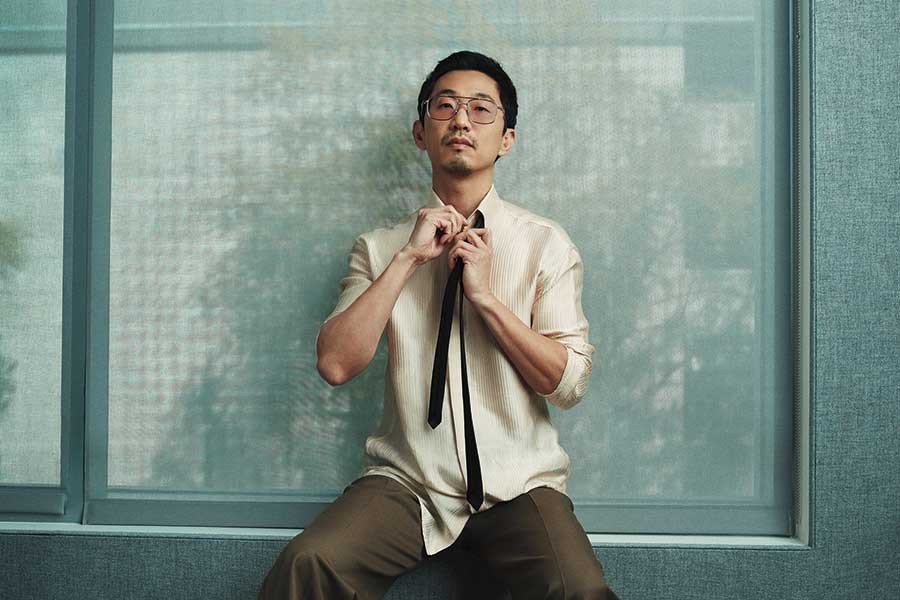
Survival in the streaming wars hinges on two things: increasing subscriber counts and minimizing churn rates. This requires hit shows. The bigger the hit, the greater the expectations are for a follow-up season. With an anthology series like Netflix’s BEEF, that’s asking a lot. How do you top eight Emmys, a 98% critics’ score on Rotten Tomatoes and a No. 1 Nielsen streaming ranking, with over a billion minutes viewed in a single week?
Three years later, creator, writer, director, showrunner and executive producer Lee Sung Jin, also known as Sonny, has fulfilled those expectations with BEEF season two.
The core DNA remains intact: engaging characters, unpredictable beats and a heady mix of highbrow references (Renaissance art and quotes from deep thinkers like Sylvia Plath and Kahlil Gibran kick off each episode) and pop-culture indulgences (a playlist soundtrack and subplots involving porn addiction and Korean plastic surgery gone awry). Class warfare is still the throughline this season, and the cage everyone is trapped in remains gilded: a Montecito country club with a $300,000 initiation fee. Raging at the center of it all, of course, is the titular beef.
Despite the familiar elements, there’s nothing derivative about this eight-episode second season. For starters, the lead characters aren’t all Asian: Carey Mulligan and Oscar Isaac play the Millennial couple feuding with the Gen-Z couple played by Cailee Spaeny and Charles Melton. The production design is also a departure; it’s maximalist rather than minimalist. Then there are the transgressions — embezzlement, bribery and blackmail; these serious crimes are premeditated rather than impulsive, and they’re motivated by money rather than spite.
It’s the scope of the beef, though, that sets this season apart. Like the road-rage scene that lit the fuse last time, a fight serves as the inciting incident this time. But that’s just the undercard — a married couple hurling barbs and breaking things. The real beef here isn’t a personal grievance. Instead, the anger is focused on that inescapable force that so many believe prevents them from getting ahead: capitalism. More than a plot device, the conflict that unspools is a grim social commentary, a reflection of the current era of rigged economics, with tax loopholes and generational wealth on one side, and minimum-wage jobs and credit-card debt on the other.
What does the man behind BEEF have to say about his latest morality play? Plenty, including his thoughts on Marxism, the nostalgia of synth-pop bands and why it’s always best to write what you know.
Oscar Isaac and Carey Mulligan engage in an epic altercation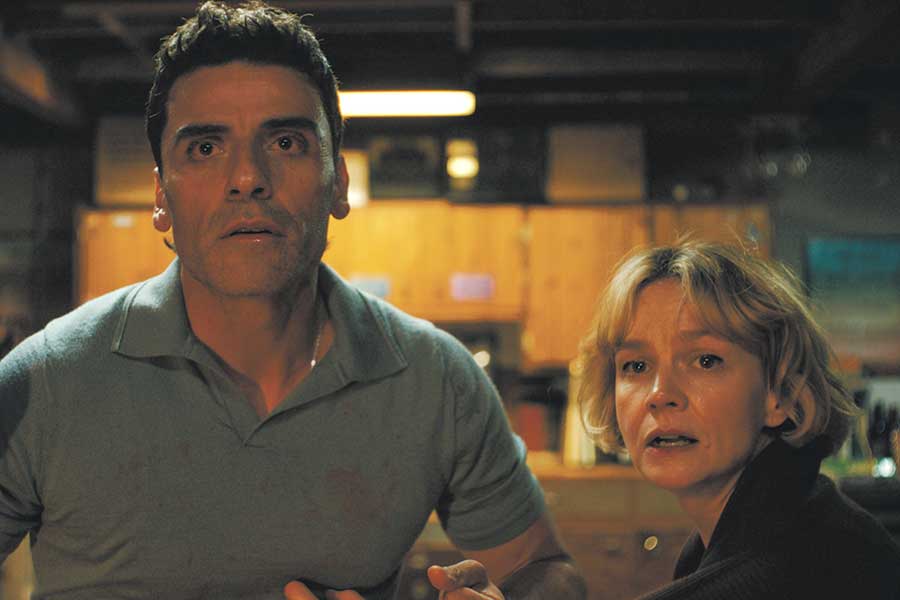
The inspiration for the first season was a road-rage incident on La Cienega Blvd. in Los Angeles between you and a BMW driver who cut you off in traffic. What inspired season two?
Another real-life event — a domestic fight in my neighborhood. Everyone heard the argument, and everyone had different thoughts about it. That stirred my imagination. It was interesting how my neighbors’ own relationships colored the way they perceived the fight. Everything flowed from that.
Once again, art imitates life.
I write what I know.
The last time we spoke, you said there was a "holy-grail formula" for BEEF: 35% Sopranos/Paul Thomas Anderson flawed-character comedy, 35% Netflix bingeability/White Lotus water-cooler moments and 30% Ingmar Bergman/Hirokazu Koreeda warm melancholic pathos. What’s the equation this time?
I used the same formula, because that’s the tone I write in. But I had a different Letterboxd screening list for the writers’ room this season: Phantom Thread, The Handmaiden, Michael Clayton, Eyes Wide Shut and Like Crazy, which is an overlooked romance film. I even put The Firm in there.
Strained relationships.
Yes. Another big one, which is different in tone but interesting in terms of juxtaposing two couples, is Mike Nichols’s Who’s Afraid of Virginia Woolf?
Liz and Dick — you can’t write a domestic fight scene without screening that.
Exactly. [Laughs]
Each episode begins with an epigram that hints at what’s about to unfold. There’s a Sylvia Plath diary entry, a Marion Woodman poetry line, even a social-science theory reference (the fallacy of prediction). When we last spoke, you said The Sopranos was your North Star. Clearly, other things inform your writing. Are you the bookworm these episode headings would suggest?
I haven’t touched a book lately, because of how busy the BEEF schedule has been, but I’m fairly well-read. I’ve been fixated on Esther Perel recently. She’s a Belgian psychotherapist. Her work on intimacy and desire is something that came up a lot. The first episode is based on one of her quotes: “All the things we’re never going to have.”
Who’s Afraid of Virginia Woolf? and Esther Perel — not the typical writers’ room fodder.
I’ve absorbed an incredible mishmash of films, TV, music and books. There’s also my Instagram feed, which shoves a lot of emo poetry in my face. So, I consume a whole tapestry of things, and then it all gets vomited out.
You call this your “fever-dream cast.” Was a more racially diverse lineup intentional, or did it happen organically?
Very organically. We were able to cast early, which is great, because I like to write-to-cast. I wanted a Millennial couple, and the combo of Oscar and Carey intrigued me. Having done two movies together [Drive and Inside Llewyn Davis], there’s an innate history and love between them that was ideal for this story. I chose Charles Melton [Riverdale, Warfare] because he’s half Korean, and I wanted to keep a Korean angle, but also because I just had a daughter, and she’s half Korean. Exploring that identity tug of war was interesting to me.
There’s also K-pop star Matthew Kim [aka BM or Big Matthew], who plays a nepo baby and the club’s tennis pro. This is his debut role. Were there any doubts about him holding the screen with veteran actors?
None. When I looked at his tape, it just blew me away. I couldn’t believe it was his first audition.
His 3 million Instagram followers must have made an impression on the Netflix executives.
That’s true. Matthew does have a strong fanbase.
There’s a pivotal moment where the setting shifts from sunny California to neo-noirish South Korea. You were born in Korea but have lived almost your entire life in the United States. What was it like shooting in Seoul?
A dream come true. I’d shot a music video in Korea, but that was on a stage. The Korean crew and the fans during the location shoots were so supportive.
Jin on the set of BEEF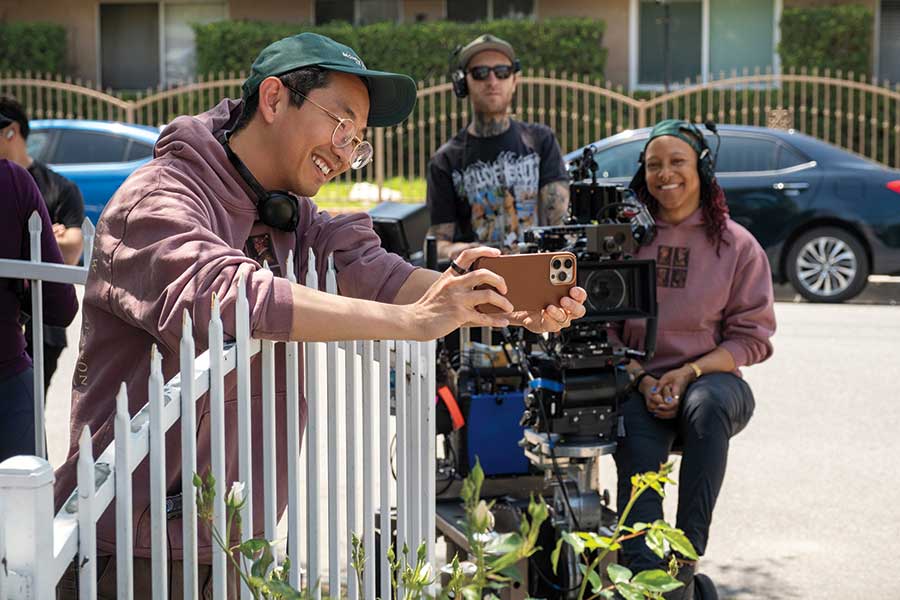
Any anecdotes to share?
I was directing a scene with YJ [Youn Yuh-jung] and Song Kang-ho. Between takes, director Bong Joon Ho [Parasite, Snowpiercer] showed up. The whole crew immediately went silent. It was like royalty arriving. He walked up to the monitor and was joking and ribbing me, saying, “Do you want to frame it like that?” He was in video village with headphones on, doubled over laughing.
Youn Yuh-jung [Pachinko, Minari], who plays Chairwoman Park, the billionaire owner of the country club, and Song Kang-ho [Parasite, Snowpiercer], her plastic-surgeon husband, are also part of the fever-dream cast. Most Americans aren’t aware that they’re massive stars.
They’re both Korean legends, and this is the first time they’ve ever acted together, which is exciting. Everyone in the cast is incredibly talented: Cailee Spaeny [Priscilla, Mare of Easttown], Seoyeon Jang [Butterfly, Good Partner], Mikaela Hoover [Superman, Duster], William Fichtner [Mom, Talamasca: The Secret Order]. It was an honor to work with all of them.
Speaking of Korean cinema, congratulations on pulling off that impressive one-shot in episode eight. Film buffs will recognize it as a nod to the corridor fight scene in the Korean classic Old Boy.
Thank you. So much blocking with our stunt folks, which was difficult. Grace Yun [Ramy, Past Lives], our amazing production designer, built a set specifically for that scene in Korea.
The fight choreography is stunning. How long did it take to nail it?
I think we got it on the ninth take.
Given that homage, I assume Park Chan-wook is on your auteur list.
Absolutely! Old Boy is a top-five film for me. I recently had the honor to present director Park an award, and I told him Old Boy was the film that made me want to direct. It broke my brain, because I didn’t know you could make a film like that. It’s such a fresh perspective on the action genre.
The fictional Monte Vista Point country club is the primary location for the series. Did you conduct any research before you started writing, like scouting fancy country clubs in Montecito?
Again, I’m just writing what I know. Between seasons, I did some house-sitting for a friend. He had a Montecito Club membership, and I was allowed to use it. I played tennis and went swimming every day. I thought to myself, “Man, this is the life.” That club is a perfect microcosm for society. There’s a lot of wealthy Silent Generation and Boomers who are members, and most of the club employees are Gen Z and Millennials who will never be members.
Income inequality is a common theme on TV: from Gossip Girl and Home Economics to more recent offerings like Sirens, Succession, The White Lotus and Squid Game. Your show mines the same territory. Any thoughts on this?
It’s impossible to write something true today without acknowledging income inequality and the growing class divide. The tentacles reach into every aspect of society and interaction. It’s not surprising so many writers are tackling the subject.
Did you originally intend to focus the beef on capitalism rather than pit characters against one another?
Over the course of the season, yes. At a Montecito country club, the personal motivation is almost always to better your life in this late-stage capitalism world. If you have a story like that, it almost has to become a beef against the larger system.
The complete version of this article appeared in emmy Magazine, Issue #6, 2026, under the title "Social Studies."
BEEF is executive-produced by creator, showrunner and writer Lee Sung Jin along with director Jake Schreier, Steven Yeun, Ali Wong, Carey Mulligan, Oscar Isaac, Charles Melton, Cailee Spaeny, Anna Moench, Kitao Sakurai and Ethan Kuperberg. The series is a production of A24.
BEEF is now streaming on Netflix.