
Revivals of any beloved property can be a double-edged sword. On one side are fans excited for a show’s return and all the warm feelings of nostalgia it brings. On the other are critical audiences ready to pounce if it is too different from — or too similar to — the cherished original.
When Netflix announced its new Little House on the Prairie series — which would focus on a grittier and grounded take on the Ingalls family and their lives in the late 1800s — writer-producer-showrunner Rebecca Sonnenshine (The Housemaid, The Vampire Diaries) immediately empathized with the vocal opinions about what this new take should (or could) be. “I'm a lifelong fangirl of lots of things, and I'm very passionate about things I love,” Sonnenshine tells the Television Academy. “But I also love new adaptations.”.
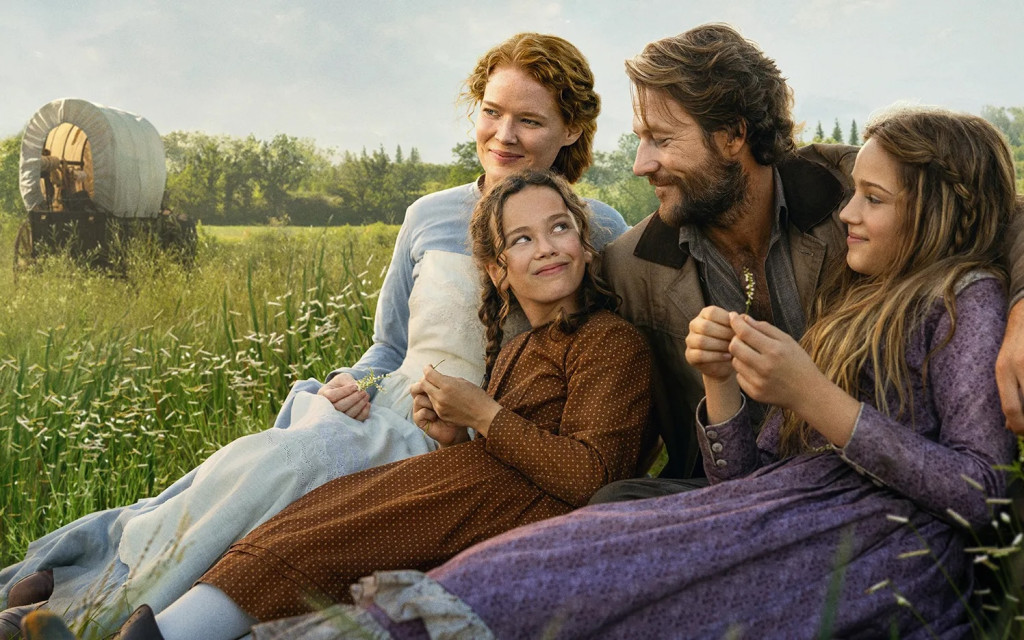
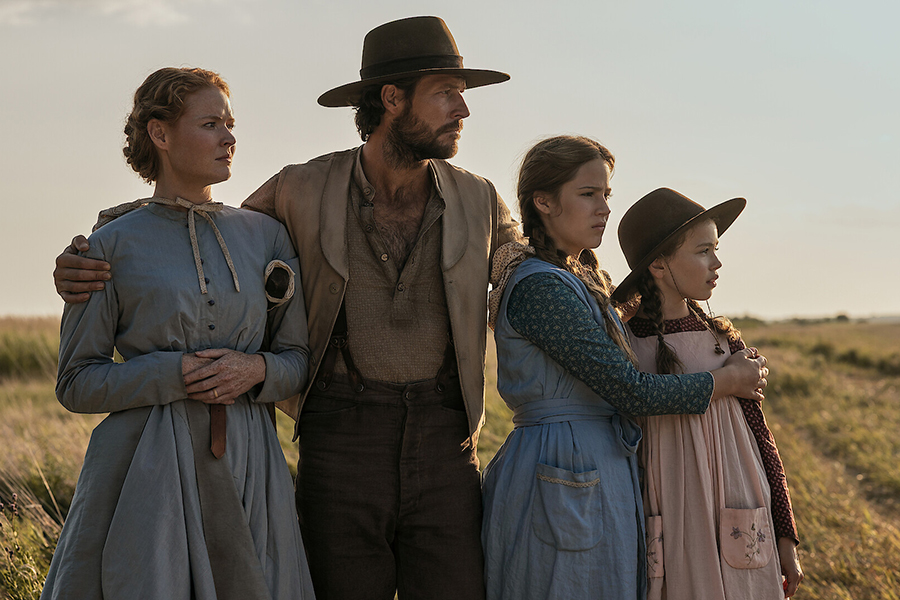
Written by Laura Ingalls Wilder and based on her life, the book series was first published in the 1930s before NBC famously adapted it for television in the ‘70s. It starred the late Michael Landon as noble patriarch Charles Ingalls, with Melissa Gilbert playing his wide-eyed daughter (and author surrogate), Laura Ingalls. The new series — which follows the intrepid family as they settle in Independence, Kansas — casts Luke Bracey in Landon’s famous role, with Alice Halsey as Laura. NBC’s more wholesome approach to the material became a touchstone for television audiences at the time. But, to bring Little House into the modern era, Sonnenshine felt that any new show would be best served by mining Wilder’s books and the real-life history they chronicled.
“You're taking these books — which are some of the most iconic pieces of American literature ever written — and taking another look at them through the lens of the time we are in now,” she explains. “What have we learned since our last adaptation? What do we have to offer with this new telling of this story that maybe can shed some light on things that we weren't able to do in the past?”
Below, Sonnenshine unpacks her character-first approach to the material and the creative challenges of reinterpreting it for 21st Century audiences.
Crosby Fitzgerald as Caroline Ingalls, Alice Halsey as Laura Ingalls, executive producer and showrunner Rebecca Sonnenshine, Skywalker Hughes as Mary Ingalls and Luke Bracey as Charles Ingalls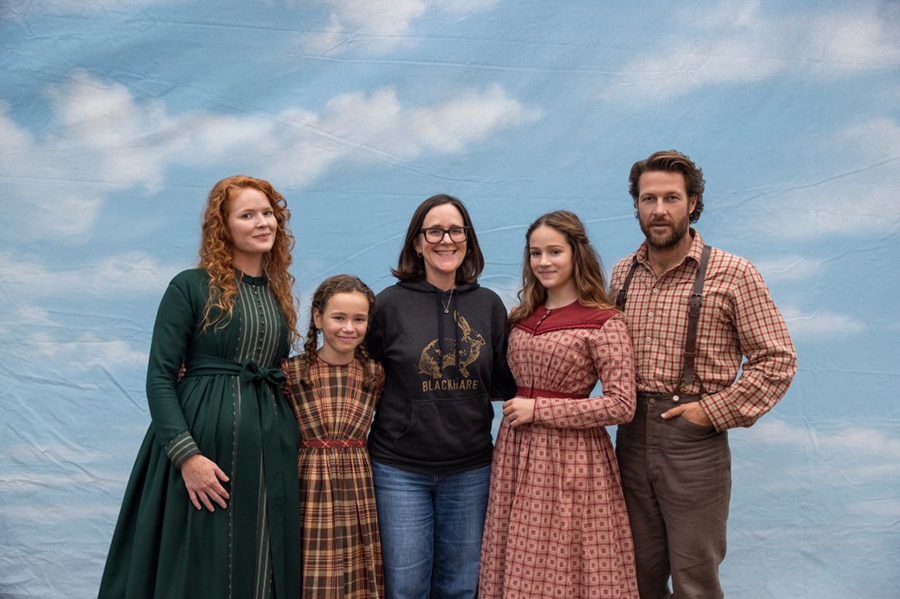
Television Academy: You’ve written for genre shows like The Boys and The Vampire Diaries, which were based on popular source material — as was your script for the 2025 feature film, The Housemaid. How much of a departure did Little House feel for you?
Rebecca Sonnenshine: To me, it’s all the same. Not totally, but I think the process for thinking about a show is always about the characters. Thinking about their emotional journeys and their relationships with others. Even The Boys is really all about that. We really did just think about: Who are these people, what do they want, what are the obstacles they’re trying to overcome personally? What’s their backstory?
I usually work in darker genres, but [Little House] is my origin story. These are the books that I first read that made me want to be a writer. They made me want to be a filmmaker, go to school and learn how to make films so I could adapt this.
How did you get the opportunity to adapt your dream project?
A producer named Joy Gorman Wettels (13 Reasons Why) had optioned these books right around the time when I was finishing my previous show for Netflix [Archive 81]. I found out that there was a hunt for a writer, and I was like, “I gotta get a meeting!” Then, I had to convince them that a genre writer who just made a horror show would be great for Little House. I had to pitch them what my ideas were for an adaptation and how I would go about it. I think they kind of felt that [Little House] was in my bones.
I was always obsessed with these books, and that’s all I’m really interested in, So, it’s really a new adaptation. It’s just like when somebody makes an adaptation of Little Women every 20 years — it’s the same principle. You’re taking these books — which are some of the most iconic pieces of American literature ever written — and taking another look at them through the lens of the time we are in now. What have we learned since our last adaptation? What do we have to offer with this new telling of this story that maybe can shed some light on things that we weren’t able to do in the past?
Since the first season of the show follows the characters for a year of their lives, starting in 1869 and ending in the summer of 1870, how challenging was casting for you?
Obviously, they’re very iconic roles — there’s a lot of pressure, there’s a lot of opinions. For casting, it’s really kind of a gut thing. I know right away — even from the first few lines that come out of somebody’s mouth — I’m like, “It’s them.” I don’t cast because they have the right hair color, or any of those things. It’s more: Do they have the essence of this character? Do they embody the spirit of this character? And it’s kind of a thing that you can say, “Oh, it’s because of these qualities,” but it’s also just that — when you see it, you know it.
Little House's Wren Zhawenim Gotts as Good Eagle and Alice Halsey as Laura Ingalls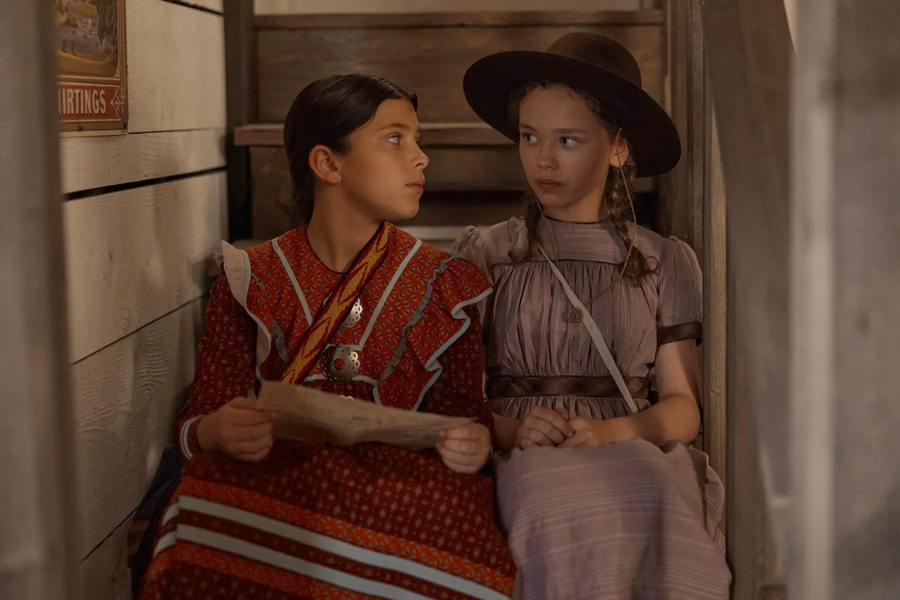
A lot of expectations were voiced even before the show aired. How do you keep that from encroaching on your creative process?
Yeah, I heard a lot. I think that our brains all work differently. My brain kind of works in a sense where, obviously, I read this book, and I have these characters in my mind. But, the minute I wrote it [for the adaptation] and then cast it, I’m like, “No, those are the characters.” My mind is very flexible in that way. I feel confident that these actors embody the characters, and that this show embodies the spirit of the books.
My main goal in adapting these books was to make the show feel how I felt when reading the books. It’s both very optimistic and a little bit rosy, but it is also a little bit scary and dangerous. It’s those two things you can hold in your hand at the same time. People have a real relationship with books and with television series. Sometimes, that relationship is really important in their lives — they don’t want anything to mess that up for them — and I totally get that. I’ve certainly had that in my life. I love every adaptation of Little Women. I love every adaptation of Sense and Sensibility. I love every version of Battlestar Galactica and Star Trek. I love all these things.
What surprised you the most about reading the books again as an adult?
I still have all my copies, and when I open them up, they tear because I read them so many times. They’re really beat up, so I actually bought them on Kindle — which is awesome. The illustrations are in color, which I’d never seen before. I’d be like, “This is what the well looks like.” The Garth Williams illustrations are really important.
Obviously, now I have an adult perspective on [the books], so things that were kind of glossed over in the book now seem more dramatic and dangerous. Sometimes, [characters] really almost died. One thing that inspired the story was about Charles’s brother, George. It was the chapter in Little House in the Big Woods where they talk about him. When you’re a kid, you’re like, “It’s so fun that Charles’s younger brother still wears his uniform and plays the bugle.” You see it as just a quirky thing that Uncle George does. But as an adult, you think, “That guy’s suffering from PTSD. This takes place right after the Civil War, and we don’t talk about it very much. What was [post-war life] like for everyone?”
There are really interesting things like that in the books that spark questions as an adult that didn’t spark any such questions as a kid. In the books, Laura talks about Dr. Tann, and he’s a Black doctor. As an adult, you’re like, “Wow, that’s interesting. Who were the Black Americans living on the prairie at that time?” I never really thought about that as a kid. But I’m thinking about it as an adult, and it kind of opens up this new path and world.
A key part of the first season’s storyline is the family’s experience with the Osage people and land ownership. How did you approach adapting that aspect of the story?
All the scholarship I’ve read about the books was that Laura Ingalls Wilder couldn’t quite get her head around it because she was quite young [at the time] the real events happened. She moved there at the age of two, or just before she turned two. These were stories that had been told to her. So, in trying to track down some of these Osage people, she got a lot of [the details] wrong.
We did not go by the book or by the fictional accounts. We [explored] the real history of that. The history of the Osage people is really complicated. They had numerous negotiating skills, and they did everything they could to make the best of a very bad situation. They were really smart, they valued education and they wanted to stay together. We really delved into who the Osage were, where they came from, where they were going and what was happening at the time in terms of treaties that were almost passed and signed or scuttled by Congress. It is a really complicated slice of history that we tried our best to dramatize and portray as accurately as we could. Hopefully, we honored that story.
Tell me about some of the characters you created for your adaptation.
Obviously, Dr. Tann (Jocko Sims) and Mr. Edwards (Warren Christie) are from the book. Then the Osage family — the Mitchell family — they were created for the show. But they are based on the Osage that were mentioned in the books. They’re not characterized [in the books], so we approached it like: “How do we create characters who can connect our family to the larger questions that we’re asking? A family that mirrors the Ingallses, that have a complicated marriage and a great love story between Mitchell (Meegwun Fairbrother) and White Sun (Alyssa Wapanatâhk) and their family issues?”
Then there’s a Mr. Scott in the book who helped Charles build the well, so we created a younger character — Adam Scott (Maclean Fish). The character Jemma James (Mary Holland) is inspired by Mrs. Scott in the book, who was a bigot. Jemma James is a little more nuanced than that [in the series]. We also created Emily Henderson (Barrett Doss), who is inspired by the fact that Dr. Tann married a woman named Eliza Harris, so she was inspired from real life. The thing about creating new characters is every person your main characters interact with tells you something new about them. It’s really important to have all these characters that create this texture of the world.
The landscape is beautiful and feels like a character in the series. Where did you shoot?
We shoot in Winnipeg, Canada. Winnipeg is a very large city, but it’s surrounded by open prairie, and that is exactly what we need. They have a great filmmaking community.
The first season is set in Independence, Kansas, but we all know the original series was set in Walnut Grove, Minnesota — where the Ingalls family does eventually settle. What can you say about where season two will take these characters?
Everybody’s wondering about [fan favorite] Nellie Oleson [played by Alison Arngrim in the original series]; we have a few nods to her in the first season. The announcement that Nellie has been cast is out there [Editor’s note: Willa Dunn will play the role]. So, for everyone who has been asking “Where’s Nellie,” don’t worry, she’s coming. And [audiences] can expect the next book [covered in the series] to be On the Banks of Plum Creek.
This interview was edited for length and clarity.
Little House on the Prairie is now streaming on Netflix.