If you're seeking ways to connect with working television industry professionals, both in front of and behind the camera, joining our organization offers you unparalleled access, benefits and opportunities.
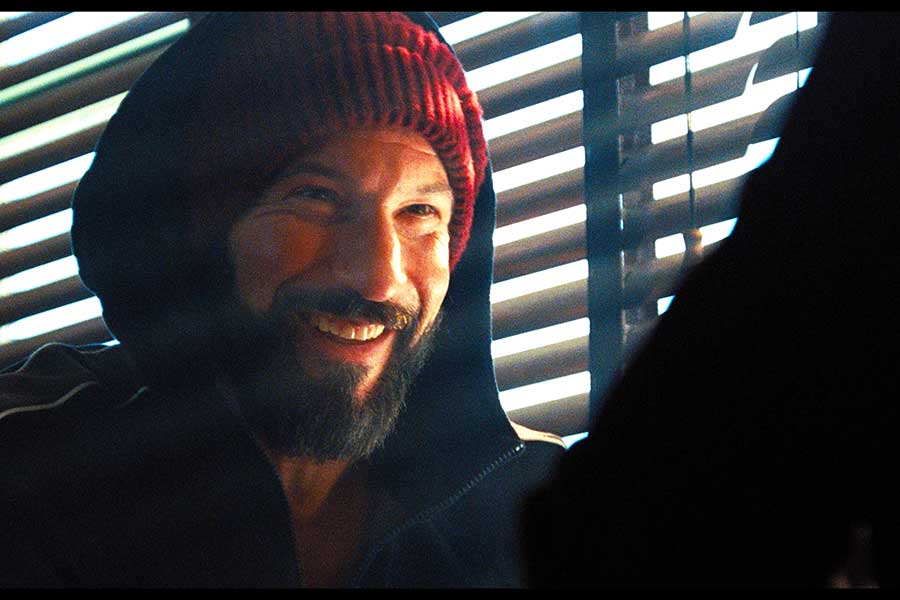
The Bear's Ebon Moss-Bachrach and Jon Bernthal in a scene from "Gary."
Photo Credit:
FX
Online Originals
May 12, 2026
How The Bear Pulled Off That Surprise Episode
"Gary" writers and stars Jon Bernthal and Ebon Moss-Bachrach reveal their unique writing process and which actor provided the real-life inspiration for one of the episode's most memorable (and graphic) scenes.
On May 5, FX on Hulu dropped a surprise standalone prequel episode of The Bear. Titled "Gary," it unfolds shortly after "Fishes" — the second season's pivotal flashback episode. The story follows family members Richie (Ebon Moss-Bachrach) and Mikey (Jon Bernthal) as they transport a mystery package across the state line to Gary, Indiana. Their journey is padded with some interesting pit stops, like an unscheduled pickup game of basketball with some local Gary teens and a fateful (and almost existential) layover at a local dive bar.
At the bar, Mikey and Richie reach a traumatic turning point in their relationship — but not before Mikey confides in a local named Sherri (Marin Ireland), who may or may not be a real person. Also, in one of the episode's most memorable scenes, Richie leads the enthusiastic barflies in a comically revealing game of "fact or fiction," where everyone shares stories that may be too good (or, in Richie's case, too embarrassing) to be true. Richie tells a graphic tale about how an encounter with a math tutor when he was younger led to some uncomfortable (and very public) bathroom issues.
In addition to starring in "Gary," Bernthal and Moss-Bachrach wrote the episode, at the urging of the show’s creator Christopher Storer. Here, the writer-performers reveal how the episode came together and which part of the episode's memorable trip to that local bar was based on a true story.
Television Academy: How did the idea for "Gary" come about, and how did you convince Christopher Storer to let you do it?
Jon Bernthal: It was a bit the other way around, which is so remarkable and magical. When we pitched [Christopher] ideas [to emphasize the depth of Mikey and Richie’s friendship], he immediately came back to us and said, "What if you guys write an entire episode, and dig in and go get it?” We were blown away; it is a testament to the kind of artist that he is.
In my very limited experience of just visiting that set for a magical week one time a season — usually coming from something much more constricting — [The Bear] is such a collaborative show. It's personal and sacred to him. He's so enormously hardworking, but he also is accepting of all ideas. It's a beautiful thing that I think only the greats have. It's beautiful that he gave us the opportunity, and we ran with it.
What was your writing process like?
Ebon Moss-Bachrach: We had a lot of conversations. Structurally, we wanted it to be a bit like a western — with two men taking something to an unknown town and spending a lot of time in this town, just waiting, waiting, waiting. We wanted them to meet a girl at the bar, have a rift in their friendship and then return back to their hometown forever changed.
Thematically, I was always thinking about the John Cassavetes movie Husbands (1970), which starts at a funeral; [the men in the movie] are burying their great friend, and they go on to swim and play basketball. They also take an impromptu trip to London. They're just running and running, trying to escape the grief and avoid having to acknowledge their loss. It seemed really appropriate for this story and for the story of Richie. When we meet him in the first season, he is [feeling] pretty lost — and he's completely broken. What is he grieving, and what does he regret? I wanted to shine a light on all of that.
Bernthal: Ebon and I have known each other a very long time, and we really trust each other as artists. We have a deep friendship; we're doing a play right now on Broadway, Dog Day Afternoon. We were at a reading together recently, and when we walked downtown . . . we just free-flowed this idea. On that day, we really came up with the structure [for "Gary']. From there, throughout the [writing] process, it was a very positive, affirming, kind of fluid situation. A lot of it does sort of feel like improvisation, but there's a real purpose with everything. What's strange is — the thing that we came up with on that first day, a lot of that really did follow [into the final episode]. Obviously, [the story] changed and evolved, but the kernel of what we were trying to get at is what we came up with that first day.
Photo Credit: FX
Moss-Bachrach: The actual process of writing was just correspondence back and forth. Jon is more organized, and he has [the screenwriting software] Final Draft. I’ll write scenes on the back of, like, a grocery bag, and then I'll take a picture of it with my phone and send it to Jon. From there, he'll format that properly. We started with some general story ideas and then, over the next few months, things got more and more specific. We wrote these speeches, scenes and all the dialogue — very much what you see in the episode is what was on the page.
The "fact or fiction" scenes in the bar play out so realistically, like it’s off the cuff. How much of that was improvised versus scripted?
Bernthal: [Richie’s] "fact or fiction" story about [defecating in his pants], I mean, embarrassingly — so many people have called me and been like, "Oh my God, that's your story!" That really did happen to me. It's like a three-page, almost stream-of-conscious monologue, and [Ebon] did it in one take. It was great.
Moss-Bachrach: That's the kind of friend I am. Jon fell victim to diarrhea, and it's my pants that got dirty. [Laughs].
The bar scene has the intensity of a play, where the words and silences matter even more than their actions. How did writing that compare to writing the scenes in the car or at the basketball court with the teens?
Bernthal: In the lore of The Bear, "Gary" takes place after "Fishes," so Mikey is in a very dark place. I think some of the people who love him know how dark a place he's in, and I think he knows where he's headed. Richie is in this beautiful, optimistic place. But, at the same time, he's worried about his friend. He wants to cheer him up — you can see that through the CD that Richie made, and his efforts in trying to cheer him up.
We knew that by the time they get to this bar, we really wanted to see the bliss. We wanted them to be [like] two 12-year-old boys, really laughing and celebrating together. We wanted to see them make each other smile, finish each other's sentences — to see how beautiful the [relationship] is that Richie lost. And we wanted to do that while always reminding ourselves that this is all through the lens of Richie's memory. I know from my own life that, if you lose a dear friend in this way, you're always thinking about what you could have or should have done or what you did do. You think of the things that were said that you can't take back, those things that are seared into our hearts. What I love about this show is that it digs into these wounds, and it doesn't shy away from exploring them.
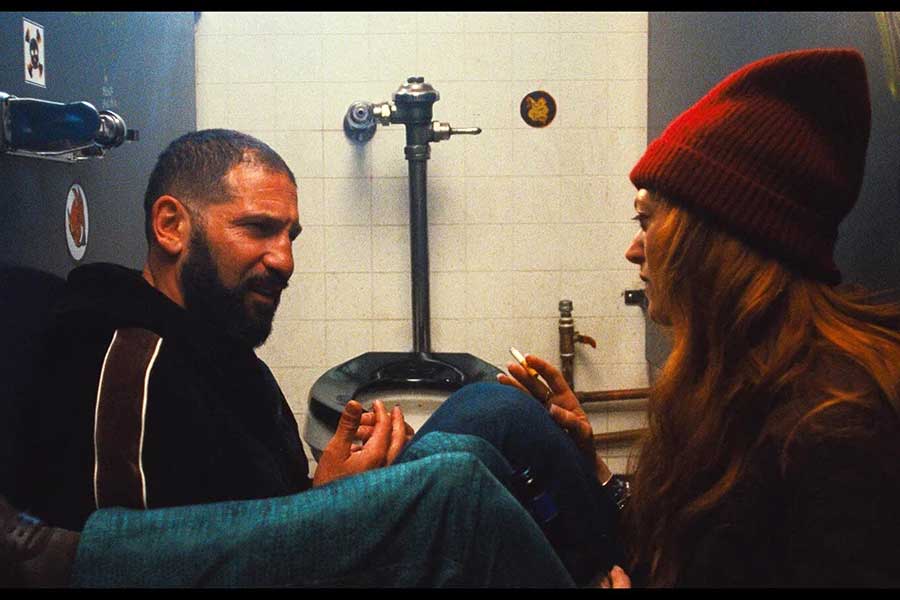
Mikey (Bernthal) gets vulnerable with Sherri (Marin Ireland) in a pivotal scene from "Gary"
Photo Credit: FX
What were your favorite things about the finished episode?
Moss-Bachrach: I love all their time in the car, the way they are when they're outside demonstrating karate kicks to each other. I love them looking at a controlled fire happening on the side of the road — details [like that] can reveal so much more about a character than the big events. And memory is so interesting that way — the first image [in "Gary"] is this strange poetic fire that's happening, and that [moment] feels so elusive and sensory. It's those little details that I like the most.
Bernthal: I would agree, but I'm also really moved by the stuff in the bar. Recently, somebody talked about how Sherri strangely doesn't really interact with anyone else, and maybe she was a figment of Mikey's imagination — or Richie's imagination. It was something we were exploring in the piece, through memory. When you think about these huge, monumental days in your life when you lost somebody, it is always through the lens of memory. So, with that in mind, we wanted there to be this kind of fantastical element to it. When [Mikey and Sherri] are sitting on the bathroom floor, did they actually have that conversation? Or is it [a conversation] that Richie imagined that they maybe had?
Moss-Bachrach: If it is a memory — and Richie's not in that bathroom, and he's creating that conversation — does Sherri then become a sort of proxy for him? Does this conversation become the conversation that [Richie] wishes he had with his friend?
Bernthal: What I think I'm happiest with [the episode] is that now, when I watch it as a viewer, it makes me think and keeps me guessing.