Smoking cigarettes is more than a nasty habit that kills 8 million people per year. It’s also stunningly cinematic: the rustling of cellophane and ping of the Zippo; the ember that glows with the first deep drag; the delicate contrails that diffuse the light, adding texture, depth and dimension to the frame. It’s more than just visual intrigue, though. Cigarette smoke also establishes character, defines setting and conjures a mood. Think of Chef Berzatto (Jeremy Allen White) taking a smoke break in FX’s The Bear, Seema Patel (Sarita Choudhury) lighting up in Max’s And Just Like That… or Ben Affleck emoting through his own smoke in the Netflix crime thriller The Rip.
But like so many things portrayed on screen, those images are an illusion. The actors aren’t smoking real tobacco. They’re puffing away on prop cigarettes. The brand that invariably finds its way onto TV soundstages and sets — thanks to the prop houses that stock it and some A-listers who specify it in their contract riders — is Honeyrose Herbal Smokes.
“Tobacco Free, Nicotine Free, Additive Free” reads the bold print on every Honeyrose hardpack. Which raises a question: If they take out all the bad stuff, what exactly is in these things? According to the United Kingdom–based company’s website, it’s a “proprietary mixture of three different herbs: marshmallow plant, red clover plant flowers and rose petals, with the addition of fruit juices and honey.”
Given guild safety regulations and the fact that tobacco smoke contains at least 70 carcinogens, it’s no surprise that Honeyrose has been embraced by producers, prop masters and actors as the default substitute ciggie. Vardan Alumyan, whose Intertobac is the exclusive U.S. distributor of Honeyrose, insists there’s a good reason for that. "Smoking any substance is not healthy, because combustion at high temperatures produces tar and carbon monoxide," he explains. "But we reduce the health risk, because Honeyrose contains none of the chemicals or tobacco found in regular cigarettes." He adds, "Our filters are also very dense — far more than a regular filter — so our smokers are exposed to fewer toxins."
Hayden Bilson, vice president of business development for Independent Studio Services, the industry’s largest prop house, says Honeyrose is essential, “because actors can smoke hundreds of cigarettes over the course of a shoot.” Hundreds? “Yes, the average viewer doesn’t realize how many takes go into a shot,” Bilson says. “If it’s a bar scene with four or five pages of dialogue, and the actors are smoking, the A-camera is looking one way, the B-camera is looking the other way and eventually there are 15 or 20 takes for a single scene. If you’re a nonsmoker working with tobacco cigarettes, you’re going to have a nicotine addiction before the show wraps.”
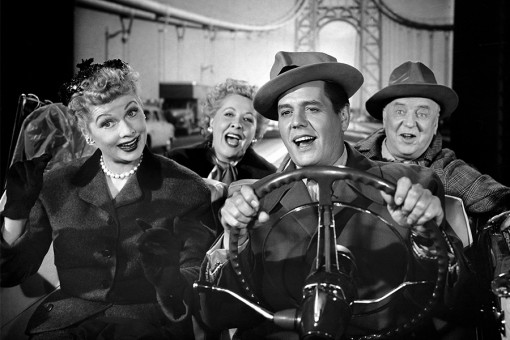
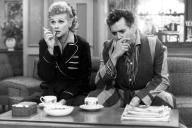
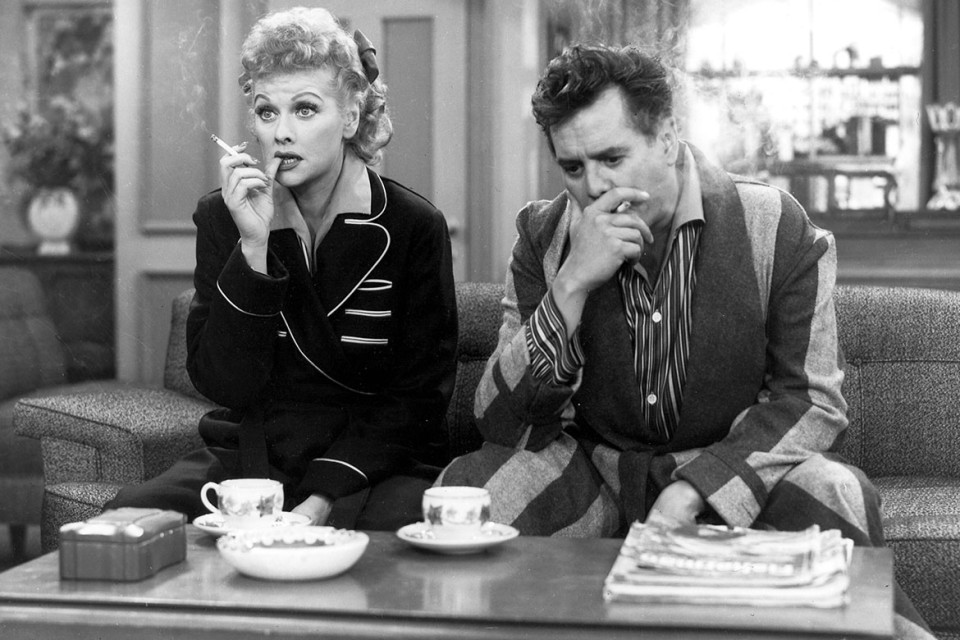
During television’s formative years, there were no prop cigarettes. In the 1950s, actors smoked the real deal on camera. And the brands they smoked — Chesterfield, Lucky Strike, Camel and the like — were the exclusive sponsors of many hit shows. Tobacco giant Philip Morris, for instance, sponsored I Love Lucy from 1951 to ’55. In return, the writers incorporated as many smoking scenes as possible. Product placement was also prominent. During the initial Philip Morris sponsorship, each episode ended with an “integrated commercial” featuring stars Lucille Ball and Desi Arnaz smoking and touting the quality of those cigarettes.
Television continued to be a cigarette-friendly medium until the early 1960s, when the Surgeon General confirmed the link between smoking and lung cancer. Eight years later, a congressional ban on all tobacco broadcast ads further stigmatized the habit. This resulted not only in a precipitous decline in smoking scenes on TV, but also a radical shift in how viewers perceived characters who smoke. Cigarettes were now evil, not glamorous; they signified villains, not heroes. An Annenberg Public Policy Center study found that between 1961 and 2010, instances of smoking in primetime TV dramas plummeted from nearly five instances per hour to fewer than one.
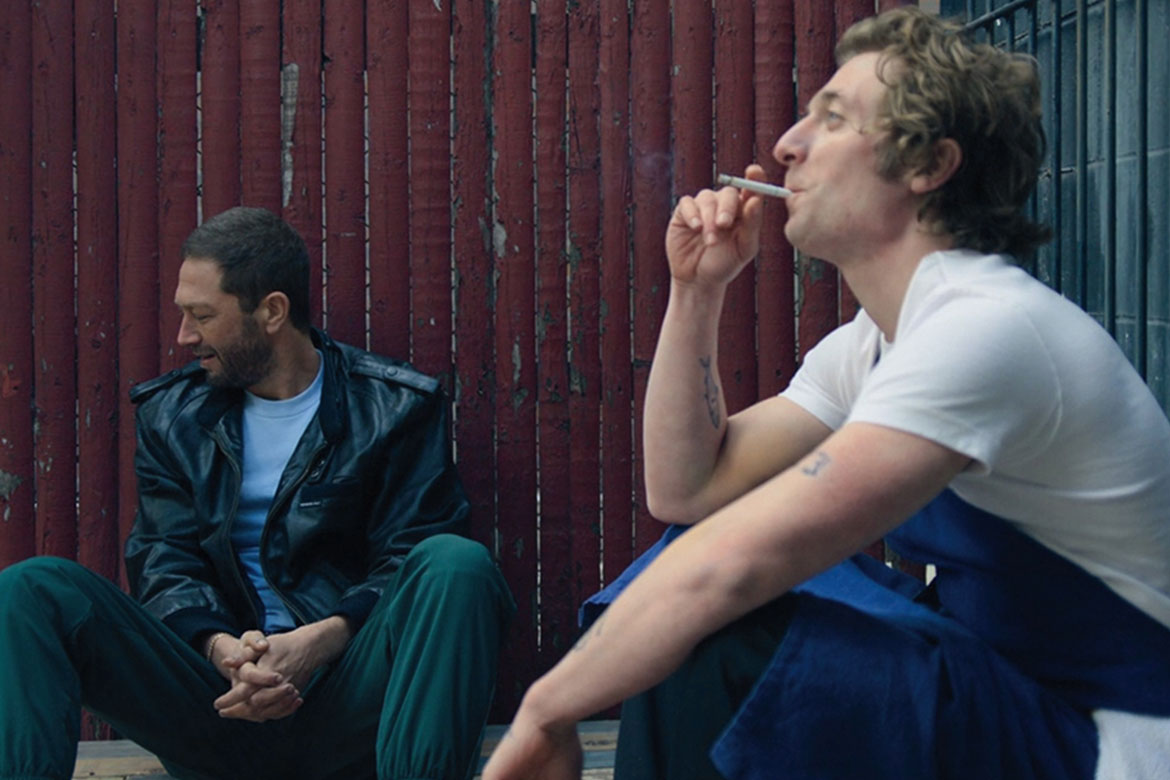 Chef Carmen "Carmy" Berzatto (Jeremy Allen White) takes a smoke break in The Bear / FX
Today, however, a cigarette renaissance is apparently upon us. More celebrities are smoking now, both on screen and IRL, than have been in decades. Blame it on a perfect storm of existential threats: political unrest, racial hostility, mass shootings, economic uncertainty, climate change, AI and all the rest. The prevailing sentiment seems to be: “Smoke ’em if you got ’em … before it’s too late.”
Last November, a billboard of Lady Gaga holding a cigarette appeared on Melrose Avenue to promote her single with Bruno Mars, “Die with a Smile.” Not to be outdone, fellow pop star Addison Rae and three dancers smoke cigarettes in her music video for “Aquamarine.” At New York Fashion Week in February, designer Christian Cowan sent models down the runway clutching half-smoked cigarettes and glasses of wine, rekindling a ’90s Kate Moss vibe. Even Honeyrose includes an unpaid endorsement on its website: a photo of Beyoncé smoking their herbal cigarette, a hardpack stuffed into her cleavage, to promote her Cowboy Carter tour book.
Perhaps predictably, social media has spawned “cigfluencers” like Jared Oviatt, whose poison of choice is Camel Blue. Asked by Vulture to describe his @Cigfluencers Instagram account, Oviatt replied, “Pics of hot people smoking.” Even The New Yorker gave the account a plug, observing that while smoking is certainly hazardous to one’s health, “from an aesthetic perspective, the act itself is perversely alluring.” Oviatt’s celebrity gallery ranges from the aforementioned Jeremy Allen White to Hannah Einbinder, Carrie Coon, Adam Scott and the dearly departed David Lynch (who died from complications of emphysema).
The glamorization of smoking — whether with real or fake cigs — has its critics. Alumyan, however, isn’t one of them. “I don’t think we glamorize smoking,” he says, trying not to sound biased. “This is simply art imitating life. Smoking on screen is about writers and actors building a character and reflecting what’s going on in the real world.”
Clover, rose petals, marshmallow … sounds like a tasty smoke. But not really, says Bilson, himself an ex-smoker who has sampled Honeyrose. “Herbal cigarettes don’t taste like regular cigarettes,” he says. Pressed on the subject, he elaborates: “They don’t taste good. They kinda taste like a campfire. It’s a bunch of herbs that have a smoky taste.”
Jon Hamm, who played a chain-smoking Don Draper on Mad Men, didn’t care for herbal cigarettes either. He once called the sheer volume of smoking required for the role “a debilitating endeavor” and described the flavor of herbal smokes as being “like a mix of pot and soap.” Christina Ricci, who’s smoked in multiple projects, has acknowledged the “coolness” of smoking on camera but said prop cigarettes are “gross” and “give you the worst headache.”
Alumyan, though, prefers to emphasize the positive: “At least Honeyrose aren’t habit-forming.”
This article originally appeared in emmy Magazine, issue #13, 2025, under the title "Smoke and Mirrors."