

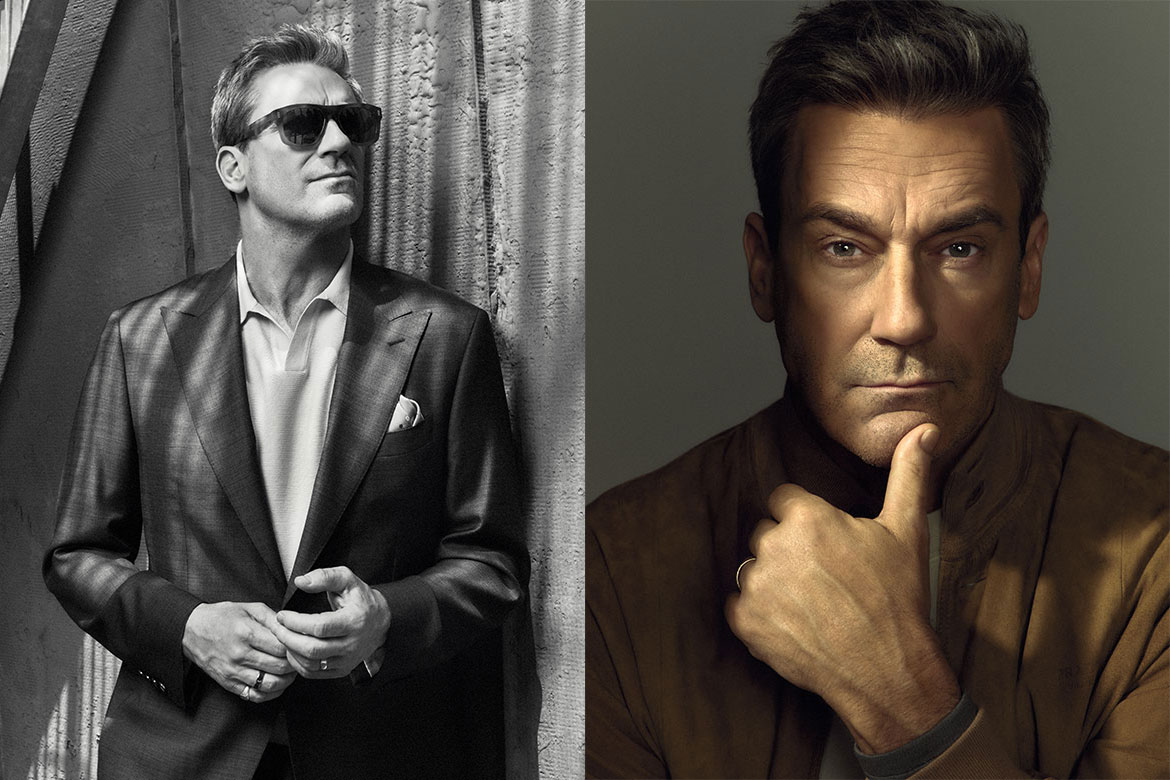
Jon Hamm knows a good story when he hears one.
In 2022, the Emmy-winning actor starred as radio reporter Fred Heckman in American Hostage, a scripted podcast about an extraordinary yet little-known true story.
The real events began on the morning of February 8, 1977, when a man named Tony Kiritsis walked into the Indianapolis, Indiana, office of his mortgage broker, Dick Hall.
Irate that a 17-acre commercial property he’d purchased was about to be foreclosed on, Kiritsis wired a sawed-off 12-gauge shotgun to Hall’s neck and abducted him.
Kiritsis then called the police to demand that Heckman — the news director of WIBC-AM radio — allow him to air his grievances live on the station. The host, known as “the Walter Cronkite of Indianapolis,” agreed.
The hostage standoff lasted 63 hours before Kiritsis eventually surrendered and released Hall.
The audio series won Best Scripted Podcast at the 2023 Signal Awards, and Hollywood took notice. An eight-episode TV adaptation, produced by Sony Pictures Television, premieres September 20 on MGM+. Hamm, who’s also an executive producer, reprises his role as Heckman, and Giovanni Ribisi portrays Kiritsis. (The story also inspired Gus Van Sant’s 2025 film Dead Man’s Wire.)
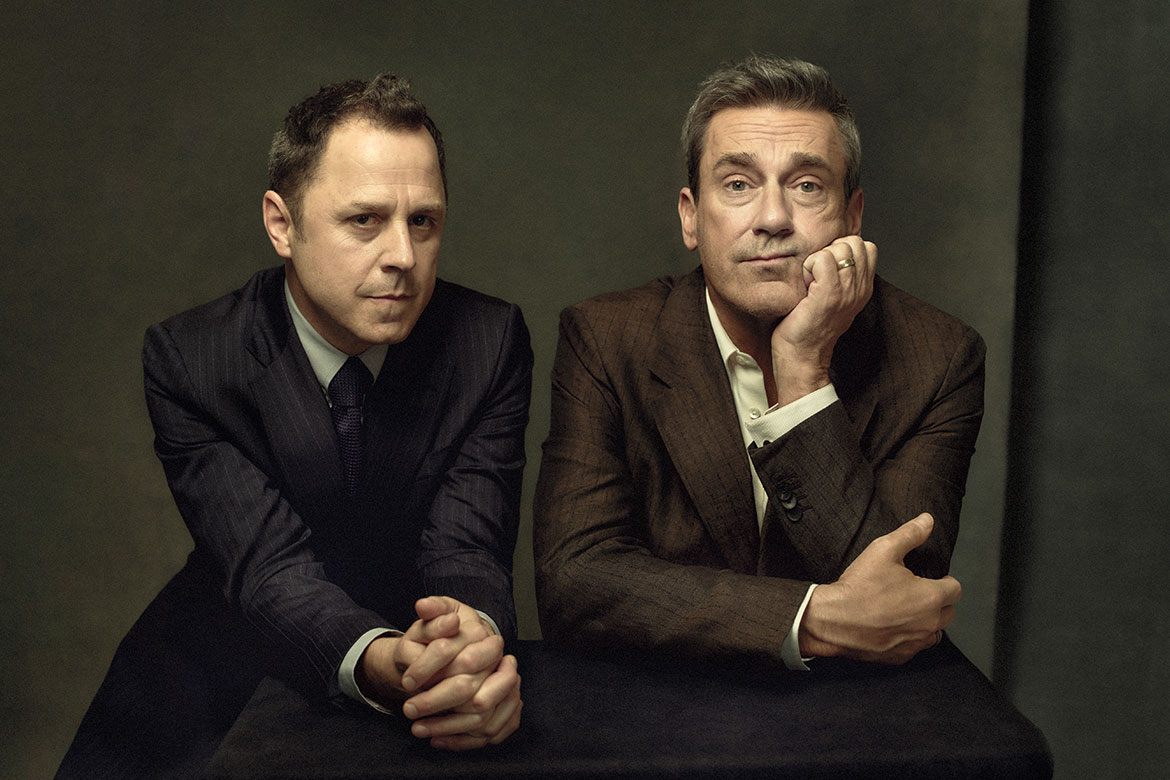
“The era made it extra interesting,” Hamm says. “As a child of the ’70s from the Midwest, the fact that I wasn’t even aware of this story was a real eye-opener. I thought there were some eerie parallels with the disaffected middle class we’re seeing in current American politics and culture.”
To adapt the podcast for television, Hamm — a 19-time Emmy nominee and a winner for AMC’s Mad Men — brought on Shawn Ryan. “Shawn, like me, was from the Midwest and deeply identified with the ’70s and ’80s; he had a transcendent vision for the show,” says Hamm, who once guest-starred for Ryan on an episode of The Unit.
Ryan, in turn, brought on Eileen Myers, with whom he shares the roles of cocreator, coshowrunner, executive producer and writer. He calls her “one of the great underrated writers in town.” (The duo previously worked together on The Night Agent and Mad Dogs.)
They pitched the series around town, but Ryan says Michael Wright, the global head of MGM+, “really got this show in a way that a lot of other people we met with didn’t — and showed an incredible amount of enthusiasm for it.”
The ensemble cast includes Kristoffer Polaha (Condor) as Dick Hall, William Jackson Harper (The Morning Show) as Heckman protégé Ben Hairston and Mireille Enos (For All Mankind) as Fred’s wife, Barbara Heckman.
Shot in Winnipeg, Canada, the show’s tale of an amateur criminal seizing a hostage conjures up the 1975 film Dog Day Afternoon, but Ryan says he was more influenced by another Oscar-winning film from that decade, Network.
“I was interested in the intersection of journalism and entertainment and audience bloodthirst and all the things that Paddy Chayefsky so presciently spoke to in that movie,” he says. “I loved the idea of putting Fred Heckman in this position where he’s got one foot in the journalism camp and one foot in the hostage-negotiator camp, and those two things have a very difficult time coexisting peacefully.”
Ryan saw contemporary relevance as well. “Right before we got picked up, the healthcare shooting with Luigi Mangione happened,” he says. “And we saw such a parallel between how the populace reacted to that shooting and what happened with Tony Kiritsis and this sort of folk hero that he became.”
Like Ryan, Myers had a personal connection to the story. “I had a real affinity for Fred Heckman, because my father worked for ABC News in the Golden Age,” she says. “And because this harkens back so much to my childhood, I wanted to capture a time when news was a bit more pure and seen as a public trust.”
Executive producer Sharon Hoffman responded to the absurdist comic elements of this true story “that hadn’t been reported,” she says. “There was so much corruption and in-fighting between the lawyers, the DA, the judges and the sheriff that it seemed ripe for a good takedown.”
The series climaxes (as in real life) with a chaotic, televised press conference where a frazzled Kiritsis addresses the media and the police while still holding Hall at gunpoint. “For the first time, America was being confronted with the idea of possibly watching someone’s brains get splattered all over national TV,” Ribisi observes.
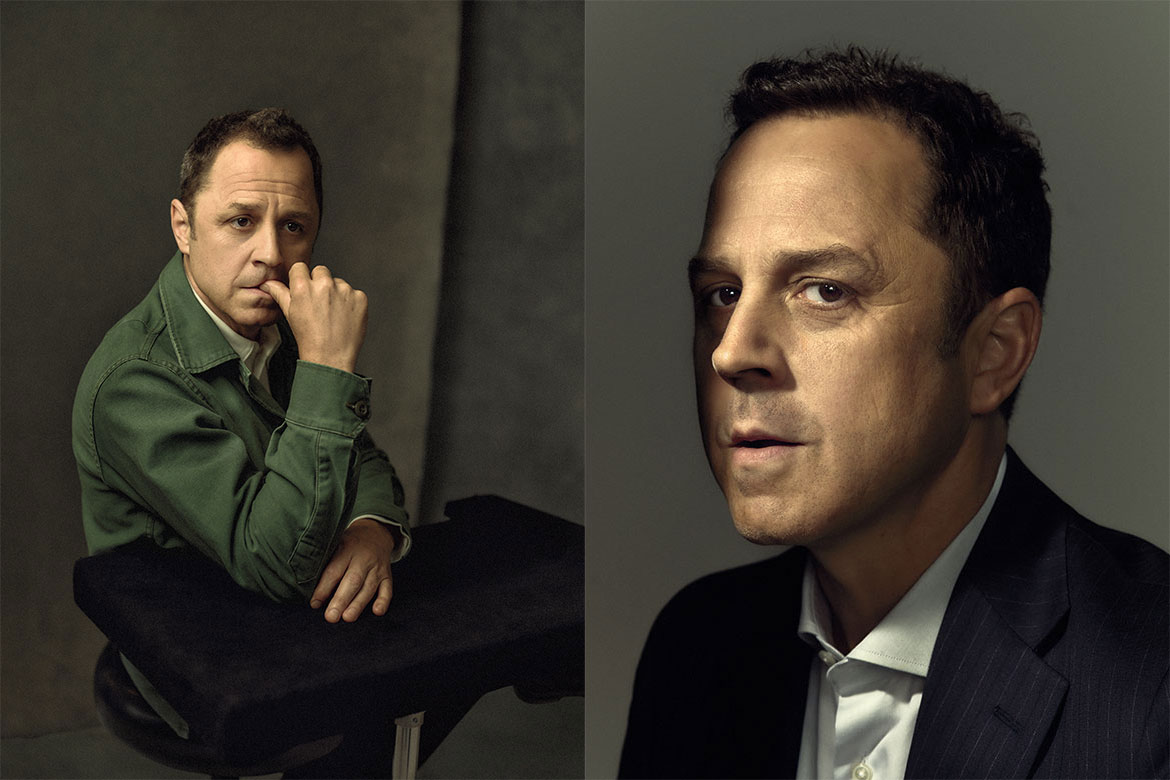
Myers recalls that Ribisi — an Emmy nominee for his guest turn on My Name Is Earl whose TV credits also include Sneaky Pete, The Offer and Waco: The Aftermath — was gracious enough to audition on Zoom for the role of Kiritsis, doing a reading with Hamm. “It was the first time we saw them together, and we were like, ‘That’s it,’” she recalls. “It was almost like a sporting event, with the two guys raising each other’s game.”
Kiritsis, who’d been a used-car salesman, had the blue-collar bravado of a David Mamet character, spewing profanity-laced rants about a system he was convinced was rigged against him.
“Tony was a guy with a very strong moral stance,” Ribisi says. “He took pride in being honest and took umbrage with anybody who was conniving, like he felt the Halls were being.” (Kiritsis’s intended target was Hall’s father, the company president, who happened to be away in Florida.) “But along with that, he had a temper where all logic just flew out the window, and this is what was sad about the whole situation.”
If Kiritsis appears constantly on the verge of a breakdown, Heckman is his counterweight: a man of gravitas with a stentorian voice, anchored by his wife and kids. “I don’t think Tony ever had a girlfriend,” Ribisi notes.
But as the crisis drags on and the phone calls get more personal, the newsman and the kidnapper find themselves relating in unlikely ways.
“We felt we were kind of telling a love story between these two men,” Myers says.
To read the rest of the story, pick up a copy of emmy magazine here.
This article originally appeared in its entirety in emmy magazine, issue #9, 2026, under the title "Captive Audience."