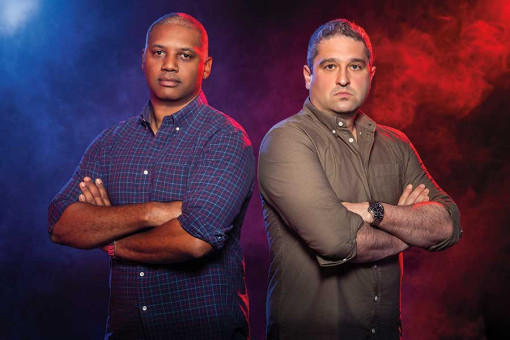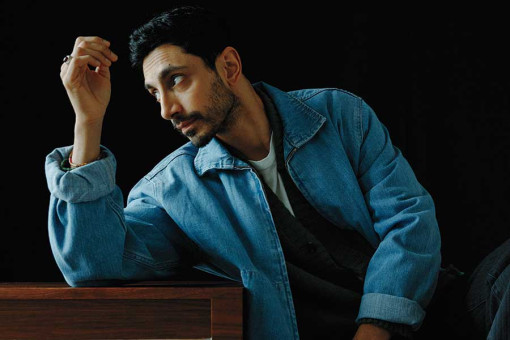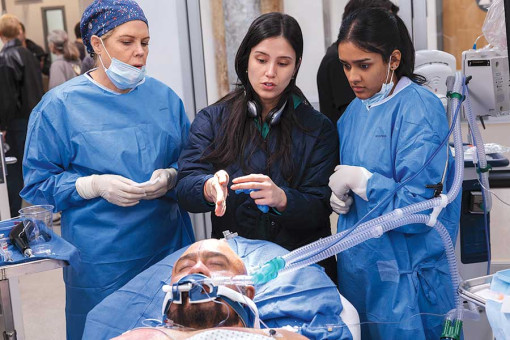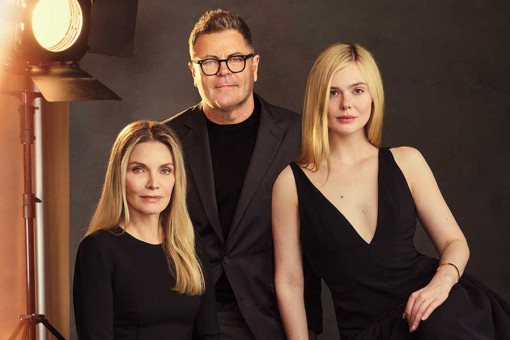

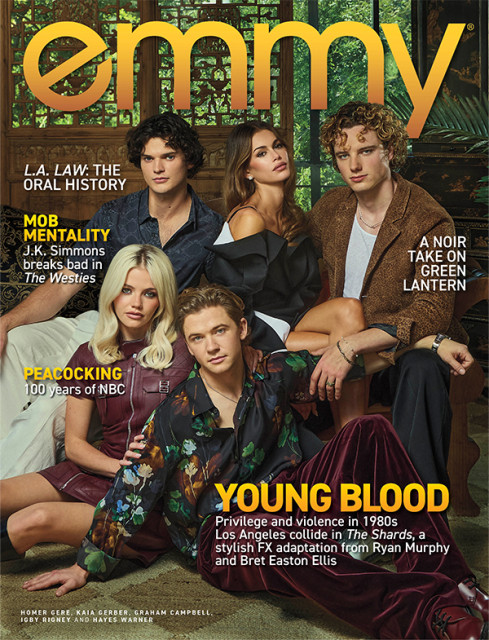
The first time the cast of FX's The Shards fully understood the show they were making, they were all huddled around executive producer-writer-director Ryan Murphy’s laptop. It had a faulty speaker on one side, but that didn’t matter. They were locked in — not because they didn’t know the story, but because they hadn’t seen the other half of it.
Thanks to the structure of The Shards, which is based on Bret Easton Ellis’s faux-autobiographical novel about privileged Los Angeles teenagers in 1981, the cast was largely sheltered from the book’s grisly half, which follows sadistic murders committed by a serial killer known as the Trawler. This ominous threat looms over the teens and over L.A. as a whole, but the stench of death barely pierces their guarded world in the drama’s nine episodes — even though the paranoia it breeds could be their undoing.
Igby Rigney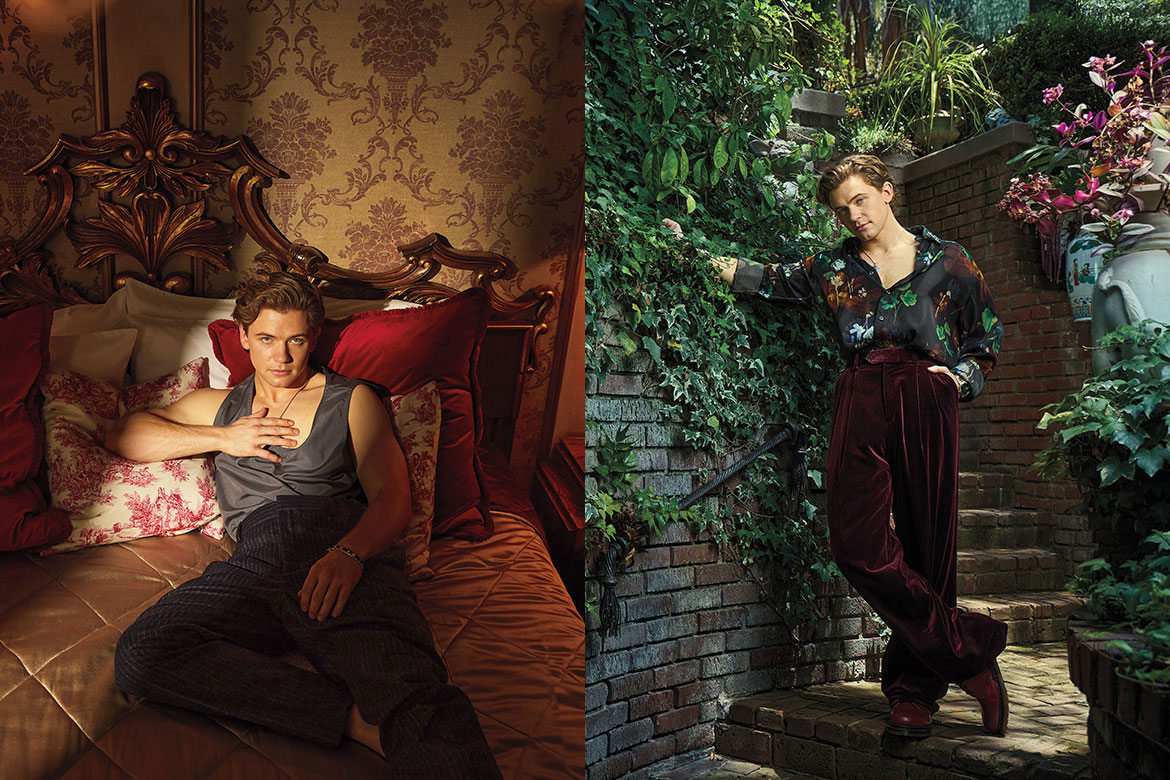
“It’s almost like a horror movie before the ghost comes,” Homer Gere (Euphoria) says. “It kind of follows you around like a shadow.” When Kaia Gerber (Palm Royale) first saw the story’s horror element on set, she was in her character Susan’s school uniform, fresh off a banal scene at the lockers with costar Igby Rigney (The Midnight Club). Entering the hair and makeup trailer, she was confronted by what she describes as “torture makeup” being applied to a costar for the horrific nighttime scene that closes out episode two. “It was the first time I saw the violent part right before my eyes, and it was like we were filming two different shows," she says. "It was actually great because for most of the show, these kids are blissfully in their pocket of privilege. It's very easy to feel like we're hearing about this dark stuff going on, but it's not going to affect us — until suddenly you're faced with it."
The series, from Murphy and frequent collaborators Nina Jacobson and Brad Simpson, is a jolt of nostalgia not unlike their last effort, FX’s Love Story: John F. Kennedy Jr. & Carolyn Bessette, which was set in 1990s New York City and shot on location. The Shards, similarly, arrives with a sense memory for a specific era of Los Angeles, one that could only be captured by filming in the belly of it. In the book’s opening chapters, Ellis, who cowrote the first two episodes with Murphy, uses his signature deadpan perspective to chart a map for readers through the 1980s L.A. he grew up in, from movie titles seen on theater marquees to long, mindless drives.
Kaia Gerber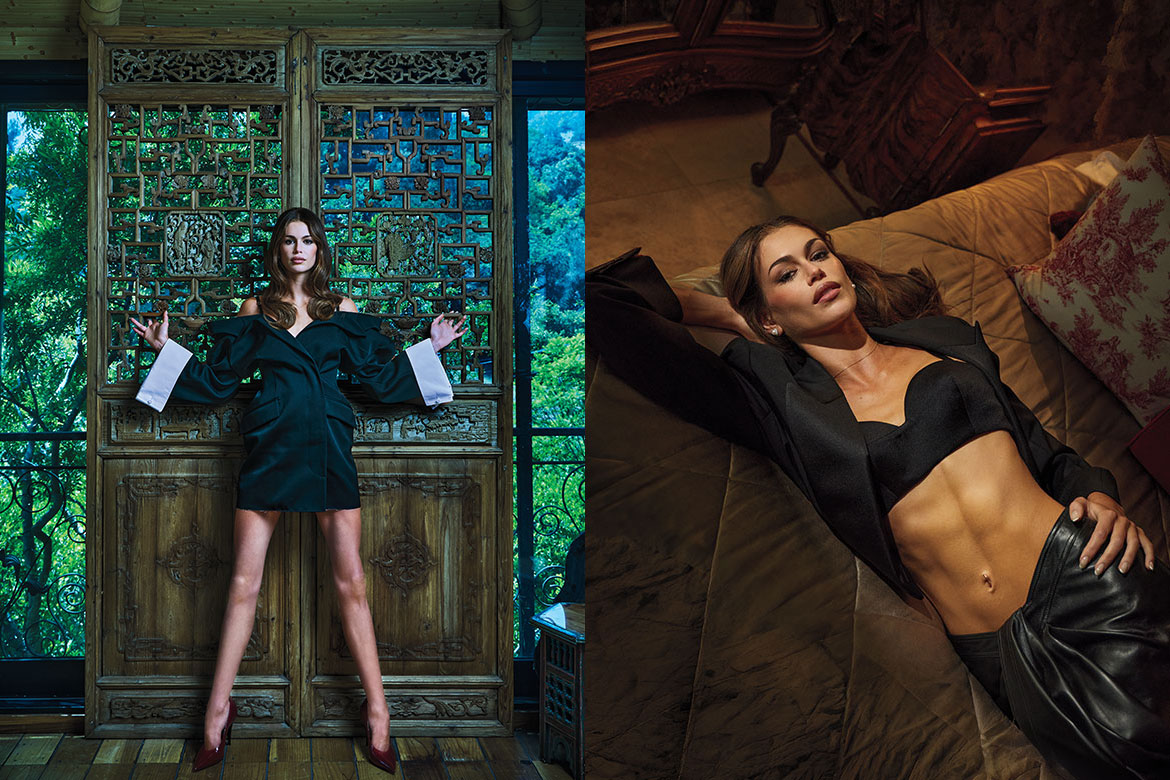
“It’s a memory piece,” Simpson says. “With this and Love Story, what we wanted was that if you were there at these times, then yes, this is what it felt like. But we also wanted false nostalgia. We wanted people to watch this and be like, ‘God, I miss 1981,’ even if they are 19 years old.”
What will be universal for anyone watching is the show’s focus on five teenagers staring down the rest of their lives at the end of high school. Bret (Rigney) is living a charmed, unsupervised life in Los Angeles, attending private school and observing his city’s privilege with both affection and disdain. He’s working on his first novel, which also happens to be Ellis’s real-life breakout hit, Less Than Zero, and he’s soaking up his last moments of youth with his girlfriend, Debbie (Hayes Warner in her debut), and his best friends, Susan (Gerber) and Thom (Graham Campbell, Late Fame), the school’s All-American power couple.
“The most interesting side of the character of Bret, to me, is the creative side, because so much of his writing is fueled by all this chaos that starts happening around him,” Rigney says.
Watch the exclusive Under the Cover video with the cast of The Shards at their emmy cover shoot.
That chaos comes in two forms: the increasingly traumatic news of the Trawler’s rising body count and stomach-turning, animal-centric mutilations; and the arrival of Robert (Gere), a mysterious new student who instantly cozies up to everyone in Bret’s orbit. In Bret’s constantly churning mind, the two events are inseparable, even if his friends don’t immediately connect the dots. Guarding his own secrets, including multiple clandestine relationships with male classmates, Bret is increasingly intoxicated by suspicion of — and attraction to — his new classmate. In a world before cell phones and the internet, his curiosity can’t live online, so it festers dangerously in the real world.
“Part of the interesting dynamic of this show is that relationship between Bret and Robert and trying to suss out this intimacy from a deep, shared understanding,” Rigney says. “You find yourself playing the game of ‘Is this potentially romantic, or is it potentially combative?’”
Homer Gere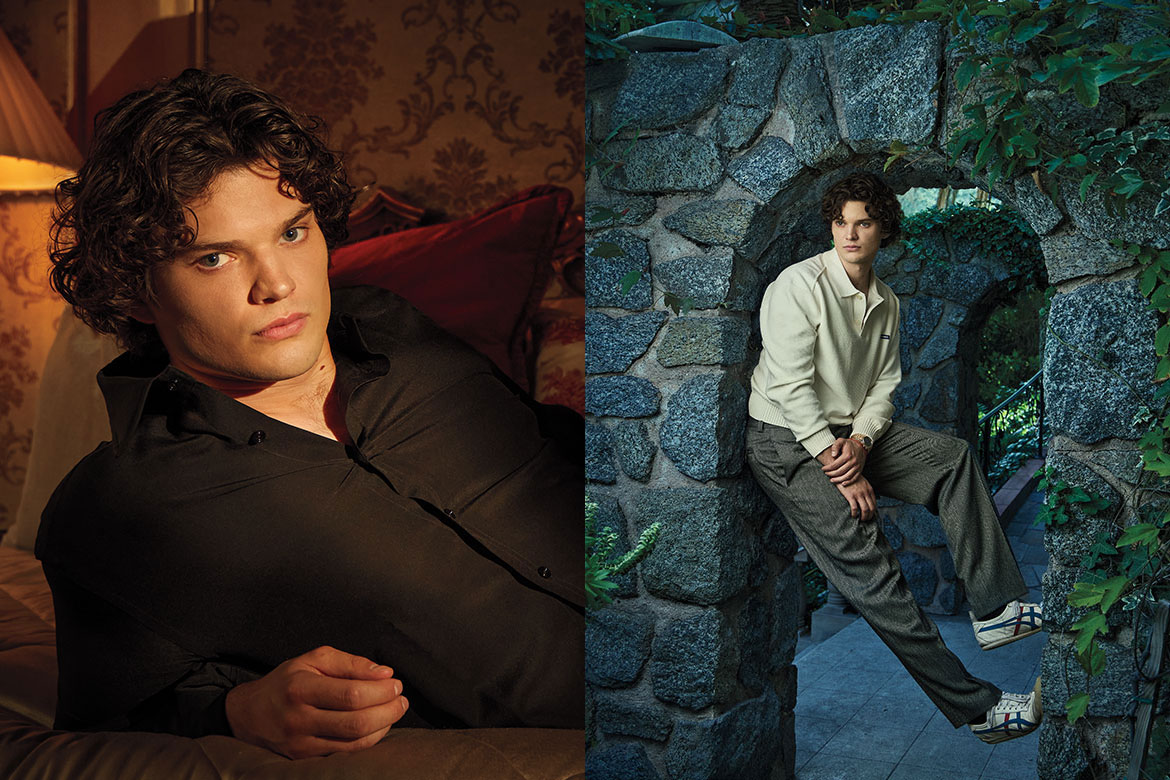
Perhaps indicative of the story’s competing perspectives, Gere sees that dynamic a little differently: “In Bret’s mind, they’re playing a chess game and trying to outsmart each other. But I think in Robert’s mind, a lot of where I came from is just, ‘Leave me alone, dude.’”
The tangled web of sex, horror, angst and ambition is what drew Simpson and Jacobson to the book. They freely admit they were very upset they missed the chance to option it initially. The book originated as a serialized audiobook/podcast, read by Ellis in his distinctive voice. Simpson would drive through Los Angeles and listen to him narrate the city that surrounded them both. Rigney did the same after landing the part, learning Ellis’s vocal cadence as it carried him from Mulholland Drive to Coldwater Canyon and beyond. Gere first listened to the book on a Midwest road trip, finding it hard to shake Ellis’s delivery long enough to get some sleep each night.
The rights first went to HBO, with Luca Guadagnino set to direct the series. But when that didn’t materialize, Murphy got his hands on it, brought on Simpson and Jacobson and started casting — all at a breakneck pace.
“It was the speed-dating of television production,” Jacobson says.
“We were coming right off Love Story,” Simpson adds. “We’d just finished shooting that when we opened a writers’ room late last summer and early fall, and we were shooting before the end of the year.”
Hayes Warner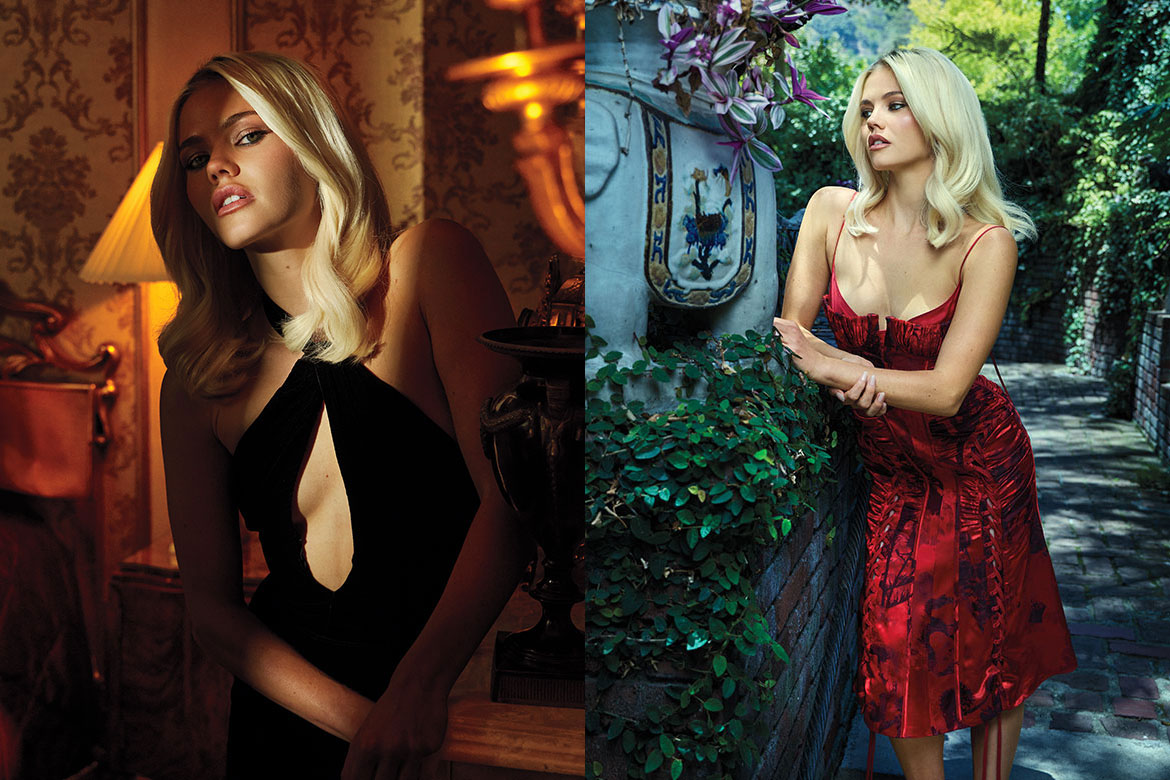
The Shards isn’t an easy sell. It is twisted and suffocatingly gory, yet culturally vibrant, in the same way that Ellis’s American Psycho has disturbed and enamored audiences for more than three decades. Yet, bringing every drop of blood and grisly murder to the screen was not the producers’ intention.
“There is the darkest possible version of this adaptation,” Jacobson says. “There’s the most violent version. That is not the one that we went for. At the same time, Ryan is not one to pull his punches, nor is Bret. But I would say that we shot quite a bit more than what ultimately ended up in the cuts.”
That doesn’t mean book readers will get a sanitized version of the story. After all, this is still a project from Ryan Murphy and Bret Easton Ellis.
“I don’t know if they would love these words, but they’re both considered the great provocateurs of our time,” Simpson says. “It was exciting to see the fusion of their voices in those first two screenplays, and it was sort of a handoff from Bret to Ryan.”
Graham Campbell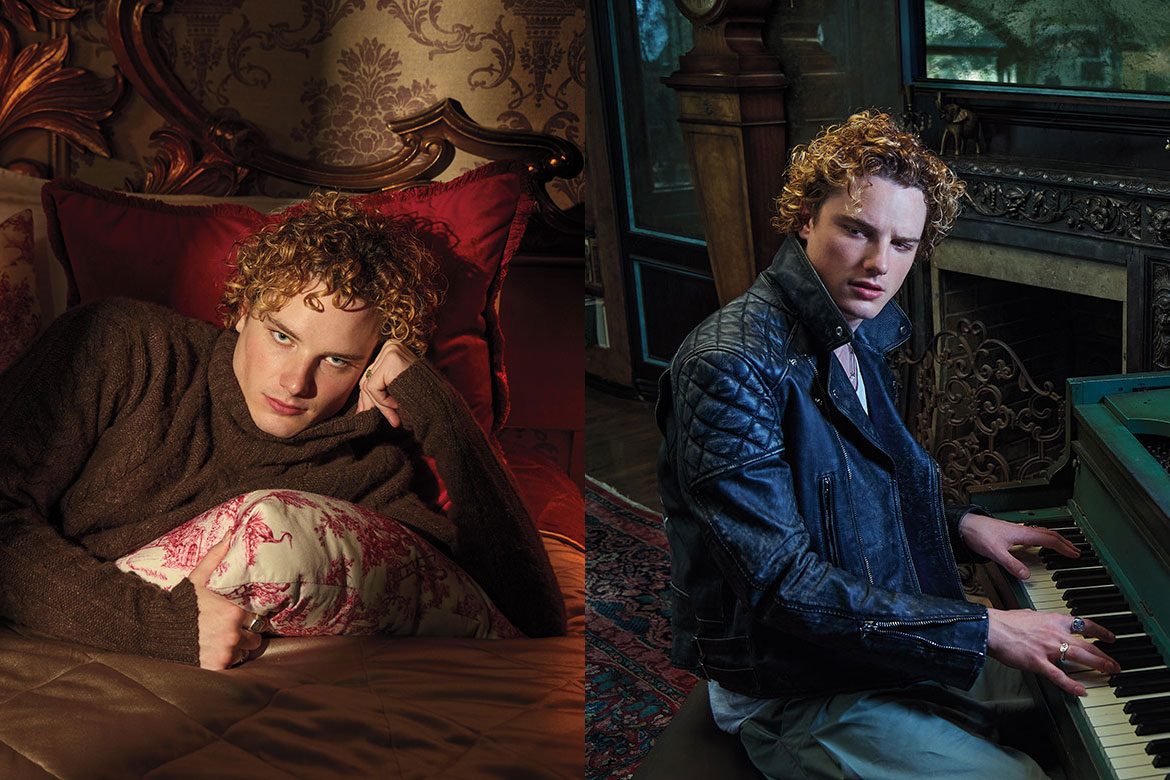
The biggest difference between the book and the series, though, is perspective. The book can’t escape Bret’s obsession with Robert, because it is told from his point of view. It consumes every bit of real estate on the page. But the series, which Simpson confirms won’t adapt the entire book in season one, expands the story to include everyone’s perspective, making Robert’s entrance into their world even more unforgettable.
It’s fitting, then, that the first scene the cast shot was Robert’s arrival at their prep school. A mystery hidden behind sunglasses he never removes, Robert strides up to the other characters at lunch and immediately changes everything — even if only Bret seems to notice. “Ryan had a very clear vision for what he wanted that entrance to be, which was kind of a glam shot, almost a runway, as he’s walking into these people’s lives,” Gere says.
To read the rest of the story, pick up a copy of emmy magazine here.
This article originally appeared in its entirety in emmy magazine, issue #10, 2026, under the title "Youth and Consequences."