

Elisabeth Moss doesn’t waste time.
She was looking for a beach read when the cover and blurb for Araminta Hall’s Imperfect Women caught her attention. Moss bought the psychological thriller — about a shocking death that shatters a trio of friends and brings to light long-held secrets — and less than three months later, she and her new producing partner, Lindsey McManus (The Veil), were pitching a series based on the book and the complicated friendship it portrays between professional do-gooder Eleanor, arts patron Nancy and doting mother Mary.
"Michelle Lee [Apple TV director of domestic programming] was very passionate about it. She really wanted this to be at Apple, and we’re forever grateful to her for that," Moss says, noting 20th Television soon joined Apple Studios for the coproduction. Annie Weisman (Physical) was brought on board as showrunner and executive producer.
Of her first meeting with Moss, Weisman says, "When she talked about her interest in the book, I assumed, having read it before I met with her, she would want to play the character of Eleanor, because that was the biggest part as the book was laid out. But she said, 'No, I think I’m Mary.' That was really intriguing. Her interest in it was really as a producer and not just as a performer."
Casting Eleanor was the next priority. Moss had long wanted to work with Kerry Washington, both as an actress and as a fellow executive producer.
"Lizzie [Moss], Annie and Lindsey had created this beautiful deck that outlined the themes of the show and the tone and the characters and the arcs, and I thought it was so powerful and interesting. I got excited about the possibility of playing this character and working with this team," Washington says.
Much to Moss’s delight, Washington was every bit as committed to actively executive-producing Imperfect Women as she was interested in playing Eleanor. Both have won Emmys as executive producers, Moss for The Handmaid’s Tale in 2017 and Washington in 2020 for Live in Front of a Studio Audience: "All in the Family" and "Good Times."
"Kerry really delivered on all of my expectations as a producer. She was asking all the right questions," Moss says. "From the very beginning, she was asking the harder questions about how to actually get things done and make the show."
Moss chose the novel for adaptation and elected to play Mary, a mother with secrets.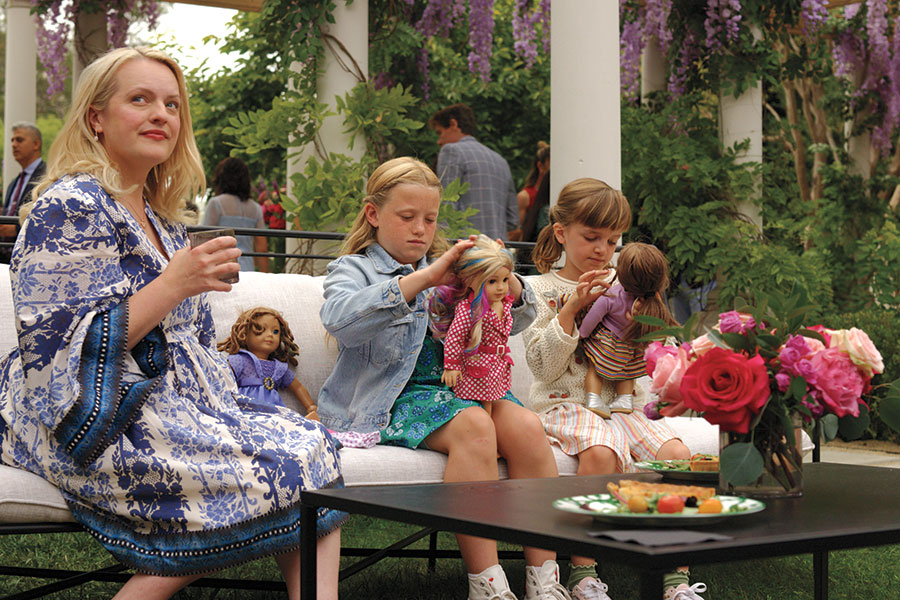
Among Washington’s suggestions was relocating the British novel to Los Angeles instead of the East Coast as originally planned. And before long, the team members were discussing their dream cast.
"One of the magical things about this show is that every single actor you see on screen was our first choice for the role," Washington says. "That really speaks to the power of the material, the team and the juicy nature of these characters."
The cast includes Joel Kinnaman (For All Mankind) as Nancy’s husband, Corey Stoll (Billions) as Mary’s husband, Leslie Odom Jr. (Hamilton) as Eleanor’s brother, Ana Ortiz (Goosebumps) as a police detective and Keith Carradine (Madam Secretary) and Sheryl Lee Ralph (Abbott Elementary) in parental roles.
Nancy was the most difficult role to cast, because she needed to be simultaneously stunning, secretive, fragile and resilient. Kate Mara (A Teacher) ticked all the boxes.
“She felt like the perfect fit for the trio. And it was a high bar, because each [member] of our trio of actors is capable of carrying a whole show. The fun with these characters is their flaws and the ways in which they step away from their core values and then have to return to them,” Weisman says.
“I was approached by the girls and Annie Weisman, but I hadn’t read the book at this point, so they were telling me about the character and about the show,” Mara recalls. “I immediately was excited about working with both of them.”
All three leads appreciated how the point of view switches from one of their characters to another with each episode. Moss also views that as a gift. “I loved doing the episodes that were focused on my character, but then I was able to kind of go, ‘Hey, have a great time. You’re killing it! You’re going to carry the torch for a while, and I will be there for you at the end, and I’ll pick it up,’” she says. “I trust when Kate’s on set or Kerry’s on set that they’re going to make sure the scene is the way it should be. I know these women are able to look at the monitor and know what feels right. I trust them.”
Shifting the perspective from one lead to another also added layers to the core mystery.
“The idea of these multiple points of view and how we all see the world so differently — what is truth and what is memory and what is subjective — is a fascinating way to tell a story,” says executive producer Lesli Linka Glatter, who directed three of the eight episodes.
Glatter believes moving between the characters’ viewpoints builds a sense of anxiety that heightens audience reaction, leaving viewers wondering where the truth lies. “We’re constantly peeling back an onion. And I love that every time you think you’ve gotten to the essence, it shifts again.”
Daina Reid (The Handmaid’s Tale), Nzingha Stewart (Little Fires Everywhere) and Jet Wilkinson (The Testaments) also directed episodes of the limited series.
“I really love and respect other directors’ visions,” Glatter says. “We all consulted with each person’s chapter. Like, if it was an Eleanor chapter, who’s the best person for that Eleanor chapter? And Nzingha Stewart was a great choice for that. Daina was someone Lizzie had worked with and was perfect for Mary’s story. I did Nancy’s story, and then Jet Wilkinson did the end, so it was all about collaboration.”
The directors were all people Moss, Washington or Weisman had worked with before or people they wanted to work with. The fact that all are women was a happy accident. That said, they point out that plenty of men worked on the show, too, notably cinematographer Darran Tiernan (Spider-Noir). “Darran created an incredible look for the show,” Moss says.
Washington collaborating with executive producer and director Lesli Linka Glatter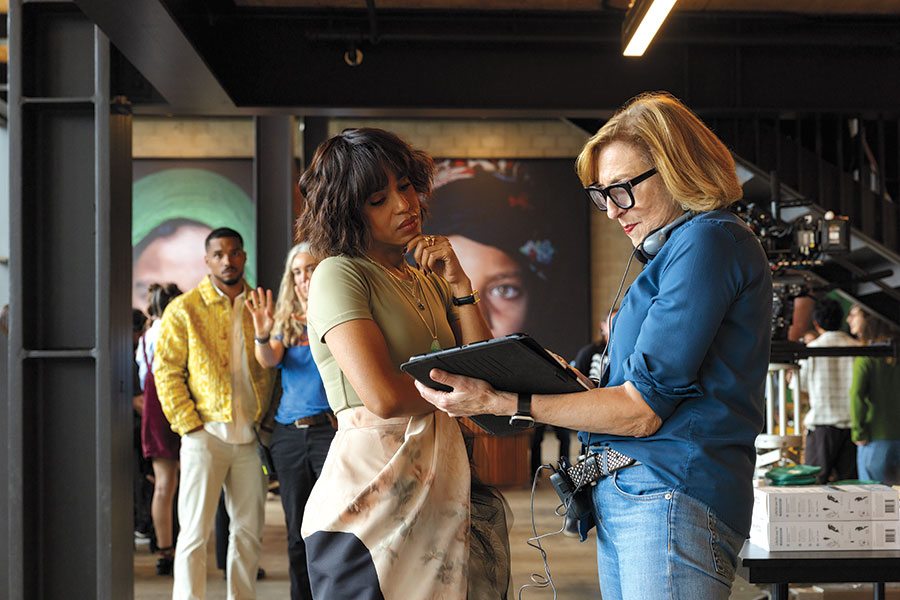
“We didn’t start out with a mission statement of hiring women. We started out with a mission statement of hiring people who shared our priorities and our perspectives,” Weisman explains. “On a crew level, for me as a producer, it’s really important to have the crew look like the creative team and the people on the screen. We want to make sure we’re creating opportunities for inclusion. I’ve been doing this for 25 years and have cultivated relationships with all kinds of people. So, it’s no longer something I have to do as a mission statement.”
Although Imperfect Women explores the complex relationships between Eleanor, Nancy and Mary, the actresses playing these leads only share a few scenes over the course of the show’s eight episodes. But they nailed the college-besties dynamic on their first try.
“From the first scene we shot with them together, there was such a chemistry between the three women that you just believe that each of them had separate and different relationships with one another,” Glatter recalls.
“It happened really naturally, because honestly, there was zero time to plan. We just got lucky with our chemistry,” Mara says. “Kerry and I have known each other forever, so we have history already that you just get for free. But we’d never worked together.”
The series also showcases other types of relationships. Something that surprised Washington, who grew up as an only child, was Eleanor’s relationship with her brother, as played by Odom.
Mara’s character is inspired by ballet in positive and negative ways.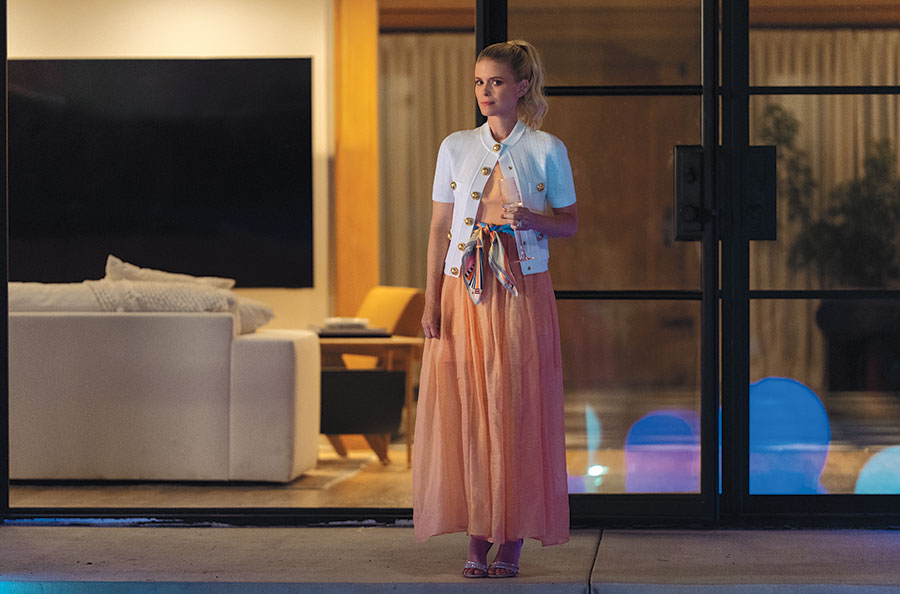
“When I’m on screen with a man who’s my age-ish, I’m usually that person’s love interest. So, to play a different kind of love with an actor who’s my age, and to play that intimacy of siblings — it’s just not something that I’ve had in my life. And I did not expect it to have the deep emotional impact on me that it had. It was a revelatory experience to have that kind of love and intimacy with somebody that’s not based on sexuality and is beyond friendship,” Washington says. “From the first rehearsal, the banter was there. That dynamic was there. It was so rich.”
Off-screen friendships developed organically, too.
“There was a text at one point that was like, ‘Let’s have lunch,’” Moss recalls. “And I was like, ‘I have a baby. I gotta shower.’ I didn’t know it at the time as much as I know it now, but the reason why these women are so incredible, why I love them so much, is that there was literally no judgment, no pressure. They were like, ‘Oh, yes, go shower. You totally got it!’ I should have known then how well it was going to work out.”
According to Washington, throughout filming the actresses sought to put each other at ease — asking what they needed, whether they wanted to run lines or simply conveying to others what they might need. “Let’s figure out what works for everybody. How do we help each other? How do we do what’s best for the show?”
Weisman was impressed as Washington slipped from actress to producer and back as she put a room full of young background actors at ease and guided them through the scene while shooting an office celebration. “She understands her role — not just as a performer, but as a producer — and what that means when she steps onto set,” Weisman says, adding that Moss took a similar approach when working with the girls who played her daughters.
One reason Washington’s suggestion to set Imperfect Women in Los Angeles was so well received is that it meant so many people making the show could go home after work.
“When we filmed the show, I was still living in L.A.,” Mara says, noting how rare it was for her to film something close to home. “With everything that L.A. has gone through in the last few years, it felt really special to be able to do that. And, selfishly, it was very important for my family. It was so nice to be able to just go home and see the kids.”
In addition to bringing production back to Los Angeles, the producers wanted to showcase the city in new ways. “We tried to focus on parts of L.A. that might be a little less familiar — downtown art spaces, Pasadena, historic homes and civic architecture, different communities that maybe aren’t as familiar to audiences,” Weisman says.
From the L.A. setting to Nancy’s beloved ballet to the kintsugi-inspired opening credits (kintsugi is the Japanese art of mending broken pottery with gold to make it stronger and more beautiful), intentional imagery and lighting underscores the main characters’ experiences, their public faces and even how they dance around the truth.
Showrunner Annie Weisman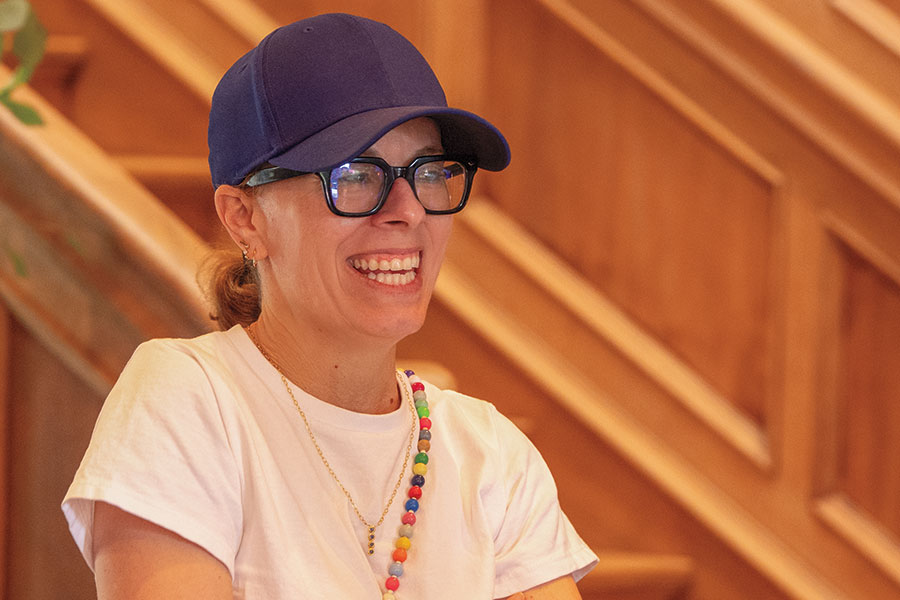
“A big metaphor is the light in the dark, and how beautiful and perfect ballet is,” says Moss, who has a background in dance. “But when you actually look at it, if you know anything about ballet, it is so fucking hard. They’re sweating, and their toes are bleeding. They’re usually injured. They’re straight-up athletes.”
Mara adds, “Ballet is directly related to my character: how perfect she looks, how perfect her home is, how perfect her family looks from the outside and how damaged and closed off they all are from each other and how dishonest everybody is.” The producers even crafted an entire ballet to echo the strength and fragility within Nancy’s story. “We had this opportunity to invent a fictional ballet that we got to write and realize at a high level,” Weisman says. “Lesli Linka Glatter has a background as a choreographer and dancer and was the perfect partner to realize that.”
Through happenstance and friendships within the dance world, Moss and Glatter independently landed on the same person to choreograph the ballet sequences: Melissa Barak, founder of Barak Ballet and artistic director of the Los Angeles Ballet.
“It’s one of those great moments as a writer, where suddenly we’re in a rehearsal space with a real ballet company, having gotten to write and produce a ballet within our TV show,” Weisman says. “Lizzie’s knowledge of the dance world was important in our producing, and we worked with Melissa and her company, which is why it feels so real.”
Contemplating her experiences making Imperfect Women, Washington keeps coming back to one word. “There’s something so intimate about the story we’re telling, about the creative experience, about how we took care of each other. I don’t want to say it felt precious, because it didn’t feel fragile. It feels really special. There was this overall commitment to excellence that was heart-centered and intimate.”
When Moss and McManus initially pitched the idea, they wanted to deliver an elevated and impeccably produced viewing experience that’s riveting and engaging. “Now I want to hear people’s guesses about who did it,” Moss says with a laugh. “That, to me, is the fun part.”
Imperfect Women is executive-produced by creator and showrunner Annie Weisman along with Elisabeth Moss, Lindsey McManus, Kerry Washington, Pilar Savone, Kay Oyegun, Araminta Hall and Lesli Linka Glatter. The series is a production of Apple Studios, 20th Television, Love & Squalor Pictures and Simpson Street.
This article originally appeared in emmy Magazine, issue #6, 2026, under the title "A Friend In Need."