

As a kid, Nick Antosca would fall asleep hoping for nightmares. That’s not what most children want, but he’d close his eyes ready for his mind to do its worst because, at least by morning, it would be useful.
“I loved having nightmares, because you wake up and your adrenaline is coursing,” he says. “You’ve had an experience — maybe a really bad, scary experience — but you survived it. You learn something about yourself. I never liked good dreams.”
A few decades later, he doesn’t have to shut his eyes to experience such horrors, because now he’s making them. Through their production company, Eat the Cat, Antosca and producing partner Alex Hedlund struck an overall deal with Universal Content Productions that has led to a number of nightmarish projects, including Syfy’s Chucky, Netflix’s Brand New Cherry Flavor and a trio of true-crime dramatizations: Hulu’s Murdaugh: Death in the Family and The Act and Peacock’s A Friend of the Family. (He served as showrunner on those last two.)
Now Antosca is back with his most ambitious nightmare yet, following in the footsteps of Martin Scorsese with an update to Cape Fear. He first saw the film as an impressionable kid, and it left a mark.
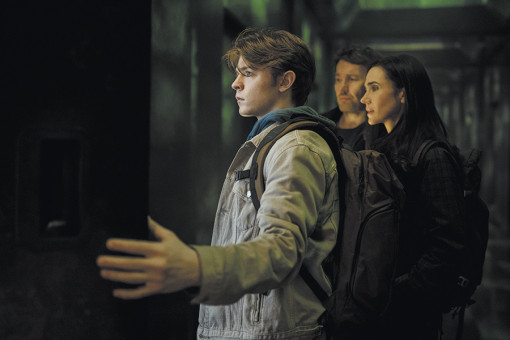
Produced for Apple TV, the 10-episode limited series — the third adaptation of John D. MacDonald’s 1957 novel The Executioners — follows two married lawyers (Amy Adams and Patrick Wilson) as they watch the man they put in prison (Javier Bardem) be exonerated and come after them for revenge. Under their Universal deal, Hedlund untangled the IP rights so Antosca could marry the paranoia of the 1962 black-and-white film with the mania of Scorsese’s operatic 1991 Oscar-nominated version.
“Each one of them reflects the fears of the culture at the time, but they also reflect the conception of family at that time,” Antosca says. “They interrogate the evolving cultural image of what a family is and the fears that we carry about our families and how to protect them.”
He sought blessings for the update from both Scorsese and Steven Spielberg, who are executive producers (and collaborated on the 1991 film), and he continued to rely on the former during postproduction. “It’s amazing to be able to work on a scene in your show and then get on FaceTime with Martin Scorsese,” Antosca says. “He just says something like, ‘Roll the cut five frames, and see if it builds more tension’ or ‘Cut this scene in half,’” he recalls. “You try it and, of course, it’s amazing.”
As creator and showrunner, Antosca aims for his sweaty, fractured Southern family portrait of moral culpability to be exactly what he sought from his nightmares. “We want to tell a story that is very much like a fever dream — that has the language of a nightmare,” he says. “You want to feel, as you go through these 10 episodes, like you’re slowly being submerged deeper and deeper into that elemental horror.”
Just don’t watch it before bed — no matter how old you are.
This article originally appeared in emmy magazine, issue #8, 2026, under the title, "Dread Ahead."