
As weather anchor on the Today show for the last 30 years, Al Roker has celebrated plenty of centenarians. This year, NBC is turning 100, and the jovial journalist has some big words to mark his boss’s big birthday: “You can go across the board with just about every genre,” he says, “and if it didn’t start at NBC, it was made popular at NBC.”
Who can argue?
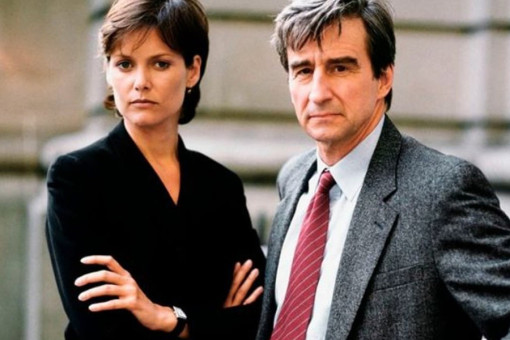
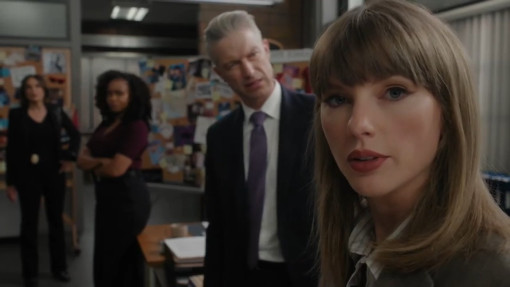
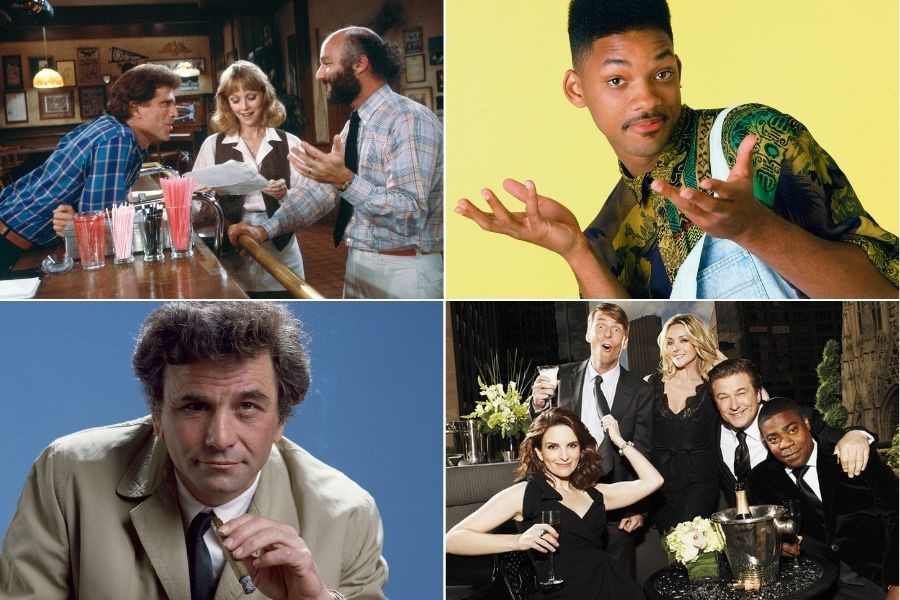
Cheers, Frasier, The Golden Girls, Seinfeld, Friends, Will & Grace, Family Ties, The Office, 30 Rock, Parks and Recreation, Dragnet, Columbo, The Rockford Files, Miami Vice, The West Wing, ER, Hill Street Blues, St. Elsewhere, L.A. Law, Heroes, Law & Order, Law & Order: SVU, The Ernie Kovacs Show, Rowan & Martin’s Laugh-In, The Flip Wilson Show, Saturday Night Live, Hollywood Squares, Jeopardy!, Wheel of Fortune, Another World, Days of Our Lives, America’s Got Talent, The Voice, Meet the Press, Chicago Med, Chicago Fire, Chicago P.D. The list goes on and on . . . .
“There have been so many culture-defining shows that, for a lot of people, have been woven into their lives,” says Pearlena Igbokwe, chairman of Television Studios, NBC Entertainment & Peacock Scripted. “People have a heartfelt reaction to NBC, because there’s always some show they can point to that means a lot to them.”
Creating that bond has always been NBC’s mission. Founded in 1926 by the Radio Corporation of America — a partnership between General Electric, Westinghouse and AT&T — the National Broadcasting Company was the country’s first major broadcasting network. CBS launched the following year and ABC 17 years later. All three started in radio — NBC’s first transmission was a four-hour variety show — and expanded into the new medium of television in the late 1940s.
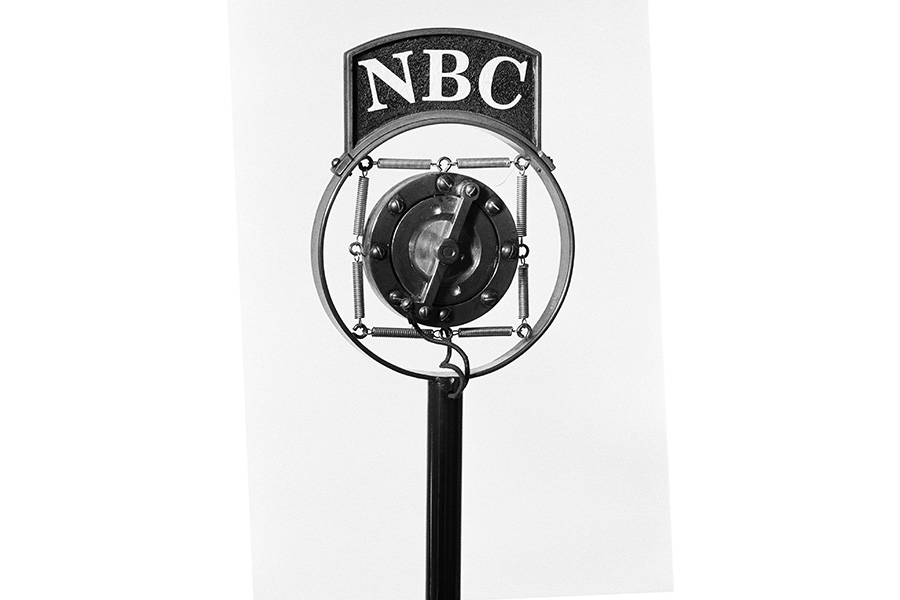
From the beginning, each broadcaster offered an eclectic mix of news, sports, game shows, comedy, drama and music. They didn’t call it broadcasting for nothing. But over time, each found its own lane. “The networks each took on a kind of personality,” veteran TV critic Bill Carter says. “CBS was older and rural, ABC was blue collar and NBC was sophisticated urban comedy and police dramas.”
The resplendent peacock logo didn’t arrive until 1956, when it was adopted to herald the ascendance of color TV, but NBC always had an abundance of vibrant television — even in black and white. The best of these shows shaped the young sensibilities of those who would go on to polish the network’s star when they in turn became working adults.
James Burrows, for instance, the late TV director whose accomplishments include helming every episode of Will & Grace, was raised in New York and watched NBC’s Your Show of Shows, the variety showcase for comedians Sid Caesar and Imogene Coca and castmates Carl Reiner and Howard Morris. It ran from 1950 to 1954. (Burrows’s interview for this story was conducted a week before his June 19 passing at 85.)
S. Epatha Merkerson, the longtime star of both Law & Order and Chicago Med, says, “I can remember sitting down as a kid in Detroit and watching the Macy’s Thanksgiving Day Parade. It was a huge part of what Thanksgiving was.” First broadcast in 1946, the parade is still an NBC tradition on the fourth Thursday of every November.
The cast of Friends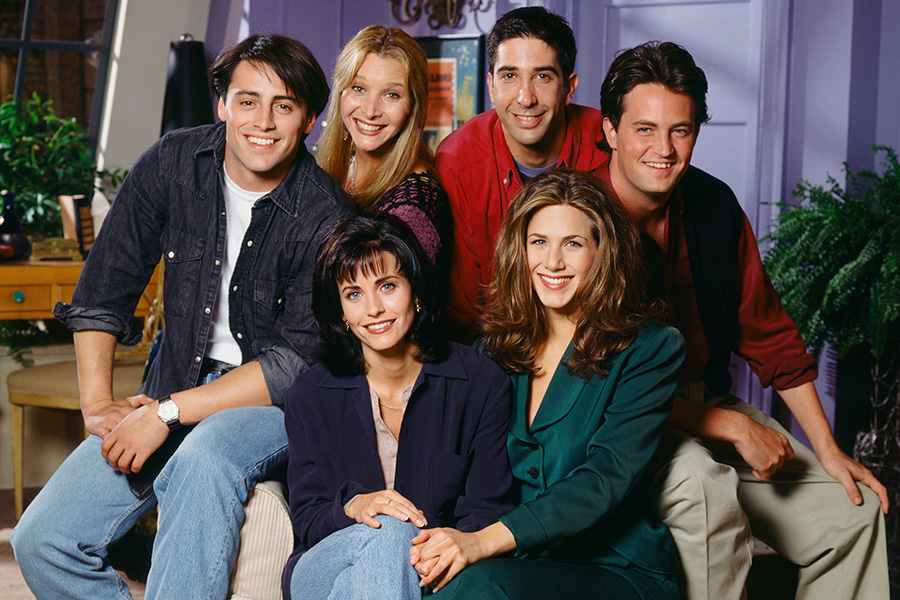
Lisa Kudrow’s first guest-starring role was on Cheers in 1989, and of course she went on to play beloved Phoebe Buffay for 10 seasons on Friends — and her twin sister, Ursula, on both Friends and Mad About You. Growing up in Los Angeles, Kudrow watched syndicated reruns of Mel Brooks and Buck Henry’s ’60s spy spoof, Get Smart — which originally aired on NBC from 1965 to 1969.
For Kenan Thompson, the longest-running cast member of Saturday Night Live, it was all about A Different World when he was a kid in Atlanta. “I grew up being such an NBC fan,” he says. “All my favorite sitcoms, maybe 80%, were on NBC.”
“Whether it was Bonanza, The NBC Mystery Movie or The Huntley-Brinkley Report, NBC shows took you to places and introduced you to people and showed you events you normally wouldn’t get to see,” says Roker, who was raised in Queens, New York, and remembers watching I Spy and Julia. “That TV screen was a window to the world and beyond, like Star Trek. There was something for everybody.”
The list of the network’s innovations is quite impressive. NBC, for example, aired the first regularly scheduled live newscast in early 1949. Over the years, such stalwart newscasters as Lowell Thomas, John Cameron Swayze, Chet Huntley, David Brinkley, John Chancellor and Edwin Newman became household names. Meet the Press premiered in 1947 and is the longest-running program on American TV. The 1952 launch of Today introduced the “morning television” concept. “It has always been a mix of ‘Here are the things you really need to know’ right up at the top, then some things we think you should know, and finally some things you didn’t know you needed to know,” Roker says.
With the advent of the late-night talk show in 1954, viewers who woke up with the Today show could go to bed with The Tonight Show. Initially hosted by Steve Allen, the show reached its peak during Johnny Carson’s 30-year reign, which began in 1962. To this day, the show’s original format — a mix of comedy, celebrity interviews and man-on-the-street bits — remains the template of talk programming.
Tonight Show king Johnny Carson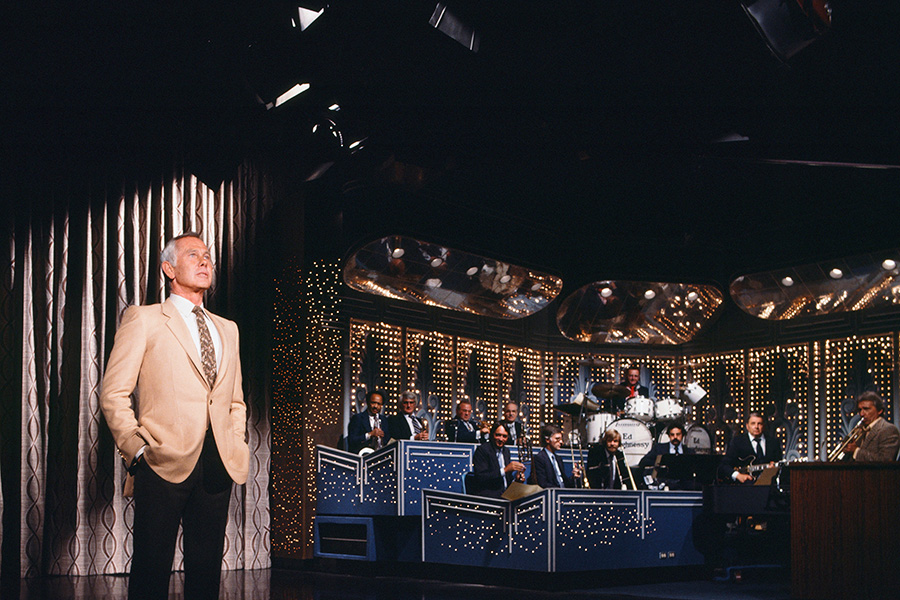
“You’re talking about Steve Allen, Jack Paar and, of course, Johnny Carson,” says Bob Costas, who hosted his own post-midnight show, Later with Bob Costas, from 1988 to 1994. “Then it was Jay Leno, Conan O’Brien and now Jimmy Fallon. It’s an extraordinary legacy to be even a small part of.”
“Between SNL, Jimmy Fallon and Seth Meyers,” Thompson says, “we rule late night.”
Costas played a bigger role, of course, at NBC Sports, helping boost the network’s renown in that arena. “Growing up as a sports fan,” he says, “NBC meant Curt Gowdy and Joe Garagiola on the baseball game of the week, Curt Gowdy and Paul Christman calling the NFL games and Dick Enberg and Al McGuire and Billy Packer on NCAA games. When I was a little kid, it was Mel Allen at the Rose Bowl every January 1. And the World Series, until some point in the mid-’70s, was always on NBC.”
Since then, NBC Sports has become synonymous with the Olympics. The network covered its first in Tokyo in 1964 and has held the rights to the Summer Games since 1988 and the Winter Games since 2002. “They’ve had the Olympics franchise for so long that it’s very much a part of their history,” Carter says. “That’s been their bread and butter now for years, and they would be crazy to let somebody else get it.”
NBC has paid billions for exclusive broadcast rights to the Olympics until at least 2036. Such staggering sums are worth it, Costas says, because sports are one of the last great unifiers. “In a fragmented media landscape, sporting events are still something that aggregates the largest possible audience.”
Certainly, NBC has had its share of what a rival would call the “agony of defeat.” The network’s nadir came during the February sweeps of 1981, when NBC was dead last in the ratings. “ABC had 14 comedies, many award-winning. CBS had a dozen award-winning shows. In the world of comedy, NBC didn’t exist,” former NBC president Warren Littlefield recalls. That, of course, was about to change.
“When I entered NBC, Fred Silverman was the chairman, and a brilliant broadcaster,” he says. “It was a major quest for him to get more comedy on the air. For me, it was a tremendous education and a great opportunity. There was nowhere to go but up.”
Cheers stars Ted Danson and Shelley Long with director and cocreator James Burrows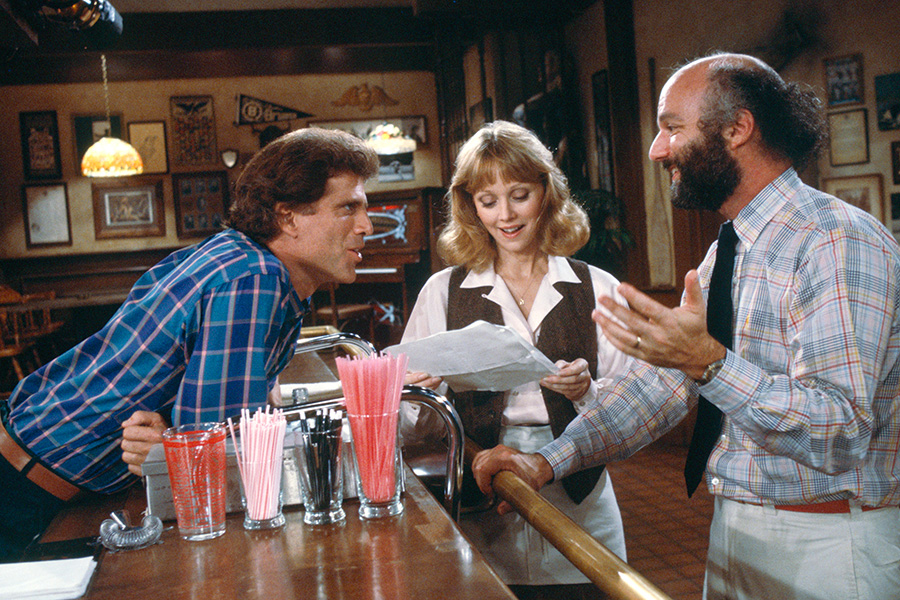
In 1984, The Cosby Show, a gentle comedy about an upper middle-class Black family, led that charge to what is considered NBC’s shining-est moment — the era of “Must See TV.” One of the strongest TV lineups ever arrived that year: The Cosby Show, Family Ties, Cheers and Night Court, followed by Hill Street Blues. No one called it binge-watching back then, but few changed the channel away from NBC for those three hours.
Such top-shelf programs found a home at NBC, Kudrow says, because “the people in charge of developing comedies were not treating the audiences like they needed to be spoon-fed. They knew they could handle things with more nuance.”
“They let us do the shows that we wanted to do,” said Burrows, who cocreated Cheers. “We rarely got a network note, and when we did, we easily ignored it.”
Littlefield, who worked with Brandon Tartikoff and Grant Tinker before serving as president of NBC Entertainment from 1991 to 1998, helped shepherd such landmark comedies as Seinfeld, Frasier, The Golden Girls, Friends, Will & Grace, Mad About You, Wings, NewsRadio, 3rd Rock From the Sun, Just Shoot Me! and The Fresh Prince of Bel-Air. They became, if not always ratings juggernauts, then timeless quality television.
“Brandon was a tough act to follow,” Littlefield recalls. “Fred Silverman was larger than life. Grant had the wisdom to respect the audience. He would say, ‘Stop thinking of the audience as aliens. They’re not. Put on the air what you want to race home to and watch. You are the audience.’
“We decided we’d be the network of sophisticated adult comedy and attract young, urban, college-educated viewers,” Littlefield adds. “With that beacon, NBC became the place where creators wanted to be with that type of content. Our wisdom was to nurture that, protect it and, if it was really good, put it on Thursday night.”
“It was the biggest money-making night in television history in terms of revenue for a network,” Carter says. “There was just nothing like it. They charged a premium, and movie companies would fall all over themselves to get ads on those shows, because their movies opened on Friday. It was also enormously significant, because it had a gigantic cultural impact. Seinfeld, Friends, The Office, Frasier — you can watch them again and again. They’re being introduced to new audiences all the time, and people are still impressed by them.”
“Seinfeld was like nothing we’d ever seen before. Mad About You had 12-minute scenes! And Saturday Night Live, good God!” Kudrow says. “For so many years, NBC was the premier network for comedy. The comedy risks they took were extraordinary.”
NBC was not risk-averse when it came to drama, either.
The cast of the groundbreaking ER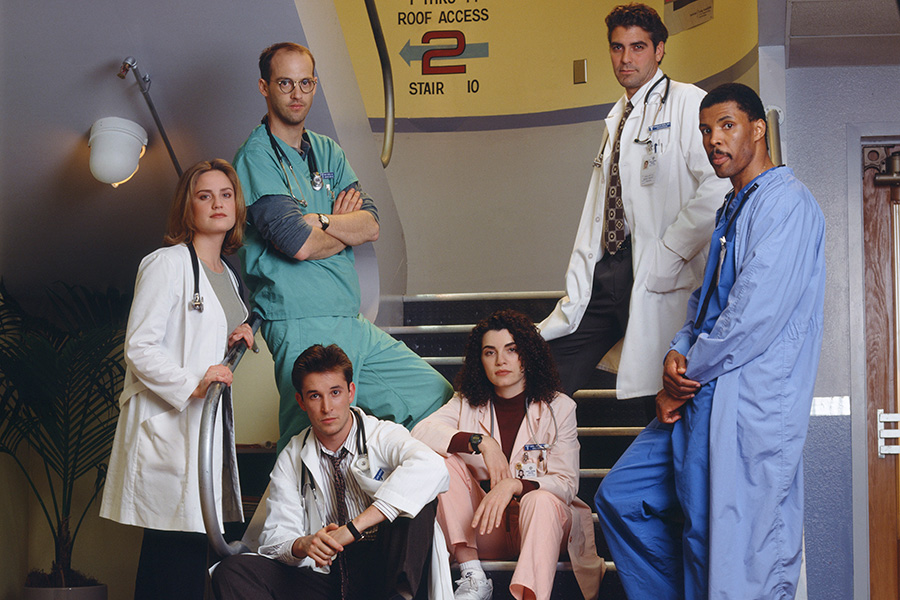
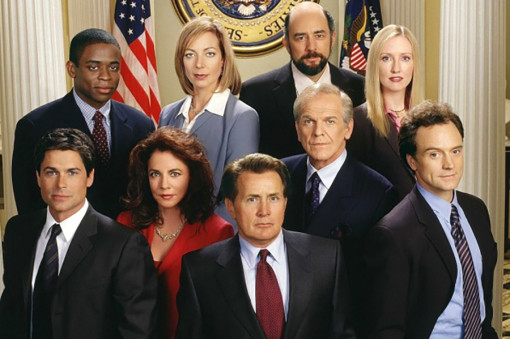
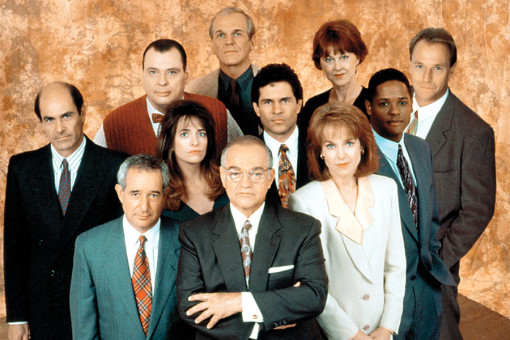
The network brought audiences such beloved and time-honored fare as CHiPs, Hill Street Blues, Knight Rider, Remington Steele, St. Elsewhere, The A-Team, Miami Vice, L.A. Law and Quantum Leap. During Littlefield’s tenure, such series as ER, Homicide: Life on the Street and Law & Order drew loyal audiences. Later, Aaron Sorkin’s presidential drama The West Wing took flight on NBC; it remains a gold standard.
“When I was given a 160-page script that came out of Michael Crichton’s trunk, that thing was all over the place. But John Wells had a vision,” Littlefield says of the show’s executive producer, writer and showrunner. That vision became ER — a groundbreaking procedural that changed the nature of TV drama.
Greater inclusivity on primetime shows has also changed television.
“When Jill Hennessy and I came to Law & Order, that was an edict coming down from NBC that we needed women on the show,” says Merkerson, who played police lieutenant Anita Van Buren. (Hennessy was assistant district attorney Claire Kincaid.)
“The note we gave was to add women to the series regulars and tell more ripped-from-the-headlines stories that feature women. The numbers grew, and Law & Order became a fixture,” Littlefield recalls.
“It was a perfect decision,” Merkerson adds. “I certainly see more of me on television now than when I started.”
Ice-T and Mariska Hargitay of Law & Order: SVU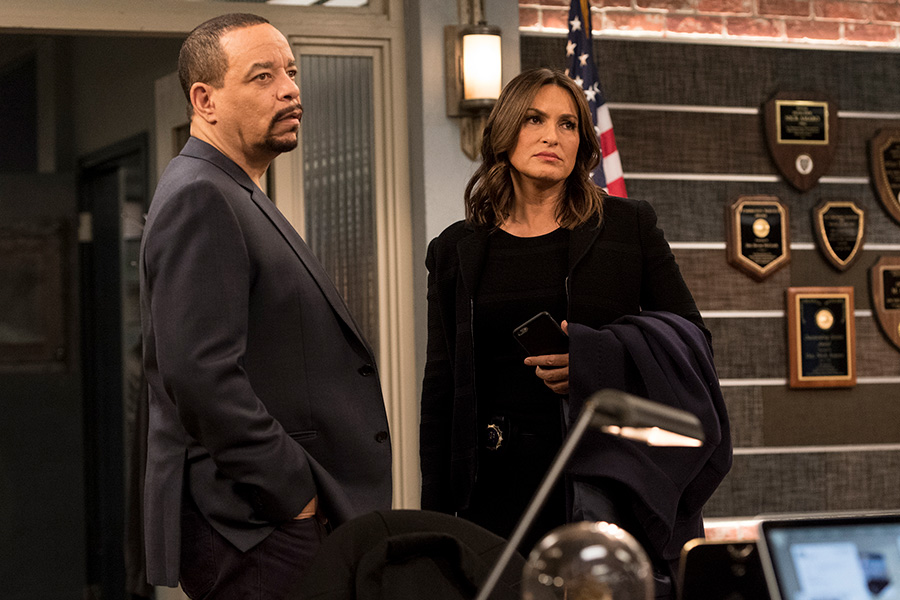
Seeing yourself is a frequent topic in discussions about NBC’s legacy.
“Television taught me so much about the country that I first moved to,” says Igbokwe, who emigrated to America from Nigeria as a child. “Television has such a powerful impact, because these people come into your home every week, and these images of what the world is get into your head.”
As a decision-maker at the network, Igbokwe says, “It’s a constant conversation that we have about how we reflect a more culturally diverse world — not just ethnicity but all kinds of things. It’s important to reflect the world in a way that feels natural or organic, and honestly, it’s just boring to not have a diverse group of people represented on screen.”
TV critic Carter says luck is always a factor in a network’s success, too. “The people who decide what programs get on the air are highly educated,” he says. “But the skill that really matters is having a catcher’s mitt, because something is going to fall out of the sky, and they better catch it. The best story was about The Office. Jeff Zucker was running everything at the time, and he didn’t like it. But he put it on, and it became this monster hit. When something lands on your doorstep, you don’t turn it away.”
“Obviously, not everything is going to work. But when you take bold risks and do things that other people aren’t doing,” Igbokwe says, and you air “things that are well done and that reflect the audience that you serve, it’s pretty incredible.”
Today, NBC is known for its highly rated reality competition shows like America’s Got Talent, The Voice and American Ninja Warrior, not to mention The Traitors on NBC’s streaming platform, Peacock. Kudrow gives props to development executives for seeing the potential in such shows. “It was a pretty brave thing to show Who Do You Think You Are? on NBC” — Kudrow was a producer of the genealogy series — “because there was absolutely nothing sexy about it. But it did really well.”
Carson Daly, longtime host of The Voice, admits that his show would not be a megahit for NBC if ABC hadn’t scored with American Idol. “Everybody was trying to figure out the singing-competition format, but when we brought the format over from Holland, NBC swung for the fences. I remember getting a call the day after the very first episode aired, saying, ‘Buckle in, because we’re in for a huge ride. We haven’t seen overnight ratings like this in ages.’ Now we’re shooting season 30.”
The reason for the show’s popularity, Daly says, is not just the music: “There’s plenty of singing on TV, but at the heart of The Voice is the second-chance stories of a lot of these artists. We do a good job of shining a light on those stories — singers who put their hopes and dreams on the back burner, and now they’re able to realize what they once felt was lost to them. People sit on their couches and say, ‘Wow, man. Good for you!’”
As always, it’s about connecting with viewers in a meaningful way.
“What the network has done well is create a real home-like environment over a long period of time for American viewers — a trusted place to be,” Daly says. “We trust this network with our hearts and our eyes, because they’ve brought us so many feel-good moments. It’s a safe, smart, entertaining, informative place.”
Longevity like that enjoyed by NBC is the reward for showing audiences themselves on the screen. “The folks who watch us say, ‘We’re kind of like you,’” Roker notes. He’s proud that his network home for the last three decades is still holding up a mirror as it turns 100. “NBC represents America,” he says. “It’s the idea that you can see yourself, if not physically, then emotionally or philosophically, on television.”
And you can do so, as they used to say, from coast to coast in living color.
This article originally appeared in emmy magazine, issue #10, 2026, under the title "Century Club."