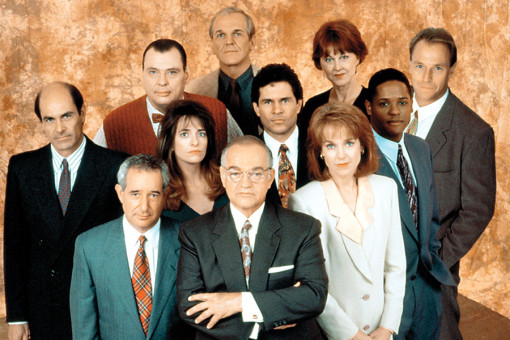


Casting director Sharon Bialy chose her field because, in her words, "It combines my love of actors and meeting people." That love, aided by what she calls her "Brooklyn-strong moxie," has made her an industry leader with 10 Emmy nominations to her name.
Bialy began her career in the '80s as a casting assistant in commercials, got a chance to move into film as a casting assistant on David Lynch's Blue Velvet, then embarked on a long run of successful television casting with partner Sherry Thomas at Bialy/Thomas & Associates. Bialy's Emmy nominations have been for her work on Breaking Bad, The Handmaid's Tale, Barry, Dead to Me and, this year, Pluribus. In 2012, Bialy, who says she's inspired by an appreciation of theater and good writing, put her auditioning tips into a book, How to Audition on Camera.
Bialy was interviewed in October 2023 by Amy Harrington for The Interviews: An Oral History of Television, a program of the Television Academy Foundation. The following is an edited excerpt of their conversation. The entire interview can be screened here.
Tell us a little bit about your childhood.
I grew up in Brooklyn, New York, the daughter of a Holocaust survivor. I love being from Brooklyn. I think it informs a lot of who I am and why I became successful — that Brooklyn-strong moxie.
I got my first introduction to my love of theater: We would go to Broadway shows and stand outside at intermission. Patrons would leave, and we would ask for their tickets. So, I saw the second half of every Broadway show for about three years.
I went to school at the University of Minnesota, which gave me a further introduction to great dance and theater. People in Minneapolis go to the theater the way other people go to the movies.
How did you get into casting?
I got a job, along with my best friend, Anne Marie Gillen, now a well-known producer. We came out here together from Minneapolis. We got work-study programs at a place called Professional Artist Group, where you would work during the day so you could take classes. It was the first place that had casting directors teaching classes at night. During the day, it was a commercial casting facility. I got to meet them all and watch.
I remember one day, a casting director, Ellen Blake — may she rest in peace — saw me sitting there, and she goes, “I can’t stand these clients anymore. Go in there and take over.” I was like, “What?” “Just bring actors in and smile and introduce them.” So, I started doing that.
I thought, “I love this.” I said to one casting director who will remain nameless, “I think I’d like to do this. It combines my love of actors and meeting people.” She said, “Ugh, you’re never going to do it.” I looked at her, and that Brooklyn moxie came up, and I thought, “Just watch me.” I guess I have to thank her, because she’s the one who got me started.
How did you first meet and start working with Rick Pagano?
I bumped into Rick Pagano. He was the casting director at the Mark Taper Forum. I said to him, “We’re the only two people in this town who love the theater. We should work together one day.” I handed him my card. He was very experienced, and I was not. He ended up giving my card to the casting director on Blue Velvet, who was renting Rick’s office because Rick was going on his honeymoon.
[Blue Velvet casting director] Pamela Rack [now Pamela Guest] called me — she was working under Johanna Ray — and said, “I need an assistant. Will you come work for me part-time for $200?” I said, “I’m casting commercials. I’m doing well. Can I call you back tomorrow?” I thought about it, and this has influenced me my whole career: Don’t do anything for money. Do what you want to do and believe in. I called her back the next day and said, “If you pay me $250, I’ll come work full time.” And I did. I was the casting assistant on Blue Velvet and learned so much.
Then La Jolla Playhouse called Rick’s office and said, “We need a casting session.” I said, “I’m Rick’s assistant. I can put together a session for you. He’s on his honeymoon.” They were so happy. I billed them, and when Rick came back, I said, “Here you go.” He was really surprised. “You don’t want to steal the client?” I said, “No, I don’t know what I’m doing. I’d love to work for you.” He said, “Okay, come be my assistant.” Six months later, he made me an associate. He really mentored me and gave me opportunities quickly that you don’t see happen today. Within two years, he made me a junior partner.
Breaking Bad's Aaron Paul (left) and Bryan Cranston.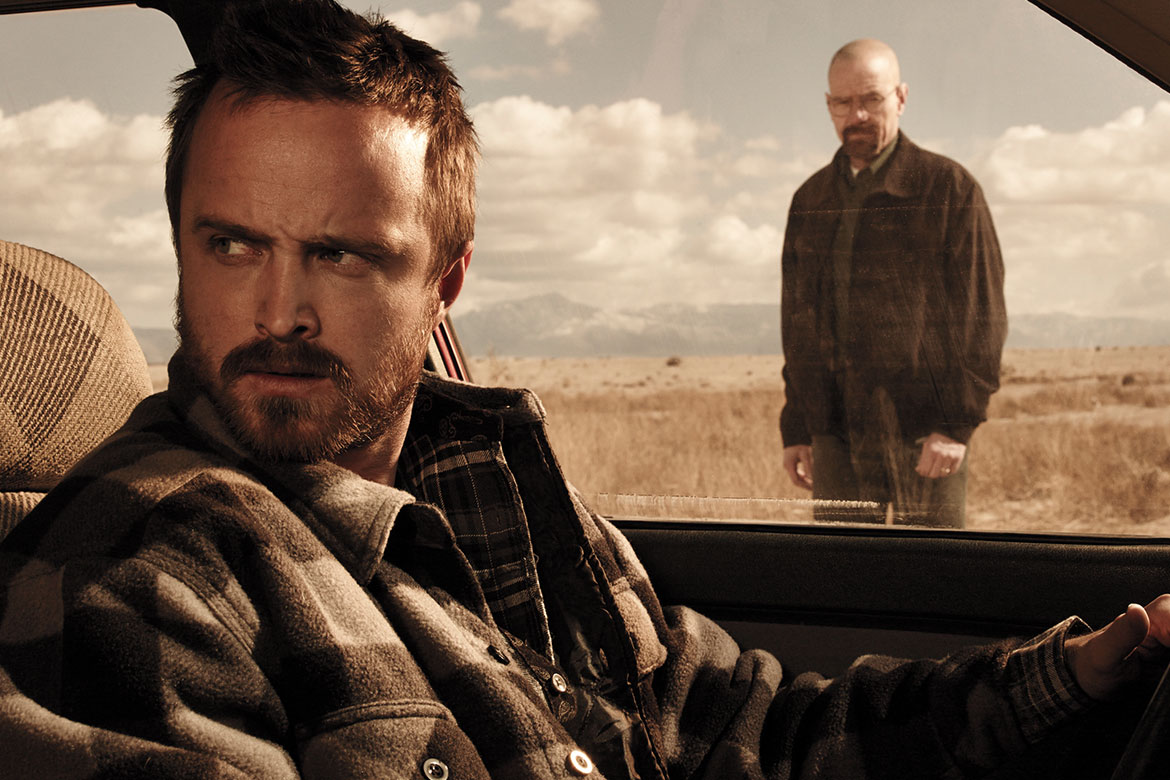
Let's talk about some of the television shows you worked on. In 1992, you were the casting director on Picket Fences.
Rick and I met with David Kelley. I was blown away by the writing. I think that show really taught me to pay attention to good writing in television.
I had the idea of [casting] Kathy Baker, and I called her agent to have her come in. Her agent at the time was not very nice to me. "Why in the world would she do television? She's a movie star." I said, "Because the material is fantastic, and David Kelley is a great writer. He's going to be something." "No." I said, "Can you at least have her read it and see if she would want to meet?" She read it and said she wanted to meet. A couple Emmys later ....
Did David Kelley have people in mind for certain parts?
He was really open. He was incredibly respectful. It really impacted me to see the difference when a showrunner is respectful and allows you to be creative. I have found in my career that the best and the brightest are the most generous and the most collaborative. They really want to know your thoughts.
How did you meet and start working with Sherry Thomas?
I needed an associate. I called my friend Debi Manwiller, and she said, “I have this fabulous person.” I set up meetings to meet with three people. [Sherry] was the first person I met. I canceled my other meetings.
A lot of people ask, “How did you become partners?” We were casting La Jolla Playhouse. It was a Friday. I had two kids at home. I said, “I’ve got to go home. By the way, can you bring a check on Monday for half the rent?” She went, “Huh? Okay.” She called her father and said, “She asked me to bring a check. What do you think that means?” And he said, “She’s asking you to be a partner. Bring the check.”
Monday morning, she brought the check in. I said, “Great. Thanks. Can you make sure you answer the phone Bialy/Thomas?” Now, 26 years later .... We didn’t sign any papers. We have no agreement. It wasn’t even on a handshake. It was just, “Can I have a check for half the rent?” [Laughs]
Why do you think your partnership is so successful?
Total trust, respect and love. We are as different as night and day. But we share the same work ethic, and the way we approach actors, the way we approach our clients, the honesty that we deal with.
In 2008, you cast the AMC series Breaking Bad. How did you get involved with that show?
Dawn Steinberg, the head of casting at Sony, called to see if we'd be available to meet on a new show. Now, remember, Vince Gilligan was only on The X-Files at that time. She said, "It's for AMC." I said, "American Movie Classics?" She said, "Yes, they're going into television." They had shot Mad Men, but it hadn't aired. So, I was like, "Okay."
I read the script. It was the second-best script I had ever read, the best for television. I was blown away. We really did our homework. And Vince is just an incredible guy. On a job [interview], they want to hear your ideas. "You're going to think we're crazy. But what about Bryan Cranston?" And Vince, in his adorable Southern accent, "Oh my gosh. That's who I want. He was amazing on The X-Files."
And then we didn't get the job, and I was heartbroken. When Dawn called me, she said, "It was a really hard decision. The other casting director is one of the greats, a big film casting director." I said, "I get it. If it doesn't work out in the dealmaking, we're closed." And she said, "What?" I said, "If you can't make a deal, we're closed." And she goes, "But you don't know what the budget is." "We're closed." She called four days later. Worst deal I have ever made. And the best decision Sherry and I ever made.
Why?
It was amazing creatively. The pilot was so much fun, to be in the room with Vince. We read people for Bryan’s role, because you have to, but it was really Bryan that he wanted and we wanted. We called Dawn and said, “This is who we want.” And to the credit of Jamie [Erlicht] and Zach [Van Amburg], who ran Sony, they went with it. That’s a big roll of the dice to [cast] the dad from Malcolm in the Middle in a drama with Vince Gilligan, who had never directed a television pilot before. I think it shows that when you trust the creative vision of the people you hired, you will get something fantastic.
What do you think makes for a good relationship between a casting director and a show creator?
I think really listening to what the creatives say, to not jump in immediately with what you want to do. Especially with the great writers, which we’ve been fortunate to work with, to really respect the writing and the script. When you come from that place, I think the showrunner gets what you’re doing, and it really helps.
And the other thing you have to do is not take any small role for granted. With the great writers — and especially with Vince — make sure those actors have a lot of depth because, as you can see in his history, Giancarlo Esposito just came in for three episodes. Bob Odenkirk went over 11 seasons or something between [Breaking Bad and Better Call Saul]. When Vince finds an actor that he loves, he starts writing to them. So, you want to make sure that actor can deliver three seasons later.
A perfect example of that on Breaking Bad is Aaron Paul, because he was not going to be in the whole series, right?
Correct. But Vince is so smart. He saw one episode, and he knew that he was not going to kill him because of the chemistry between him and Bryan and how special that was. But casting Aaron — we saw a lot of actors. Initially both Sherry and I, when his agent pitched him, thought he was too old. She was a really great agent, and she said, “Just try it.” He was so great when he came in for us and so great on his callback. It was just magical.
How did casting Breaking Bad impact your career going forward?
In a huge way. Breaking Bad opened a lot of worlds for us. Sherry and I could not get a comedy. It was really Danny McBride that gave us our shot on Vice Principals. Sherry and I used to be so upset. If you watch Breaking Bad, there’s a lot of comedians in there. It was our knee-jerk reaction — an “F you” to people that said we couldn’t do comedy. We would just keep peppering comedians in there.
What was it about the comedians that made you think they could deliver in drama?
I think comedy is hard, and I think there are a lot of comedians who really have it in them to be wonderful actors. And because Vince wanted that underneath sometimes, it really worked. How great was Lavell Crawford? Bob Odenkirk, Bill Burr …. There was one day on set the director calls, “I can’t get anything done because I’m laughing so hard in between takes.”
In 2010, you cast the AMC series The Walking Dead.
Sherry and I loved it. When we went in to meet with [executive producer] Gale Anne Hurd and [showrunner] Frank Darabont, I said two things to Frank: "The last time I got a script from you, and I didn't have the opportunity to meet, I cried because I didn't get to do the movie." It's the only time I've ever cried because I didn't get a job. It was The Shawshank Redemption [written and directed by Darabont]. Beautifully cast by Deb Aquila. I literally said to him, "I am not going to cry again. I want this job."
Sherry smartly told them both that we had been offered a job prior to going in to meet that we turned down because we wanted to be available for them. Even if we didn't get it, this is what we wanted to do. That helped us get the job.
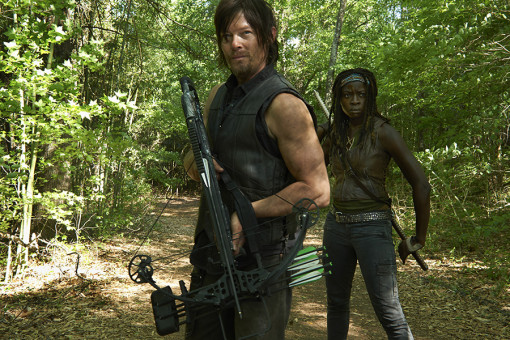
Frank hadn't done television. I had a lot of late-night conversations with him on the phone, because he would watch the casting at the end of the day on a big screen. He wouldn't watch it on the computer. We had to transfer things and deliver it to his house. He loved actors. He saw things in actors that other people didn't see. And that taught me something. Like, Norman Reedus by his own words is a terrible auditioner. When he came in, he said, "I'm not going to get this job. I never get a job when I audition." And it wasn't a great reading. Frank said, "Look at his eyes. Look at the pain in those eyes. That's the part." That was Frank's brilliance. Andy Lincoln was new. We did screen tests at Frank's house. Sherry was holding the boom. I was holding a light. We were in Frank's garage. It was so much fun.
The Handmaid's Tale's Ipsita Paul (left), Ann Dowd (middle) and Elisabeth Moss. 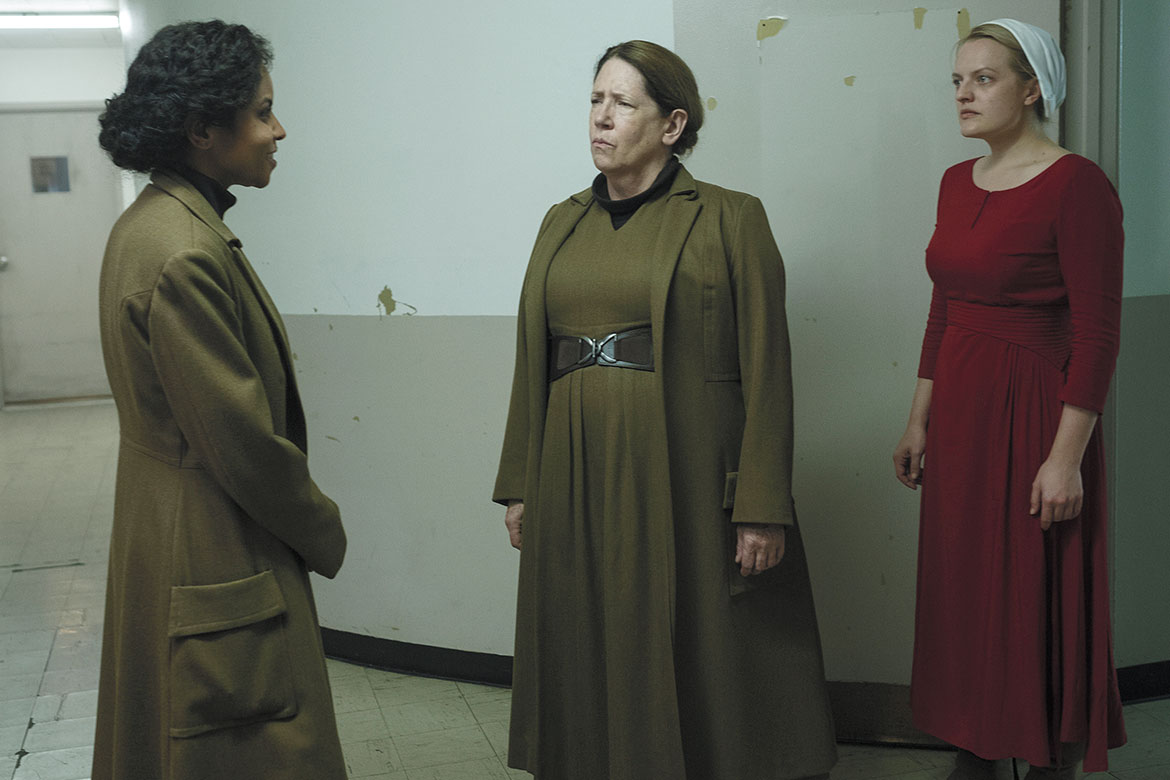
You were also the casting director for The Handmaid's Tale.
Sherry and I went to a meeting at MGM with [executive producer] Warren Littlefield and [showrunner] Bruce Miller. I think Warren Littlefield is one of the best producers ever in Hollywood. He’s just incredible.
And we were just blown away by the script. Elisabeth Moss came with the show. We didn’t know that when we went into the meeting. They told us that, and we were like, “Phew, okay. That’s amazing, because she’s amazing.”
The first person we cast was Ann Dowd. Sherry was obsessed with Ann Dowd. I remember hearing from some executives, “We can’t cast that role first.” And we’re like, “We have to.” Bruce and Warren were right there with us. That’s when it’s fun — when you’re all in sync about a choice. How do you say no to so many people who love what they’re doing who are creating something they’re passionate about? So, we got to cast Ann Dowd first.
It was wonderful, because the writers were down the hall from us, which is a really nice thing to have for a pilot. When Samira Wiley came in, I was like, “Sit here. Bruce, she’s here from New York. Is there any way you can come in and watch this reading?” That was very helpful. When your showrunner sees your excitement, that makes a difference.
What advice would you give to an aspiring casting director?
I think that an aspiring casting director should not only watch films and television, but go to the theater. I think aspiring casting directors should read. When you read a lot, you understand what good writing is. That way, when you start working, you will immediately understand when something is well written. Even if you’ve never heard of [cocreators of Halt and Catch Fire] Chris Cantwell and Chris Rogers, you go for that job, whether you’re an actor or anybody.
Also, try to work with people who will give you trust and respect and opportunity, because so many young casting associates don’t get that. I think that’s one of the things I’m proudest of — the people Sherry and I have mentored through the years. It’s important for us to pass along opportunities to younger people and especially to the people within my own office.
Adrienne Faillace is the contributing editor for Foundation Interviews.
The Interviews is celebrating its 30th anniversary as it marches toward its 1,000th interview. Since 1997, the archive has conducted more than 960 interviews chronicling the evolution of television by capturing indepth conversations with the people who have transformed the industry. To make a gift to the Television Academy Foundation to help preserve this invaluable resource for generations to come, please reach out to Courtney Gross, Senior Director of Development, at gross@televisionacademy.com.
The complete version of this interview can be found in emmy magazine, issue #9, 2026, under the title: Sharon Bialy.