

David J. Rosen wove several ideas together to create Apple TV's Maximum Pleasure Guaranteed. He had long daydreamed about centering a darkly comedic thriller around a normal person. “I also knew I wanted to write about somebody who wasn’t going through their firsts in life — not like a 25-year-old with their first apartment and their first love, but someone who’s going through their seconds. Maybe that first love didn’t work out, or that first job didn’t work out — so the stakes were higher,” the creator and showrunner says.
At the time, the pandemic was winding down, but Zoom meetings had become firmly entrenched in daily life, he notes wryly while on a Zoom interview. Rosen (Hunters) realized that would be a great device for the inciting incident. “I thought a lot about Rear Window.”
He decided the lead character had to be a mother, “because moms have so much more pressure on them,” he explains. Needing a break from all those demands, she would turn to a paid online relationship for a little bit of happiness. “That could be turned into shame and such a spiral,” he says. “It all came together.”
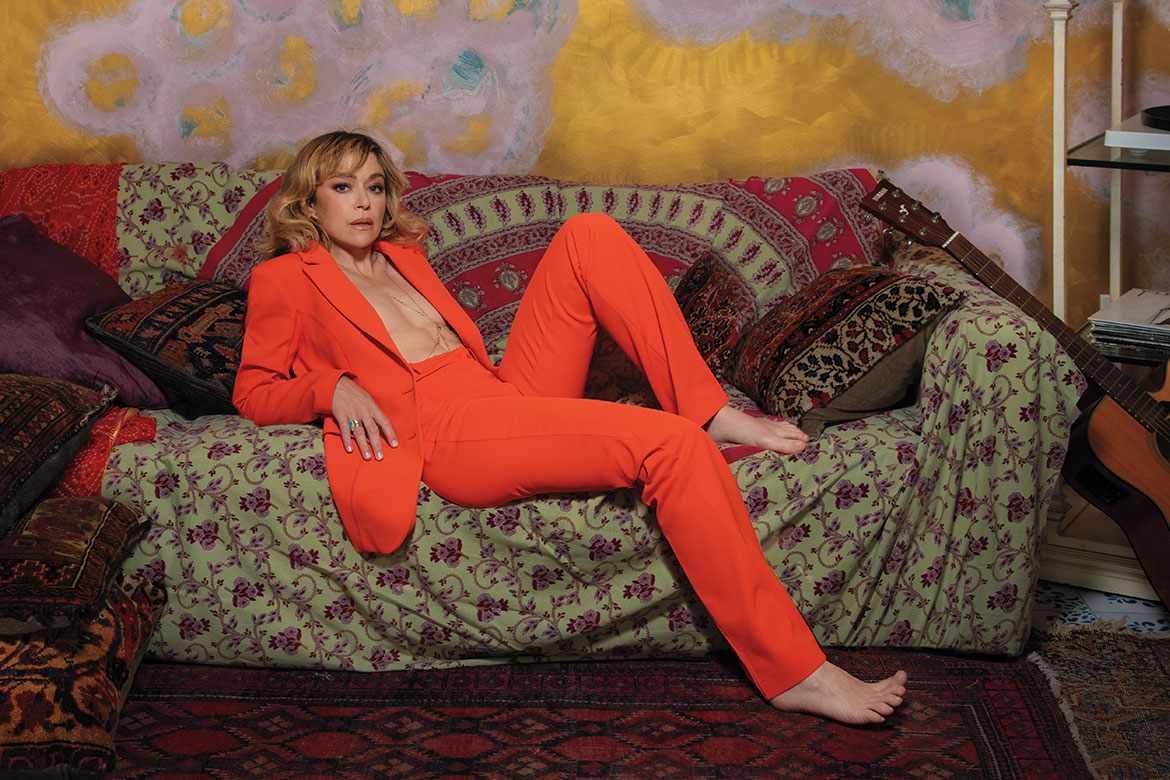
Trevor seems to offer the only sympathetic ear in her life and perhaps the only sense of control. “There’s an element of safety for Paula — in that she gets to pay, there’s a specific time, she gets to stay a little removed and she gets to present a version of herself that is maybe the charming version of her,” Maslany says. “And all of these pressures, and all of these changes, and all of these losses, and all of this desire that is unfulfilled in so many ways” have built up. “I love the idea that she’s trying to tap back into her sexuality in the middle of a bunch of boxes as she’s just moved. There’s something really beautiful in that image.”
Then, out of nowhere, she gets brutally scammed. Terrified at first, Paula quickly starts using her analytical skills to get out of the predicament, but the scam goes awry, and she becomes embroiled in a murder investigation. Already at her lowest point, she is engulfed in something bigger than she can imagine, and she feels compelled to solve a case that the police don’t seem to care about getting right. “She’s super-smart, and then she makes reckless choices, which is a very fun contradiction to play with,” Maslany says. “She’s not logical, but she is dogged.”
Watch the exclusive Under the Cover video with Tatiana Maslany at her emmy cover shoot.
When she auditioned for the role of Paula, she says, “I remember prepping and being like, ‘I don’t know who she is really.’” That confusion delighted her. “I was like, ‘I think that’s actually where she’s at.’ It really worked on me in a way that was quite visceral.”
Rosen remembers his initial impression when Maslany walked onto set the first day of shooting. “I thought, ‘Oh my God, this show might be good.’ It was really important, knowing that Paula was going to do some smart things but also some dumb things and also some really questionable things. Especially as the show goes on, the feeling toward the character was like, ‘What are you fucking doing? But I still love you.’ And Tatiana just exudes this naturalism in everything she does. She makes you believe it.”
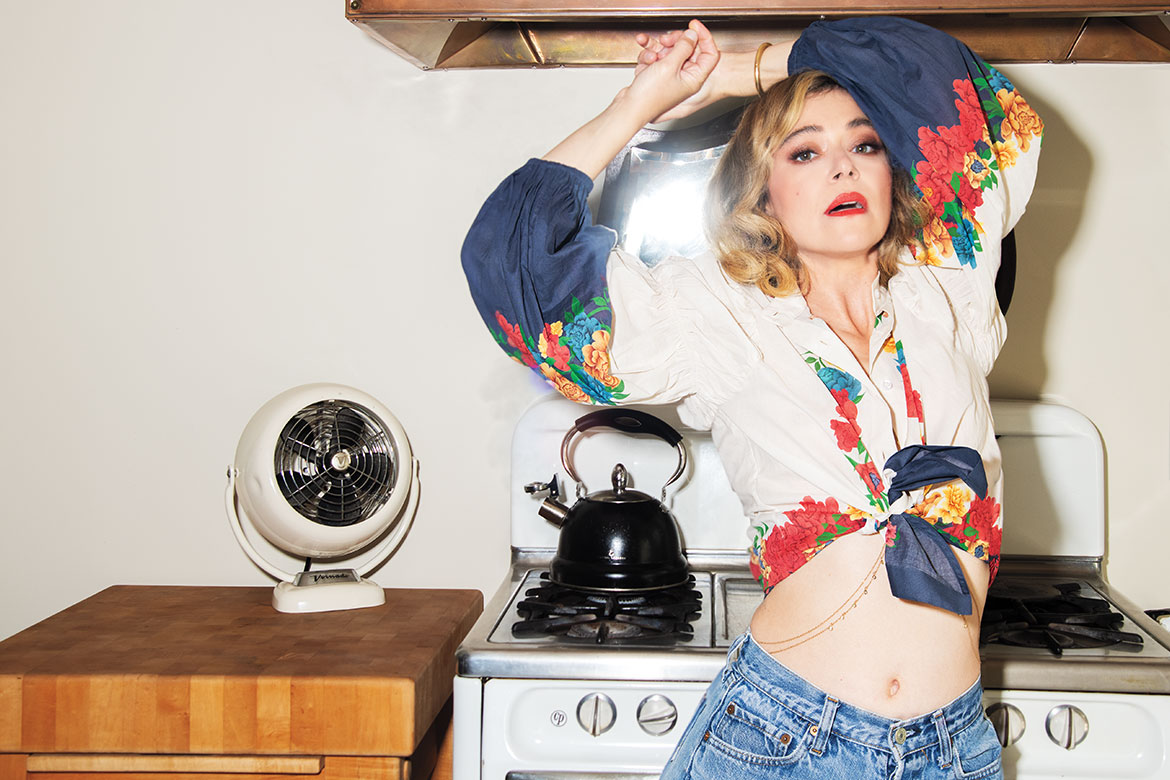 Maslany handles every angle of the comic thriller with unhinged aplomb. It stands to reason that her acting hero is Gena Rowlands. Maslany has been acting since the age of 9. At about 20, she was questioning why she was still doing it. Then she saw Rowlands in A Woman Under the Influence, “and I was like, ‘Oh, that’s why.’ I want to pursue the freedom that she has in that — and the limitlessness. And if I can capture even a fraction of what her performance makes me feel as a viewer in my own work, then great — I can feed off that for the rest of my life.”
Maslany considers herself a disciplined actor, but says she was even more so when she was younger — “so disciplined that sometimes I would be in my head, and I would be very controlled and very worried about veering out of a character. Especially when I was doing Orphan Black, because I had all these people [to play], I really wanted to be like, ‘This is the spine of this person.’ But the pursuit is always infinite, because I’ll never reach what Gena did, and I’ll always seek it out as a North Star.”
She also cites Laura Dern in Wild at Heart, Ellen Burstyn in Alice Doesn’t Live Here Anymore and Shirley MacLaine in The Apartment for performances “that are feral and outside of the construct of a woman, and I will follow them to the ends of the Earth. That’s the dream.”
While Paula may be less of a stretch than all of the Orphan Black clones, she still contains multitudes. “What is very relatable about her is this sort of, ‘I’m Paula at work, I’m Paula at home, I’m Paula privately, I’m Paula with my daughter, I’m Paula with my crush’ — these different versions of her that are demanded. When they start to blur, that’s when people start to get upset with her,” Maslany says. “Everything she feels solid about has been sliced out from under her, so she’s in this place of, ‘Who am I, and how do I be me in the middle of this chaos?’”
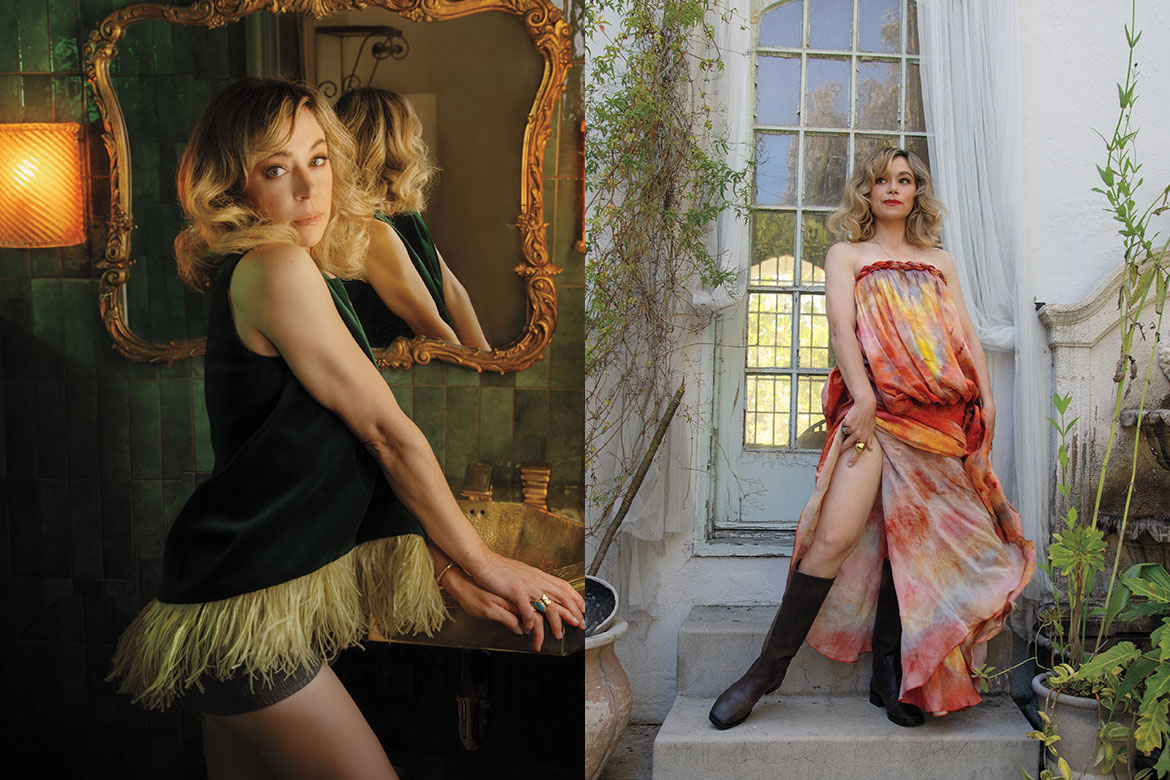 Maslany felt “a sense of fraudulence” playing a mother, because she isn’t one herself, and that fed into the character as well. “I think that is, in a lot of ways, what Paula is dealing with: a lot of eyes watching her and being like, ‘Hmm, are you meant for this? Is this your thing? Are you good at that?’”
She memorizes her lines a week ahead, “so that I can be free when I’m working, because there are so many threads,” she says. “I experienced this with Orphan Black, too, where I was like, ‘There’s no way I can keep on top of all this unless I’m way ahead of it.’”
In some of the more terrifying moments, Rosen recalls, her fear was so palpable that words were unnecessary. “We could lose whole lines when we were editing, because of the way that her eyes darted,” he says. “We understood everything she was thinking.”
To read the rest of the story, pick up a copy of emmy magazine here.
This article originally appeared in its entirety in emmy magazine, issue #7, 2026, under the title "Mother Mayhem."